fbpx

February 19, 2020

UC Berkeley Chancellor Weighs in on Bears for Palestine Display

Following the fallout from a December display by UC Berkley’s Bears for Palestine praising Palestinians involved in hijacking and bombing attacks, the school’s Chancellor Carol Christ sent letters to Jewish and pro-Israel groups as well as pro-Palestinian groups on Feb. 19 addressing the issue.

On Feb. 10, the Associated Students of the University of California (ASUC) University and External Affairs Committee rebuffed a ASUC Senator Milton Zerman’s resolution to condemn the display, for glorifying “violent terrorists, including but not limited to Rasmea Odeh, Fatima Bernawi, and Leila Khaled.”

At that same meeting, a Jewish student, who identified himself as “H” said he wanted to join the Israel Defense Forces (IDF) so he could “eliminate Palestinians.”

Following that meeting, Jewish groups on campus wrote to Christ asking the university to better protect Jewish students during ASUC meetings.

Previously, in a Feb. 3 ASUC meeting pro-Palestinian students chanted “Free Palestine!” as Jewish and pro-Israel students walked out. Jewish students claimed that the pro-Palestinian students intimidated and threatened them. Pro-Palestinians students claimed that pro-Israel students harassed them.

In her letter Christ wrote, “While the campus acknowledges and understands that students have a constitutionally protected right to display the posters in question, using a campus location to honor those who killed unarmed Jewish civilians and/or bombed, or planned to bomb places frequented by unarmed Jewish civilians, is an affront to our Principles of Community. So too were the words of a speaker at the latest ASUC meeting who proclaimed a desire to, ‘eliminate Palestinians from the world.’”

She added, “I understand why these kinds of actions and words have created fear and safety concerns among our Palestinian and Muslim communities, and I am telling you — our Israeli students, as well as Jewish students from the United States and elsewhere — the very same thing regarding your understandable fears and concerns about the poster’s implications.”

Christ reiterated her commitment to combating all forms of bigotry.

“I will in the future, as I have in past, speak out loudly and clearly in condemnation of anti-Semitism, Islamophobia, anti-Blackness, racism, and other hateful ideologies and perspectives that target people based on their identity, origins or beliefs,” she wrote. “We are in the process of assessing the best, most effective way to continue providing educational information about anti-Semitism in the Golden Bear Orientation for all incoming students, while expanding that essential training to include Islamophobia, anti-Blackness, and other ideologies that are antithetical to our Principles of Community.”

She also condemned websites that engage in the practice of doxing students.

“I believe that practices such as doxing, posting home addresses and other private information on public websites, and inaccurately labeling people as criminals or terrorists are inconsistent with the values of a democratic society.”

Christ previously said during a Feb. 5 ASUC meeting, “Students who support the Palestinian cause have a right to celebrate those they see as fighters for that cause, and their rights to express that support are fully protected by our country’s constitution. By the same token, Jewish students have a right to feel dismay and concern after seeing a poster they perceive as honoring those who killed, or attempted to kill, unarmed Jewish civilians.”

Christ’s letters can be read in full here and here.

UC Berkeley Chancellor Weighs in on Bears for Palestine Display Read More »
Protesters Hold Signs Criticizing Israel During Holocaust Scholar’s Anti-Semitism Lecture

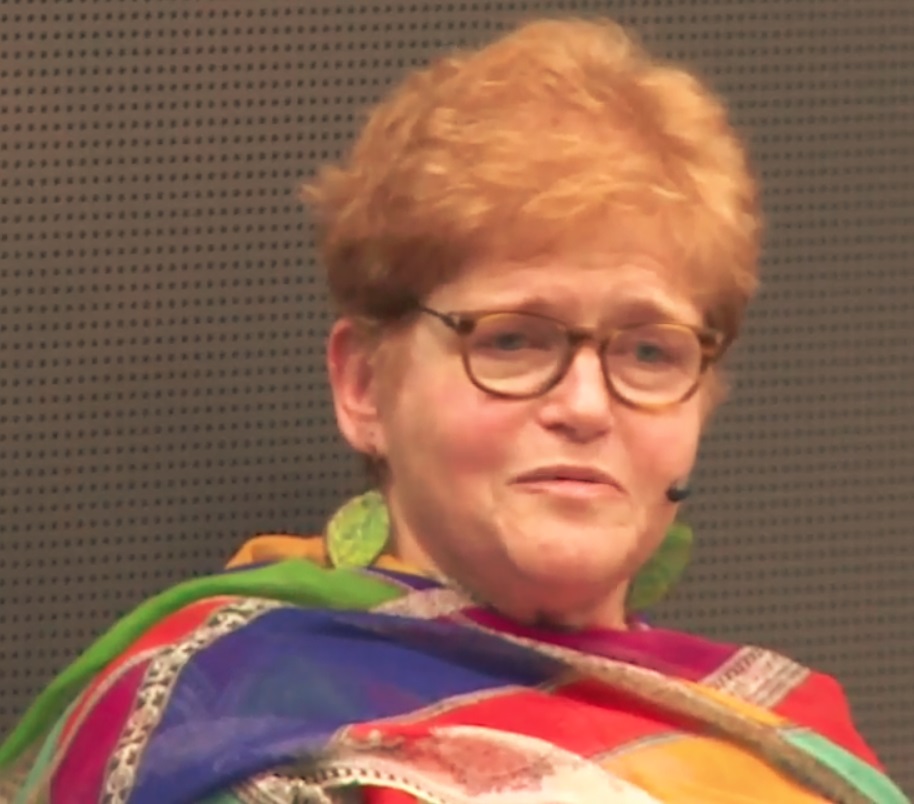
Three protesters with signs criticizing Israel stood next to Holocaust scholar Deborah Lipstadt during her lecture about anti-Semitism at UC Berkeley on Feb. 13.

Lipstadt posted a photo of the protesters in a Feb. 16 Twitter thread. One read “another Jew supporting divestment.” Another read “Anti-Zionism =/= anti-Semitism” while the third stated “the crimes of ’48,” referencing the founding of the State of Israel.

“My talk was about anti-Semitism here and now. Not about Israel,” Lipstadt tweeted. “Three protesters positioned themselves next to me with signs attacking Israel.”

Lipstadt said in a subsequent tweet: “I want to thank the protestors for making my point more clearly than my words could,” adding that she “ignored their presence. I had far more important things to discuss.”

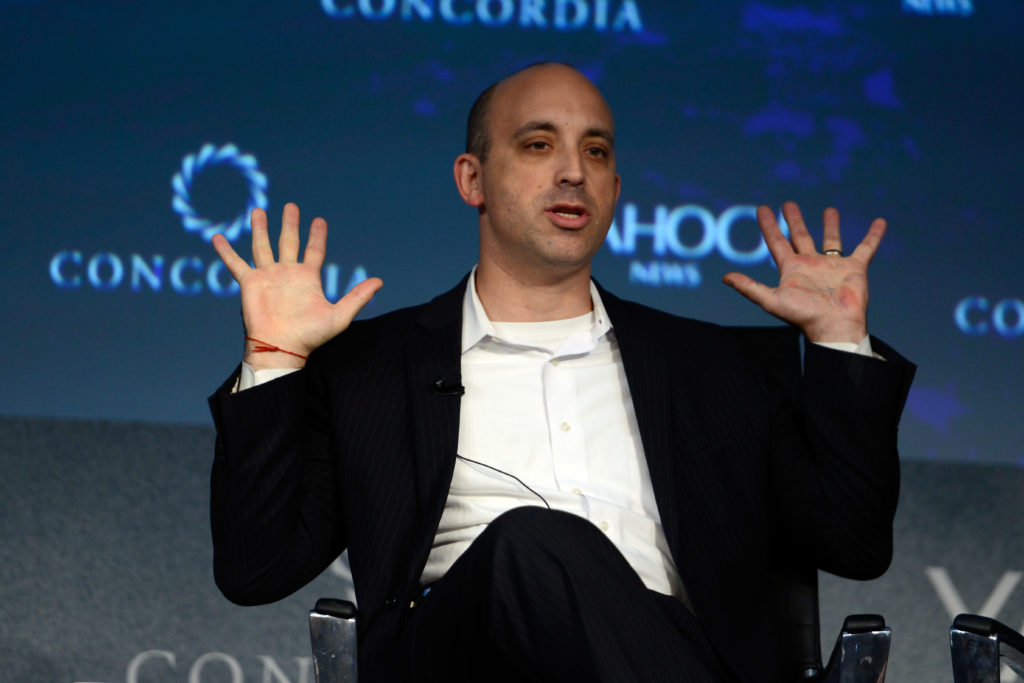
Anti-Defamation League CEO Jonathan Greenblatt tweeted: “Our friend & pioneer for Holocaust education @deborahlipstadt had her talk marred by [Students for Justice in Palestine] protesters who literally manifested her thesis by equating her with the Israeli govt. As if it needs to be said, holding all Jews collectively responsible in this manner is #antiSemitic.”

StandWithUs CEO and Co-Founder Roz Rothstein similarly tweeted, “Deborah Lipstadt’s talk at @UCBerkeley disrupted by anti-Israel protesters. Why? She wasnt talking about #Israel. So, Why? Because she is a Jew? Yes. So here we see that anti-Zionism and antisemitism are in fact, related.”

UC Berkeley Assistant Vice Chancellor of Executive Communications Dan Mogulof wrote in an email to the Journal the protesters’ actions were “a sad, unfortunate sign of the times that there would be opposition to an academic lecture on anti-Semitism. The protest appears to be another indication of the extent to which those who oppose Israel’s actions fail to distinguish between that government’s policies, the Jewish people and the Jewish religion.”

However, he added that the protesters did not disrupt Lipstadt’s lecture, stating, “While they were certainly a distraction, the protesters were silent and did not obstruct the view of the podium and, as a result did not violate campus policies or the law. This was expression protected by the First Amendment, but we still regret it occurred. There are a growing number of anti-Semitic incidents in the US and abroad — a horrible phenomenon that requires understanding if it is to be successfully confronted. We struggle to understand why anyone would oppose that.”

Protesters Hold Signs Criticizing Israel During Holocaust Scholar’s Anti-Semitism Lecture Read More »

‘3 Rabbis … 1 Opinion’ at UCLA, Hatzalah L.A. Gala

FRI FEB 21

Stand-up Shabbat Dinner
Knesset Israel Congregation of Beverly Hills (KI) holds its second annual Shabbat comedy dinner, featuring Daniel Lobell and Eli Lebowicz. Rabbi Jason Weiner delivers remarks. 5:30 p.m. service, 6-9 p.m. dinner program. $30 adults. $12 kids under 12. Free for kids under 6. Knesset Israel, 2364 S. Robertson Blvd.

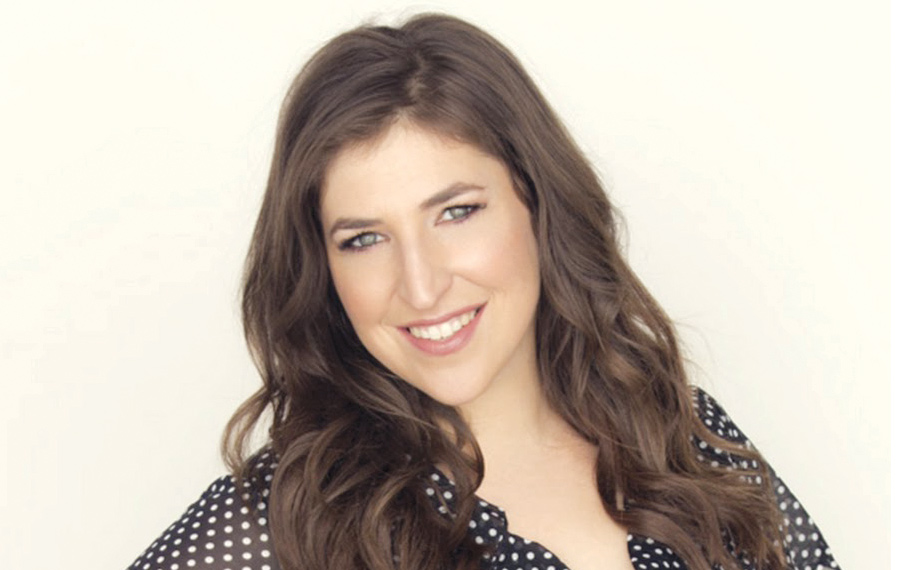
Mayim Bialik
Actress and neuroscientist Mayim Bialik is currently Adat Ari El’s scholar-in-residence. Best known for her roles in two long-running television series, “Blossom” and “The Big Bang Theory,” Bialik discusses “Israel in My Personal and Public Life.” 6 p.m. service, 7 p.m. dinner, 8 p.m. program. $25 for dinner. Program is free. Adat Ari El, 12020 Burbank Blvd., Valley Village.

“Shabbchella”
Join Temple Isaiah for “Shabbchella,” a modern Shabbat musical festival for all ages. Diverse activities, including dinner, face-painting, flower-crown making and services set to Jewish and secular music, remind synagogue-goers that “All You
Need is Love.” The family-friendly gathering also features Torah study in a beer garden for adults and Om Shalom Yoga for yogis ages 10 and up. 5:30-9 p.m. Free for members. General: $36 families, $18 individuals. Temple Isaiah, 10345 W. Pico Blvd.

Cantorial Sephardic Shabbat
Sephardic Temple Cantor Haim Mizrahi and Israeli Cantor David Dery, aka Dudu, come together for a musical Shabbat. Services are followed by a full-course dinner. 7 p.m. services and dinner. $45 members, $50 general, $10 children. Reservations required. On Saturday morning, the musical Shabbat continues, with services led by Sephardic Temple Rabbi Tal Sessler featuring the two cantors. 8:30 a.m. Saturday services. Sephardic Temple, 10500 Wilshire Blvd.

SUN FEB 23

“Do I Win or Do I Lose?”
The funny and moving one-man show “Do I Win or Do I Lose?” starring Israeli actor Roy Horovitz kicks off the Friends of Sheba Medical Center’s program. Based on a true story, the show follows a young man who tells the tale of his grandfather, a gambler, diagnosed with pancreatic cancer. A panel discussion follows with Dr. Talia Golan, head of the Sheba Pancreatic Cancer Center, and pancreatic cancer survivor Tamir Gilat. 1 p.m. VIP reception at The Mattress, across the street from The Pico theater. 2 p.m. The Pico doors open, 2:30 p.m. curtain. $50 general admission, $150 VIP reception and preferred seating. The Pico, 10508 W. Pico Blvd. Contact rachel@shebamed.org.

“The Impossible Medical School”
Dr. Leo Gordon, who for 40 years was a member of the Cedars-Sinai Medical Center surgical staff, discusses a clandestine medical school that operated within the walls of the Warsaw Ghetto in 1943. The largely unknown piece of Holocaust history is a story of educational risk, brave students, courage under siege and medical resistance. 4-5:30 p.m. $10 suggested donation. Los Angeles Museum of the Holocaust, 100 S. The Grove Drive.

MON FEB 24

“Blackness in Israel”
During “Blackness in Israel: Political and Cultural Dimensions,” a symposium at UCLA, a group of Israeli scholars explore different manifestations of blackness in life and popular culture in Israel. Introduced by Uri Dorchin, visiting assistant professor at the UCLA Y&S Nazarian Center for Israel Studies, with participants Sarah Hankins of UC San Diego, Fran Markowitz of Ben-Gurion University, Don Seeman of Emory University and Avihu Shoshana of University of Haifa. 3-5:30 p.m. Free. UCLA Charles E. Young Research Library, main conference room, first floor, 280 Charles E. Young Drive North, Los Angeles.

“Wit and Sisterhood”
Two acclaimed Jewish writers visit the Studio City Branch Library to discuss how camaraderie between women is a focus of their recent novels, as well as the important role of humor in our lives. Idra Novey’s latest book is “Those Who Knew,” and her work has been translated into 12 languages. Cathleen Schine is the author of two global bestsellers, “The Love Letter” and “Rameau’s Niece.” 6:30-7:30 p.m. Free. Studio City Branch Library, 12511 Moorpark St., Studio City.

TUE FEB 25 

“Jews and Comedy”
“Jews and Comedy,” a panel featuring writer, producer and comedian Peter Mehlman (“Seinfeld”), producer and comedian Lew Schneider (“The Goldbergs,” “Everybody Loves Raymond”) and comedian and actress Fielding Edlow, co-creator of the web series “Bitter Homes and Gardens,” discuss Jews and humor, where it comes from, how it has evolved and where it is going. Journalist and Wilshire Boulevard Temple congregant Michael Janofsky moderates. 7:30 p.m. Free. Wilshire Boulevard Temple Irmas Westside Campus, 11661 W. Olympic Blvd.

WED FEB 26

“The Lost Crown”

“The Lost Crown”
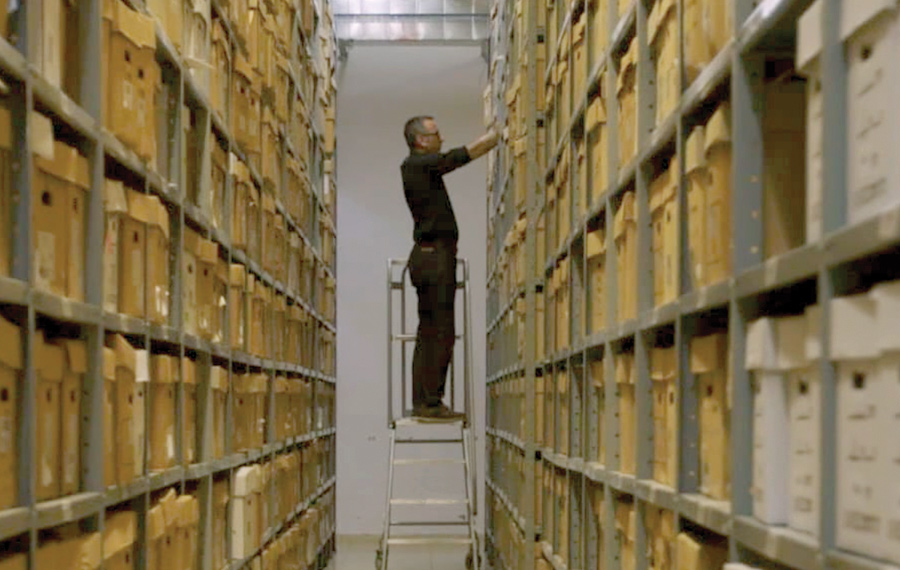
“The Lost Crown,” a 2019 documentary thriller surrounding the mysterious disappearance of the Aleppo Codex, the world’s oldest manuscript of the Hebrew Bible, premieres at the Sephardic Educational Center, followed by a dessert reception and discussion with scholar, educator and historian Rabbi Abraham Lieberman. The film is in Hebrew with English subtitles. 7 p.m. $18. Laemmle Royal Theatre, 11523 Santa Monica Blvd., Los Angeles.

“What You Do Matters”
The United States Holocaust Memorial Museum (USHMM) holds its 2020 dinner, titled, “What You Do Matters.” Holocaust survivor Rénee Firestone, Oscar-winning film producer Deborah Oppenheimer (“Into the Arms of Strangers: Stories of the Kindertransport”) and attorney and Los Angeles City Planning Commissioner Dana Perlman receive USHMM’s National Leadership Award, presented by actress Jamie Lee Curtis. 6 p.m. reception, 7 p.m. dinner. $500. The Beverly Hilton, 9876 Wilshire Blvd., Beverly Hills.

Hamantashen Making Party
Shomrei Torah Synagogue invites children and adults to prepare hamantashen and take them home to bake. The event also features other fun Purim activities for all ages. 7-9 p.m. Free for STS Sisterhood members. $5 general. Kids free. Shomrei Torah Synagogue, 7353 Valley Circle Blvd., West Hills.

THU FEB 27

Rabbi Sarah Bassin

“3 Rabbis… 1 Opinion”
A program devoted to Jewish unity during a time of deep division features three rabbis with different perspectives on Judaism. Reform Rabbi Sarah Bassin of Temple Emanuel of Beverly Hills, Conservative Rabbi Sammy Seid of Ner Tamid Synagogue and Orthodox Rabbi Levi Cunin of Chabad of Malibu highlight ahavat Yisra’el (loving our fellow Jews) and explore how people can be more accepting of one another. 7:30 p.m. $10, cash only. Hillel at UCLA, 574 Hilgard Ave., Westwood. RSVP at jewishunity2020@gmail.com. 

Sheldon and
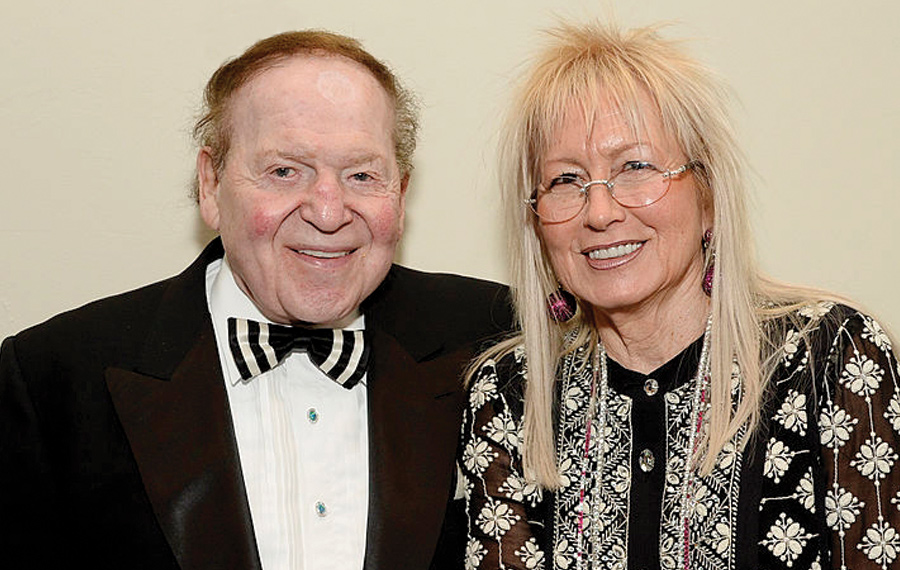
Dr. Miriam Adelson

Annual Hatzalah L.A. Gala
Friends of United Hatzalah of Israel in Los Angeles’ second annual gala recognizes Dr. Miriam and Sheldon Adelson with its Lifetime Achievement Award. Miriam Adelson will deliver the keynote address. Filmmaker Dina Aspen will receive the Pioneer Award. The evening features an appearance by Jay Leno and a performance by Israeli singer Dudu Aharon. 6 p.m. $500 dinner ticket. Kosher dietary laws observed. $1,000 VIP reception with Leno, premier seating. The Beverly Hilton, 9876 Wilshire  Blvd., Beverly Hills.

“Anti-Semitism on The Left”
Wilshire Boulevard Temple and the American Jewish Committee hold “Anti-Semitism on the Left: Israel, Anti-Zionism and Intersectionality,” featuring political experts on how to respond to the growing threat of anti-Semitism. 7:30 p.m. Free. Wilshire Boulevard Temple, Irmas Campus, 11661 W. Olympic Blvd.

“Hitler in Los Angeles”
In the second installment of American Society for Yad Vashem’s “#Educate Against Hate” series, USC professor Steven Ross discusses his bestselling new book, “Hitler in Los Angeles: How Jews Foiled Nazi Plots Against Hollywood and America.” Frank Mottek of KNX-AM moderates a Q&A session with Ross. 7 p.m. reception, 7:30 p.m. program.
$50, includes Ross’ book. Limited seating. No tickets at the door. Sfixio restaurant, 9737 Santa Monica Blvd., Beverly Hills.


Have an event coming up? Send your information two weeks prior to the event to ryant@jewishjournal.com for consideration. For groups staging an event that requires an RSVP, please submit details about the event the week before the RSVP deadline.

‘3 Rabbis … 1 Opinion’ at UCLA, Hatzalah L.A. Gala Read More »

ADL Calls on Belgian Carnival to Remove ‘Anti-Semitic Caricatures’ from Parade

Anti-Defamation League CEO Jonathan Greenblatt called on an upcoming Belgian carnival to remove anti-Semitic caricatures from the carnival’s parade.

Greenblatt tweeted on Feb. 19, “In a time of rising #antiSemitism, perpetuating these stereotypes is dangerous and wrong and it is well past due for the organizers of this carnival to remove them.”

He linked his tweet to a Feb. 18 an Algemeiner article that cited an op-ed written by three Belgian academics who warned that such anti-Semitic imagery has been associated with genocide against Jews throughout world history.

In March 2019, the Aalst Carnival had a float featuring “effigies of grinning Jews holding money, one carrying a rat on its shoulder,” the Jewish Telegraphic Agency reported. Aalst Mayor Christoph D’Haese defended the effigies as satirical and said they will be used in the Feb. 23 carnival.

One of the academics, Ghent University’s Klaas Smelik, told Belgium’s Radio 1 on Feb. 18 that the media should not show the effigies. “Especially in the time of the Third Reich of Hitler Germany, this kind of caricature became widespread in order to change people’s mentality, and to teach that the Jews are something bad,” Smelik said. “Spreading these images now works in the same way as before.”

In December, the United Nations Educational, Scientific and Cultural Organizational (UNESCO) removed the Aalst Carnvial from its Intangible Cultural Heritage list due to the effigies. A UNESCO spokesperson said in a statement at the time, “The recurrence of racist and anti-Semitic representations is incompatible with the fundamental principles of the 2003 Convention for the Safeguarding of the Intangible Cultural Heritage.”

ADL Calls on Belgian Carnival to Remove ‘Anti-Semitic Caricatures’ from Parade Read More »

Israel Bonds Event, AMIT Gala, Art Awards

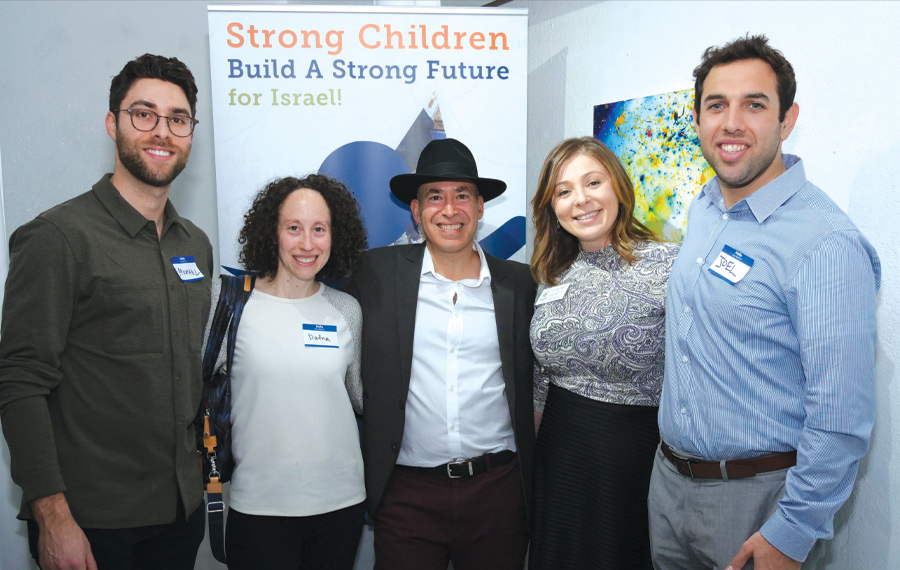
Nearly 80 young Jewish professionals turned out to AMIT Los Angeles’ NewGen AMIT and Greet on Feb. 5, featuring the artwork of local artist Fabian Lijtmaer.

“It’s exciting to be able to combine two of my greatest loves — arts and education — and weave together this event where I could bring money in for AMIT and take people on an experiential journey into the artwork,” Lijtmaer said.

The one-night, pop-up art show at Exhibit A Gallery featured guided meditation led by Lijtmaer. “I was putting into practice my educational philosophy and using it to [enhance] people’s experiences,” Lijtmaer told the Journal.

The more than 70 attendees included Rabbi Aviva Funke, who leads services at Mishkon Tephilo and Wilshire Boulevard Temple.

AMIT, an educational network comprising 108 schools in Israel, provides innovative and Jewish values-based education to more than 37,000 students, 70% of whom live on the socioeconomic or geographic periphery. According to AMIT, the organization’s L.A. NewGen community continues to grow thanks to “passionate champions … who seek opportunities to make a direct impact on Israel’s future leaders.”

Hilary Brody, development associate at AMIT Western Region, also attended the event. She is leading the Amit NewGen effort in the L.A. area.

“The highlight was seeing people journey into the artwork,” Lijtmaer said of his work, which he described as spiritual abstract expressionism. His pieces included paintings of an aleph, of the Burning Bush and a work titled “Hidden Angels,” which prompted viewers to recall mentors from their pasts. 


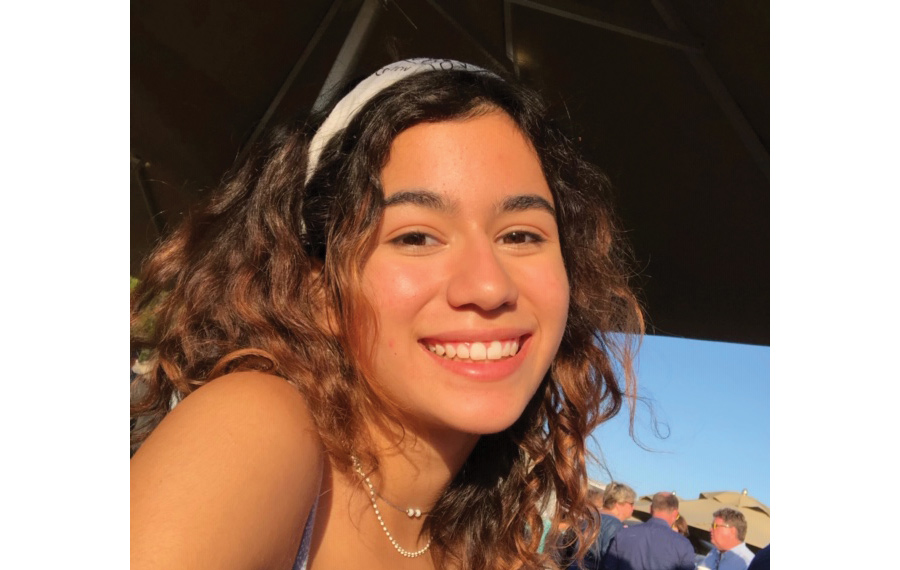
Milken Community Schools junior Sophia Herzog’s photographs were recognized by the 2020 Scholastic Awards. Photo courtesy of Diane Castro

Milken Community Schools junior Sophia Herzog was honored in the 2020 Scholastic Art Awards.   

Her photographs “A Little Rascal,” “Isolation” and “Freezing Time Itself” earned her Gold Key awards, the top honor. She also won a Silver Key award for her work titled “Phantasm” and four honorable mention awards for works “Purple Haze,” “Serenity,” “Insurgent” and “Sleep Paralysis.” 

Sophia shot her photograph “Isolation” in the Israeli desert while participating in Milken’s Tiferet Israel fellowship last spring.

Works recognized with Gold Key awards will advance to national judging to be considered for national medals, according to a Milken statement.

Sophia’s photographs were selected from more than 346,000 pieces submitted to the Scholastic Art and Writing Awards, which describes itself as the nation’s longest-running and most prestigious scholarship and recognition program for creative teens. 

According to Milken, Sophia honed her craft under the guidance of Milken advanced-placement photography instructor Bonnie Ebner. 

“Sophia’s recognition in the highly competitive Scholastic Art Awards is a testament to Ms. Ebner’s inspiring leadership and support,” the Milken statement said.

The awards are presented by the nonprofit Alliance for Young Artists and Writers. Since 1923, the awards have recognized “the vision, ingenuity and talent of our nation’s youth, and provided opportunities for creative teens to be celebrated,” according to the organization’s website. 

Teens in grades seven through 12, ages 13 and older from public, private and home schools can apply in 29 categories. Winners earn scholarships and have their works exhibited.


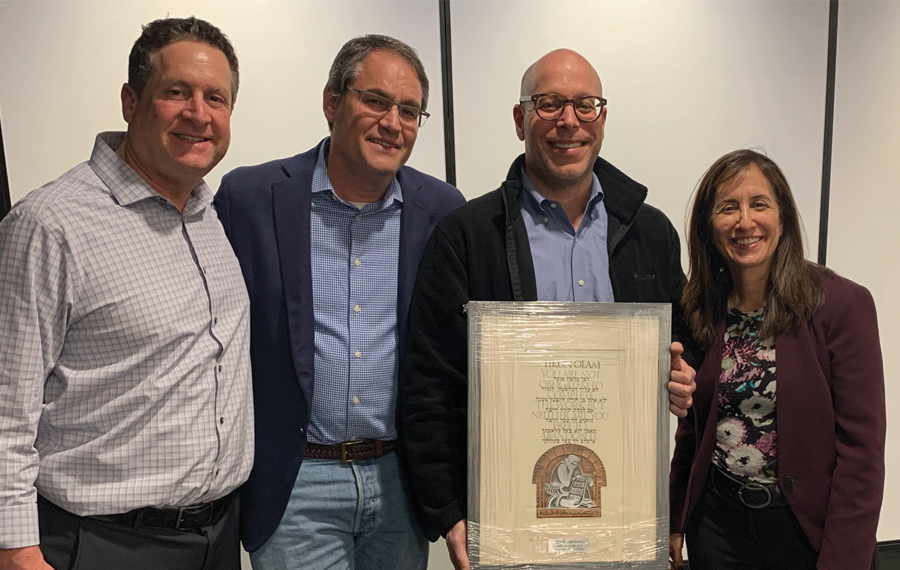
From left: Shalom Institute Executive Director Rabbi Bill Kaplan, Shalom Institute Board President Larry Cohen, Immediate Past President Gil Breakman and Jewish Federation of Greater Los Angeles Executive Vice President Becky Sobelman-Stern at the Shalom Institute board installation ceremony.
Photo courtesy of the Shalom Institute

Larry Cohen recently was installed as the new Shalom Institute Board President. 

Becky Sobelman-Stern, executive vice president of the Jewish Federation of Greater Los Angeles, attended the Jan. 30 meeting to install Cohen and the 2020 board of directors.

Cohen, who previously served for three years as the Shalom Institute’s developmental committee chairperson, succeeds Gil Breakman, treasurer and immediate past president.

The Shalom Institute and Camp JCA Shalom is an experiential Jewish education, retreat and community center in Southern California. The Institute’s center in Malibu was devastated in the 2018 Woolsey fire and its summer camp has been operating at a temporary home. 

Cohen was among those who took part in a cleanup effort at the center’s Malibu site last November. He is serving on the board along with Vice President David Thorpe and Secretary Art Verity.


From left: Israel Bonds L.A. Platinum Society members Adam and Gila Milstein and Elissa and Edward Czuker at the Westwood home of Susanne Czuker.
Photo by Linda Kassan

The Israel Bonds Platinum Society held a Feb. 10 event at the Westwood home of Susanne Czuker, drawing Israel Bonds’ Platinum Society members, who are Israel Bonds’ highest-dollar investors at $1 million and higher.

Platinum Young Professionals — premium investors younger than 45 — also attended the event, held in cooperation with the Israel-based Bank Leumi.

The gathering featured cocktails, light supper, a reception and program, with IDF Sgt (Res.) Benjamin Anthony as the guest speaker. Anthony is the founder of Our Soldiers Speak, an Israeli nonprofit that provides “briefings and analyses on the realities and challenges faced by the Israel Defense Forces in asymmetrical combat situations,” according to its website.

Additionally, a conversation was held with Michael Zaremsky, head of U.S. private banking at Bank Leumi, and Scott Beiser, chief executive officer of financial adviser firm Houlihan Lokey.

Additional participants included Gina Raphael, campaign chair at Israel Bonds, and Erez Goldman, executive director for the Western region of Israel Bonds. 

Israel Bonds, also known as Developmental Corporation for Israel, is the U.S. underwriter of debt securities issued by the State of Israel. Conceived as a way of supporting Israel when it was a fledgling state with an unproven economy, Israel Bonds today are viewed as a sound financial investment.


Wanna be in Movers & Shakers? Send us your highlights, events, honors and simchas.
Email ryant@jewishjournal.com.

Israel Bonds Event, AMIT Gala, Art Awards Read More »

Rochel Lazar: Honoring Orthodox Women on Nashim Magazine

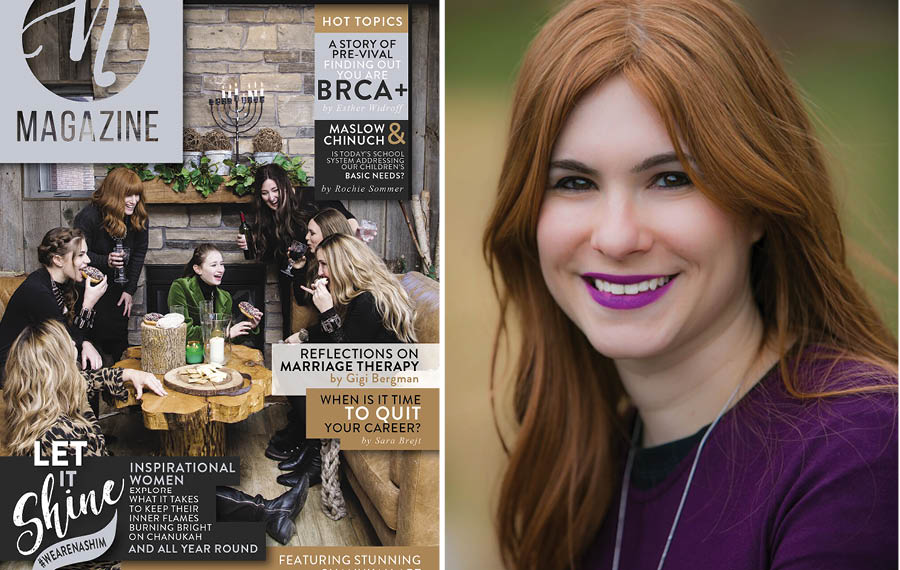
In some Orthodox Jewish communities, women’s faces are not shown in magazines, on billboards, in pamphlets or on flyers for community gatherings, for purposes of modesty. However, some Orthodox women with different minhagim (traditions) are doing their part to ensure women become more visible in Orthodox media and the Orthodox world at large. 

One of them is Baltimore-based Rochel Lazar, who in 2018 founded Nashim Magazine, a publication for Orthodox women with articles written by Orthodox women. Lazar, who is both the publisher and editor-in-chief of Nashim (which means women in Hebrew), puts out six print editions a year and distributes them in Baltimore, in the tri-state area around New York and in Los Angeles. Subscriptions are also available and there is an online site. 

Articles include everything from motherhood, career and faith to self-care and health. The Journal caught up with Lazar to discuss her work and why the Orthodox world needs her publication.

Jewish Journal: What did you do before you started Nashim?

Rochel Lazar: I’ve been homeschooling my kids for the last 13 years. That is a full-time job. I’ve had other jobs. I used to run a preschool and worked in other schools before that and tutored, but mainly I’ve been at home with my children, mommying.

JJ: Why did you start Nashim?

RL: I started Nashim as a place for frum (religious) women to come together and support each other, and to help each other not feel alone in our struggles. I felt that there was a sore lacking within our community [when it came to talking] about certain topics. A lot of issues that women struggle with are full of shame and taboo and not discussed. Because of that, a lot of people are suffering and they feel they can’t open up and get the help they need. I wanted to be able to create a comfortable space for people to speak about these issues, give each other support and help them feel like they’re not alone.

[I started the magazine] when I was finally ready to share my experience and the things I went through getting married and having children. I didn’t feel like there was a good place for me to have that outlet. I even felt that when [these topics] were [written about elsewhere], it was on a very base or shallow [level]. I didn’t find a good place where I could express my voice in a way that was comfortable. 

JJ: Who is Nashim’s target audience? 

RL: The magazine is for Orthodox women [across] the spectrum. We’ve got women who are converting to Judaism and women who have told me they are not associated with the Orthodox community anymore, but they wish something like this would have been around when they were struggling with their religion. There are high school girls all the way up to great-great-grandmothers reading this.

JJ: Why is it important for you to show women in the magazine?

RL: Women are not necessarily always being seen or heard. I think it’s important for us to know that we are feeling isolated and that we’re not being erased. We’re not in the dark. There is a way to be seen, even by each other. I also think it’s very important for the next generation [to] have role models and that they don’t feel this same pressure and isolation that their mothers and grandmothers felt. [They’ll have] a cohesive community because [they’ll] see there are other women they can talk to.

JJ: Has there been pushback because you show women?

RL: There has been pushback. You know you’ve succeeded when you get your first hate mail. I got one email recently telling me it’s a slippery slope and what I’m doing is a terrible thing for the nation. I laughed through that. The only major pushback I got is it’s hard to get distribution in a lot of the main stores because there are women on my cover. I’m trying to stick with places I know women are shopping and that support women. I’m not trying to make my way into major areas where I know the magazine won’t be well received. But I know it’s needed and this is a fight worth having. A lot of it is people stepping up and saying, “Hey, I want to be part of this and sell it at my store or salon.” They’re people who want to be part of the family as we continue to grow.

For more information on Nashim Magazine, visit the website.

Rochel Lazar: Honoring Orthodox Women on Nashim Magazine Read More »

Make Jewish Art Out of Leftover Wine Corks

As a craft supply hoarder, I have an odd collection of materials in my art studio. One thing I have a lot of is wine corks. (Don’t ask me why I have so many of them.) If, like me, you have a stash of corks just waiting for a purpose in life, here’s a project that will use them up in a stylish way — a cork trivet. If you don’t happen to have a jar full of wine corks, you can purchase them in bulk on Amazon.

Corks work really well for trivets because they don’t transfer heat. And their soft, cushioned surface won’t scratch tabletops. By hot gluing corks together, you can create any configuration you wish. I took on the challenge of making a trivet in the shape of a Star of David. Fortunately, all those math classes I took in high school and college paid off, as I was able to figure out the geometry of the pattern in a way that made assembling it foolproof. 

Besides using this trivet to hold pots, pans and serving ware, you can hang it as a wreath or bulletin board. Really, you just can’t cork up the creative possibilities.

What you’ll need:
54 wine corks
Hot glue 


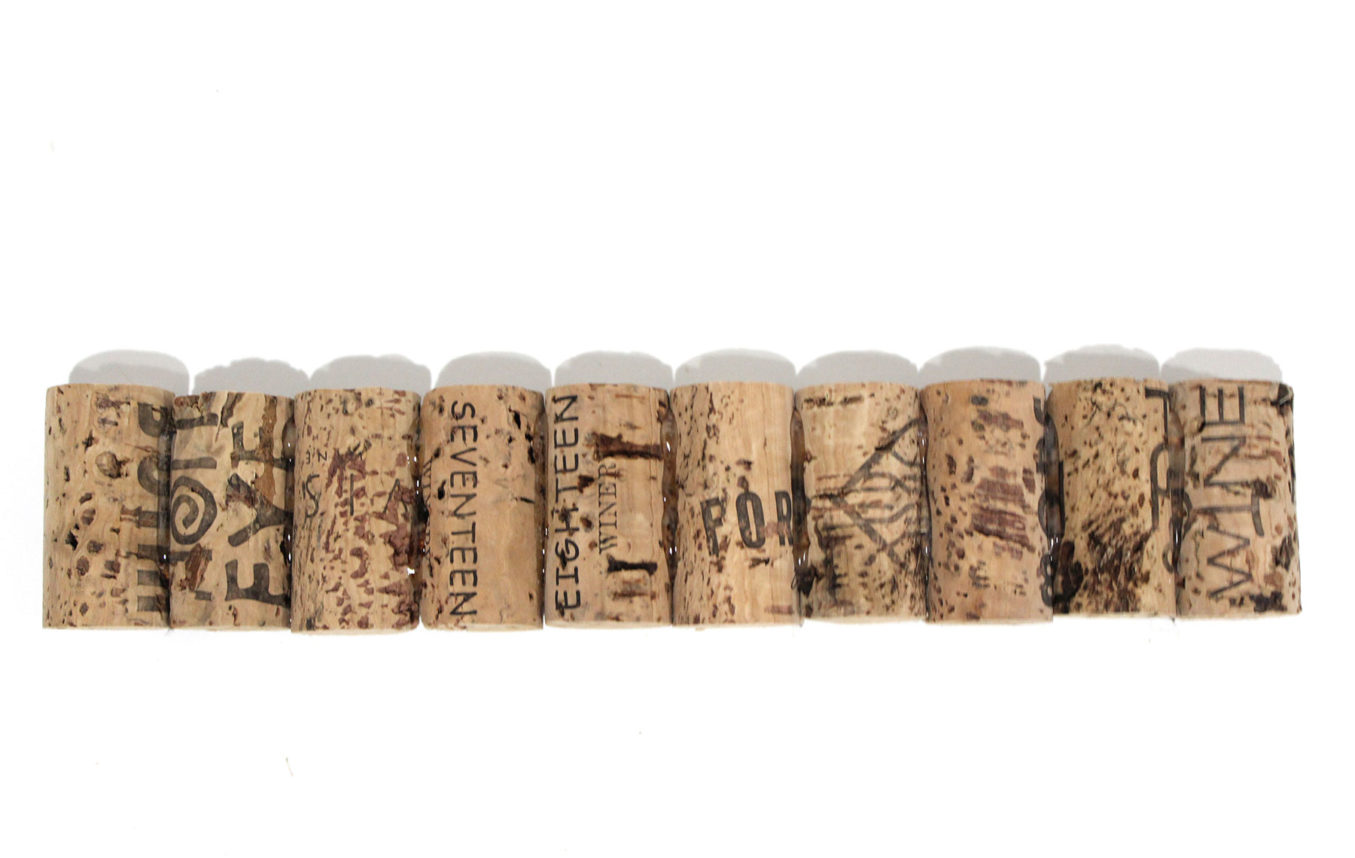
1. Line up 10 corks in a row on their side. Apply a line of hot glue between each cork.


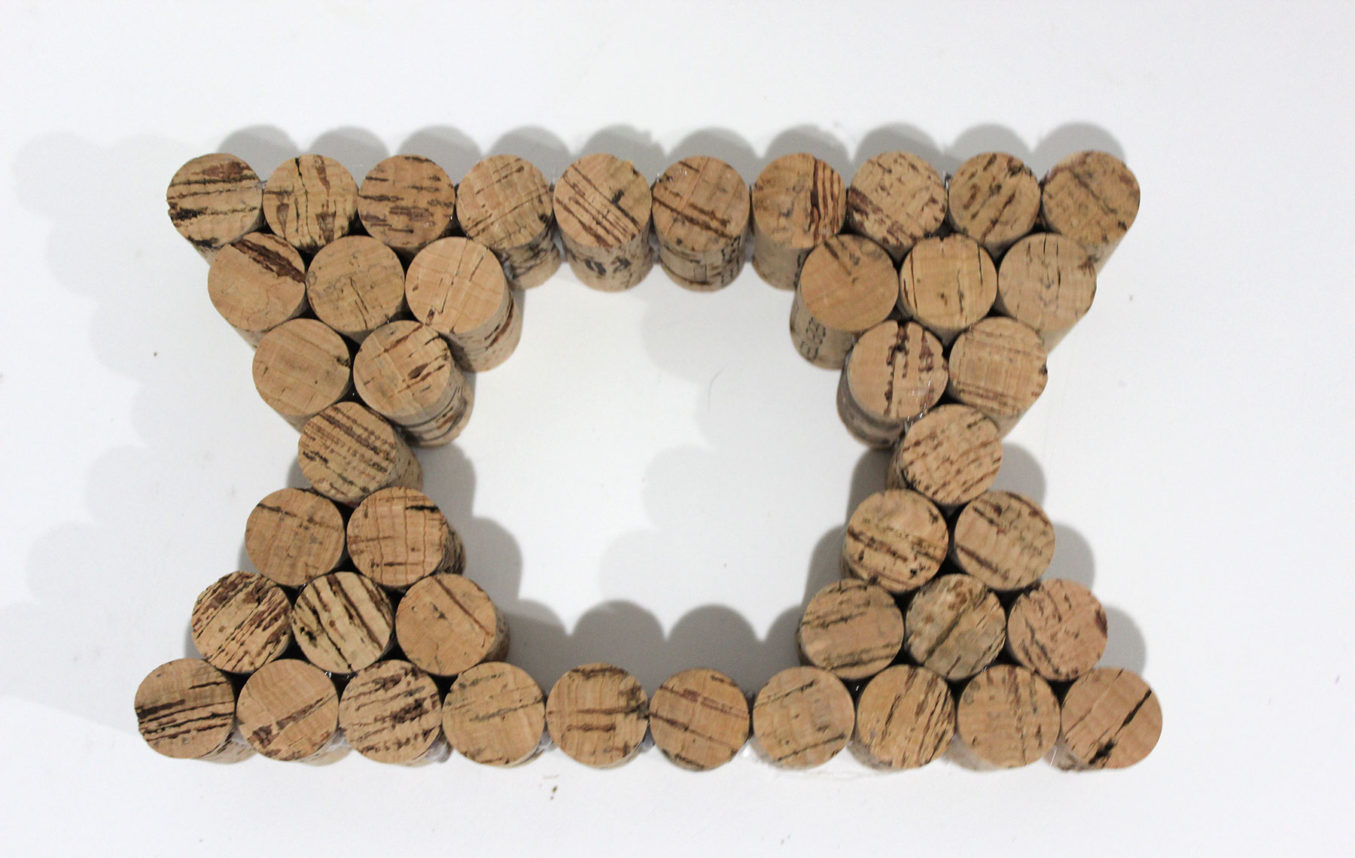
2. On the far left and far right of the row of corks, stack a triangle of six corks. Hot glue them together so each adjacent cork is connected with glue.


3. Repeat steps 1 and 2, lining up 10 corks but stacking only five corks on the left and right side, i.e., a triangle with the top cork missing.


4. Join together the two cork sections by inserting the six-cork triangles into the five-cork triangles. Hot glue them together.


5. Stand the cork configuration upright. It will look like a bridge. In the center of the top row, stack a triangle of six corks and hot glue them together.


6. Place the configuration on its side again, and hot glue a triangle of six corks to the bottom row.


Jonathan Fong is the author of “Flowers That Wow” and “Parties That Wow,” and host of “Style With a Smile” on YouTube. You can see more of his do-it-yourself projects at jonathanfongstyle.com.

Make Jewish Art Out of Leftover Wine Corks Read More »

Obituaries: Feb. 21, 2020

Frances Blumberg died Jan. 11 at 98. Survived by cousins Maxine (Patrick) Reagh, Carol (George Levinthal) Nelson, Wendy Ladin, Mark Ladin. Mount Sinai

Irene Botvinick died Jan. 8 at 83. Survived by husband Stanley; sons Alan, Jeffrey (Allison). Hillside

Jack Stewart Brummer died Jan. 6 at 80. Survived by daughters Sharon Neeley, Stacy (Kenneth) Brock; stepdaughters Lisa (Mo) Earrue, Stacy Spann, Rhoda Gibson; 11 grandchildren. Mount Sinai

Edisson Cohen died Dec. 14 at 60. Survived by wife Margielen Alvarado Rodriguez; sons Ovadia Cohen, Daigo Alvarado; mother Elvia Ocana; father Luis Alvarado; sisters Genoveva, Gimena Alvarado; brothers Ignacio, Javier Alvarado;. Chevra Kadisha

Vitaly Faybisovich died Jan. 7 at 82. Survived by wife Ronya Faybisovich; daughter Alicia Gamer; 2 grandchildren. Mount Sinai

Matthew Gallon died Jan. 11 at 62. Survived by sons Bradley Davis Moore, Benjamin Joseph, Spencer Alan Moore, Jonathan Elton; sisters Victoria, Sharon (Michael) Reynolds; brother Michael. Mount Sinai

Harlan Richard Garber died Jan. 10 at 86. Survived by wife Karlene; daughters  Laurie (Eric) Fulton, Michele; stepsons Scott (Victoria) Beal, Chris Hinojosa; 6 grandchildren. Mount Sinai

William Gilford died Jan. 13 at 91. Survived by wife Greta; daughter  Susan Pugach; son Jeffrey; 1 grandchild. Mount Sinai

Pearl Grodberg died Jan. 14 at 95. Survived by daughters  Jennifer (Tom), Heather (Lee) Cole, Ann Edwards-Ragone; 3 grandchildren. Mount Sinai

John D. Hebert died Nov. 9 at 83. Survived by daughter Ruth (Brandon); stepsons  Jay Kahn, Wayne Kahn; 3 grandchildren; sisters Della Boulette, Shirley (Ronald) Rossitnol. Mount Sinai

Libby Hershberg died Jan. 12 at 89. Survived by daughter Lori Byer; son Robert Hershberg; 5 grandchildren. Mount Sinai

Elliott S. Horwitch died Jan. 9 at 83. Survived by wife Adrienne; daughter Cecelia (Michael) Karz; son Jason (Michelle); 5 grandchildren. Mount Sinai

Mark Kalman died Jan. 11 at 66. Survived by sister Sheri (Michael); brother Alan. Hillside

Joseph Karol died Jan. 8 at 93. Survived by wife Natalie; daughter Susan; son Lawrence; 1 grandchild. Hillside

Minto Elizabeth Keaton died Jan. 14 at 99. Survived by daughters Elizabeth (George) Pacal, Janette (Eugene) Lupario, Deborah (Bob) Gannon, Juliana (Andy) Keaton-Moritz; 7 grandchildren; 2 great-grandchildren. Mount Sinai

Sam Kochman died Dec. 21 at 91. Survived by wife Carmela; daughter Ann (Ovi) Lalo; son Ron; 2 grandchildren; 3 great-grandchildren. Chevra Kadisha

Iris Leeds died Jan. 13 at 89. Survived by sons Andrew (Cheryl), Steven; 5 grandchildren; 8 great-grandchildren. Mount Sinai

Gerald “Jerry” London died Jan. 9 at 91. Survived by wife Carolyn; daughters Sheryl Ruskin; Sandy (Steve) London-Gedalje; Dana (Dan) Cohn; 8 grandchildren; brother Leonard. Malinow and Silverman

Lillian “Lilly” Matell died Jan. 13 at 102. Survived by daughters Anne (Nickolas) Ramirez, Denise (Bruce) Rees; 2 grandchildren; 4 great grandchildren; 2 great-great-grandchildren. Mount Sinai

Harold Markowitz died Jan. 19 at 85. Survived by wife Vera; daughter Susan (Ira) Cohen; sons David (Sarah), Steve (Michelle);
6 grandchildren; brother Robert (Pearl). Mount Sinai

Suzanne May died Jan. 20 at 102. Survived by daughters Diane (John Roberts) Henschel, Meridith (Bill Brandel); son Michael; 5 grandchildren; 8 great-grandchildren. Mount Sinai

Ruthe Meltzner died Jan. 12 at 89. Survived by daughter Karen (Henry); sons Brian (Carol), Craig (Elaine); 6 grandchildren; 8 great-grandchildren. Hillside

Murray Morguelan died Jan. 8 at 80. Survived by wife Geri; daughters Natalie Lavine, Gariann (Larry) Weisenberg; 3 grandchildren; sister Barbara Katz; brother Fred. Mount Sinai

Richard Neiter died Jan. 10 at 82. Survived by wife Lois; daughter Deborah; son Mark; 5 grandchildren; brother Jerry. Hillside

Margaret Nichols died Jan. 14 at 69. Survived by mother Mary. Hillside

Jean Persselin died Jan. 7 at 92. Survived by daughters Ruth, Sara (Steven Honnald); son David (Stacy Acton); 3 grandchildren. Malinow and Silverman 

Joan Praver died Jan. 8 at 92. Survived by sons Paul, David (April), Stephen (Susan); 3 grandchildren; 2 great-grandchildren. Hillside

Charlene Schachnow died Jan. 16 at 77. Survived by husband Stan; sons Ed, Danny; 1 grandson. Hillside

Anita Smith died Jan. 15 at 88. Survived by daughter Stacey (John); sister Lenore. Hillside

Howard Tasker died Jan. 13 at 70. Survived by brothers David, Daniel. Hillside

Jacob Vyazmensky died Jan. 15 at 91. Survived by wife Gnesya; daughter  Nelly Gorin; 1 grandchild. Mount Sinai

Steven K. Warshawsky died Jan. 18 at 62. Survived by sister Valerie (Craig) Simms; brothers Evan, David. Mount Sinai

Judith Wexler died Jan. 10 at 98. Survived by son Paul (Millie); 2 grandchildren; brother Leon. Hillside

Obituaries: Feb. 21, 2020 Read More »

What We Really Mean by Free Speech

The First Amendment does not protect the person who falsely cries “Fire!” in a crowded theater, according to the classic words of Supreme Court justice Oliver Wendell Holmes Jr. More to the point nowadays, however, is whether the First Amendment protects the person who uses hate speech in a world that is crowded with hate and violence.

“This book hopes to begin an honest conversation about what we really mean by free speech — when we invoke the right and trumpet the liberty, when we demand freedom of speech only for the issues personal to us, and when we seek to deny it for others,” announces Thane Rosenbaum in “Saving Free Speech … From Itself” (Fig Tree Books).

The very notion that we ought to rewrite the First Amendment is mind-blowing to those of us who cherish the right of free speech as a core value of American democracy. Ironically, the high regard in which we hold the First Amendment obliges us to afford Rosenbaum an opportunity to be heard. And anyone who recognizes the dire risk of hate speech in our benighted world is obliged to consider what Rosenbaum has to say.

Rosenbaum is a public intellectual and an especially accomplished and credible one. He contributes to The New York Times, The Washington Post and The Wall Street Journal, among many other distinguished publications. He is a legal analyst for CBS News Radio, a commentator on CNN, and the moderator of “The Talk Show” at the 92nd Street Y in Manhattan. He is the author of five novels and two provocative books on the theme of justice, “Payback: The Case for Revenge” and “The Myth of Moral Justice: Why Our legal System Fails to Do What’s Right.” He is Distinguished University Professor at Touro College, where he serves as director of the Forum on Life, Culture & Society. Above all, and unlike many others who command the attention of the media, he is no mere controversialist.

“If he has a problem with the First Amendment, perhaps we should give it another look,” writes New York Times columnist Bret Stephens, a former Republican (and still a principled conservative) in his foreword to “Saving Free Speech …” 

Thane Rosenbaum cites a long list of democracies, including countries as dissimilar from each other as India, Ireland and Israel, that are less “exuberant” in their defense of free speech.

“Saving Free Speech …” is a detailed and well-documented overview of how the First Amendment actually functions in contemporary America. Rosenbaum points out that “nearly everyone has a strong opinion about the sanctity of free speech.” But troubling distinctions are made between speakers whose rights are respected and protected, and speakers whose rights are disregarded. On one hand, Rosenbaum points out, college campuses across the country have withdrawn speaking invitations from public figures as diverse as Ayaan Hirsi Ali and Condoleezza Rice, Henry Kissinger and George Will, Michael Moore and Bill Maher. On the other hand, the courts have protected the First Amendment rights of not only “cross-burners” and “flag-burners” but even neo-Nazis who wanted to march through Skokie, Ill., a suburban Chicago community they chose because of the Holocaust survivors who lived there.

Indeed, the rhetorical thread that runs through Rosenbaum’s book is his argument that we have misunderstood and misapplied the right of free speech. He decries what he calls “the free speech madness that is as tightly woven into America’s democracy as are the Stars and Stripes.” He points out that the right of free speech is already circumscribed by law — shouting “Fire!” in a theater is just one of many examples of impermissible speech — and he asks us to entertain the not-so-radical idea that the time has come for some additional legal restraints.

“More and more are recovering addicts from the drunken free-speech hedonism of the past,” he writes with his characteristic snap and flair. “Many question what free speech really means in a world of social media trolling, cyberbullying, cloak and dagger hacking of America’s presidential election, militant protest rallies by groups that spread hate, incitement to violence, the spreading of fear, and college campuses that are repressing the openness of mind that was once the whole point of a liberal arts education.”

Rosenbaum cites a long list of democracies, including countries as dissimilar from each other as India, Ireland and Israel, that are less “exuberant” in their defense of free speech. “Marching neo-Nazis in Austria and Germany — two nations for whom brown shirts and the chanting of ‘Heil Hitler’ is not some quaint trip down memory lane — get marched right to jail for up to three years.” For Germans, he argues, the Skokie decision “was not so much a federal case as a freak show.” 

The case that Rosenbaum makes for fine-tuning the First Amendment is based on balancing our concern for freedom of speech with the social and political values of civility, dignity and privacy. “The right to free speech was never divorced from a companion obligation to do so with decency,” writes Rosenbaum, citing the Founders who gave us the Bill of Rights in the first place. “Anything less makes no sense in a free society.”

The next limitation on freedom of speech, Rosenbaum proposes, is to make hate speech a hate crime: “Verbally assaultive assaults — against individuals and groups — are not protected under the First Amendment.” The internet, which has become “a terrorist’s best friend,” is the first place to start: “The internet is policed by no one,” he writes, and yet it is a source of incitement and instruction to aspiring mass murderers. “Hate speech — whenever it is uttered, wherever it is found, in whatever form it takes, and on which platform it makes itself known — must be treated like obscenity: subject to Justice Potter Stewart’s aphorism, ‘I know it when I see it.’ ”

So Rosenbaum proposes a variety of concrete steps, ranging from a constitutional amendment to new municipal ordinances, arguing that “somebody has to be in charge, minding the store and enforcing discipline and responsibility.” His thought experiment is plausible and even compelling right up to the moment when we pause to wonder what tinkering with the First Amendment would really mean now that President Donald Trump, Sen. Mitch McConnell and Attorney General Barr are the ones in charge?


Jonathan Kirsch, attorney and author, is the book editor of the Jewish Journal.


CORRECTION Feb. 20: An earlier version mistitled the book “Saving Free Speech…” as “Saving the First Speech…” 

What We Really Mean by Free Speech Read More »

Albare’s Love of Music, Family, Israel and Philanthropy

In music circles, he goes by one name: Albare. He’s a jazz guitarist and composer, and he’s speaking with the Journal about his latest album. However, the 63-year-old, born Albert Dadon in Morocco, raised in Israel and France, and who moved to Melbourne, Australia, in 1983, wears many hats. 

In addition to his musical hat, the father of three is a philanthropist, a property developer, hotelier and club owner. He founded Le Concours des Vins de Victoria, an annual wine festival. Passionate about fostering relationships between Israel and Australia, in 2001 he was the chairman of Victoria’s United Israel Appeal and the following year he founded and chaired the Australian Israel Cultural Exchange. In 2008, he received the Order of Australia for his services to the arts, and in 2009 established the Australia Israel Leadership Forum, which in 2011 was expanded to England and became the Australia-UK Leadership Dialogue. He also was the chairman of the Melbourne International Jazz Festival from 2003-2005 and was the Artistic Director of the festival between 2006 and 2009 — a festival that hosted such luminaries as Herbie Hancock, Chick Corea and McCoy Tyner. 

He responds to all these accolades by simply stating, “I wear many hats.” 

For now, he wants to talk about his new album, “Albare Plays Jobim,” his tribute to the father of bossa nova, Antonio Carlos Jobim (1927-1994). The album has generated buzz and is now in the top 20 on the U.S. JazzWeek charts.  

Jobim is best known in the United States through recordings of his songs by Frank Sinatra, Ella Fitzgerald, Stan Getz and others. Albare said he discovered Jobim when he was 15 through the music Jobim wrote for the 1959 film “Orfeu Negro” (Black Orpheus). “To me, it sounded magical,” Albare said. “There were guitar chords I didn’t understand.” 

Albare started playing guitar when he was 8 after his mother bought him the instrument. Initially disappointed (he wanted an accordion), Albare attended the local conservatory in Dimona, Israel, but left after two years. 

“I was bored to bits,” he said. He loved music, especially the jazz his America-loving father played, but didn’t see how that related to his guitar. That changed when his family moved to France when he was 11. There, Albare discovered the pioneering gypsy jazz guitarist Django Reinhardt and took his guitar to the street to play with his friends. At 14, his parents bought him an electric guitar and amplifier, and he started playing rock ’n’ roll and fusion jazz in bands. 

“I have time for my family, time for studying. There’s time for business and there’s time to build and time to implement. You have to figure out how to put it all together.”  — Albare

But in his 20s, Albare put his music aside, instead concentrating on business. Moving to Australia at 28, he became the president of the French Chamber of Commerce in Victoria, but at 30, he suffered debilitating panic attacks. 

“I didn’t know what I had,” he said, and neither did his doctors. “The more diagnoses I’d hear, the more depressed I became.” After seeing a neuro-linguistic programmer and studying with Chabad, Albare said he came to realize he missed playing music.  

Through Transcendental Meditation, Albare said he discovered he “could actually be and do as many things as I wanted to. That’s the time when I went back deeply into music,” practicing upward of six hours a day while still working. 

He did so, he said, by eliminating the “obstructions” in his life. “I have time for my family, time for studying. There’s time for business, and there’s time to build and time to implement. You have to figure out how to put it all together.”

Albare released his first album, “Acid Love,” in 1992. It was picked up by Australia’s national alternative radio station Triple J Radio and spent 16 weeks at the top of the jazz charts. “Suddenly, I was getting engagements, people were lining up to come to my gigs,” he said, adding that if “Acid Love” had failed, “it would have been my last record.” 

“Albare Plays Jobim” is Albare’s 14th album, and the seeds for it were planted while Albare was recording his 2016 “Dreamtime” album featuring his interpretations of classic movie themes recorded with a 25-piece orchestra arranged by Joe Chindamo, his longtime pianist. He wanted to follow it up but wasn’t sure of the theme.  Chindamo was also a fan of Jobim’s music and presented the idea to Albare.

Albare said his versions of Jobim’s classics would “probably be a surprise to Jobim.” The biggest difference, Albare explained, is the lack of vocals on his album. “My tribute is to allow the music to talk for itself,” he said. 

Albare also reworked the song’s tempos. “Corcovado,” one Jobim’s best-known songs, is usually an upbeat tune. Albare’s version is played “super slow,” he said, adding he hopes that “even if you recognize the songs, you don’t recognize them entirely.” 

Albare performs on guitar, with Chindamo (who also arranged the pieces) on piano, Antonio Sanchez on drums and Ricardo “Ricky” Rodriquez on bass. Phil Turcio produced the album, yet none of them were in the studio at the same time during the recordings. 

“People are traveling all the time and it’s hard to get together,” Albare said. Instead, they worked out the arrangements by emailing each other files and recording their parts separately. Albare laid down his solos last. He recorded them over a day and a half while recovering from knee surgery. Playing the guitar, he said, helped him forget the pain.

Albare expects to take this band on the road this year and has plans to include a few dates in New York and Los Angeles. Until then, he’s busy working with South American musicians and his band Urbanity, which plays fusion jazz. 

And, of course, there’s his other life, including the annual Leadership Dialogue in Israel. Events like these, he said, keep his connection to Israel and Judaism. It brings “a sense of commitment, a sense of history, a sense of tradition that I hope I’ve passed on to my kids,” he said. “It’s very important to me.”

Albare’s Love of Music, Family, Israel and Philanthropy Read More »