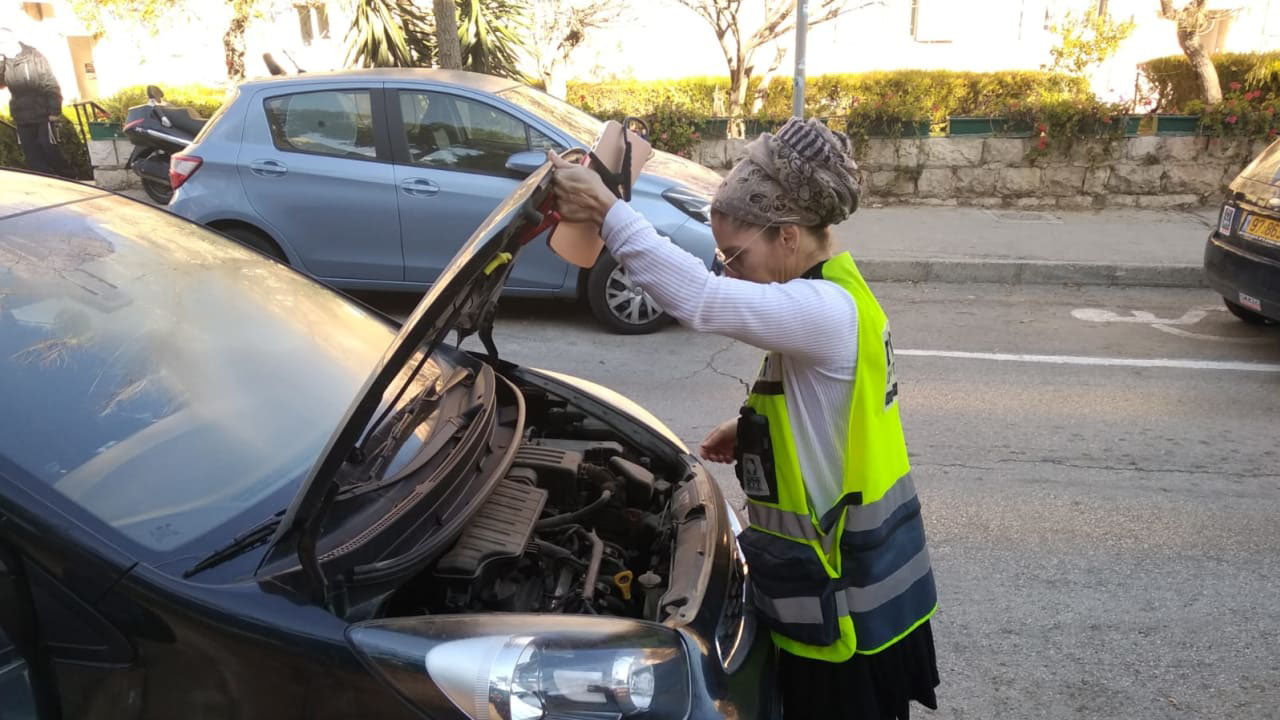
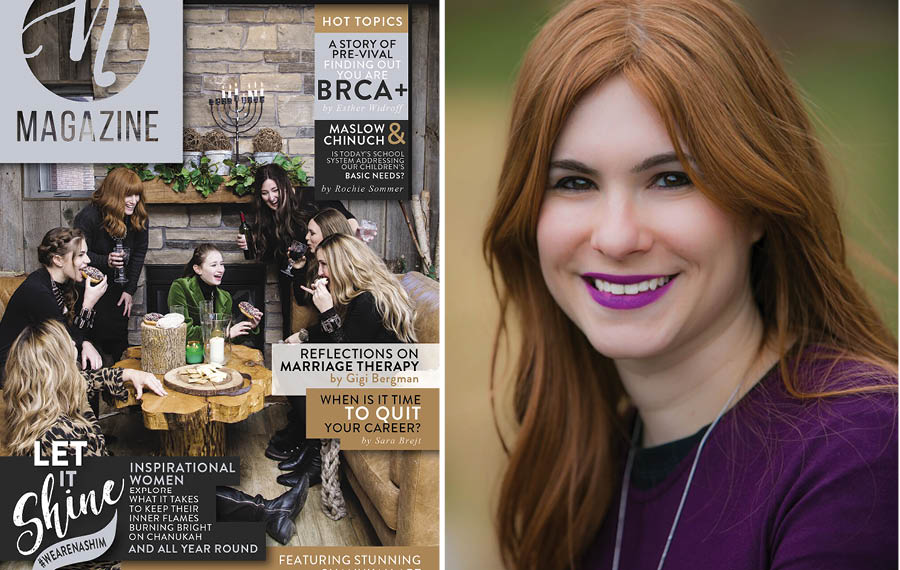
In some Orthodox Jewish communities, women’s faces are not shown in magazines, on billboards, in pamphlets or on flyers for community gatherings, for purposes of modesty. However, some Orthodox women with different minhagim (traditions) are doing their part to ensure women become more visible in Orthodox media and the Orthodox world at large.
One of them is Baltimore-based Rochel Lazar, who in 2018 founded Nashim Magazine, a publication for Orthodox women with articles written by Orthodox women. Lazar, who is both the publisher and editor-in-chief of Nashim (which means women in Hebrew), puts out six print editions a year and distributes them in Baltimore, in the tri-state area around New York and in Los Angeles. Subscriptions are also available and there is an online site.
Articles include everything from motherhood, career and faith to self-care and health. The Journal caught up with Lazar to discuss her work and why the Orthodox world needs her publication.
Jewish Journal: What did you do before you started Nashim?
Rochel Lazar: I’ve been homeschooling my kids for the last 13 years. That is a full-time job. I’ve had other jobs. I used to run a preschool and worked in other schools before that and tutored, but mainly I’ve been at home with my children, mommying.
JJ: Why did you start Nashim?
RL: I started Nashim as a place for frum (religious) women to come together and support each other, and to help each other not feel alone in our struggles. I felt that there was a sore lacking within our community [when it came to talking] about certain topics. A lot of issues that women struggle with are full of shame and taboo and not discussed. Because of that, a lot of people are suffering and they feel they can’t open up and get the help they need. I wanted to be able to create a comfortable space for people to speak about these issues, give each other support and help them feel like they’re not alone.
[I started the magazine] when I was finally ready to share my experience and the things I went through getting married and having children. I didn’t feel like there was a good place for me to have that outlet. I even felt that when [these topics] were [written about elsewhere], it was on a very base or shallow [level]. I didn’t find a good place where I could express my voice in a way that was comfortable.
JJ: Who is Nashim’s target audience?
RL: The magazine is for Orthodox women [across] the spectrum. We’ve got women who are converting to Judaism and women who have told me they are not associated with the Orthodox community anymore, but they wish something like this would have been around when they were struggling with their religion. There are high school girls all the way up to great-great-grandmothers reading this.
JJ: Why is it important for you to show women in the magazine?
RL: Women are not necessarily always being seen or heard. I think it’s important for us to know that we are feeling isolated and that we’re not being erased. We’re not in the dark. There is a way to be seen, even by each other. I also think it’s very important for the next generation [to] have role models and that they don’t feel this same pressure and isolation that their mothers and grandmothers felt. [They’ll have] a cohesive community because [they’ll] see there are other women they can talk to.
JJ: Has there been pushback because you show women?
RL: There has been pushback. You know you’ve succeeded when you get your first hate mail. I got one email recently telling me it’s a slippery slope and what I’m doing is a terrible thing for the nation. I laughed through that. The only major pushback I got is it’s hard to get distribution in a lot of the main stores because there are women on my cover. I’m trying to stick with places I know women are shopping and that support women. I’m not trying to make my way into major areas where I know the magazine won’t be well received. But I know it’s needed and this is a fight worth having. A lot of it is people stepping up and saying, “Hey, I want to be part of this and sell it at my store or salon.” They’re people who want to be part of the family as we continue to grow.
For more information on Nashim Magazine, visit the website.