The creations of Santa Monica-based artist Joshua Abarbanel can be found both nationally and internationally, in public exhibitions and private collections. His work is inspired by forms and patterns found in nature, including the progression of numbers known as the Fibonacci sequence.
He also taps into his Jewish side, having created a golem for an exhibition on sacred texts and words that eventually turned into a centerpiece for an exhibition at the Jewish Museum in Berlin.
Abarbanel works in a variety of mediums, with wood playing a prominent role. He also uses digital tools to help create his pieces, and he teaches others the same skills in his position as associate professor of digital/media art at Harbor College.
On the eve of Tu B’Shevat, the Journal caught up with Abarbanel to talk about that golem project and his passion for creating art inspired by nature.
Jewish Journal: When did you first know you wanted to be an artist, and what was the path you followed?
Joshua Abarbanel: My mother was an art teacher and my father was an anthropologist, so I grew up doing a lot of looking and creating, and also thinking about the meaning of objects. Eventually, I studied art and psychology as an undergraduate at UC Berkeley and then received an MFA at UCLA.
JJ: What is it about the Fibonacci sequence that interests and inspires you?
JA: I am fascinated that the Fibonacci sequence is universal — found in everything from biological to geological formations. It leads me to think about the interconnectedness of things, both animate and inanimate, which is very important to me.
JJ: What’s your process when you begin a new piece?
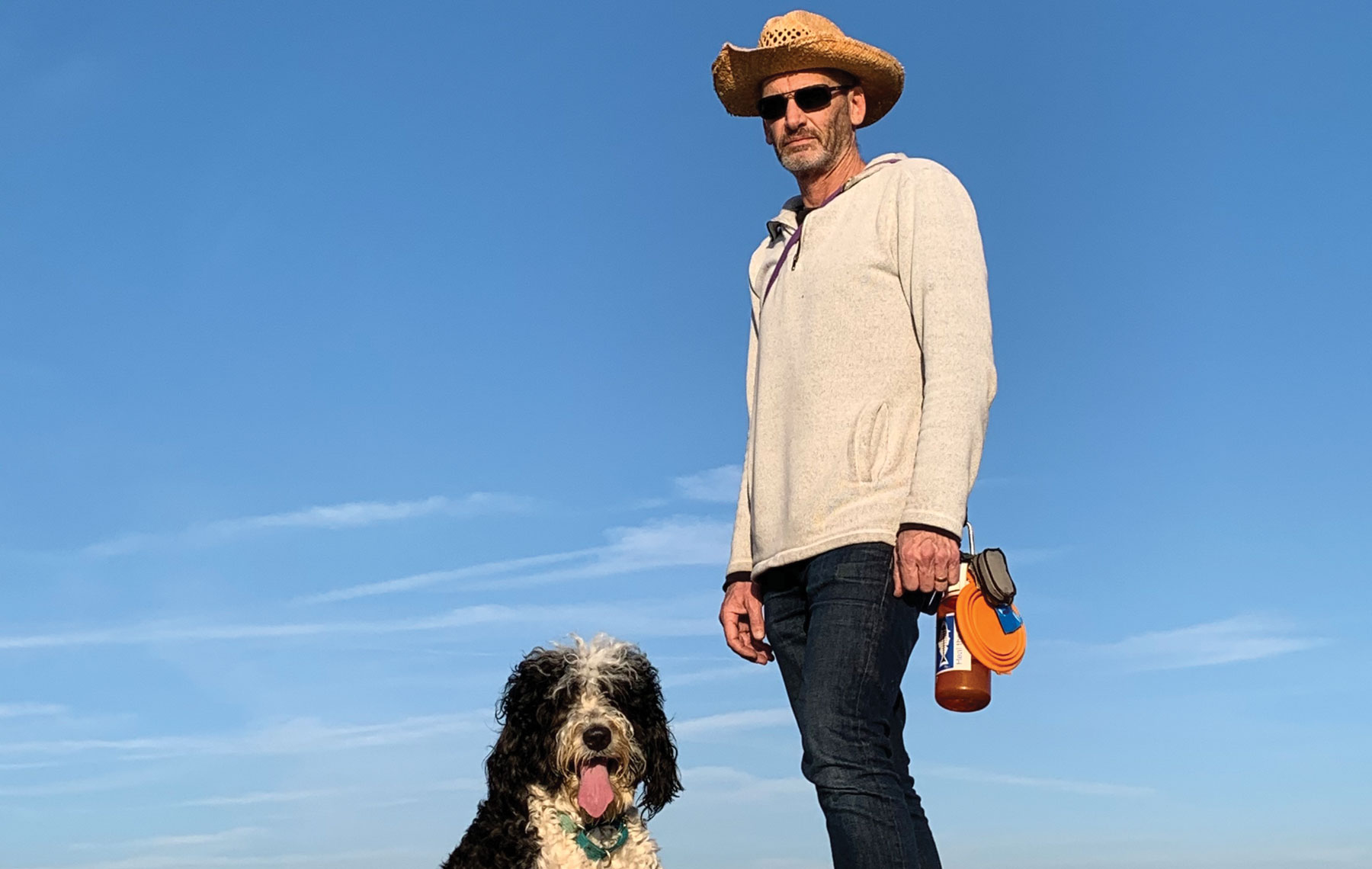
JA: Being an incessant doodler, I am always drawing and sketching shapes, many of which find their way into my work. Since I’m inspired by structures and ideas generated by the natural world, I try to get out into it as much as possible. One of the things I love about living in L.A. is that although it’s a huge metropolis, it’s set amidst such an amazing geography and topography that make it possible to experience the ocean, or mountains, or desert in a relatively short time. Even local hikes with my dog in the hills are inspiring.
I also read a lot of nonfiction and love to pore over images from nature, especially those taken via electron microscopy. In addition, I spend a good amount of time researching technical processes and fabrication that I might want to utilize.
Being an incessant doodler, I am always drawing and sketching shapes, many of which find their way into my work. Since I’m inspired by structures and ideas generated by the natural world, I try to get out into it as much as possible.
JJ: Can you discuss your golem project?
JA: In 2013, I was invited by L.A. curator Georgia Freedman- Harvey to participate in a group exhibition on the subject of sacred texts and words. I spent a lot of time thinking about the subject and experimenting with Hebrew letters for both their aesthetic forms and various word associations. Eventually, the golem story came to my mind, especially the version in which the golem is “activated” and “deactivated” through the power of Hebrew letters. In that telling, a golem is inscribed with the Hebrew word emet (truth), and removing the aleph in emet could still it, thus changing the inscription from “truth” to met (dead).
I first made a small version of the piece for a few exhibitions here in L.A., and then I was invited by the Jewish Museum in Berlin to create a large-scale version of the work for their 2016-17 exhibition “Golem.”
JJ: Does Judaism or Jewish culture impact your work or life, aside from the golem sculpture?
JA: Without question, being Jewish has been a profound part of my life and continues to be a source of reflection and inspiration. With my family, I observe the Jewish holidays and often attend Shabbat services at Ohr HaTorah, where Rabbi Mordecai Finley is an important teacher for me. For a while, I was active in the Jewish Artists Initiative of Southern California, and that community of artists was stimulating and the opportunities to exhibit were most welcome. At present, most of my work isn’t overtly Jewish in content, but I’m certain that my Jewish life provides a lens through which I see the world.
JJ: How much of becoming a good artist is innate talent and how much can be learned?
JA: One can be born with a lot of talent but if they don’t work at honing it, it won’t amount to much. Conversely, someone can be born with very little innate ability but have all of the desire in the world and find a way to make really compelling work. Even if someone has the artistic skills to manipulate material, it doesn’t necessarily mean they can or desire to say something new or important. And I say all of this with no judgment; any making of any kind is phenomenal.
JJ: How do you integrate technology in your work with natural materials?
JA: I often use technology as part of my process — artists have always done so. It’s intriguing to harness the power of digital tools and they offer opportunities to push boundaries of what’s possible, but at the end of the day it’s my eyes, hands and imagination that I rely on to make the work.
JJ: What are you currently working on?
JA: As far as sculpture goes, I’m working on translating the visual vocabulary of my Hull series into new, more sustainable materials, for a traveling exhibition about oceans. I’m also excited to be working on a documentary film project along with my wife, Stacey Ravel Abarbanel, based on her essay recently published in Tablet about her grandfather and Pancho Villa.
Correction: This article has been updated to reflect that the artist’s golem was the centerpiece for an exhibition at the Jewish Museum in Berlin.
Allison Futterman is a writer based in North Carolina.