
Ron Hasser: Is there anti-Semitism at UC Berkeley?
Professor argues that significant progress has been made for Jewish students on Berkeley campus
Ron Hasser: Is there anti-Semitism at UC Berkeley? Read More »

Professor argues that significant progress has been made for Jewish students on Berkeley campus
Ron Hasser: Is there anti-Semitism at UC Berkeley? Read More »

Jewish talent is represented on screen and behind the camera in the nominations for the 92nd Academy Awards.
Scarlett Johansson had never been nominated for an Oscar, but this year she was recognized twice, in the lead actress category for “Marriage Story” and in the supporting category for “Jojo Rabbit.”

Both films are among the nine best picture nominees, which also include “Ford v Ferrari,” “The Irishman,” “Joker,” “Little Women,” “1917,” “Once Upon a Time … in Hollywood” and “Parasite.” Only “Parasite” did not feature Jewish producers.

Taika Waititi wasn’t nominated for best director but scored nods for producing and adapting “Jojo Rabbit” for the screen. Noah Baumbach also received nominations for his “Marriage Story” original screenplay and producing the film with David Heyman, who also produced “Once Upon a Time … in Hollywood.”
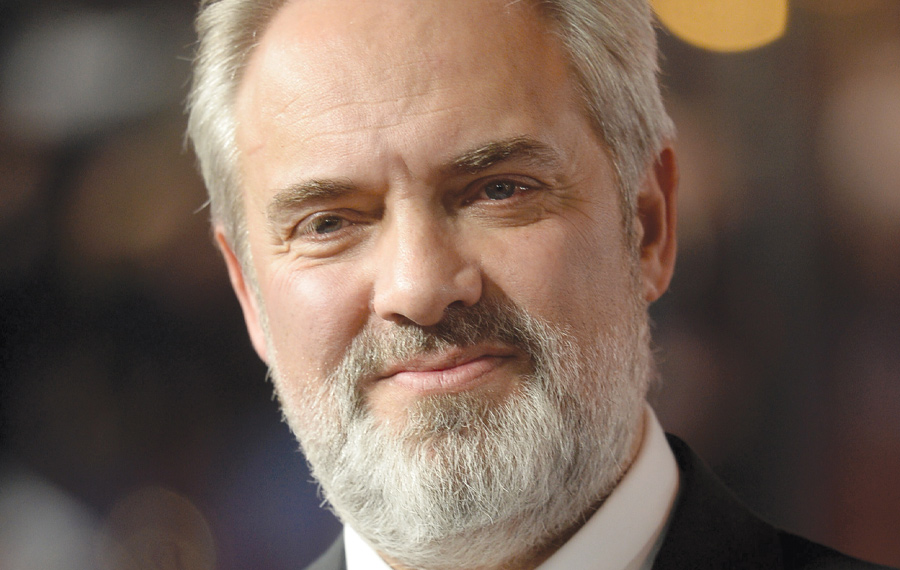
Sam Mendes is nominated for directing and writing the screenplay for his World War I movie “1917,” and Todd Phillips is similarly honored for his direction and writing on “Joker.” Both produced their films.

Among the other honored producers are Jane Rosenthal for “The Irishman,” James Mangold and Peter Chernin for “Ford v Ferrari,” and Amy Pascal for “Little Women.”

In the music categories, Thomas Newman is nominated for his “1917” original score, and Randy Newman is a double nominee, for his “Marriage Story” score and original song “I Can’t Let You Throw Yourself Away” from “Toy Story 4.” Diane Warren received her 11th Oscar nomination for “I’m Standing With You” from “Breakthrough.” Lawrence Sher
was recognized for his cinematography on “Joker.”
One of this year’s biggest Jewish snubs was “Uncut Gems.” The New York diamond district thriller, written and directed by Josh and Benny Safdie, stars Adam
Sandler and received critical acclaim and audience appreciation. The film, which had Oscar buzz since its release on Dec. 25, recently was chosen by the National
Board of Review as one of the top 10 films of 2019, with Sandler also winning best
lead actor.
Also snubbed was Amazon’s indie film “Honey Boy,” written by Shia LaBeouf and directed by Israeli filmmaker Alma Har’el. Although it wasn’t recognized at the Golden Globes or Oscars this year, the semiautobiographical film about LaBeouf’s childhood received three Film Independent Spirit Awards nominations including best director and two for best supporting actor. The ceremony is Feb. 8.
Har’el also received the First Time Feature Film Award at the 72nd Directors Guild of America Awards on Jan. 25.
— additional reporting by Erin Ben-Moche

This year’s Oscar-nominated documentary “Edge of Democracy” is a cautionary tale of a democracy in crisis. Written and directed by 36-year-old Brazilian actress and filmmaker Petra Costa, the movie documents the political mayhem in Brazil.
The film debuted at the Sundance Film Festival in 2019, but Costa told the Journal making it to the Oscars is very meaningful, “especially in a year where the government attacked the arts. It’s very significant and also, being a Latin American in a year where there are no Latin-American films in the foreign film division and there are no women in the best director [category]. I’m very happy and very honored.”
In the film, Costa links her personal narrative with political storytelling, documenting the rise and fall of three politicians: former progressive president Dilma Rousseff, who was impeached in 2016; liberal Workers’ Party founder and first president elected by the people Luiz Inácio Lula da Silva, who was thrown in prison in 2018; and current far-right leader Jair Bolsonaro, who stated on April 2, 2019, at the Yad Vashem Holocaust memorial in Jerusalem that Nazism was a leftist ideology.
“I started filming in 2016,” Costa said. “There [were] protests that exploded asking for Dilma’s impeachment. I went to film one, and I was really scared of what I saw. It was a very nationalist protest. There was a lot of hatred. There was one woman wearing red and she was escorted out because she basically resisted [the impeachment]. I’d never seen that level of intolerance before, and I was very afraid of where that would lead us.”
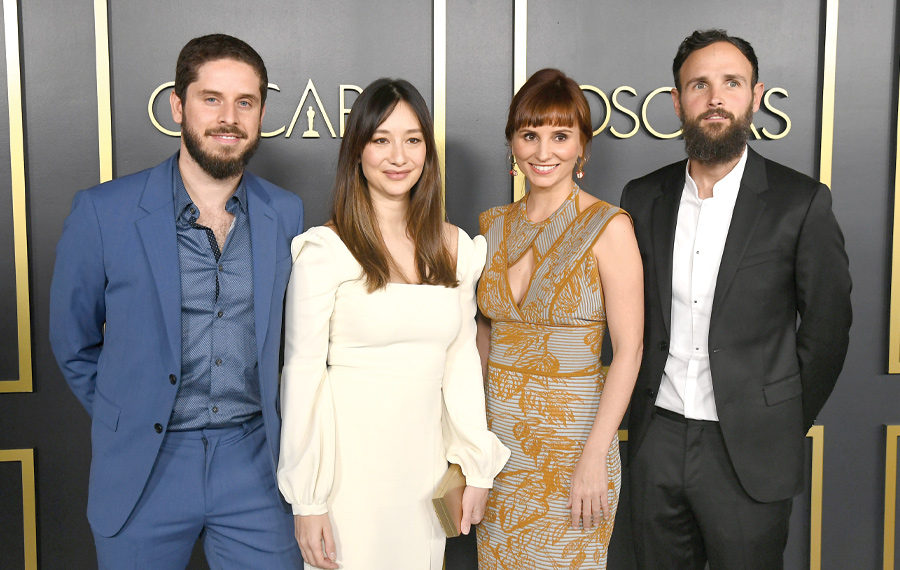
Costa and producer Shane Boris, who is Jewish, told the Journal the two-hour documentary was never supposed to be made. However, the duo — who had been working together since 2013 — realized there was an urgency to tell a story about a divided country.
“In Brazil, you can see the rule of law being eroded and each branch of government losing its legitimacy and the cracks in the democratic system were not only in Brazil,” Boris said. “These extreme forces were coming to power across the world, and Brazil started to feel like this dangerous omen. One of the most incredible things about this film and Petra’s filmmaking is how deeply intertwined the personal and political are.”
“My desire was to make a film that would show
Brazilian society at all its different levels — on the streets, in Congress, in the presidential palace — to see how decisions were being shaped and to be a fly on the wall.”
— Petra Costa
Costa said she was motivated to make the film because she is almost the same age as her country’s democracy. (Brazil became a democracy in 1988.) Her allegiance throughout the film is with the Workers’ Party.
Costa interacts with many different groups in the film but consistently shares her family history to bring an intimate perspective to the political divide between generations. Costa’s grandparents are conservative and held positions of power in Brazil’s construction empire. Her liberal parents fought against Brazil’s military from the mid-1960s to the mid-’80s and were even jailed.
“My desire was to make a film that would show Brazilian society at all its different levels — on the streets, in Congress in the presidential palace — to see how decisions were being shaped and to be a fly on the wall,” Costa said.
Costa and Boris both said that media bias and reconstruction of political narratives played a huge part in the divide. “Politics is mobilized by dreams, and you can’t just mobilize people to believe in a party because they know the other one is worse,” Costa said.
Over the past year, the film has continued to gain popularity through distribution via Netflix. In Brazil, reaction has been both positive and negative. One of the first people to criticize the film, calling it fantasy and fiction, was Brazil’s Secretary of Culture Roberto Alvim. Alvim recently was fired for quoting Nazi propaganda chief Joseph Goebbels in a now-deleted video.
“He had Hitler’s favorite opera [‘Lohengrin’ by Richard Wagner] playing the background,” Costa said. “That really unveils the worst face of the government. There’s still much reason to worry, because this hate speech was very much present during the presidential campaign and [is} very much present [today].”
When Bolsonaro saw the film he, too, called it fiction. Costa said Bolsonaro’s criticism is ironic but that her film must have hit on something truthful if the government is trying to discredit it.
“Dilma was impeached with a fictional piece of accusation,” she said. “In many ways, Lula was imprisoned also with a PowerPoint presentation but not with an actual accusation or proof of a crime. And then Bolsonaro was elected and 90% of the people who voted for him were exposed to fake news, and 87% believed in the fake news they saw.”
Costa added, “For him then to say that our film — which tried to go underneath the fiction and get into the facts of what happened — [was] fiction is ironic and also quite representative of how leaders are now attacking journalism or filmmaking in attempts to discredit something.”
Boris said he hopes their unconventional approach in introducing personal and political themes into the documentary allows people to see what is happening to their own democracies, and will motivate them to act.
“Usually, political documentaries are told in an investigative and journalistic way,” he said. “We know political is personal and therefore, stories about our politics, if they are to be grounded in facts, [should] also contain the personal aspect, too. I know the story about Brazil is also very much about the world. My hope is that through making the internal workings of what’s going on in Brazil comprehensible, it resonates with people all around the world.”
“The Edge of Democracy” currently is streaming on Netflix.
CORRECTION: An earlier version of this story reported that Shane Boris is an executive producer on the project. He is a producer.
‘Edge of Democracy’ Is a Warning for All Democracies Read More »

Fourteen Israelis were injured in a reported terror attack in central Jerusalem on the morning of February 6, Jerusalem time.
Magen David Adom (MDA), Israel’s national medical emergency service, tweeted that a car rammed into civilians at Jerusalem’s First Station. One of the injured Israelis is in serious condition and another is in moderate condition; both are 20 years old. The rest were lightly injured.
Initial report: At 01:47, the MDA 101 Emergency Dispatch Center received a report of 3 pedestrians who were injured by a car on David Remez St in Jerusalem. MDA EMTs and Paramedics are treating 1 seriously injured, 1 moderately and one lightly. Photo credit: MDA Operational Unit pic.twitter.com/RwbDg6f6sk
— Magen David Adom (@Mdais) February 6, 2020
— Magen David Adom (@Mdais) February 6, 2020
Update: MDA EMTs and Paramedics are treating and evacuating to hospitals, a 20 year old in serious condition with multiple injuries, unconscious (to Shaare Zedek), an additional 20 year old in moderate condition with injuries to his limbs (to Hadassah Ein Karem).
— Magen David Adom (@Mdais) February 6, 2020
Update: MDA EMTs and Paramedics treated and evacuated to hospitals 14 injured: 1 in serious condition (to Shaare Zedek), 1 moderate (to Hadassah Ein Karem) and 12 injured lightly.
— Magen David Adom (@Mdais) February 6, 2020
The driver of the vehicle abandoned the car and fled the scene. Police are searching for the suspect.
14 Injured in Jerusalem Terror Attack Read More »

Making movies is never easy, but for the artisans behind this year’s crop of best picture nominees — many of whose films also have been nominated — the challenges were particularly difficult. Here are some of the problems they faced and how they solved them.
“1917”
Even though it appears that way, the journey through the trenches in “1917” was not shot in one take, but filmed in a series of extended, uncut takes that could be connected seamlessly to appear as a continuous shot. Director Sam Mendes and cinematographer Roger Deakins, both Oscar nominees, carefully blocked the scenes to map the movement of the camera. “A lot of the blocking was done in our heads, then Sam would rehearse the scenes,” Deakins said. “Then we drew schematics and had a storyboard artist who gave different options within those basic ideas. It gradually evolved, but then, when we worked with our actors on location, it evolved even further.”
“The dance of the camera and the mechanics all had to be in sync with what the actor was doing. When we achieved that, it was exhilarating. But it took immense planning and immense skill from the operators,” Mendes noted. “Sometimes, we’d have a camera that was carried by an operator, hooked onto a wire. The wire would carry it across more land. It was unhooked again; that operator ran with it, then stepped onto a small Jeep that carried him another 400 yards, and he stepped off it again and raced around the corner.”
Because he could not adjust the light, Deakins prayed for overcast skies. Fortunately, the notoriously gloomy U.K. weather generally cooperated.
“Ford v Ferrari”
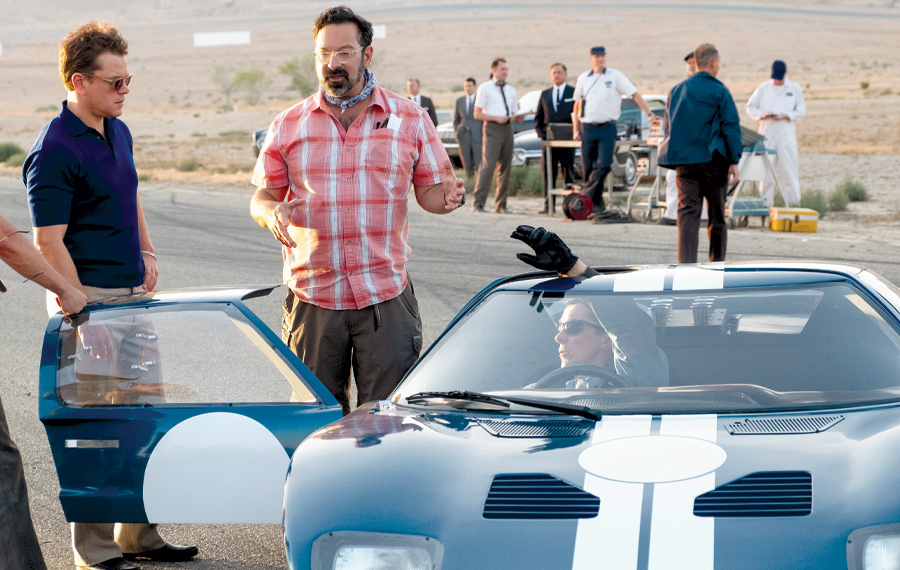
Capturing the thrilling racing sequences in director James Mangold’s “Ford v Ferrari” involved camera-mounted tracking cars, stunt drivers and visual effects. However, re-creating the climactic 24-hour Le Mans road race was complex. The course was replicated in rural Georgia, and everything else had to be made from scratch, including racecar replicas, grandstands and service pits, as well as the advertising, banners, race programs, stopwatches, drivers’ helmets, spectator flags and pit tools. For reference, production designer Francois Audouy used archival photos from the era acquired from sources including Le Mans organizers and the Automobile Club of the West in France.
“When you’re telling a story like this, you’re given the ability to re-create the world exactly as it was, to show how the historical events looked at the time,” Audouy said. “We have to be faithful to history in re-creating the signage and details at the same scale, in the same colors, not changing anything.”
“Jojo Rabbit”
To film his World War II satire set in Nazi Germany, Oscar-nominated director Taika Waititi chose locations in small towns in the Czech Republic that were under occupation at the time but never bombed, thereby preserving their prewar look. “Often on a period film, you’re trying to hide signs of the modern world with camera angles and lighting. But here, everything looked so good and authentic, and there was so much detail in every direction, it allowed us so many more options,” director of photography Mihai Malaimire said. “You could barely tell it was the 21st century because there were no wires or air conditioning units or anything that takes you out of time. So we had the beautiful luxury of being able to move freely and shoot in 360 degrees, and it was quite amazing.”
Crew built interior sets on stages at Prague’s Barrandov Studios, where the Nazis once made propaganda films. “It felt like a kind of poetic justice to make ‘Jojo Rabbit’ there,” Oscar-nominated production designer Ra Vincent said, “as well as a kind of blessing of the ground and clearing a new path for anti-racist and anti-fascist beliefs to flourish.”
“Joker”
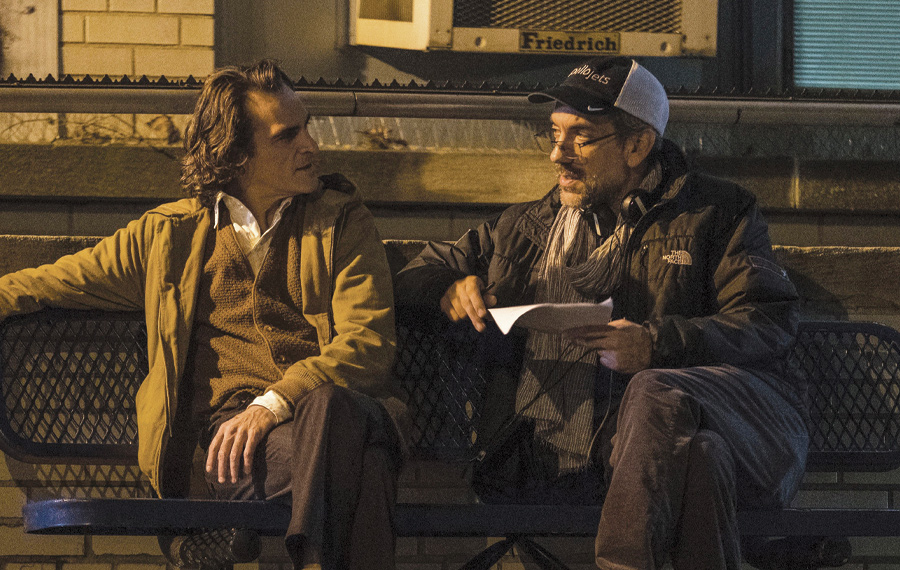
Creating the Gotham City of 1981 in the New York of today was a major challenge for Oscar-nominated director Todd Phillips and his team. “The physical world we were trying to depict is not that available, as we’ve slowly been turning our cities into glass skyscrapers and malls,” production designer Mark Friedberg said. He built Gotham Square in Newark, N.J., found other locations in Jersey City and the boroughs, and added trash and signage to project the grimier look of a decaying city.
In addition, “Everything we used to light the set was authentic to the time. None of the modern technology of lights was used,” Oscar-nominated cinematographer Lawrence Sher said. Friedberg sourced vintage TV cameras from Rhode Island’s Museum of Broadcast Technology for the Murray Franklin talk-show set and obtained 1970s period subway cars from the New York City Transit Museum.
But for all the physical transformations needed to create “Joker’s” world, the most dramatic may be the one Oscar nominee Joaquin Phoenix undertook to play the man behind the clown mask. At Phillips’ suggestion, Phoenix shed 52 pounds, eating little more than an apple per day. “I wanted the character to look hungry and unhealthy,” Phillips said. “Like a malnourished wolf.”
“Once Upon a Time … in Hollywood”
Re-creating 1969 Los Angeles in his alternative-history Hollywood fable, Oscar-nominated director Quentin Tarantino used some iconic locations that existed then, including the Musso & Frank, Casa Vega and El Coyote restaurants, and the notorious Playboy Mansion. He even shot in the actual El Coyote booth Sharon Tate occupied one fateful night in August of that year.
Other locations had to be replicated. The old Western set at Spahn Ranch — the Manson family’s home base — burned down in a wildfire in 1970 and needed to be rebuilt. A drive-in theater in Paramount stood in for the Van Nuys Drive-In, which was torn down in 1998. It fell to Oscar-nominated production designer Barbara Ling to reproduce iconic signage representing Roy Rogers restaurant, Earl Scheib auto body and Holiday Inn. For the scene in which Brad Pitt and Leonardo DiCaprio drive along Hollywood Boulevard at night, crew shut down four blocks, retrofitted storefronts, brought in vintage cars and dressed extras in period style.
Costume designer Arianne Phillips, also an Oscar nominee, researched the era by watching movies popular in ’69, including “Butch Cassidy and the Sundance Kid,” “Easy Rider,” “Bob & Carol & Ted & Alice,” and the TV series “Hullabaloo” and “Lancer.” Extras wore vintage pieces but principal actors’ wardrobes were handmade, including Pitt’s Hawaiian shirt and the 22 outfits DiCaprio wore as Rick Dalton, including the initial “R” belt buckle and medallion he sported. In dressing Margot Robbie as Sharon Tate, Phillips not only had photos of Tate for reference, but her actual clothes and jewelry. Throughout the movie, Robbie wears rings and earrings lent by Tate’s sister, who served as a consultant on the film.
“The Irishman”
Martin Scorsese’s mob epic takes place from 1949 to 2000, and it was clear to the Oscar-nominated director that veteran stars Robert De Niro, Al Pacino and Joe Pesci couldn’t play their characters in their early years. Casting younger actors wasn’t an option; neither was the motion-capture system that would require the stars to act with reference dots on their faces, as Scorsese didn’t want to impede their performances in any way.
In 2015, Industrial Light & Magic’s (ILM) Pablo Helman, who worked with Scorsese on “Silence,” proposed a novel solution: building a new system to digitally de-age the actors without those interferences. The ILM team spent two
years devising a three-camera rig with infrared capability that eliminated shadows, and a facial-expression-capturing software called FLUX, tested with
De Niro re-creating a scene from “Goodfellas.” The test’s success “greenlit the movie,” the visual effects nominee said. “It sounds complicated and it is, but it takes the burden away from the actors and the director. It’s visual effects on a whole different level.”
“Little Women”
To create her adaptation of Louisa May Alcott’s classic novel set in the Civil War era, writer-director Greta Gerwig and her creative team did copious research on the period, taking inspiration from paintings, architecture, photographs and clothing of the time. “The 1860s was the very beginning of photography, and both European and American Impressionist painters were a big influence on the film,” Oscar-nominated costume designer Jacqueline Durran said. She used those iconic images to create wardrobes for the March women, using a different color palette for each, according to distinct personalities: red for Jo; lilac and green for Meg; pink for Beth; and light blue for Amy.
Production designer Jess Gonchor found several existing buildings to use as locations, but others had to be built from scratch. Using Orchard House, Alcott’s home-turned-museum, as a reference, the exteriors of the March and Laurence houses were erected by hand on a property in Concord, Mass., over a period of 12 weeks. The March home’s interiors were shot in a warehouse, but Gonchor was lucky enough to find a 50-room mansion “that had just the right feeling” required for the Laurence place.
He re-created downtown Concord in the town of Harvard, bringing in 60 tons of snow for a Christmastime scene. Locations in Boston and Lawrence, Mass., stood in for locations in New York City. Boston’s Arnold Arboretum and other Massachusetts locales served as 19th-century Paris. “We couldn’t go to Europe, so we found this opulent castle in Ipswich, where the gardens are rich, it’s on the ocean, and the scale is amazing,” Gonchor said.

“Marriage Story”
Even though it’s about the unraveling of a relationship, “I wanted a big, warm, romantic score for the movie,” director Noah Baumbach said. He turned to composer Randy Newman, with whom he worked on “The Meyerowitz Stories,” to get it. The Oscar-nominated orchestral score Newman composed for the eight-minute montage early in the film sets the scene for what follows.
“It’s celebratory. It’s compassionate. It’s human,” Baumbach said. “It’s not romanticizing them, but it is loving, I think. The visuals that are accompanying it in the beginning are mostly images of domesticity, or coupledom, or individual characteristics that makes us unique. Ordinary moments. And I felt like the score could sort of celebrate it; make these ordinary moments extraordinary. But then, the movie shifts and suddenly, the same music means something else. It gave us a foundation for the rest of the movie.”
“Parasite”
A struggling family of con artists insinuates itself into a rich family’s life in Bong Joon Ho’s biting tragicomedy “Parasite,” in which the production design by Oscar nominee Lee Ha Jun underscores the chasm between the haves and have-nots. Lee and his team built two very different locations: a lavish, spacious, hilltop designer home and the squalid, cramped basement hovel in a slum below.
To create the vision Bong described in detail in his screenplay, Lee scavenged existing poor neighborhoods in Seoul for doors, signage and artwork to dress the basement neighborhood set. He also consulted architect friends in designing the rich family’s home. “I had to make it believable as something an architect would have built while satisfying all the demands of the screenplay,” Lee said.
Lee also used color and water to define and separate the two spaces visually, as well as staircases. “In the rich family’s home, they’re angular and perpendicular, and in the poor neighborhood, they become topsy-turvy,” he said. “There is a lot of top-to-bottom motion in the film, and as you move from top to bottom, a lot of things change. In the rich family’s home, things are spacious and peaceful, and when you go to the poor family’s neighborhood, things become tight and claustrophobic.”
The latter set had to be built in a water tank to accommodate the flooding scene near the end of the film. “We poured muddy water into the set for the sequence,” Bong said. “The water looks dirty, but for the sake of the actors, we actually added a facial mud mask to the water. It was very safe.”
The Academy Awards ceremony will be broadcast live on ABC on Feb. 9 from the Dolby Theatre in Hollywood.
Technical Difficulties: The Challenges of Bringing Best Picture Nominees to the Screen Read More »

Before its first-round elimination in the Academy Awards’ best international feature film (formerly best foreign language film), the hotly disputed question at my dinner table was whether Switzerland’s “Wolkenbruch’s Wondrous Journey Into the Arms of a Shiksa” was likely to beat out Greece’s “When Tomatoes Met Wagner” or Honduras’ “Blood, Passion or Coffee.”
None of the three films made the cut. Nor did Israel’s entry, “Incitement,” which probed the 1995 assassination of Israeli Prime Minister Yitzhak Rabin.
I became interested in the academy’s foreign films some 30 years ago while trying to find an answer to the question: With all horrors in the world, and given the general short memory of the masses and media, why do novelists, researchers and filmmakers return to the topic of the Holocaust year after year?
In numerous interviews with Jewish film producers and directors, my lead question was, “Assuming Albanians or Swedes, instead of Jews, had founded Hollywood and continued to make many of the creative decisions, would we still get such Holocaust-centered movies as ‘Schindler’s List,’ rather than epics about the Vikings or the Balkan wars?”
The answer always was “yes.” Holocaust pictures would be made, just as in the olden days, Hollywood churned out “cowboys versus Indians” sagas. To test the question and answers on a global scale, I started to analyze films submitted to the academy from countries around the world.
The Journal reached out to three noted experts for their perspectives on filmmakers’ focus on the Holocaust.
Deborah Lipstadt of Emory University in Atlanta is the Holocaust historian known for winning her 1996 court case against London Holocaust denier David Irving, who sued her for libel. Lipstadt responded in an email: “I am not surprised by this fascination with the most extensive genocide in history; one committed by a country that was considered to be the most advanced, cultured and educationally accomplished country. It happened in the heart of a continent that considers itself to be enlightened. The Germans did not act alone. From France to Latvia, the Netherlands to Norway, they had accomplices. They numbered in the hundreds of thousands. As a result of this genocide, one out of every three Jews on the face of the Earth was murdered. Is there any wonder that creative people are perplexed by this unprecedented phenomenon?”
Loyola Marymount Jewish and Holocaust Studies professor Holli Levitsky wrote:
“The strongest case why the memory of the Holocaust increases rather than diminishes in power over time is that each generation re-witnesses the events and thus, reproduces the trauma. The further we get away from the event itself, the more generations feel its effect — and most strongly by those who illuminate history and culture for its citizens, such as novelists, researchers and filmmakers.”
Emeritus professor John K. Roth, founding director of the Center for the Study of the Holocaust, Genocide and Human Rights at Claremont McKenna College wrote:
“For a time, it was hoped that calling attention to the Holocaust might curb, if not eliminate, anti-Semitism; keep genocide at bay and raise the ethical quality of human life … these assumptions are proving too optimistic in retrospect …. So what can calling attention to the Holocaust do?”
“The Holocaust, as Michael Berenbaum said, serves as a
negative absolute … and shows how much truth and
right matter. It is for these fundamental ethical reasons that scholars, novelists and filmmakers return again and again to the Holocaust.” — John K. Roth
He added, “The Holocaust, as [Holocaust scholar] Michael Berenbaum said, serves as a negative absolute … and shows how much truth and right matter. It is for these fundamental ethical reasons that scholars, novelists and filmmakers return again and again to the Holocaust, especially when times are fraught …. Attention to the Holocaust is an act of resistance; it works in spite of forces that wreck human flourishing.”
Among the 10 semifinalists in this year’s best international feature film category, two have the Holocaust as its main theme.
“The Painted Bird,” directed by Vaclav Marhoul and adapted from the novel of the same title by Jerzy Kosinski, the Czech Republic’s submission is about an unnamed Jewish boy who goes through a litany of horrors. His parents send him to relatives in Eastern Europe to avoid anti-Semitic persecution. The boy’s aunt suddenly dies, so he has to fend for himself in a wild, dangerous and hostile world.
Hungary’s entry was “Those Who Remained,” about the romance between two concentration camp survivors: a middle-aged doctor and a 19-year-old Jewish teen. In 2015, Hungary won the award in this category for “Son of Saul,” set in a death camp.
Worth noting are some of the films with Jewish content that were eliminated in the first round, including Latvia’s “The Mover,” in which a Latvian dockworker saves 60 Jews during the German occupation, with the help of his family and friends.
Luxembourg submitted “Tel Aviv on Fire,” and despite the ominous title, the film is a comedy about a Palestinian worker who receives a promotion thanks to an Israeli checkpoint guard.
Lebanon’s entry is “1982,” about that year’s war with Israel. However, the emphasis is on director Oualid Mouaness’ recollection of a boyhood crush on his teacher as Israeli troops approach Beirut.
It’s Ireland’s entry that chastises Israel in the documentary “Gaza.” In a series
of individual segments, the film likens life in the Gaza Strip to existing in “a big,
open prison.”
Holocaust Themes in Oscars’ Best International Feature Film Race Read More »

Since its world premiere at the 44th annual Toronto International Film Festival last Sept. 8, “Jojo Rabbit,” Taika Waititi’s Nazi satire, consistently has made its mark on Hollywood and the Jewish community during a competitive film year. Its final stop on the awards circuit will be at the 92nd Academy Awards.
Overall, the film has scored 134 various award nominations with 24 wins. “Jojo” is nominated for six Oscars: motion picture, lead actress, adapted screenplay, costume design, production design and film editing.
There are many reasons the film stands out compared to other Holocaust/World War II narratives. Waititi, a Maori Jew, told the Journal in September that he wanted to share a perspective that hadn’t been seen before. He said he felt putting the lens and pathos of the story through a child’s eyes enabled audiences to empathize in ways they may not be able to through an adult.
Many fans also took notice of the film’s costume and production design. The vibrant colors are a stark juxtaposition from Holocaust narratives. Waititi said that’s the point.
“That’s all authentic in keeping with how people dressed,” he said. “I think people are too used to the normal palette of these films, which are browns and grays, very muted and desaturated palettes. I know why they do it, which is to highlight just how grim the situation was. I just felt like I’d seen that so many times before, and I wanted to show a different side to this.”
He added that it enabled him to see how vibrant Germany was during WWII.
“Even the inks and dyes are very different than now,” Waititi explained. “I wanted to show that. There’s something really cool seeing the festive frenzy Germany was in at the time where they would spend all their money on extravagance and the very best things and the most modern art. Meanwhile, everything is deteriorating from within, and I think it is interesting to see by the end of the film, everything is in ruins.”
“I think about the children and all of those conflicts, and [children] don’t really know why people are fighting. We should be mentoring them and being those beacons of hope.” — Taika Waititi
Hilary Helstein, executive director of the Los Angeles Jewish Film Festival, which is presented by the Journal, screened “Jojo Rabbit” last fall. She told the Journal it drew a slew of people, from ages 20 to 80.
“It’s a terrific way to engage younger people in seeing [‘Jojo’] and other people aside from the traditional film [audience] a ‘Holocaust’ film would draw,” Helstein said. “It’s a fresh approach regardless of how the book was written. The way that Taika Waititi wrote it and directed it is absolutely a fresh and unique approach to the subject matter that I have seen in many years.”
Waititi told the Journal he wrote the story in 2011, not thinking it would become hyper-relevant today. “I tried to see how many conflicts there had been since World War II, after they said, ‘Well, we should never fight again. Let’s never forget what happened.’ I gave up because s— happened since then,” he said. “I think about the children and all of those
conflicts, and [children] don’t really know why people are fighting. We should be mentoring them and being those beacons of hope. How are they supposed to grow up having tolerance or hope in humanity if this is the chaos they see?”
The USC Shoah Foundation took notice of the film’s impact and teamed up with Fox Searchlight Pictures on Dec. 19 to develop a classroom curriculum around the film. The Foundation said in a statement, “ ‘Jojo Rabbit’ demonstrates how individuals can overcome ingrained prejudices and hate — components USC Shoah Foundation, with a deep history of Holocaust scholarship and developing transformative learning tools, will deploy during the partnership.”
The new education initiative brought together the powerful anti-hate message of the film with Holocaust survivor testimony from the Institute’s Visual History Archive via several resources for educators, classroom-ready activities incorporating clips from the film, and a dedicated landing page on the Institute’s IWitness website. The resources aim to help students understand the peril of prejudice, anti-Semitism and bigotry as well as the power of individual agency and resilience.
According to the Shoah Foundation, a dedicated page for the partnership has been created, to which more than 175,000 users worldwide will have access in all 50 states and 89 countries.
Stephen D. Smith, USC Shoah Foundation and UNESCO chair on genocide education, said Jojo’s journey is one many, especially children, can identify with, making the movie a great educational source. “We give students the opportunity to explore their own attitudes and learn how to question hate, just as the young boy Jojo ultimately does,” Smith said. “The film depicts how easily hate can find a home in the very young, which is still true today and the reason behind our urgent work to develop empathy, understanding and respect.”
Not everyone loved the film. Many criticized “Jojo” for joking about Nazis during a period in U.S. history when synagogue shootings are taking place and Orthodox people are attacked for dressing in “Jewish garb.” Richard Brody wrote in The New Yorker that the film was “a failure” — or at least one “Bialystock and Bloom, in ‘The Producers,’ would have made when they got out of prison and went legit.”
Still, Hollywood celebrities including Norman Lear, Patton Oswalt, Ava DuVernay, Russell Crowe and Jon Favreau praised the film. The Jewish king of comedy and satire, Mel Brooks, praised Waititi’s work on the film during the 2020 American Film Institute (AFI) Awards.
“I want to say, I just saw ‘Jojo Rabbit,’ and it’s really a terrific and eloquent and beautiful picture,” Brooks said at the event in Beverly Hills. “Taika, you did a great job. Even as an actor, you were good, which is hard.”
Whether you agree with the criticisms or loved every moment of the satirical romp with heart, Waititi said the weight of the world ultimately will fall on the next generation if it is not dealt with now, so something should be done about it for the sake of the children.
“I couldn’t predict that it would be more relevant now,” Waititi said. “I like how we need to better serve children and guide them to a better future.”
The Rise of Taika Waititi and ‘Jojo Rabbit’ Read More »

Shabbat Shira
Celebrating 220 years of Reform Jewish music and history, Temple Isaiah and Beth Chayim Chadashim, merge their choirs to welcome Shabbat and Tu B’Shevat. Dinner to follow. 5:45 p.m. pre-Oneg. 6:15 p.m. Shabbat service. 7:30 p.m. dinner. Free. Temple Isaiah, 10345 W. Pico Blvd.
“Perspectives on the Problem of Hate in America”
Rabbi Abraham Cooper, associate dean of the Simon Wiesenthal Center, who has devoted much of his life to confronting anti-Semitism, speaks to Knesset Israel in Beverlywood. He is joined by a fellow expert on hatred, Pastor William Smart Jr., president and CEO of the Southern Christian Leadership Conference for Southern California. 9 a.m. service. 10:40 a.m. guest speakers. 11 a.m. Q&A session. 11:30 a.m. sushi Kiddush. Knesset Israel, 2364 S. Robertson Blvd., Beverlywood.
“Iran’s Hegemonic Ambitions”
Daniel Schueftan has been a consultant to consecutive Israeli governments from the 1980s and heads the International Graduate Program in National Security at the University of Haifa. He will speak on “The United States, Israel and Iran’s Hegemonic Ambitions.” Suitable for all ages. Sponsored by IDEA (Individuals Devoted to Education and Awareness). Noon luncheon follows 9 a.m. services. $26 adults, $18 children under 13. Nessah Synagogue, 142 S. Rexford Drive, Beverly Hills.
“Songstruck 2020”
Commemorating Shomrei Torah Synagogue’s 25th anniversary, the Conservative synagogue holds “Songstruck 2020,” showcasing cantorial soloist Jackie Rafii and special guests. Wilshire Boulevard Temple Cantor Lisa Peicott and two new artists, David Childs, a cantorial intern at Sinai Temple, and Josh Goldberg, songwriter, producer and student cantor, share the stage with Rafii. Daniel Raijman directs the band. 6:30 p.m. pre-concert cocktail party. 8 p.m. concert. $75 general admission. $175 reserved seat and cocktail party admission. Shomrei Torah Synagogue, 7353 Valley Circle Blvd., West Hills.
Oscar Night: Helping the Hungry
Help Kehillat Israel pack some of the 15,000 meals being prepared for the Rise Against Hunger program. Free dinner included. Ages 8 and up are welcome. 5 p.m. Free. Kehillat Israel, 16019 W. Sunset Blvd., Pacific Palisades.
Modern Orthodox Changing?
The Shalhevet Institute convenes its “Let’s Talk” program in a private home. Elana Stein Hain of the Shalom Hartman Institute of North America addresses the subject, “Modern Orthodoxy in Transition: On Religion, Politics and Social Change.” Na’amit Sturm Nagel serves as moderator. 7:30 p.m. Address upon RSVP at a.schwarzberg@shalhevet.org.
Flatow at Beth Jacob
After his daughter, Alisa, was murdered by terrorists in the Gaza Strip 25 years ago, attorney Stephen Flatow initiated lawsuits against the Islamic Republic of Iran and international banks that processed the terrorists’ funds. He discusses, “A Father’s Story.” 7:30 p.m. Free. Beth Jacob Congregation, 9030 W. Olympic Blvd., Beverly Hills.
L.A. County DA Candidates Forum
Ahead of the March 3 primary election, the National Council of Jewish Women-Los Angeles (NCJWLA) holds the Los Angeles County District Attorney (DA) Candidates Forum, featuring incumbent Jackie Lacey; George Gascon, a former L.A. police official who most recently served as San Francisco’s district attorney; and Rachel Rossi, the first former public defender to run for DA. The NCJW co-sponsors the candidates’ forum with the League of Women Voters, among other groups. 6:30- 8 p.m. Free. NCJW-Los Angeles, 543 N. Fairfax Ave., Los Angeles.
Sometimes it seems Tu B’Shevat, which takes place this year on Feb. 10, has more nicknames, including New Year of the Trees and Birthday of the Trees, than recognition. Here are some celebrations around the community.
Kol Tikvah Tu B’shevat
The event features food, fun and activities for all ages. Bring a canned fruit or vegetable for the West Valley Food Pantry. 5:15 p.m. Tot Shabbat service. 5:30 p.m. activities and hosted dinner. 6 p.m. adult text study. 6:45 p.m. Shabbat service followed by dessert. Free. Kol Tikvah, 20400 Ventura Blvd., Woodland Hills. RSVP for the dinner at the link above.
Westside JCC Festival
The Westside Jewish Community Center’s celebrations include a bounce house, food, music, carnival games, face painting, family art and free trees from City Plants. Rain or shine. 11:30 a.m.-2:30 p.m. Free. Westside JCC, 5870 W. Olympic Blvd.
Vegan Seder
Enjoy an organic vegan seder at Beth Chayim Chadashim, led by Rabbi Jonathan Klein, rabbinic chair of Jewish Veg L.A. Bodhi Thai provides the kosher vegan meals. 6-8 p.m. $22. Beth Chayim Chadashim, 6090 Pico Blvd. Contact Shantal at LA@JewishVeg.org with any questions.
“Tu B’Shevat in the Desert”
Friendship Circle Los Angeles celebrates “Tu B’Shevat in the Desert” with children and young adults with special needs and their families. 1-3 p.m. Friendship Circle Los Angeles, 1952 S. Robertson Blvd. RSVP with Chanie@FCLA.org.
Plant Sale for Tu B’Shevat
Temple Beth Israel of Highland Park is opening its low-water native plant garden to the wider community. More than 20 species are available for purchase. You are invited to plant seasonal produce and participate in an 11 a.m. seder with home garden produce. 10 a.m.-2 p.m. Free. Temple Beth Israel, 5711 Monte Vista St., Los Angeles. RSVP at the link above.
“Family & Me!” at AJU
The Burton Sperber Jewish Community Library and PJ Library collaborate to present Sunday Morning Storytime, featuring music and dancing with Doda Mollie, singing, crafts and an interactive story for preschoolers ages 3-6 and their grandparents, parents or other special persons. 10 a.m. $25 per family. American Jewish University, Sperber Library, 15600 Mulholland Drive.
Have an event coming up? Send your information two weeks prior to the event to ryant@jewishjournal.com for consideration. For groups staging an event that requires an RSVP, please submit details about the event the week before the RSVP deadline.
What’s Happening: Tu B’Shevat Celebrations, Democratic Primary Forum Read More »
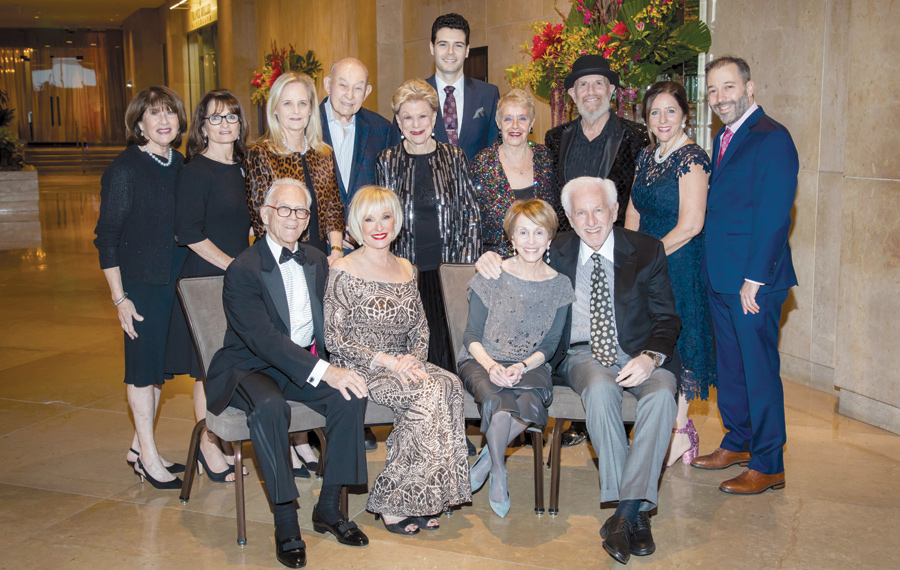
Beit T’Shuvah (BTS) held its 28th annual gala at the Beverly Hilton on Jan. 26.
The event, which raised more than $2.2 million for the Jewish rehabilitation center and drew more than 700 attendees, honored Pat Train Gage with the T’Shuvah Award and Barbara and Ronnie Kahn with the Harriet Award.
Gage, who was introduced to BTS 20 years ago, was described as a “true hands-on volunteer whose generosity knows no bounds.” She has served as a BTS board member, co-chaired the annual gala’s auction and has mentored residents. She also directed the play “I Never Saw Another Butterfly,” featuring BTS residents and students from Santa Monica College.
“I recall being in awe at the scope and breadth of the mission,” Gage said of her introduction to BTS. “I loved the rawness that bore honesty in every corner.”
The Kahns, meanwhile, established the Barbara and Ronnie Kahn Educational Scholarship Fund in 2016, through which more than 50 individuals from BTS have received scholarships to go back to school.
“It’s been a privilege to help others move forward in their lives and we are so grateful to be a part of their journeys,” Barbara Kahn said.
Speakers included Janice Kamenir-Reznik, chair of the BTS board, BTS Senior Rabbi Ben Goldstein; BTS Founder Harriet Rossetto and BTS Founding Rabbi Mark Borovitz.
The evening featured a live auction, live music from the Beit T’Shuvah Band and a video featuring residents of BTS testifying how the organization’s recovery programs have saved their lives.
“Beit T’Shuvah’s 28th annual gala was truly an amazing night of celebration and gratitude,” a BTS statement said, “with a call to action for the entire nation to stand together in the fight against addiction.”
Chairing the event were Annette and Leonard Shapiro, along with co-chairs Emily Corleto and Heidi Praw. Attendees included former California Gov. Gray Davis and his wife, Sharon; Jeffrey Herbst, president of American Jewish University, and his wife, Sharon Polansky; Sue Neuman Hochberg, chair of the board of governors at Hebrew Union College-Jewish Institute of Religion; Larry Kilgman, head of Abraham Joshua Heschel Day School; and Mark Shpall, head of de Toledo High School.
Founded on an integrative, long-term care approach that helps people recover
from addiction and regain their passion and discover their purpose, BTS describes
itself as one of the only treatment centers that adheres to a “mission over money” philosophy and welcomes anyone in search of recovery regardless of their financial situation.
According to BTS, “the event [at the Hilton] also helped to educate those in attendance and create greater awareness regarding this growing [drug abuse] epidemic, which has been declared a national emergency.”
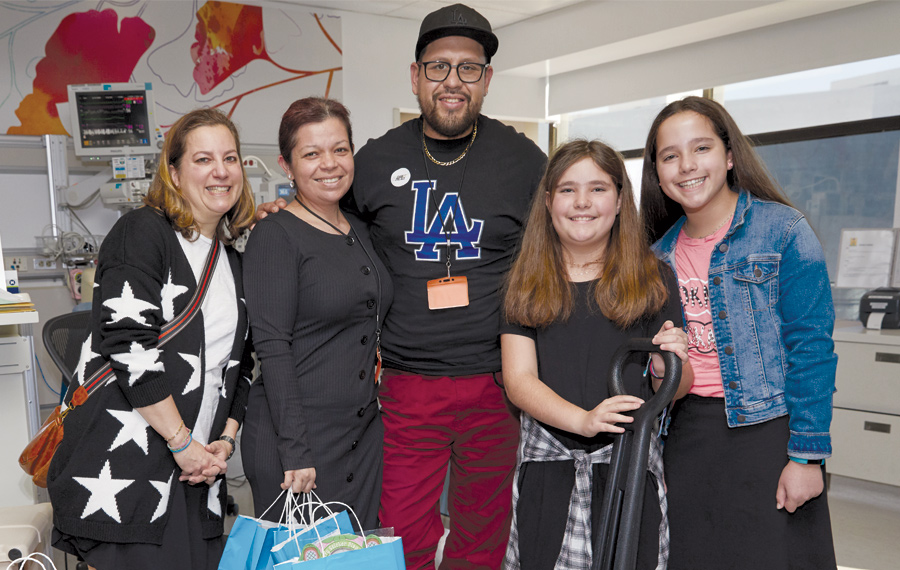
The Steinlauf family of Beverlywood celebrated their twin girls’ bat mitzvah with a chesed party on Jan. 24, with the two girls — Meital Steinlauf and Amalia Steinlauf — making gift bags for the older siblings of babies in the Neonatal Intensive Care Unit (NICU) at Cedars-Sinai Medical Center.
The gift bags were filled with items for babies in the NICU and the Steinlauf siblings were able to distribute them to several parents with children at home.
Meital and Amalia were preemies in the Cedars-Sinai NICU in 2007, Meital for 12 weeks and Amalia for 10 weeks. As a way to give back to the NICU, they distributed the gift bags.
Jewish and Muslim students from Pressman Academy at Temple Beth Am and the Islah Academy opened last month’s Los Angeles Clippers game against the Detroit Pistons with a song of peace.
The game was held on Jan. 2 at the Staples Center and featured Pressman Academy School Rabbi Chaim Tureff, organizer of the event, and Imam Jihad Saafir offering inspirational words, followed by the students singing the song, “Pangea,” which they wrote with the help of local band Distant Cousins.


A sold-out crowd gathered on Jan. 12 at Sinai Temple for Builders of Jewish Education’s (BJE) annual gala, honoring Cheryl Weisberg Davidson; Marlynn and Rabbi Elliot Dorff; and Craig Rutenberg.
The event helped raise funds to support BJE and its teen experiential programs, which engages youth in action and reflection based on the Jewish value of helping those in need.
Among the highlights was a presentation by Ayla Kattler, a participant in BJE’s Teen Service Corps, a summer program of community service framed by Jewish values.
Speaking about her Teen Corps experience, Kattler said, “This program has helped me and so many other teens cement our Jewish identities in experiences and values.” It was announced that an anonymous donor has endowed an annual day of BJE Teen Service Corps in memory of Barbara Yaroslavsky, a longtime director of the BJE board who embodied a commitment to Jewish education and service to others. The day will be devoted to addressing the issue of hunger.
“The focus of this year’s gala was on experiential education, and was truly reflected in our honorees,” Miriam Prum-Hess, director of donor and community relations at BJE, said. “In addition to demonstrating a profound commitment to Jewish education generally, each of them is meaning-
fully engaged in supporting and advocating for experiential education for Jewish teens.”
Maggie Howard, Brian Kaplan and Susan Jacoby Stern co-chaired the gala.
Want to be in Movers & Shakers? Send us your highlights, events, honors and simchas.
Email ryant@jewishjournal.com.
BJE and BTS Galas, Bat Mitzvah Gift Bags Read More »

The creations of Santa Monica-based artist Joshua Abarbanel can be found both nationally and internationally, in public exhibitions and private collections. His work is inspired by forms and patterns found in nature, including the progression of numbers known as the Fibonacci sequence.
He also taps into his Jewish side, having created a golem for an exhibition on sacred texts and words that eventually turned into a centerpiece for an exhibition at the Jewish Museum in Berlin.
Abarbanel works in a variety of mediums, with wood playing a prominent role. He also uses digital tools to help create his pieces, and he teaches others the same skills in his position as associate professor of digital/media art at Harbor College.
On the eve of Tu B’Shevat, the Journal caught up with Abarbanel to talk about that golem project and his passion for creating art inspired by nature.
Jewish Journal: When did you first know you wanted to be an artist, and what was the path you followed?
Joshua Abarbanel: My mother was an art teacher and my father was an anthropologist, so I grew up doing a lot of looking and creating, and also thinking about the meaning of objects. Eventually, I studied art and psychology as an undergraduate at UC Berkeley and then received an MFA at UCLA.
JJ: What is it about the Fibonacci sequence that interests and inspires you?
JA: I am fascinated that the Fibonacci sequence is universal — found in everything from biological to geological formations. It leads me to think about the interconnectedness of things, both animate and inanimate, which is very important to me.
JJ: What’s your process when you begin a new piece?
JA: Being an incessant doodler, I am always drawing and sketching shapes, many of which find their way into my work. Since I’m inspired by structures and ideas generated by the natural world, I try to get out into it as much as possible. One of the things I love about living in L.A. is that although it’s a huge metropolis, it’s set amidst such an amazing geography and topography that make it possible to experience the ocean, or mountains, or desert in a relatively short time. Even local hikes with my dog in the hills are inspiring.
I also read a lot of nonfiction and love to pore over images from nature, especially those taken via electron microscopy. In addition, I spend a good amount of time researching technical processes and fabrication that I might want to utilize.
Being an incessant doodler, I am always drawing and sketching shapes, many of which find their way into my work. Since I’m inspired by structures and ideas generated by the natural world, I try to get out into it as much as possible.
JJ: Can you discuss your golem project?
JA: In 2013, I was invited by L.A. curator Georgia Freedman- Harvey to participate in a group exhibition on the subject of sacred texts and words. I spent a lot of time thinking about the subject and experimenting with Hebrew letters for both their aesthetic forms and various word associations. Eventually, the golem story came to my mind, especially the version in which the golem is “activated” and “deactivated” through the power of Hebrew letters. In that telling, a golem is inscribed with the Hebrew word emet (truth), and removing the aleph in emet could still it, thus changing the inscription from “truth” to met (dead).
I first made a small version of the piece for a few exhibitions here in L.A., and then I was invited by the Jewish Museum in Berlin to create a large-scale version of the work for their 2016-17 exhibition “Golem.”
JJ: Does Judaism or Jewish culture impact your work or life, aside from the golem sculpture?
JA: Without question, being Jewish has been a profound part of my life and continues to be a source of reflection and inspiration. With my family, I observe the Jewish holidays and often attend Shabbat services at Ohr HaTorah, where Rabbi Mordecai Finley is an important teacher for me. For a while, I was active in the Jewish Artists Initiative of Southern California, and that community of artists was stimulating and the opportunities to exhibit were most welcome. At present, most of my work isn’t overtly Jewish in content, but I’m certain that my Jewish life provides a lens through which I see the world.
JJ: How much of becoming a good artist is innate talent and how much can be learned?
JA: One can be born with a lot of talent but if they don’t work at honing it, it won’t amount to much. Conversely, someone can be born with very little innate ability but have all of the desire in the world and find a way to make really compelling work. Even if someone has the artistic skills to manipulate material, it doesn’t necessarily mean they can or desire to say something new or important. And I say all of this with no judgment; any making of any kind is phenomenal.
JJ: How do you integrate technology in your work with natural materials?
JA: I often use technology as part of my process — artists have always done so. It’s intriguing to harness the power of digital tools and they offer opportunities to push boundaries of what’s possible, but at the end of the day it’s my eyes, hands and imagination that I rely on to make the work.
JJ: What are you currently working on?
JA: As far as sculpture goes, I’m working on translating the visual vocabulary of my Hull series into new, more sustainable materials, for a traveling exhibition about oceans. I’m also excited to be working on a documentary film project along with my wife, Stacey Ravel Abarbanel, based on her essay recently published in Tablet about her grandfather and Pancho Villa.
Correction: This article has been updated to reflect that the artist’s golem was the centerpiece for an exhibition at the Jewish Museum in Berlin.
Allison Futterman is a writer based in North Carolina.
Tu B’Shevat and Joshua Abarbanel: An Artist Inspired by Nature Read More »