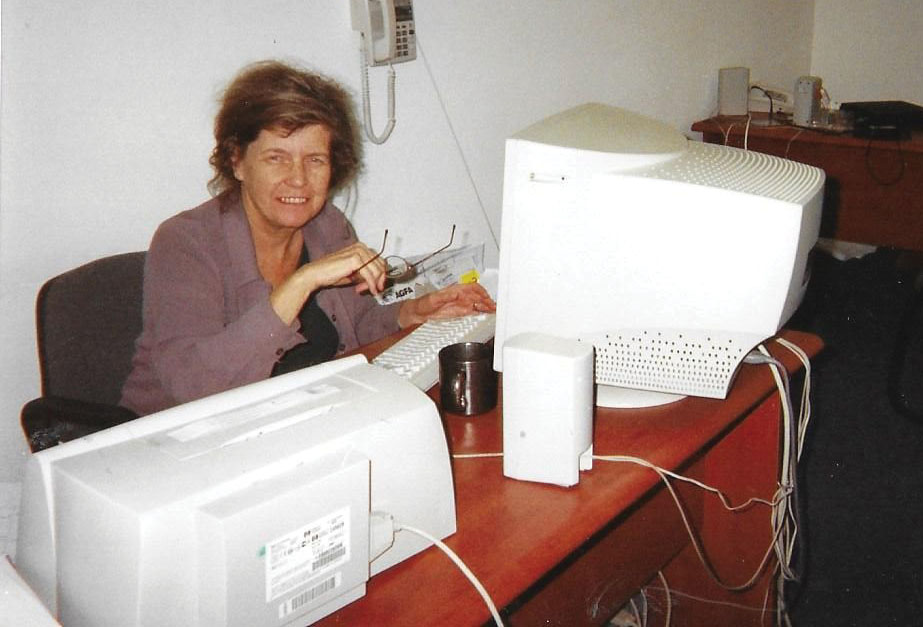
Eva Etzioni-Halevy, a Viennese-born Holocaust survivor, wants everyone to enjoy Bible stories as much as she does.
“At a certain stage in my life I became religious, and I wanted to bring the Bible close to people’s hearts,” said the 72-year-old Israeli academician turned best-selling author.
Etzioni-Halevy has focused her attention on reworking popular biblical stories, making the characters, particularly women, more alive and personable for modern readers.
“The Bible stories are very beautiful but very brief,” Etzioni-Halevy said in a phone interview from her home in Tel Aviv. “They leave a lot unexplained, so you to have to fill out the gaps with your imagination.”
Her most recent book, “The Garden of Ruth,” explores “the smooth, idyllic pastoral story” of Ruth, the widowed Moabite woman who was one of King David’s ancestors and is revered for following her bereaved mother-in-law, Naomi, back to Israel.
As told in “Megillat Ruth,” she is credited for extraordinary modesty and loyalty. It was Ruth who uttered the famous words “Where you go, I will go.”
In Etzioni-Halevy’s retelling, Ruth’s fictional great-grandchild, Osnath, becomes a detective of sorts when she discovers a scrap of a love letter written to Ruth. Osnath investigates her ancestor’s story, even as she deals with her own problems in becoming the paramour of both King David and his brother.
In the book, Ruth is not just the modest woman of tradition, but rather one with a secret, and her journey back to Israel is not simply and act of devotion, but also a journey to rejoin an unnamed lover.
Etzioni-Halevy’s biblical personalities lose their halos.
“The Bible makes it very clear that the heroes are not angels — it is full of descriptions of the weaknesses of the patriarchs,” she said. “It doesn’t detract from the heroes — but it makes them more human. I think the Bible did us a great favor by not presenting people as saints and angels — and we should follow what the Bible says and not sweep it under the carpet.”
Eva Etzioni-Halevy will be in Los Angeles Feb. 8-12.