
In ancient Israel, Jews wouldn’t eat a tree’s fruit in the tree’s first three years so that the tree could grow strong. In the fourth year, they would bring its fruit to the Temple as an expression of gratitude. Only in the fifth year would they start enjoying the fruit. Tu B’Shevat (the 15th day of the month of Shevat), the New Year for the Trees, began as a way to keep track of the trees’ age. In the tradition of the 16th-century mystics of Tsfat, who marked the day with a Tu B’Shevat seder, the Journal offers these meditations and activities to celebrate the trees.
The Centrality of trees
Trees are so important, the rabbis tell us, that if the messiah should arrive while you are planting one, you should finish planting before greeting the messiah. The prophet Micah’s vision of paradise is a time when “All shall sit under their grapevine or fig tree.” We call Torah a Tree of Life, but it’s an inverted tree: Torah has its roots in heaven, and its fruit is so close that its sweetness is already in our mouths.
Plant a Seed
Plant parsley seeds on Tu B’Shevat and you’ll have parsley by Passover, linking the celebration of trees to the spring festival of freedom. But we should also plant something that takes years to grow. Just as we enjoy trees that our grandparents planted for us, says our tradition, so should we plant for future generations. Place a sapling in the earth and offer a prayer that, with love, it will one day grow to nurture countless creatures, great and small.
Caring for the Earth
Even in times of war, Torah tells us, we shouldn’t cut down fruit trees. In the Garden of Eden, God told the first humans to serve and protect the land. Yet, each year humans destroy more than 5 billion trees in tropical rainforests — ecosystems essential to sustaining life on earth. Countless species are threatened with extinction. The world gives so much to us. Trees remove harmful gasses and give us pure oxygen. We have forgotten our obligation to be stewards of this precious world.
The Four R’s
We’ve all heard “Reduce, Reuse, Recycle.” As Jews, we add “Remember.” Consider these categories and commit particular
actions.
• Reduce: Cut back on paper by printing less or decrease waste by borrowing instead of buying.
• Reuse: Drink from a reusable water bottle instead of plastic ones, use cloth grocery bags and eliminate plastic tableware.
• Recycle: Start a compost bin and choose products made from recycled materials.
• Remember: Create art as a reminder that we are stewards of the earth, all part of the same ecosystem.
Trees in Israel
Israel is the world’s only country whose territory has more trees today than it did a century ago. Its trees are special. Almond trees are the first to bloom, with white and pink petals and sweet perfume. Ancient olive trees, thousands of years old, hold history in their twisted trunks. Swaying palms drip with date honey. Cedars hold up the sky. Pomegranate trees yield fruit as full of seeds as life is with blessings. Early pioneers planted eucalyptus trees to drain the swamps, and the Jewish National Fund planted the Mediterranean cypress.
Which Fruit are You?
In the tradition of the mystics, choose a variety of fruits: hard outsides / soft insides (banana and kiwi); soft outsides / hard insides (peaches and plums); and entirely edible (figs and starfruit). Which one are you? Do you wear a protective shell around a tender heart? Are you vulnerable, with a strong core? What do you hope to peel away this year and what weight do you want to dislodge?
Who Owns the Earth?
Rabbi Ezekiel Landau of Prague tells of two people fighting over the same piece of land. “The land belongs to me!” one shouts. “No, it belongs to me!” replies the other. They finally bring the matter to a judge. The judge listens to each person, then kneels and puts an ear to the ground, listens to the land and stands up. “The land does not belong to either of you,” says the judge. “Rather, you belong to the land.”
Listen and Share
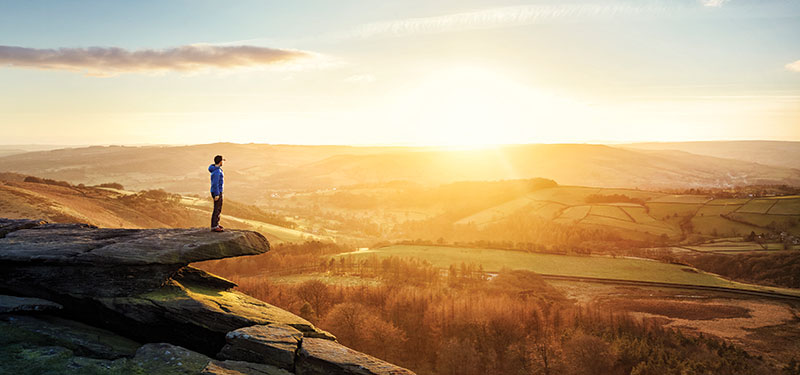
Spend time amid the trees by taking a hike, enjoying a park or just lying in your backyard. For 10 minutes, be silent — just listen, feel, be. Listen for the rustling of breezes in the leaves. Notice how it is all in sync with your own heartbeat and your own breath. Smell the complex bouquet around you and savor your place in the river of life. Finally, share the bounty: Perhaps you, a friend or a neighbor have a fruit tree bursting with produce. Gather a group to glean ripe fruit for a local homeless shelter.