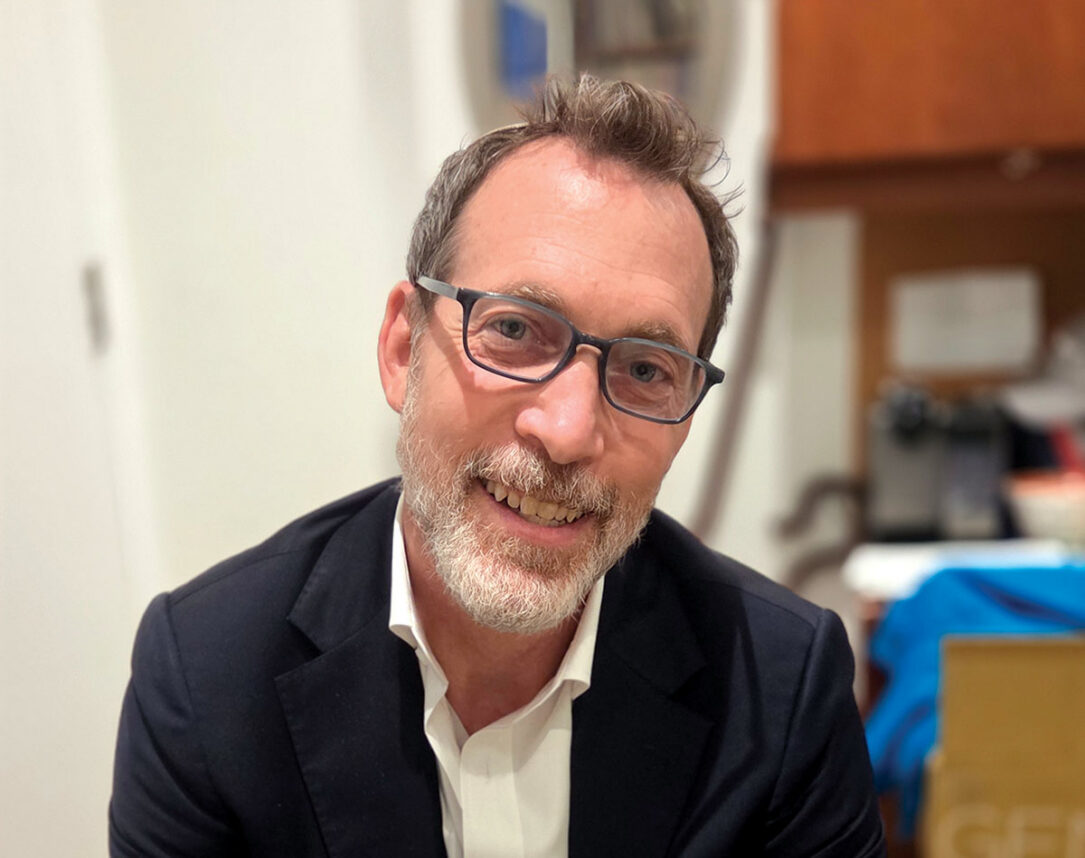

When visiting with Rabbi David Woznica of Stephen Wise Temple it’s important to sit close by. The modest, soft-spoken Los Angeles native, who started his career at New York City’s 92nd Street Y, was talking to The Journal about growing up in what he called the “old country,” North Hollywood. That is where his late Polish-born father, Sam Woznica, owned a well-known Arco gas station for decades at the intersection of Moorpark and Whitsett in Studio City.
With a sly grin Rabbi Woznica looked back on those childhood days: “I never would say I know more about anything than any other rabbi. That would not endear me to anybody. But I do know more about carburetors.”
The oldest of Sue and Sam Woznica’s three children used to love hanging out at his father’s full-service gas station, He spoke about how his Holocaust-survivor father knew most of his customers by name, washed their windows, pounded carburetors into place – not necessarily the way it was recommended — and made them click.
Rabbi Woznica presently is taking a class with Chabad, and the lessons can seep into his daily email to the Stephen Wise congregation. “I recently took a class about the teachings of the [Chabad] Rebbe,” the rabbi said. “The Rebbe talked about the importance of just doing the mitzvah. I am paraphrasing, but he taught ‘Don’t think about it a lot. Just do it.’”
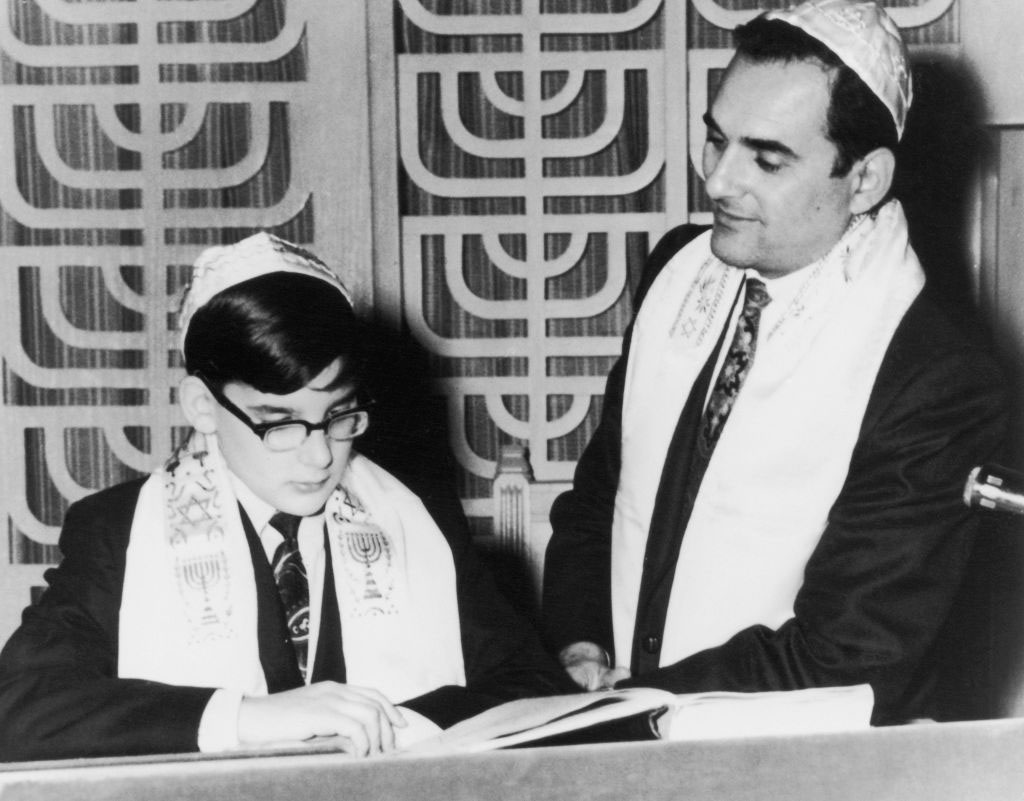
This topic brought back memories of his college days at UCLA. He remembered strolling up Bruin Walk where he would encounter Rabbi Shlomo Schwartz, of blessed memory. “Schwartzie would walk up to us, and he would say ‘Did you put on tefillin today?’ I was thinking about this on my way home from class that night. “I would sheepishly walk over [to Schwartzie] and say ‘No, I didn’t put on tefillin,’ and I am going to be embarrassed.”
It occurred to him that what Rabbi Schwartz did not do was hand him a booklet explaining to him the purpose of tefillin. “He just said ‘do it.’ I should read about it and understand. But that is an example of the Rebbe’s great insights ‘Do it. Do the mitzvah. How we act,’ the rabbi said, ‘affects much more the way we think than we know.’ If you want to think like a good person, act like a good person.” Sam Woznica may or may not have phrased it that way, but growing up, Sam’s first-born learned and employed life lessons by the sensitive way his father treated his customers.
While Rabbi Woznica, who recently turned 70, grew up at Adat Ari El – located in what is now called Valley Village — he is old enough to remember when the Conservative synagogue went by its original name, the Valley Jewish Community Center, and Rabbis Aaron Wise and Moshe Rothblum were the leaders.
Sue Woznica, the rabbi’s “nearly” 98-year-old mother, shares his love of learning. “She loves Judaica, and she is a passionate Sephardic Jew who grew up in Atlanta.” She has, the rabbi said, been taking Wednesday classes at Adat, for 50 years. “We do not schedule appointments for her on Wednesdays, because her classes at Adat are sacrosanct. She takes notes, too.”
Rabbi Woznica reflected on a recent phone call with his mother on his 70th birthday. “I called and said ‘Hi, Mom.’ She said ‘How are you, Honey?’ I said ‘Fine. What did you learn in school today?’” He followed that up by asking “Mom, how many 70-year-old men get to call their mother and say ‘What did you learn in school today?’”
While he proudly learns from Orthodox teachers, grew up Conservative and now helps lead one of the most prestigious Reform synagogues, Rabbi Woznica is a model for line-crossers in Jewish life. But how did growing up with an Ashkenazic father and Sephardic mother impact his Judaism? “It meant on Passover we ate nothing,” he said with a hearty laugh. “We joke about it all the time.” Is he more Ashkenazic or Sephardic? “The Sephardim,” he explained, “have a verve, a love, a passion. Ashkenazim are a little more particular about certain things.”
The rabbi launched his career at one of the more prestigious addresses in Jewish life, the 92nd St.Y in New York. He was the founding director of the 92nd St. Y Bronfman Center for Jewish Life for more than a decade. He characterizes the Young Men and Young Women’s Hebrew Assn. he led as “a community center unlike any other in the world, literally.” He described the Y as “probably the premiere lecture platform in the world. We would have the Poet Laureate Maya Angelou on a Monday night, and I might interview Elie Wiesel on Tuesday nights. Or Václav Havel or Boris Yeltsin on Wednesday nights. Half a million people walk in their doors a year. It continues to thrive. It’s like the Carnegie Hall of Jewish life.”
Before accepting the 92nd St. Y leadership post, he had an opportunity for a prestigious position with the influential Orthodox Rabbi Yitz Greenberg’s National Jewish Center for Learning and Leadership. “I had a tug,” the rabbi said. As he looked back at the 35 years since his ordination, he said“I have had a very exciting rabbinate,” 11 years at the 92nd St. Y and 21 at Wise. So why did he move to L.A.? While Woznica insisted he was fulfilled in New York, “my wife Beverly and I wanted our grandchildren, who are here, to know their grandparents.”
“‘How we act,’ the rabbi said, ‘affects much more the way we think than we know.’ If you want to think like a good person, act like a good person.”
Fast Takes with Rabbi Woznica
Jewish Journal: Your favorite Jewish food?
Rabbi Woznica: Food for thought – because it often lasts beyond the meal.
J.J.: If not the rabbinate, what career might you have chosen?
Rabbi Woznica: I studied psychology as an undergrad because I am fascinated with the working of the mind. Or perhaps something in business.
J.J.: Your favorite Shabbat moment?
Rabbi Woznica: At the Friday Shabbat table when my wife Beverly and I lay our hands on our two children and daughter-in-law and offer personal and traditional blessing.