With its iconic angular form tucked between a ramshackle limousine company to the north and a feed and pet supply store to the south, Temple Akiba rises behind a black tarp-lined security fence on a well-traveled stretch of Sepulveda Boulevard.
It’s never really been a secret — it’s been around since 1953 — but with the renaissance of Culver City as a lively, youthful center, this Reform synagogue, the only one between West Los Angeles and Long Beach, is shedding its half-hidden and haimish image for that of a more happening place, bustling with activities most days and evenings for its multigenerational congregation of 320 families.
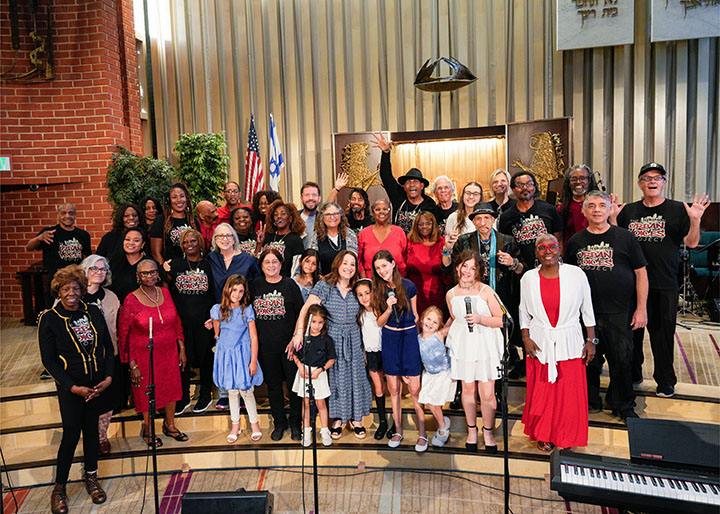
On the last Friday night of each month, the Kabbalat Shabbat band led by Rabbi Zachary Shapiro and Cantor Lonee Frailich takes center stage. Up to 175 congregants, accompanied by band members on guitar, bongos and a harp, join together to clap, sing, pray and sway at what’s become the synagogue’s signature service.
“I was once told that our congregation doesn’t sing, but our congregation is dying to sing,” said Shapiro, 37, who was installed as rabbi in June 2006. He replaced Rabbi Allen Maller, now rabbi emeritus, who retired after 39 years of service and after instituting such traditions, among others, as Camp Akiba, the synagogue’s sleep-away camp; family and adult retreats; and the Temple Akiba choir, which continues to sing twice a month.
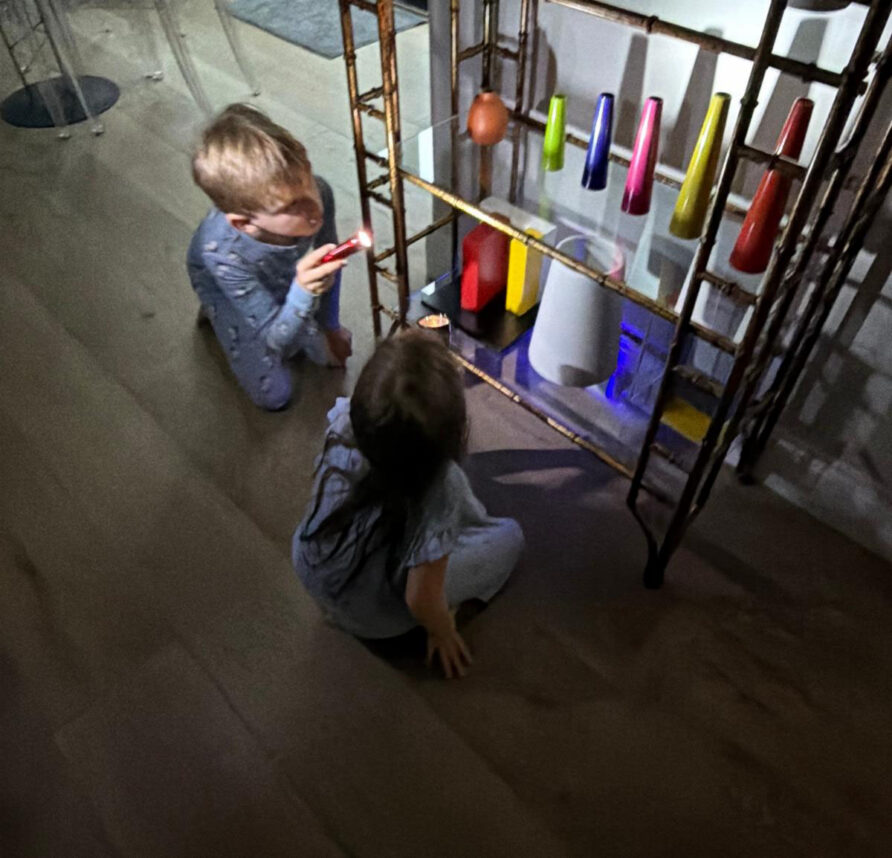
A new buzz can also be found in the nursery school, which had dwindled to fewer than 20 students only three years ago. Now it’s at capacity with 90 preschoolers, ages 2 to 5, with a waiting list. Much of the credit for the school’s new success goes to Israeli-born nursery school director Maguy Weizman McGuire, an early childhood educator for 30 years who came on board in the fall of 2005 with her child-centered philosophy and vision.
“I saw an amazing space that has so much richness for children to play and interact and spend time in,” she said.
Gayle Haberman enrolled her 4-year-old daughter, Lena, in the nursery school last year when the family moved to Culver City. “She doesn’t want to come home most days,” Haberman said.
In part, Temple Akiba’s transformation can be attributed to the changing face of Culver City. In January 2007, The New York Times declared, “Culver City, once considered a place to drive by on your way to somewhere else, has become Los Angeles’ newest stylish neighborhood, a magnet for lovers of the arts, good food and culture.” Let alone that it’s more affordable than most of Los Angeles’ Westside for young professional families.
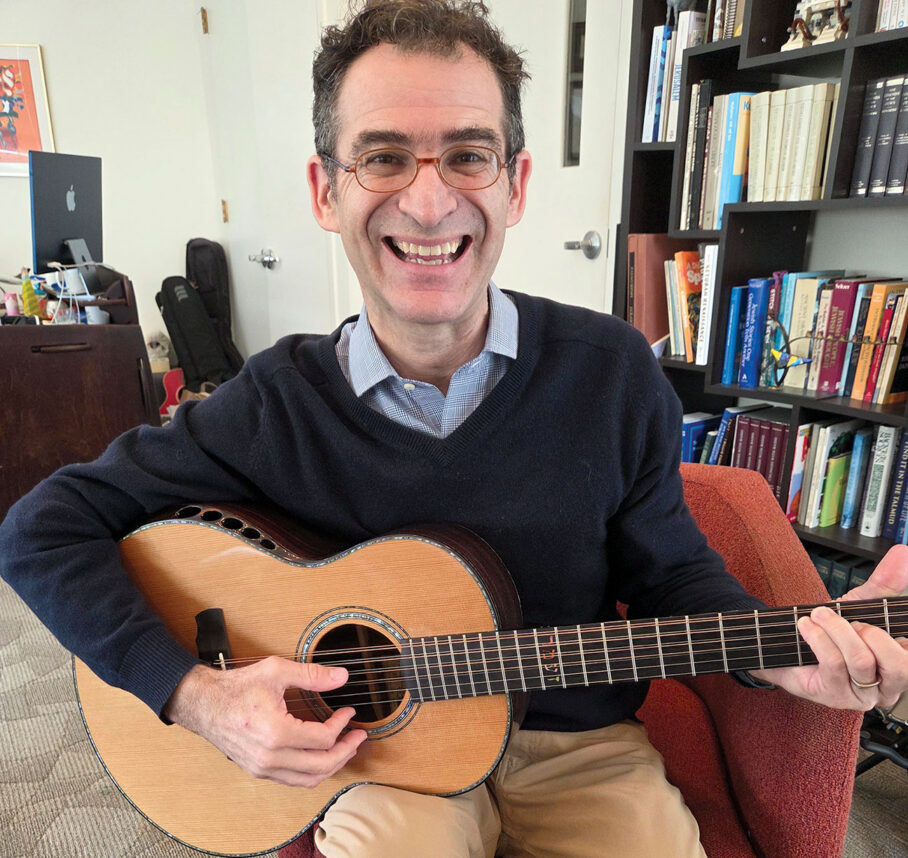
But many congregants are also drawn to the style of the synagogue’s new, hip rabbi, the 37-year-old Boston-born, Brooks Brothers-clad, guitar-playing Shapiro, who previously spent eight years as associate rabbi at Brentwood’s University Synagogue. He also directed the Introduction to Judaism program for the Union of Reform Judaism’s Pacific Southwest region for one year.
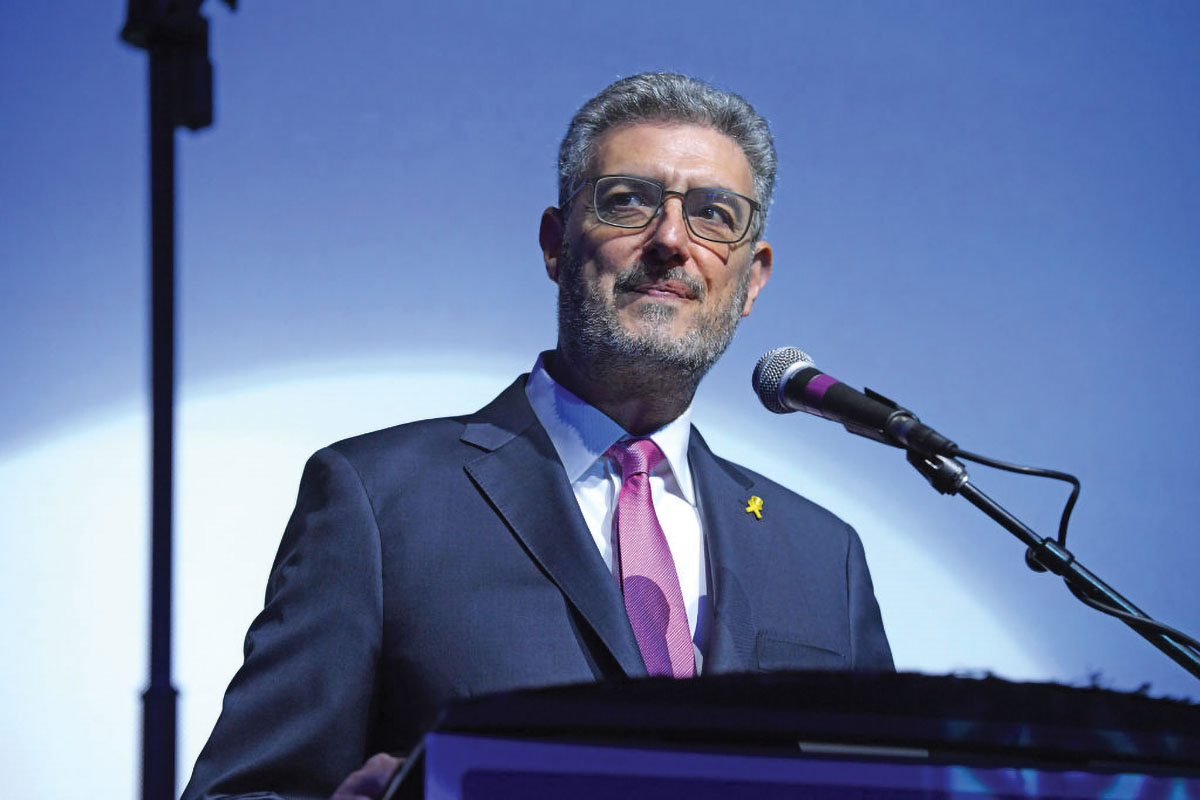
Shapiro is life partner to Ron Galperin, an attorney, lay cantor and candidate for Los Angeles City Council’s Fifth District. He is also the author of “We’re All in the Same Boat” (Penguin, $16.99), an illustrated children’s book about Noah’s ark to be released in January 2009.
But Shapiro’s innovations, seemingly paradoxically, also include a return to more traditional practices, including greater use of Hebrew and Saturday morning Torah study. He has also brought on the synagogue’s first professional cantor, Frailich, 33, a fourth-year student at Academy of Jewish Religion. Previously, the synagogue relied on talented and dedicated lay leaders, including Ilbert Phillips, now High Holy Day cantor emeritus.
Shapiro’s paramount goal as a rabbi is “to bring goodness into the world.” And in his role at Temple Akiba, that means administering to the needs of his eclectic congregation composed of seniors, young families, gays and lesbians, converts and many interfaith families. “No one feels left out. This is a safe home. This is a sacred place,” he said.
Shapiro is “Rabbi Shabbat Shalom” to the preschoolers who high-five him every Friday morning as they enter the sanctuary to celebrate Shabbat. He also reads to them on Wednesdays. For the 160 religious school students in grades kindergarten through 12, many of whom are also summer campers,
Shapiro works closely with director of education Stephanie Schwartz to instill a positive Jewish education and identity. He’s also instituted an annual confirmation class trip to Washington, D.C. And for the many senior members of the congregation, he offers compassion and a spiritual home.
“This man is so full of love. He will bring Torah to a sick person when that person can’t get to Torah,” said congregant Lucy Shine, whose mother, Ann Shine, 98, suffers from Alzheimer’s.
Shapiro is only the fourth rabbi of this congregation, which was founded by 25 families and originally held Shabbat services in a VFW hall.
The current building, completed in 1967 and constrained by a relatively small lot, was designed and constructed by modernist architects Arthur Silvers and Robert Kennard. It consists of two hexagonal buildings, and all the rooms are wedge-shaped, resulting in virtually no 90-degree angles.
Because of construction budget shortfalls at that time, a few essentials remained unfinished. Longtime member Harriet Herst, 73, recalled, “We all had to bring in our books of S&H Green Stamps to help carpet the building.”
While striking in its time, the building today presents challenges beyond its acoustic “cottage cheese” ceilings and worn 1960s décor. Preschool classrooms are inconveniently located down a flight of stairs and twice weekly must be hastily rearranged to accommodate the religious school. Additionally, the sanctuary, which features uncomfortable and unmovable wooden pews and doesn’t open into the social hall, seats only 415. High Holy Day services, which can attract up to 1,000 people, are always held in the Veterans Memorial Auditorium.
One of Shapiro’s dreams is to implement a large capital campaign to improve the facility, ideally to include a state-of-the-art education wing. The synagogue has hired a consultant to evaluate the feasibility of a capital campaign.
But overall, the temple is enjoying a rejuvenation, according to Ed Wolkowitz, a former two-term mayor of Culver City who is completing his fourth and final year as synagogue president.
“One of the things I find interesting is how much passion people have about this temple. It ebbs and flows. And right now it’s flowing,” he said.
For more information, visit http://www.templeakiba.net.