
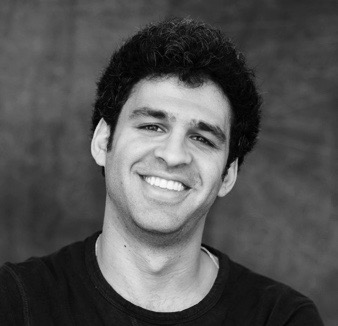

Azerbaijani survivors OF AN ongoing Armenian-Azerbaijani conflict spoke at Nessah Synagogue in Beverly Hills on Nov. 13 and shared their stories of resilience and struggle. The evening was billed as “Stories of Survival and Hope from Azerbaijan: Embracing Peaceful Co-Existence and Harmony.”
Held in partnership with the Iranian American Jewish Federation, community leader Isaac Yomtovian introduced the speakers. He said Nessah was more than a synagogue — it was an educational center, and the evening was an attempt to inform the community about the experiences of the Azerbaijani people.
The speakers discussed a conflict that has been going on since the collapse of the Soviet Union in 1991. After Azerbaijan and Armenia both attained independence from the Soviet Union, the two countries engaged in a war over Nagorno-Karabakh, a territory located inside Azerbaijan but with an Armenian ethnic majority that now control it. The war ended in 1994 but the dispute in ongoing.
The speakers said the international community recognizes Nagorno-Karabakh as belonging to Azerbaijan and that an ethnic cleansing of their people by the Armenians ensued following an Armenian invasion of the Nagorno-Karabakh village of Khojaly in 1992.
Durdane Agayeva, a Muslim woman who blogs for the Journal, spoke about spending days in captivity and in torture camps. “I have experienced the worst of what human beings are capable of,” she said.
Earlier the same day, Agayev visited the Museum of Tolerance and the Los Angeles Museum of the Holocaust and met with Holocaust survivor Joshua Kaufman, who also attended the Nessah event.
The evening’s other speakers included another survivor, Tural Ganjaliyev, chairman of the Azerbaijani community of the Nagorno-Karabakh region, and Consul General of Azerbaijan in Los Angeles Nasimi Aghayev.
“The international community recognizes the territorial integrity of Azerbaijan and condemns the brutality against other people,” Ganjaliyev said. “Our homes, mosques, schools and gardens — everything has been demolished by the Armenian forces.”
Ganjaliyev showed photos of his native home in Shusha, a city in the disputed region, “where I spent the best years of my childhood,” he said. “I will never forget the safety and peace I felt there.”
He called the Armenians “occupying forces” and said his refugee community uses Google Earth to view images of their former homes. They are dismayed when they see “for sale” signs outside the houses they were forced from, he said.
Aghayev said more than 1 million Azerbaijani civilians were expelled from their homes and land due to the conflict with the Armenians.
He also noted that Azerbaijan is one of Israel’s most unlikely allies and spoke of the warm diplomatic relations between Azerbaijan and Israel, and of the “religious harmony” in Azerbaijan that allows Jews to thrive there. He noted there are 13 synagogues in Azerbaijan, along with a yeshiva, day schools and a kosher restaurant. He highlighted the “strong and historic bonds between Azerbaijan and the Jewish people.”
He called Azerbaijan “an island of stability and progress in a very turbulent region,” and said that he appreciated the support “of Israel for Azerbaijan’s territorial integrity.”

































