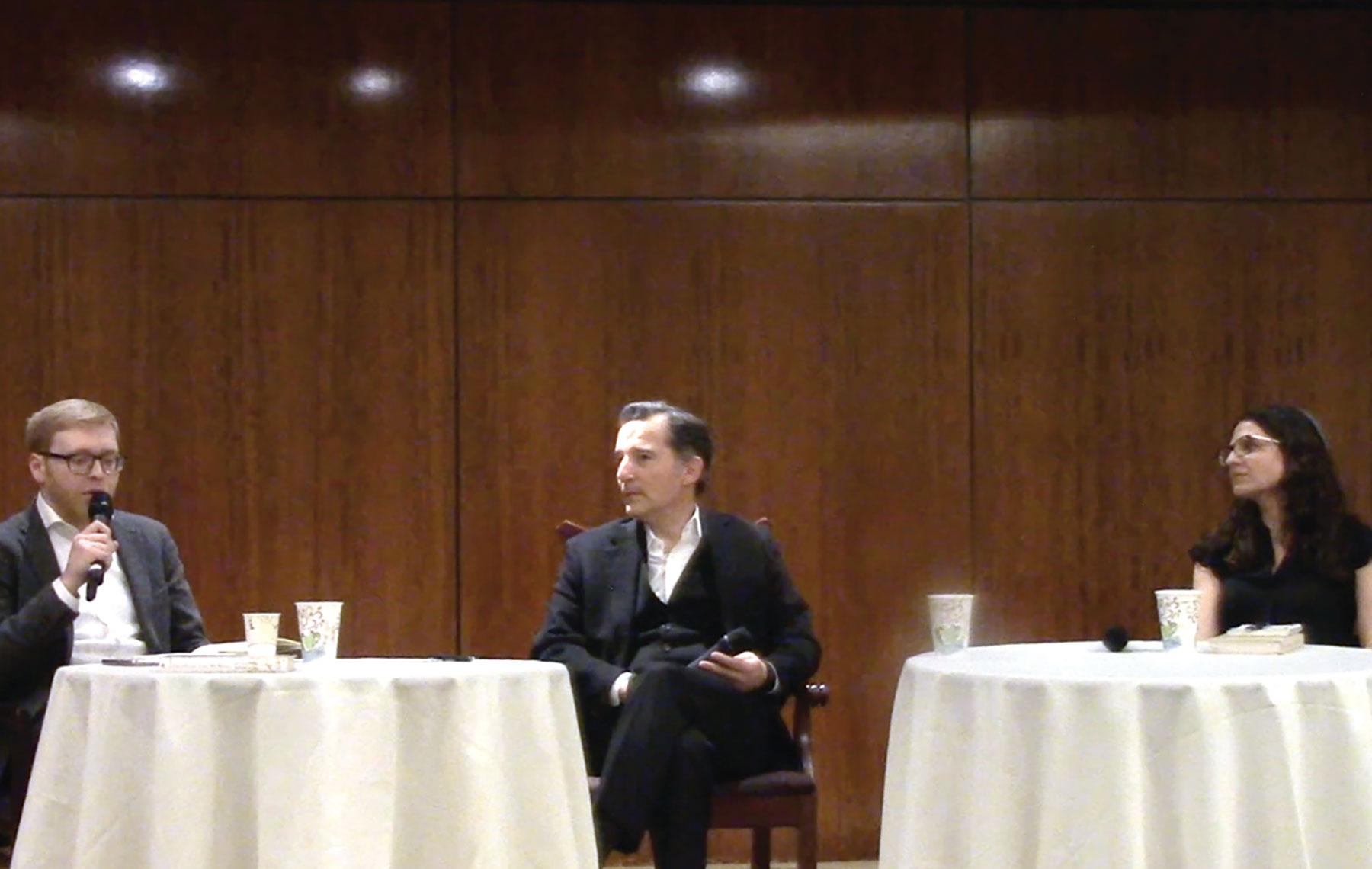
Seated between Rabbi Sharon Brous and author Jonathan Neumann, Rabbi David Wolpe said, “My chair is exactly equidistant between our two participants.”
Wolpe was referring to the role he was about to undertake as the centrist between two speakers with opposing viewpoints at a debate titled “Is Tikkun Olam Actually Good for the Jews?”
Without missing a beat, Brous moved her chair closer to Wolpe’s.
During the impassioned, good-humored discussion, held Feb. 5 at Sinai Temple, Brous — the founder and spiritual leader of progressive congregation IKAR — said her community’s emphasis on tikkun olam is informed by how prevalent a role the Exodus story plays in contemporary observance of Judaism.
“Why has Jewish tradition so centralized this story?” she said. “This is the centerpiece of biblical legislation and it is the centerpiece of our liturgy as well. This story is the paradigm of human experience.”
Neumann, author of the book “To Heal the World? How the Jewish Left Corrupts Judaism and Endangers Israel,” argued the American-Jewish community is overly embracing of tikkun olam, which, he said, is synonymous with left-wing politics.
“Tikkun olam is hegemonic in American Judaism,” he said. “It is there from cradle to grave. It’s there in books for infants, in elementary and high school curriculum, extracurricular activities, summer camps, campus initiatives. The great American philanthropies are dedicated to tikkun olam. Presidents talk about tikkun olam.”
Neumann argued that if a synagogue makes tikkun olam core to its mission, it leads to the neglect of more Jewish-specific practices.
Brous denied this, pointing to IKAR congregants that organize for low-wage hotel workers and pray with equal devotion, denounce Trump’s policies targeting asylum-seekers with the same passion they study Torah. Caring about human rights and Judaism are not mutually exclusive, she said.
“I am seeing in the book and in the many people who have written about your book a reductionist claim that those who fight for universal rights have therefore abandoned our particular Jewish rituals, traditions and peoplehood,” Brous said. “My answer to that is come to IKAR and see how we daven and see how long Mussaf is — even though people are hungry for lunch, we have in no way abandoned our particular claims and have no intention to because they are all part of one conversation for us.”
Wolpe asked Brous and Neumann why the debate over the merits of tikkun olam divides Orthodox and Reform Jews and Republican and Democratic Jews.
Neumann disagreed with Wolpe’s question, arguing that his message has resonated with non-Orthodox people who are tired of hearing sermons about social justice in their non-Orthodox synagogues. Meanwhile, he said, there are those in the Orthodox movement who are active in social justice groups. He added that his book doesn’t argue that Judaism endorses either liberal or conservative politics. When Wolpe asked him to name a conservative position that Judaism rejects, he said, “Judaism doesn’t have a position on most of the issues that occupy American political discourse today.”
Brous, who said she had read Neumann’s book carefully, cited how the commandment to welcome the stranger is mentioned at least 36 times in the Torah, “Completely disproportionate to any other mitzvah we read about in our Torah. So to my mind, this is not some made up, 20th-century invention of a bunch of feminists who wanted to eat pork, but instead is really a core message of our tradition.”
The Journal did not attend the event, but received a video recording of the debate from Sinai Temple.