fbpx

February 20, 2019

Israel’s Election Handbook: The Big Gantz-Lapid Bang (and What It Means)

We call this format a Timesaver Guide to Israel’s Coming Elections. This will be a usual feature on Rosner’s Domain until April 9. We hope to make it short, factual, devoid of election hype, and of he-said-she-said no news, unimportant inside baseball gossip.

Bottom Line

Updated 2pm Israel Time: A big bang. Benny Gantz and Yair Lapid agreed to merge. Everything is up in the air.

Main News

Gantz and Lapid agreed to merge. Gantz will be PM for two and a half years, Lapid will succeed him. That is, if the party wins. The list will run under the title Blue and White.

Another former chief of staff joined the merged party: Gabi Ashkenazi.

The religious right merged: The Jewish Home, Tkumah and Otzma Yehudit will run together.

Gesher did not join Gantz, and in most recent polls does not cross the electoral threshold.

Last minute drops and recruits: Tzipi Livni and the Hatnuah Party dropped, General Tal Rousso joined Labor.

Talks about mergers of Arab parties, and of Labor with Meretz continue. The dead line is Thursday night, Israel time.

Developments to Watch

Political: Fresh polls – starting today – are necessary, to understand the implications of the merger. Likely outcomes: Likud grows (because of voters wanting to ensure its victory); Labor loses the gains of recent days (because of voters who see opportunity for change); other small parties pay a price (Kulanu, Gesher, Israel Beiteinu, Meretz). Some of them will not cross the electoral threshold.

Legal: Next stop, indictment. Everybody is waiting for the Attorney General to publicize his decision on the Netanyahu case.

Social: The barrier between right-religious parties and radical Kahanist activists was removed. This reflects important changes and splits in the Zionist-religious camp. Netanyahu played the role of matchmaker, as not to lose rightist voters who could elect parties that do not cross the electoral threshold.

Social: Lapid downgraded most representatives who emphasized state-religion issues in his party. This is not an important issue for the voters in this election.

The Blocs and Their Meaning

The old polls mean little when realities change. Still, some media outlets conducted “scenario polls” that tested what happens in case of significant mergers. Clearly, what the voters say they might do in a theoretical setting is not what they will do in a real situation, and yet, for now this is the only tool we have by which to examine possible implications of the merger. So here is a graph based on the last 4 scenario polls. What you see in the graph are three things: How Likud fairs, how the new party fairs, and how Netanyahu’s coalition of 67 (the one that was the basis for his government for most of the last four years) fairs. The last column, in a different color, is one of averages. Look at the graph, followed by a few comments:


  • Likud and the new party compete for two things. The first of which is to be the larger party – as to force the president to consider it worthy of forming a coalition (the larger party does not always get the job, but it is unlikely to see a distant second party getting a shot at forming a coalition). The new party seems to achieve this goal.
  • The second competition is for the bloc, and the post-election coalition. For now, Netanyahu has the advantage when we look at the blocs if – and this is not a certainty – all the parties in his 67 coalition agree to return to the same coalition.
  • Netanyahu’s advantage is small and fragile. Some of the parties might be tempted to go with other coalitions (Kulanu, Israel Beiteinu). Some might not cross the threshold.
  • Still, it will not be easy for Gantz and Lapid to form a coalition. Arab parties are out of the question. Meretz is unlikely to join in what’s going to be a centrist coalition. So the new party will have to find a way to tempt the ultra-Orthodox parties to consider a coalition.
  • Last but not least: If Netanyahu is forced to stay with the base for a new coalition, the Trump plan is in even more trouble than we think. Or maybe it’s Netanyahu in trouble.


Israel’s Election Handbook: The Big Gantz-Lapid Bang (and What It Means) Read More »

The Annexation Issue, Where to Direct Anger, Democrats and Anti-Semitism

The Annexation Issue
The exercise of Israeli sovereignty over Judea and Samaria is the correct and logical continuation of Zionism (“Annexation Is a Pernicious Issue for Israel,” Feb. 8). The authors present the same stale arguments that have been made against the Zionist enterprise since the days of Theodor Herzl. Many of their ilk urged David Ben-Gurion not to declare a state in 1948, predicting calamities similar to those the authors present as absolutely coming to fruition if Israel exercises its legal, moral, ethical and religious rights in the Jewish heartland.

Not exercising sovereignty over this land shows retreat and weakness in the eyes of the Arabs. Weakness and concessions don’t help the situation; they just lead to more terror.

The authors would do well to internalize this lesson. The Jew haters of boycott, divestment and sanctions, and the European Union don’t need any further excuse to do harm to Israel. These are the same people who ignore the thousands of rockets sent from Gaza and fault Israel for defending itself.

Haven’t we learned that the Arab nations, Russia and China will all do what’s best for themselves irrespective of the Palestinians? They will not retreat from cooperation with Israel as long as it benefits them.

The prediction that the exercise of Israeli sovereignty over Judea and Samaria will somehow cause the Israeli economy to collapse is patently ridiculous. They should have a bit more faith in what Israeli society can do. Perhaps they haven’t heard that Israel is now energy and water independent and that Israel has the third most companies registered on NASDAQ, after the United States and China.

There are several proposals for exercising Israeli sovereignty over all or parts of Judea and Samaria that will, in conjunction with a rational view of the demographic situation, enable Israel to remain a Jewish and democratic state after the annexation.

Perhaps the authors should ponder Ben-Gurion’s quote that if you live in Israel and don’t believe in miracles, you’re not a realist. Not that it will require a miracle to allow the successful annexation of the Jewish heartland.
Alan Jacobs, Beverly Hills

Where to Direct Anger
Rabbi Robin Podolsky is angry about President Donald Trump’s State of the Union
address and Trump in general (“Angry About Trump’s Speech,” Feb. 15). She cites all the outrages to the Jewish people by the president. She refers to an organization called Bend the Arc, whose lead story on its website was “Trump should resign, not Ilhan Omar.” So Jews should support someone who tweeted, “Israel has hypnotized the world, May Allah awaken the people and help see the evil doings of Israel” over someone who has moved the American embassy to Jerusalem, cut
funding to the Palestinian Authority as long as it pays terrorists, cut funding to the United Nations Relief and Works Agency, took the U.S. out of the U.N. Human Rights Council, which has as a permanent agenda item condemning Israel. And let’s not forget the disastrous Iran deal.  We definitely live in an upside-down world.
Bill Azerrad, Los Angeles

I am the child of Holocaust survivors. I was born in a displaced persons camp in Germany after the war.

My parents decided to come to the United States and were able to do so. They had to be vetted and came here legally. President Donald Trump isn’t against allowing in people from other countries; he just wants them vetted and to come in legally. He has said before that we need these people because it would help them and help our economy. By bringing them in legally, we can distinguish between criminals, drug cartels, human trafficking and other such problems. If you feel that having these kinds of neighbors in your communities is OK for you, then Trump is wrong.

Rabbi Robin Podolsky says that Trump should keep our people out of his mouth. Please don’t speak for Jews like me and for so many other Jews who are grateful to him for moving the American embassy to Jerusalem, where it belongs. No other president in our country kept that promise. As for honoring a Holocaust survivor and the American World War II veteran at his speech, I feel it put a face on the horrors that a section of humanity perpetrated upon a nation of innocent souls for being Jewish. I personally know the survivor, Joshua Kaufman, and he indeed suffered immensely and was very proud to be so recognized by the president.
Miriam Fiber, Los Angeles

Stop the ‘Conversation’
David Suissa suggests that the controversy surrounding reputed anti-Semite Rep. Ilhan Omar (D-Minn.) lead to an honest conversation about the Middle East (“A ‘Difficult Conversation’ About Israel,” Feb. 15). That war, unfortunately, is unwinnable because Israel’s enemies on the left and its militant Muslim allies are not swayed by facts. I would suggest the conversation swivel in a westerly direction — to  Omar’s country of origin: Somalia. The Arab-Muslim genocide of African Christians in Darfur, Sudan — the habitual burning down of Christian churches in Nigeria and West Africa by Muslims, including Somali Islamic terror group al-Shabab, Boko Haram, et al., is a disturbing example of today’s real religious apartheid; the southern Sudanese survivors of the Darfur massacres took perilous journeys to Israel for protection, obviously  discounting  baseless Islamic propaganda leveled against Israel. Omar professes to be “Americanized and a respected member of her new country,” but her consultative status for the Council on Arab Islamic Relations, a known front-group for Hamas, renders her unfit, if not a danger, for participation in a post-9/11 American government.
Richard Friedman, Culver City

Democrats and Anti-Semitism
For those Jews who have been sleeping under some rock these past few years, the embarrassing fact is that the Democrats have been in a blind, spiraling, continuous free fall against Israel — and, sadly, against the Jews — for some time now (“Have the Dems Abandoned the Jews?” Roundtable).

I honestly think Rep. Ilhan Omar (D-Minn.) was as surprised as the rest of us when she was so resoundingly chastised by her fellow Democrats. After all, wasn’t there a clear OK to cozy up to anti-Semite Louis Farrakhan? (The Clintons did; why couldn’t she?) Didn’t former President Barack Obama vilify Israel and Prime Minister Benjamin Netanyahu every chance he got?

Didn’t the Democratic Convention vote down support of Israel when L.A. Mayor Antonio Villaraigosa asked for its support as early as a decade ago?

Please spare the feigned surprised looks; the raised eyebrows concerning Omar, Rashida Tlaib, Linda Sarsour, Alexandria Ocasio-Cortez and Keith Ellison.

And thank you for finally waking up. Those who wrote in to the Journal that you are being deluded by some GOP plot to think poorly of the party long-distanced from that of your parents and grandparents are trying to insult your intelligence.

Shrug your shoulders to time lost and move on. It certainly is never too late to dust off what was an overly long, intellectually lazy stupor.
Steve Klein, Encino

A Caregiver’s Advice
Thank you for Rabbi Eva Robbins’ story on “Taking Care of the Caregiver,” Feb. 15. I am a caregiver. I also co-facilitate a group for caregivers whose loved ones have multiple myeloma. I would like to add additional pieces to the discussion:

1. There are moments of great warmth, discovery, love and humor that pervade many caregiving relationships.

2. We do live in a “new normal” but the “new” doesn’t automatically erase all of the old. Not everything changes, and it’s crucial to remain conscious of the things in your relationship that remain constant and valued.

3. In terms of “relinquish all expectations as nothing will ever be the same,” I believe one should be realistic about expectations but not relinquish hope. All we know for certain is the past and the moment, not what tomorrow may bring.

4. I agree that a caregiver must take care of himself/herself or he/she will be useless in trying to care of anyone else. It’s the old “put on your own oxygen mask first” theory of survival, whether your oxygen mask is psychological, spiritual or intellectual.
Sally Weber, Encino

Canter’s Deli
I find it ridiculous that your story on Canter’s says, “the place is packed, as usual … ,” but the large photo reveals a mostly empty restaurant.
Ina Miller, Playa Vista

CORRECTION
In a story on a reality TV talent show (“Israeli Dancer Brings Expertise to ‘World’s Best,’ ” Feb. 15), dancer and choreographer Kobi Rozenfeld’s age was incorrect. He is 36.


The Annexation Issue, Where to Direct Anger, Democrats and Anti-Semitism Read More »

Macron Says France Will Adopt IHRA Anti-Semitism Definition

French President Emmanuel Macron announced on Feb. 20 that France will be adopting the International Holocaust Remembrance Alliance (IHRA) of anti-Semitism in light of the rising anti-Semitism in the country.

Macron reportedly told Israeli Prime Minister Benjamin Netanyahu in a Feb. 20 phone call that they would be instituting that definition of anti-Semitism, and told French Jewish leaders at a Council of Jewish Institutions in France dinner that evening that the French government will define “anti-Zionism as a modern-day form of anti-Semitism.”

“Our country, and for that matter all of Europe and most Western democracies, seems to be facing a resurgence of anti-Semitism unseen since World War II,” Macron said.

Macron also said at the dinner the French parliament will take up legislation to crack down on hate speech online and that his interior minister will look to break up three far-right groups: Bastion Social, Blood and Honour Hexagone and Combat 18.

Anti-Defamation League (ADL) CEO Jonathan Greenblatt praised Macron in a tweet:

American Jewish Committee Europe Director Simone Rodan-Benzaquen said in a statement, “President Macron’s declaration endorsing the working definition is critically important and most welcome. However, additional substantive, sustained, and meaningful steps are urgently required to seriously confront the scourge of anti-Semitism that has strikingly strong roots in French society.”

Recent French government statistics have revealed that anti-Semitic incidents increased by 74 percent from 2017 to 2018 and anti-Semitic assaults increasing by 270 percent in the same timeframe.

“France remains the most serious locus for anti-Semitic acts, a place where Jews face tragic examples of extremism from radical Islamists – who perpetrated the 2018 Knoll murder, the 2015 Hyper Cacher kosher supermarket attack, and the horrifying 2012 attack on the Jewish school in Toulouse – as well as attacks from the left and the right,” the ADL wrote in a Feb. 20 post on their website. “Even memorials to those slain in anti-Semitic attacks are being targeted: last week, two trees planted in memory of Ilan Halimi, the 23-year-old Jewish man abducted and killed over a decade ago by a gang of Islamist thugs, were found to have been mutilated and chopped.

Macron Says France Will Adopt IHRA Anti-Semitism Definition Read More »

Preparing for the ‘End’ in Nominated Short Documentary

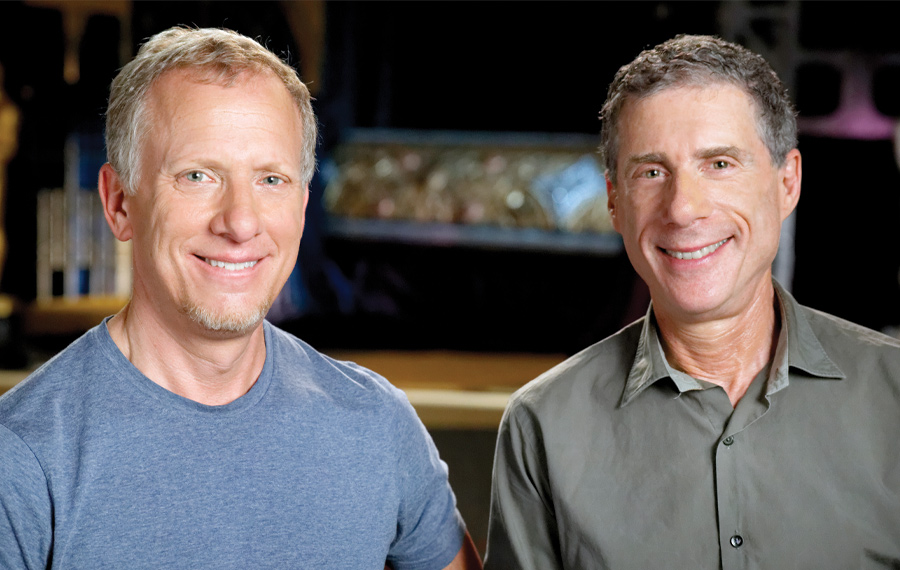
Oscar-nominated for best documentary short subject, “End Game” follows patients with terminal illnesses, their families and the palliative care professionals making them comfortable. Filmmakers Rob Epstein and Jeffrey Friedman, whose films include “The Times of Harvey Milk,” “The Celluloid Closet” and “Paragraph 175,” handle a difficult subject sensitively and compassionately.

The Bay Area-based duo had personal experience with terminal illness, long before they shadowed doctors at the University of San Francisco Medical Center and Zen Hospice.

“We both lost friends and family,” Friedman told the Journal. 

“We lived through the worst years of the AIDS epidemic, so we were around way too many deaths at a relatively young age, losing friends who were in their 40s,” Epstein added. “So in that sense, it wasn’t as scary a topic to take on. I also was with my father in the final moments of his life and it was really a gift. I know that death, as awful as it is, can be quite beautiful and quite special to have that time with someone you love in those final moments.”

Making “End Game,” the duo said, reinforced that notion. “One of the amazing things about these palliative care teams and the hospice volunteers is the vast storage of empathy and caring that they bring to people,” Friedman said. “Watching how that changes the experience for the people who are going through this was really uplifting.”

He and Epstein wanted to get the word out about this kind of end-of-life care, “and give thanks largely to these practitioners who are helping to frame end-of-life as a part of life. The more we can see it that way and not be afraid of it, the more we can actually have some control over how we face it,” he said. 

“You hope putting light on a subject encourages conversation, and that was certainly part of our intention,” Epstein added.

The filmmakers spent about a year working with the hospital to plan and negotiate access to patients and their loved ones. “Anybody who’s in the film wanted to be in the film,” Epstein said. “It was a revelation for us while we were filming to see those tender moments between human beings, because that, in the end, is what it comes down to.”

Friedman was asleep when Epstein called him to give him the good news about the Oscar nomination. It’s Epstein’s first and Friedman’s third, having won twice, for the documentary features “The Times of Harvey Milk” and “Common Threads: Stories From the Quilt.”

“I felt thrilled and honored, especially at this point in the process. It’s recognition from our peers in the documentary branch,” Epstein said. 

Rob Epstein and Jeffrey Friedman. Photo by Don Holtz

“It feels great to get this recognition after working together for 30 years,” Friedman said. “This time, I feel like I can fully appreciate it, at least so far. It’s not as nerve-wracking. We’ll see what happens once we get closer to the Oscars.”

“[‘End Game’] is really a very sad love story, but I feel that love triumphs. You can’t fight the inevitable, but you can face it in a way that transforms it into something 

precious.” 

— Jeffrey Friedman

“End Game” has worldwide exposure on Netflix, but winning the Academy Award “would mean a lot for the film, that many more people will see it. Just the nomination alone has done so much already,” Epstein said. “It’s a cliché to say that getting nominated is the honor, but it’s true.”

New York native Friedman met Epstein, originally from New Jersey, when Friedman moved to San Francisco in 1979. “I had seen ‘Word Is Out’ and wanted to meet those filmmakers because it was the first documentary made by and for gay people,” Friedman said. “One of them was Veronica Silver and she invited me to a birthday party for a friend. That turned out to be Rob.”

“We’re both East Coast Jews and there’s a lot of shorthand that goes along with that, certainly in terms of humor,” Epstein said. “We have a similar sensibility and I think that’s a part of why we’ve worked together well all these years.” 

Epstein was raised “culturally Jewish” and celebrated his bar mitzvah in his backyard with 350 guests. Friedman grew up secular but surrounded by Jews on Manhattan’s Upper West Side. “I thought the whole world was Jewish,” he said. “There are values that I associate with Jewish culture that have to do with learning and commitment to repairing the world. Tikkun olam. That’s what I got from my family, but it was never presented in a religious context.”

The pair has several new projects in the works, including documentaries about singer Linda Ronstadt and the late photographer Peter Hujar. “He was very much a part of the 1970s East Village art scene, which got decimated by AIDS,” Friedman said. They’re currently editing “State of Pride,” which Epstein described as “a look at what LGBTQ pride means to young people 50 years after Stonewall, the first gay freedom march.” It will be released in June to coincide with the event’s anniversary.

“Whenever people ask me about [‘End Game’], I never know how to present it in a way that doesn’t make them afraid to watch it,” Friedman said. “It is a difficult subject, but I keep coming back to the love. The film is really a love story, a very sad love story, but I feel that love triumphs. You can’t fight the inevitable, but you can face it in a way that transforms it into something precious.”

Preparing for the ‘End’ in Nominated Short Documentary Read More »

Marc Shaiman on the Verge of EGOT Thanks to ‘Mary Poppins Returns’

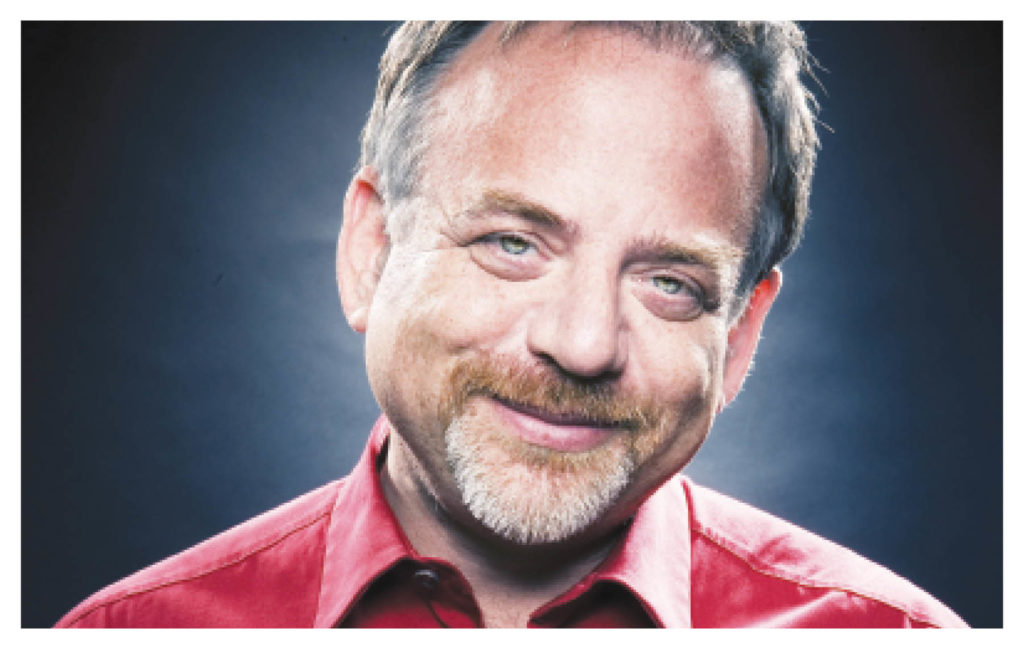
Composer Marc Shaiman has Tony and Grammy awards for the Broadway musical “Hairspray” and its cast album. He earned an Emmy for his contribution to the 1992 Academy Awards show, but his five Oscar nominations have produced no wins. This year, he’ll have two chances to rectify that, as well as achieve the rare and coveted EGOT — Emmy, Grammy, Oscar, Tony — status. Shaiman is a double nominee, for the original score of “Mary Poppins Returns” and its song “The Place Where Lost Things Go.”

When he heard his name announced among the nominees on Jan. 22, “the emotion was relief,” Shaiman told the Journal. “I was so honored and it was such a dream come true to get to work on this movie. The idea that it could lead me to an Oscar win after all these years of losses almost seems meant to be because it’s the most important [nomination] of all.” 

Two days later, reports surfaced that the Academy of Motion Picture Arts and Sciences had selected only two songs — “Shallow” from “A Star Is Born” and Kendrick Lamar and SZA’s “All the Stars” from “Black Panther” — to be performed on the Oscars telecast, to reduce its running time. Shaiman likened that to saying, “The nominees for best actress are Lady Gaga, Glenn Close and some other people. Tune in after the show to see who they are. It’s meshugge.” 

Ultimately, negative response and protest from Lady Gaga in solidarity with her fellow nominees resulted in a reversal of the decision, and all five songs will be performed.

Shaiman confided he’d had “some bad days” fretting about the proposed exclusion, but nothing could take away from his enthusiasm for “Mary Poppins Returns.” 

As an ardent fan of the 1964 original “Mary Poppins” movie musical, Shaiman said he would have been “miserable” if director Rob Marshall hadn’t asked him to write the music. “I don’t know how I could have lived in a world where [the film] existed and I hadn’t gotten to work on it,” he said. “I would have had to move to a desert island.”

But following up the Sherman brothers’ iconic “Mary Poppins” score was a daunting prospect. “Nothing ever will compare to their song score for that movie,” Shaiman said. “It’s lightning in a bottle. But I think we made a nice light of our own. Instead of being daunted, we decided to just write a love letter, a thank you note to them. We were lucky enough to get to sit a few times with Richard Sherman, and I got to ask him every question I ever dreamed of asking. He said that he loves what we’ve done. To hear that from him was the ultimate award.”

A scene from “Mary Poppins Returns.” Photo courtesy of Walt Disney Pictures.

Shaiman said working with stars Emily Blunt and Lin-Manuel Miranda, along with director Marshall and the orchestra, was “a total joy.” Together with “Hairspray,” Shaiman said it tops the list of his proudest accomplishments of a 43-year career that has included scores for more than 50 movies and nearly as many TV shows, including musical arrangements for “Saturday Night Live,” Billy Crystal and Bette Midler.

“It was such a dream come true to get to work on [‘Mary Poppins Returns’]. The idea that it could lead me to an 

Oscar win after all these years of losses almost seems meant to be because it’s the most important [nomination] of all.” 

— Marc Shaiman

Shaiman’s musical ability emerged when he was in first grade, when he heard his older sister playing piano and then duplicated the piece by ear. He left school at 15 and was playing at a piano bar when the comedy revue rehearsing next door hired him to replace their pianist. The director was Scott Wittman, and they’ve been collaborating ever since, sharing songwriting credits on “Mary Poppins Returns.”

“It’s been quite a career,” Shaiman said. “I was sort of a child prodigy of show business. Falling into movie scoring was the perfect job for me, as was writing Broadway musicals. That’s what I really love to do, so I’m blessed to do it all.”

Shaiman, who grew up in Scotch Plains, N.J., describes himself as a “cultural Jew. I have all the traits of my faith, Lord knows. I’m a textbook example of the clichés of a Jewish person. Neurosis and guilt.” And although he has not been to synagogue much since becoming a bar mitzvah, he finds Jewish traditions beautiful.

“Friends invite me to seders now and then, but I’m not really practicing. I try to live by the golden rule, and to me, it’s good enough to do that,” he said. “It doesn’t mean that I don’t weep copiously when I see ‘Fiddler on the Roof’ and make that connection to what I come from and who I am. It’s strong. It’s in the blood and it’s in the soul.”

Shaiman currently is writing a musical version of the film “Some Like It Hot” with Wittman, but he has considered the possibility of retirement. “I’d do jigsaw puzzles, play with my dog, get another dog, maybe teach,” he said. A trip to Israel, which he has never visited, is also on his to-do list.

“The absolute truth is after ‘Mary Poppins Returns,’ I feel like I don’t know that I could ever work on another movie that would be as meaningful to me or that would suit my specific style of music and writing and songwriting,” Shaiman said. “Nothing could ever compare to this opportunity. We wrote this movie and created it for the ultimate ‘Mary Poppins’ fans. It touches something in all of us. I am just so proud of it.”

Marc Shaiman on the Verge of EGOT Thanks to ‘Mary Poppins Returns’ Read More »

‘A Night at the Garden’ Unearths American Nazi Rally

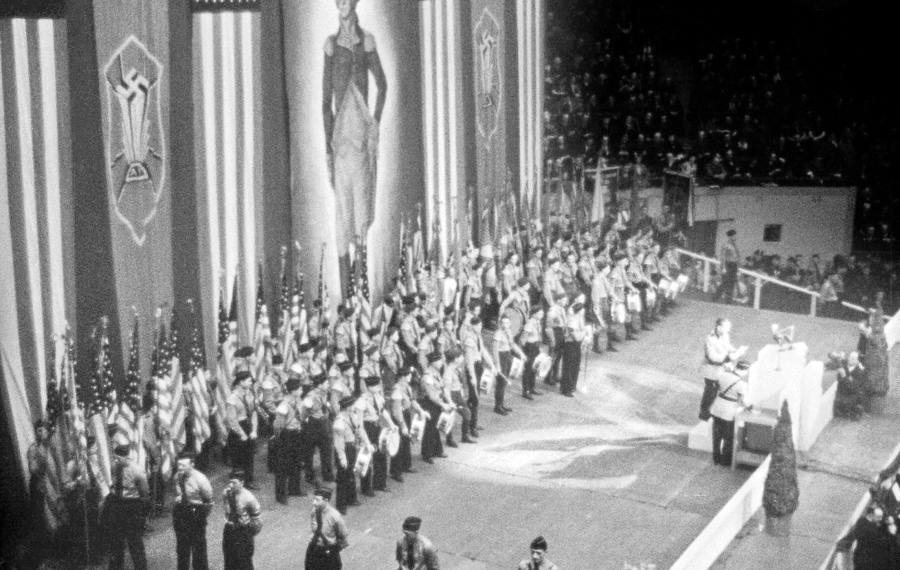
On Feb. 20, 1939, 20,000 people filled an arena for a political rally. Before an enormous portrait of George Washington, they pledged allegiance to the American flag as the national anthem played. They also wore swastika armbands, gave the Nazi salute and cheered hateful rhetoric about reclaiming America from the “Jewish-controlled press” and “Jewish-Moscow domination.”

This shocking spectacle took place at Madison Square Garden in New York, and it’s the subject of the Oscar-nominated short documentary “A Night at the Garden.”

Just over seven minutes long and consisting entirely of black-and-white archival footage, the film has a chilling impact. 

“What struck me when I saw the footage was that this philosophy that most Americans would say was completely un-American was being presented wrapped up in the American flag,” filmmaker Marshall Curry told the Journal. “[It shows] the way that the demagogues can excite crowds to violence and to ridicule and to hate.”

When he first heard about the footage’s existence, Curry embarked on “a bit of a scavenger hunt,” locating bits and pieces — less than an hour total — in the National Archives, the Sherman Grinberg Film Library and in archives at UCLA. He had considered interviewing historians for comment but opted to “just drop people into the event and bear witness. I felt it was actually more engaging than if it had been a straight, analytical, historical documentary.”

At one point in the film, a protester rushes the stage and is violently attacked. “His name was Isadore Greenbaum. He was a plumber’s assistant in Brooklyn who was just so outraged by what he saw that he just jumped up onstage,” Curry said. “He’s a symbol of not just sitting on the sidelines, but running out onstage and saying, ‘No,’ even when it’s 20,000 to 1, to just make sure that the voice of the people and decency is heard.”

Curry pointed out that rally leader Fritz Kuhn had plenty of ultra-right-wing company at the time, including Charles Lindbergh and radio host Father Charles Coughlin, who had 3 million loyal listeners. But when the United States entered World War II, Nazism “no longer was an acceptable point of view and we kind of washed away the fact that anybody had ever supported it,” Curry said. “It was like an embarrassing part of somebody’s family history that they stopped talking about. Now, of course, we’re seeing it creep out of the closet again.”

In making the film, Curry said, “I wanted people to be sensitive to the way that symbols of America can be misused to peddle ideas that are, in my opinion, un-American, anti-American, at least against the American values that we have. I also wanted them to be sensitive to the way that demagogues can excite crowds to violence and to ridicule and to hate.”

The director added that he hopes people watching the film “will be sensitive to the way that demagogues currently are using or trying to use the same tactics to turn us against each other and make us stop caring about each other. I just feel like every high school student should know about this in their studying of World War II.”

Curry, who has been Oscar-nominated twice, for his feature documentaries “Street Fight” in 2006 and “If a Tree Falls” in 2012, hopes this nomination will mean that more people will see “A Night at the Garden.”

“For short documentaries, it’s very hard to cut through and to attract attention,” he said. “I made it expecting nothing, just to share this kind of crazy part of American history with my fellow Americans who don’t know about it. It’ll be fun to go to the Oscars and put on a tuxedo, but the thing that is the most exciting is the way that it’s going to help the movie get seen.”

Curry came to filmmaking late, after working at a variety of jobs for a decade after he graduated from college. “I taught high school students about government and politics, I worked for a public radio station and I worked at an internet startup in the ’90s, designing the Metropolitan Museum of Art’s first website,” he said. “Then in 2002, I met a city councilman in Newark, New Jersey, who was about to run for mayor. I asked him if I could film his campaign. That was Cory Booker, and the film was ‘Street Fight.’ I’ve been making films ever since.”

His subjects have included young aspiring NASCAR drivers, urban politics and radical environmentalists. “My interests are pretty broad. I’m kind of curious about human beings and why we do what we do and believe what we believe,” Curry said. “I’m interested in people with big dreams. I’m interested in the human experience with all of its different facets.”

His next project is a short dramedy he’s written and directed called “The Neighbor’s Window.” “It’s about a woman with young kids who becomes obsessed with watching
the young couple who move in across the street,” he said. “It’s going to be coming out in the spring.”


“A Night at the Garden” is available via YouTube, PBS.com and anightatthegarden.com.

Update: In an earlier version the author said it was on Feb. 28 but in fact it was Feb. 20.

‘A Night at the Garden’ Unearths American Nazi Rally Read More »

‘RBG’ Scores Nods for Documentary and Original Song

When directors Julie Cohen and Betsy West watched the Academy Awards nomination announcements on Jan. 22, they were surprised and thrilled to hear that their Ruth Bader Ginsburg documentary, “RBG,” was nominated for best documentary feature.

“I was very nervous going into the nominations and when we heard that we were nominated, it felt joyful,” Cohen told the Journal. “Now we can relax and begin to enjoy this amazing experience. It’s a very exciting thing when you’re in the great position to have a film that a lot of people connect with.”

Shortly thereafter, the filmmakers had the “great honor” of sharing the news with the Supreme Court justice herself, as Ginsburg was at home recovering from her recent lung surgery. “The biggest thrill of that conversation was just hearing how good she sounded. She sounded really peppy,” Cohen said. “She was really enthusiastic about the film being nominated. She said she felt that it was eminently well-deserved.”

Now streaming on Hulu, “RBG” was both a critical and box-office success. 

“I think there’s a lot in Justice Ginsburg’s story to connect with,” Cohen said. “First of all, she’s become a pop culture icon to a lot of young people. But also, there’s this successful, long-waged battle that she fought starting in the 1970s to secure equal rights for
women under the law and it’s very, very resonant today.”

The director believes Ginsburg’s multigenerational popular appeal and the film’s lighthearted humor have a lot to do with the success of “RBG.” “We didn’t want it to
feel like a history lesson,” Cohen said. “I’m a big fan of comedy in all movies, including serious movies and documentaries.”

Win or lose on Oscar night, “being nominated will have a very big impact and really help us get more attention for the kind of projects we want to do,” Cohen said. “It just increases the visibility of a film that was actually quite visible for a documentary, so that’s great. I feel like the success, the attention and acclaim for ‘RBG,’ both the woman and our film, certainly gives a boost to projects that Betsy [West] and I want to make together, particularly projects that focus on women. We’re working on two, but we’re not disclosing who they are right now.”

Cohen has seen “On the Basis of Sex,” the scripted feature about Ginburg’s early career, and said she thought it was “terrific. It told a slice of Justice Ginsburg’s story that people aren’t familiar with. It happened to be a case that we didn’t include in our film because there isn’t footage of it. Not only is it the beginning of her work on gender discrimination, but it also shows the deep connection between her life’s work and her husband, Marty.”

While she believes that Ginsburg “doesn’t need films to make her more famous,” Cohen thinks that both movies benefited from widespread public interest in Ginbsurg and may benefit each other. “We heard from a number of people that had seen the documentary and then felt very eager to see the feature film,” Cohen said. “Conversely, people who had seen the film in theaters are now saying they wanted to watch the documentary because they wanted to see her in the flesh, telling her own story.”

“RBG” also is nominated in the best original song category for “I’ll Fight,” written by Diane Warren and sung by Jennifer Hudson. “RBG” score composer Miriam Cutler and executive music producer Bonnie Greenberg brought Warren on board. 

“Diane captured the spirit and the essence of the film and Justice Ginsburg without making [the song] super specific,” Cohen said. “In fact, Jennifer Hudson said that when she recorded it, she was thinking about all kinds of fights and battles in her own life. Because it’s in the first person, while it applies very neatly to Justice Ginsburg’s story, it’s universal.”

Warren, who is nominated for her 10th Oscar this year, considers “I’ll Fight” to be the third song in a defiant trilogy, after “Til It Happens to You,” sung by Lady Gaga and nominated in 2016 for the documentary “The Hunting Ground,” and “Stand Up for Something,” sung by Andra Day and nominated last year for the film “Marshall.” “Justice Ginsburg has fought for all of us. What better lyric to write than ‘I’ll fight’?” she said, calling Hudson “the perfect vocal avatar.”

Warren told the Journal she’s glad the academy dropped its proposal to limit the best song performances to two. “I figured it would work itself out, and it did,” she said.

Currently, Warren is working on music projects with singers Elle King and Fifth Harmony’s Ally Brooke. And she’s already thinking about possibilities for next year’s Oscar nominations. “This Is Us” actress Chrissy Metz recorded one of Warren’s songs for an upcoming movie called “Breakthrough,” and another song, “Call the Shots,” is on the soundtrack of the new release “Miss Bala.” 

Warren, who once again had friends over for a “sleepless sleepover” party to wait for the nomination announcements, said “it doesn’t get less exciting” to hear her name. 

“I don’t ever take it for granted,” she said. “The nomination is a win. When you think that there were over 90 songs from movies this year, five songs get chosen and mine was one of them — that was a win in itself. It’s always fun to be in the game.”

‘RBG’ Scores Nods for Documentary and Original Song Read More »

‘Spider-Verse’ Director Reveals Peter Parker Is Jewish

When he was 3 years old, Rodney Rothman made his parents drive by the local movie theater so he could find out what was playing. “I was always fascinated by movies and dreamed of making them,” he told the Journal. Now he’s nominated for his first Academy Award for his directorial debut, “Spider-Man: Into the Spider-Verse,” one of five films vying for best animated feature.

“I never thought that it would happen for me, so, on a personal level, it’s really gratifying and cool,” Rothman, 44, said of his nomination. He also gave credit to the “massive team” that worked with him on the movie. “It required an incredible amount of hard work and trial and error and hundreds of artists working together,” he said. “So, in a bigger way, I felt happy for our whole team because it encompasses everybody’s contributions.” 

Now Sony Pictures’ highest-grossing animated film, “Spider-Verse” introduces a young half-black, half-Puerto Rican hero who is bitten by a radioactive spider and takes up the Spidey mantle. The story takes place in part in a parallel universe where young and older Spideys of both genders — and a spider-pig — join the fight against the villains. 

“We wanted to tell a very intimate story about a teenage kid and his family and express the emotions that he’s feeling,” said Rothman, who wrote the script with Phil Lord. “Animation was a tool for us to make the movie feel even more real than a live superhero movie does. We could take gigantic risks in the way our movie looks and feels. No matter how stylized or abstract the world we’re depicting is, we find that once audiences adjust, they’re completely immersed and engaged.”

Rothman and co-directors Bob Persichetti and Peter Ramsey “all brought different areas of expertise to the movie, writing or animating or storyboarding. We had to divide and conquer and work together to make it happen,” Rothman said. “The movie was so complicated technically. It was like running five relay races at the same time. We’d meet in the editing room every day and talk and argue and figure out what we wanted to do next.”

Continuing the tradition of his movie cameo appearances, the late Marvel Comics creator Stan Lee, who died last November at 95, appears in “Spider-Verse” as a shop owner. “We recorded Stan’s part over a year ago. His scene took on a whole other meaning after he passed away,” Rothman said. “We screened the movie before and after [his death], and we saw the audience’s reaction change. It was very important to us to have him in the movie and have his blessing. He invented an art form that has been interpreted in many different ways by thousands of different people.”

Rodney Rothman; Photo courtesy of Sony Pictures

In the comics, Peter Parker is a nebbishy kid from the largely Jewish neighborhood of Forest Hills and was considered to be Lee’s alter ego. Rothman, who is himself from that same Queens, N.Y., neighborhood, took that notion a step further in “Spider-Verse.” There is a scene that shows Peter B. Parker — the older, alternate-universe Spidey — breaking the glass at his wedding. 

“Peter B. Parker is unique to our movie, but [his Jewishness] definitely came from a strong conviction I had and a joking argument we were having in the office,” Rothman said. “It’s our interpretation, knowing what we know about Stan Lee.”

Growing up in Forest Hills and then in Scarsdale, Rothman was raised in a Reform Jewish home where Judaism was “always part of our lives,” he said. “I was bar mitzvahed. We observed all the holidays and traditions, and I’ve maintained that. It’s an important part of who I am. I have children now and it’s definitely part of how I raise them. I belong to a temple in Los Angeles and I’m looking forward to becoming more involved as my kids get older.”

Rothman, who joined an improvisational comedy group while attending Middlebury College in Vermont, began thinking about how he might combine his flair for writing, comedy and love of movies as a career. At 21, he landed an apprenticeship at “The Late Show With David Letterman” that turned into a staff job. As the show’s head writer, he received five Emmy nominations during his tenure.

In 2001, Rothman came to Los Angeles to work with Judd Apatow on the short-lived series “Undeclared” as a writer and producer. “Even though it was only on for a little while, it was a launching pad for a lot of people who became prominent in film comedy, Seth Rogen and Jason Segel among them,” Rothman said. “I got lucky in that regard. We all liked working together, so they brought me along and I ended up writing and producing other things.” 

After working on projects including the films “Forgetting Sarah Marshall” and “22 Jump Street,” Rothman said he became “more interested in trying my hand at more visual storytelling and relying less on dialogue, [to] find ways to make it compelling and entertaining without words. That led me to ‘Spider-Verse.’”

Rothman’s next project is a new “Jump Street” movie, “24 Jump Street.” “It’s a continuation of the story,” he said. “But it skips over ‘23.’” 

As for the possibility of “Spider-Verse 2,” “that’s well above my pay grade, but there’s certainly talk of it, and hopefully it will happen,” Rothman said. “Everyone is excited, not only to keep telling the story but also to take the spirit of innovation behind this movie and see where it will lead us next time.”

‘Spider-Verse’ Director Reveals Peter Parker Is Jewish Read More »