fbpx

February 20, 2019

Real Magician Takes on Role of Houdini in ‘Ragtime’

A decade ago, during his first crack at the musical “Ragtime,” Benjamin Schrader was a member of the ensemble and an understudy in the show’s first Broadway revival. Fast forward to the Pasadena Playhouse where “Ragtime” has become magic time for the Seattle-born Schrader.

Not only is Schrader undertaking the role of Harry Houdini in the Pasadena Playhouse production that runs through March 3, he is also the show’s magic consultant. Given his career as a professional magician, the dual assignment of illusionist and illusion overseer fits the actor like a rabbit fits in a magician’s top hat.

“We have straitjacket effects while hanging upside down high above the stage. We have some pyrotechnic elements,” Schrader said during a rehearsal break a couple of weeks before the show’s opening. “A lot of the design work is coming from my end, so I have my role as an actor and I have my role as a magic technician and the meeting of two worlds. It’s kind of thinking with the left and right side of my brain here.” 

Adapted from the novel by E. L. Doctorow, with music by Stephen Flaherty and lyrics by Lynn Ahrens, “Ragtime” tells three intersecting tales. In New Rochelle, an upper-middle-class woman called Mother keeps her family together while her husband is out of the country. A black pianist from Harlem encounters racism while trying to carve out a life with the mother of his infant son, and a Latvian Jew travels to America with his young daughter with a dream of striking it rich. The Playhouse staging is directed by “Frasier” co-creator David Lee and is one of the largest physical productions in the company’s history. 

In addition to its fictional characters, “Ragtime” is littered with historical figures: the actress Evelyn Nesbit, Booker T. Washington, Emma Goldman and Houdini, who pops up at strategic points in the narrative, a figure of mystery and the ultimate representation of an immigrant having made good. 

“If he was possessed of anything, it was self-promotion. He was a showman through and through,” Schrader said of Houdini, who was born Erik Weisz. “And if he had a Twitter feed or an Instagram if he was alive today, he would be one of the greatest influencers in the world.”

“[Houdini] was a showman through and through. And if he had a Twitter feed or an Instagram if he was alive today, he would be one of the greatest influencers in the world.” — Benjamin Schrader

Schrader had a magic kit as a child and read a couple of books on magic, but lost interest when his attention switched to theater. He studied at the Cornish College of the Arts in Seattle, worked extensively at theaters in Washington state and ultimately moved to New York. Schrader appeared in the Broadway productions of “Avenue Q” and “The Book of Mormon” and toured with “Avenue Q,” “Peter and the Starcatcher” and “Big River.”

Relocating to Los Angeles five years ago, he accompanied a friend to the Magic Castle, a visit that triggered a flood of memories and nostalgia for the art form. Schrader returned to the books and became a regular at the Magic Castle. He eventually worked his way up to performing and used his theatrical eye to help other magicians develop their shows. Schrader opened the Magic Bar at a strip mall in Encino where, two nights a week, he and fellow Magic Castle magicians craft cocktails and do close-up magic for an intimate audience of 18.

“It’s been going for over a year-and-a-half now and it’s turned into one of the premiere venues for close-up magic in the country,” said Schrader, who will have a substitute magician hosting at the Magic Bar on Tuesdays during the run of “Ragtime.” “And I’m very proud of it.”

Jews have put their stamp on magic throughout history, from Houdini to David Seth Kotkin (AKA David Copperfield). Schrader’s mother was from Long Island and Jewish, and her family included singers and vaudeville performers. His father was a non- Jew who worked for American Airlines, relocating the family to the airline’s hub in Washington DC. 

“The Jewish sensibility, the Jewish sense of humor, the Jewish cuisine, that was all my Jewish experience and still is,” Schrader said. “The culture surrounding being Jewish has always been just a major influence in my life, in everything from my love of theater and performing, to my sense of humor, down to the quality of the matzo ball that my mom makes when I go and visit her. The only thing that hasn’t been a large part of my life is the religious aspect of it.”

As for “Ragtime,” he is seeing new themes in the show this time around, as well as old ones. 

“The play has stayed the same. The content technically hasn’t changed,” he said. “But for some reason, the meaning of the play and the words and the description of this play have gone through profound changes because the news cycle brings out new things. I find that fascinating, how a piece of art can stay the same and yet evolve over time.”


“Ragtime” plays through March 3 at The Pasadena Playhouse

Real Magician Takes on Role of Houdini in ‘Ragtime’ Read More »

Poem: Patricide

This is how I’d kill my father: 

Take him out for yogurt
at the mall near the dementia place,
order him a chocolate cone,
slide pills into the swirls.

He’d want to share, too big for one,
but I’d just say, eat what you can,
then watch him take another bite,
the way he puts one foot before the other
without knowing where he’s going.

Is this my life now? he asks sadly
when we drop him in the room
with the chair he doesn’t sit in
and TV he doesn’t watch.

He doesn’t understand
how his clothes got in the closet
or why the rest of us can leave
when they take him down to dinner.

He‘s mad that the attendants make him
brush his teeth and change his pants,
and he can’t shave inside the dining room at lunch.

Of course you can’t, my mother says. 

She talks to him like he’s still real.

I was hoping for a blood clot
when they called to say he fell,
a bubble to his brain to take him out,
but he was fine. 

His legs weep fluid, drenching pants and socks,
the fleece-lined scuffs he slides around in —
grizzled phantom in a terry robe.

Eat your yogurt, I would tell him
if I didn’t lose my nerve,
resigned to soldier on like he is,
one foot past the other,
till the white flag’s hoisted
and it’s safe to carry off our dead.

Poem: Patricide Read More »

Life Lessons From a Dying Jew in ‘Tuesdays With Morrie’

“Tuesdays With Morrie,” Mitch Albom’s memoir about his relationship with his college professor Morrie Schwartz, was published in 1997 and became a worldwide best-seller. Two years later, it was made into a TV movie starring Hank Azaria and Jack Lemmon, who won an Emmy Award for his performance. Adapted for the stage by Albom and Jeffrey Hatcher, it debuted off-Broadway in 2002. On Feb. 22, the emotional play about life, loss and the bonds of friendship comes to the Sierra Madre Playhouse in a production starring Jackson Kendall as Mitch and Larry Eisenberg as Morrie. 

The story focuses on Mitch, an aspiring jazz musician who has a close relationship with Morrie, his sociology professor at Brandeis University. Mitch vows to keep in touch after graduation but breaks that promise amid the pressures of a demanding career as a sports journalist. Years later, when he sees a “Nightline” report featuring Morrie, now terminally ill with Lou Gehrig’s disease (ALS), he seeks out his mentor and finds that he can still learn valuable lessons from him.

“I think anyone who has dealt with losing a loved one will relate to it in some way. The audience brings their own experience,” director L. Flint Esquerra told the Journal after a rehearsal of the play. 

“This play is so well known and has the reputation for being a very inspiring piece,” Esquerra said. “We really strived to keep it honest and let the humanity come through.” 

Unlike Albom, Kendall was raised Roman Catholic and doesn’t understand any of the Yiddish phrases that Morrie uses in the play. He also hasn’t experienced the kind of life pressures or loss that Albom had dealt with at the time.

“He’s 37 [when he meets with Morrie] and I’m 27,” Kendall said. “I’m not married and don’t have kids. While I’ve lost people who are important to me, Mitch has only had two people in his life who have pushed him to pursue his passion — Morrie and his uncle. He has lost one and he’s losing the other. [In portraying] that world, the last thing you want to be is phony. The depth of loss has to be real and that’s a very hard thing to do.”

Kendall said he was “vaguely” familiar with the story but hadn’t seen the TV movie and avoided watching it, reading the book or watching Albom’s lectures “because I didn’t want to do an impression,” he said. 

For Eisenberg, 72, the theme of loss hits much closer to home. His father, a man he described as having been “a vibrant and powerful man,” is now in an assisted living home. “Witnessing his aging, deterioration, mental loss, it’s been the theme for me in the last few years,” Eisenberg said. But as the son of Polish-Jewish Holocaust survivors born in a displaced persons camp, he and his family experienced loss long before. 

“My mother was 12 years old when she went to Buchenwald and came out when she was 16. She lost her entire family. My father escaped from a train going to Auschwitz,” he said of his parents, Orthodox Jews who settled in Brooklyn after World War II, then moved to New Jersey. Eisenberg characterizes himself as an “atheist, the cliché cultural Jew. I was bar mitzvahed, but it had nothing to do with God. It was to honor my parents and the sense of tribe that was very important to me.”

Eisenberg finds it challenging to portray Morrie’s physical deterioration believably and still make himself heard to the audience, but other aspects of the character come easily. “I’ve been preparing my whole life to play an old Jew, and here I am. It’s all very familiar to me,” he said. “One of the things that draws me to this play is it’s filled with a lot of Yiddishkayt. Yiddish is my first language and I’ve done a lot of professional work where the text is in Yiddish. I’m very comfortable with it.”

Playing Morrie made Eisenberg realize that he’s “getting better, not diminishing. What I’ve learned from Morrie is that I’m better now than I’ve ever been before and that every obstacle that I have is one more tool for me to use as a performer,” he said. “I now have more to express and my ability to perform has been enhanced by all the obstacles.”

Esquerra said of the production, “I hope audiences take away a new perspective on how to live life. Morrie says amazing things because of his awareness of his mortality.”

“There are so many life lessons packed into this about humanity and relationships and forgiveness,” Kendall said. “If you come see the show and feel something, whatever it is, I’m happy.”


“Tuesdays With Morrie” runs Feb. 22-March 31 at the Sierra Madre Playhouse.

Life Lessons From a Dying Jew in ‘Tuesdays With Morrie’ Read More »

Eyewitness: Documenting the Holocaust on Film

After conducting more than 50,000 interviews with world leaders, dignitaries and celebrities, Larry King may have met his match last month in Marthe Cohn, a 98-year-old woman who stands barely 5 feet tall and admits to a certain amount of hearing loss.  

After Cohn regaled an audience at the Paley Center for Media in Beverly Hills about her years spying for the French military during World War II, King — who was moderating the panel — exclaimed, “Don’t mess with this lady. This is some lady.”

The documentary about Cohn’s life, “Chichinette — How I Accidentally Became a Spy” was one of four films highlighted at a cultural event sponsored by the Conference of Jewish Material Claims Against Germany (aka the Claims Conference). Where many conventional film festivals are held solely for purposes of entertainment, “Eyewitness: Documenting the Holocaust on Film” had a different agenda: remembrance and desperately needed awareness. Survey data collected by the Claims Conference indicates that 22 percent of millennials have never heard of the Holocaust while nearly 50 percent of Americans cannot name the location of a single concentration camp. 

“The most common comment I get from Holocaust survivors these days is a simple request: please do not forget us,” Greg Schneider, Claims Conference executive vice president said during his introductory remarks. “As long as there are filmmakers who can tell the history and stories that must be told, we will help. We will help you tell them. That’s why we are here tonight.” 

Filmmakers from the four documentaries — each of which received Claims Conference funding — emphasized that his or her work offered a slightly different perspective than viewers might get from a Holocaust-themed film. Roberta Grossman’s “Who Will Write Our History” focuses on the secret band of journalists, scholars and community leaders in the Warsaw Ghetto known as the Oyneg Shabes who took up their pens to confront Nazi lies and propaganda. With “Chasing Portraits,” Elizabeth Rynecki documented her efforts to recover the artwork of her great-grandfather Moshe, that was lost during the war. And in “The Liegnitz Plot,” longtime TV writer and producer Gary Gilbert undertakes a quixotic quest to recover a priceless stamp collection stolen from concentration camp victims that Gilbert and director/producer Dan Sturman are convinced is buried in the basement of a house in Poland. 

“Invariably, the discussion turned to awareness and to whether a genocide comparable to the Holocaust could happen today. Even in a world where the rise of digital media would make concealing such an act difficult, Grossman believes it’s possible.” 

A five-minute clip from each film preceded the four panels. In addition to the filmmakers, the Eyewitness panels featured historians, subject matter experts and Holocaust survivors. King, who has worked with the Shoah Foundation, moderated the “Who Will Write Our History” and “Chichinette” panels; actress Lisa Edelstein led the conversations for “Chasing Portraits” and “The Liegnitz Plot.”

“Who Will Write Our History” is currently in theaters and “Chasing Portraits,” which has been shown at multiple festivals, has been acquired by First Run Features. The filmmakers emphasized the importance of their stories reaching audiences so that they could help to serve the mission of the Claims Conference and bring untold stories of the Holocaust to light. 

Rynecki’s story documents a personal journey — an attempt both to recover her great-grandfather’s artwork and to heal a portion of the existing relationship with her father. “Chasing Portraits” took 10 years to make, according to the writer-producer-director. Rynecki insisted she is “not a filmmaker. I made this film because I had a story to be told. … “The survivors are dying and I knew that I couldn’t bear witness because I wasn’t there. It’s both a burden and a total honor to be able to tell those stories and to share them with others.”

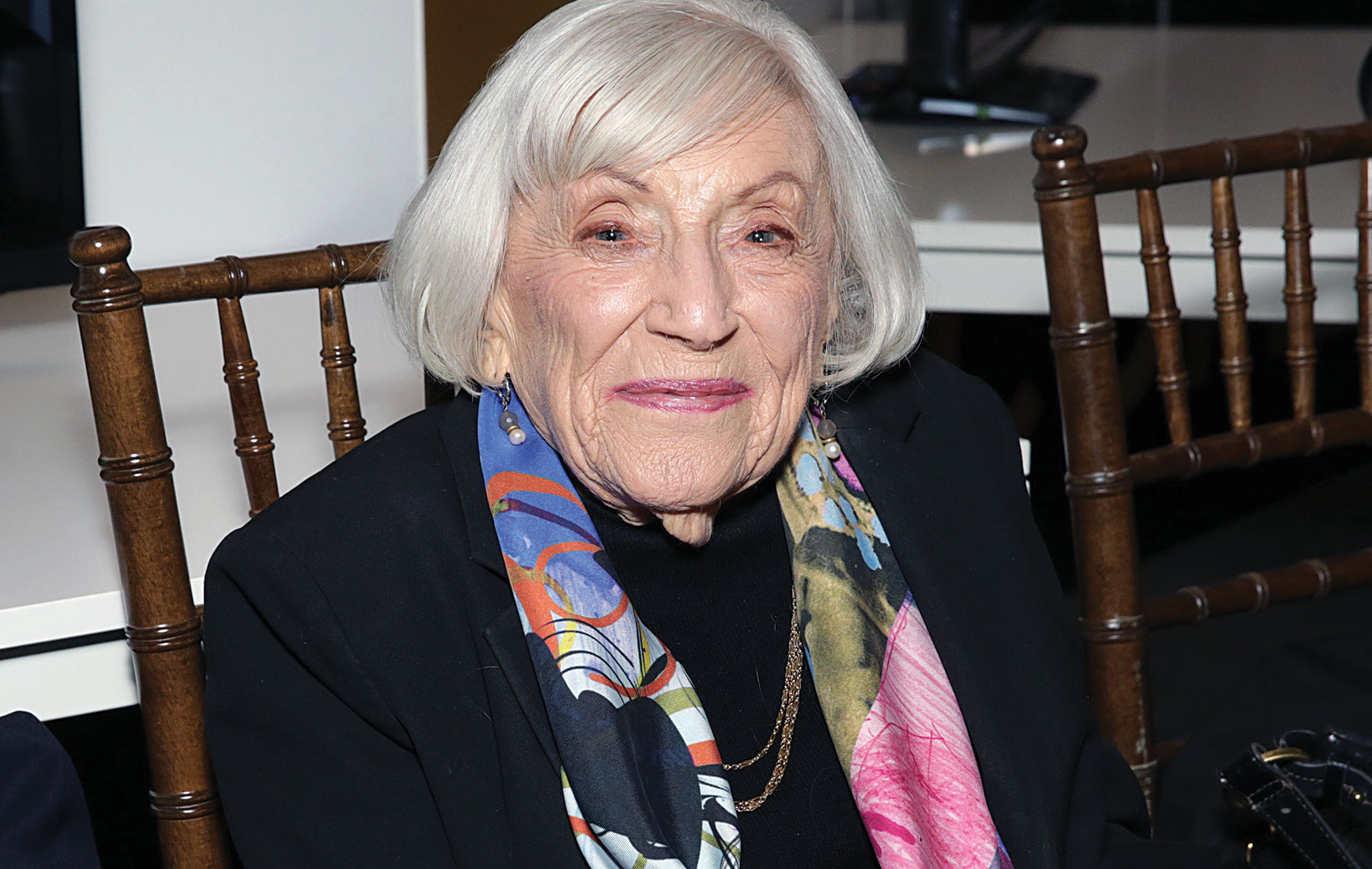
(Holocaust survivor, author,
former spy).

“The Liegnitz Plot” came about after Gilbert decided to investigate the story of a Nazi who was skimming stamps intended for Adolf Hitler. Gilbert said he felt he had a moral obligation to make his film. “In a way this movie honors the 6 million people who couldn’t take the journey with me,” he said. “What could possibly be more important than this? I Lisa Edelsteincan’t fix anything. I can’t bring back those lives. All I can do is my little part.”Lisa Edelstein

 “The Liegnitz Plot” is not yet finished and neither is Gilbert and Sturman’s quest. The filmmakers have contacted various museums and dreamed of ways to continue the story and perhaps make restitution to some of the victims. If even one missing stamp could be traced back and returned to the family of its original owners, the act would have significant symbolic meaning, Gilbert said.

“In my mind, there’s an old man, maybe he’s 90 years old, sitting in England. If we can show up and knock on the door and say, ‘Guess what? I can’t bring back your wife and your kids and all your neighbors. But this was a part of your life,’” Gilbert said. “As a collector, I know how important certain things are.”

Invariably, the discussion turned to awareness and to whether a genocide comparable to the Holocaust could happen today. Even in a world where the rise of digital media would make concealing such an act difficult, Grossman believes it’s possible. “Genocides still occur. I think there is something in our humanity that needs to be watched very carefully,” she said. 

Survivor Natalie Gold, who lost 82 members of her family, had a firm answer when King asked her what action she would like to see audience members take after seeing a film like “Who Will Write our History?”

“Vote,” Gold said, drawing a round of applause from the audience. “Vote the bastards out when they get in.”

Eyewitness: Documenting the Holocaust on Film Read More »

Fighting to Retrieve a Nazi-Looted Painting

For nearly two decades, a San Diego-based family has been trying to retrieve a valuable painting relinquished under duress to the Nazis during the Holocaust. 

The painting, currently valued at more than $30 million, hangs in the Thyssen-Bornemisza Museum in Madrid, but in December 2018, an attorney representing the family argued in a Los Angeles court that the museum did not acquire the painting in good faith. 

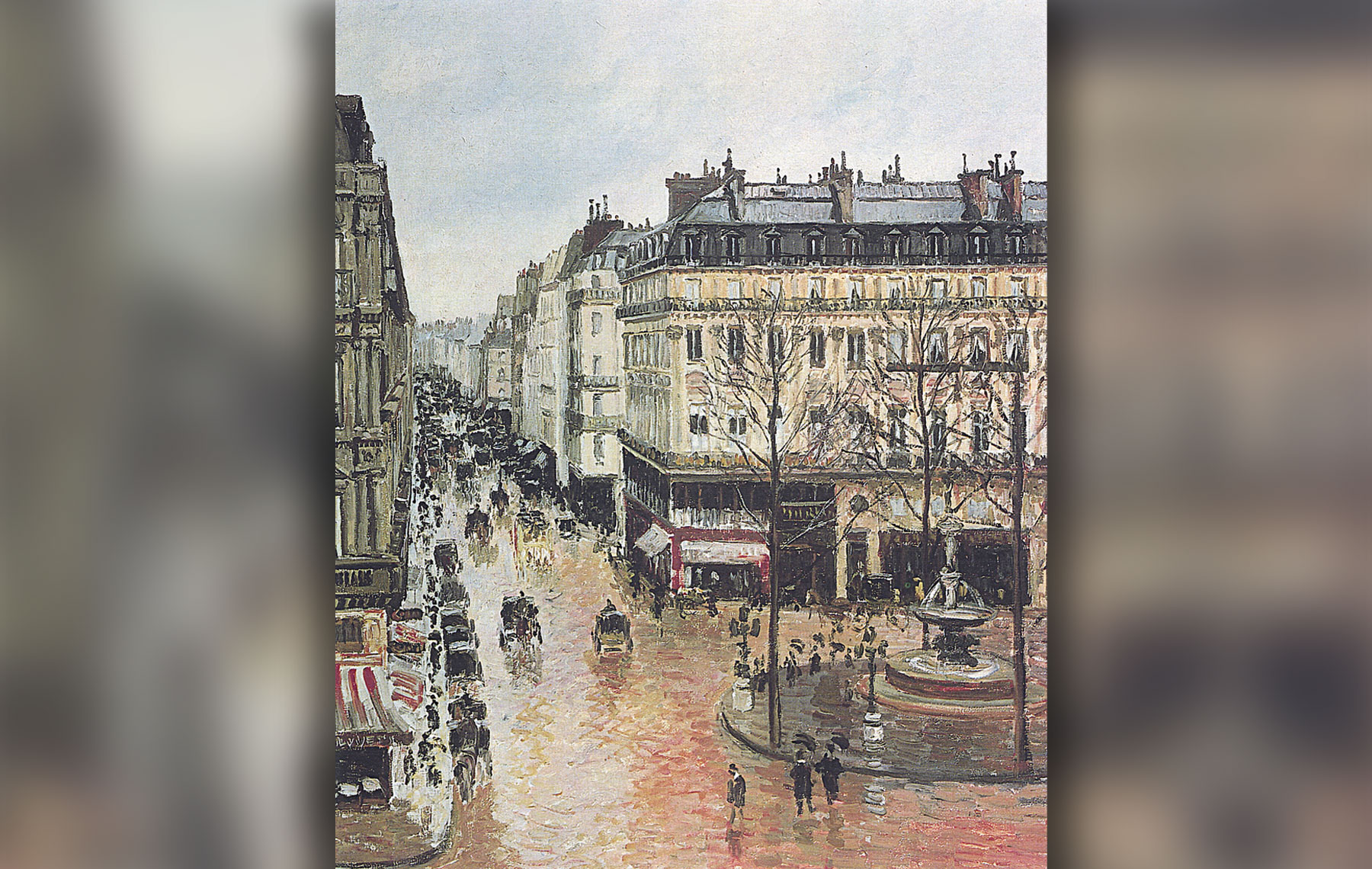
The plaintiff is 64-year-old David Cassirer, the great-grandson of the late Lilly Cassirer, a German Jew who owned the Camille Pissarro impressionist masterpiece “Rue Saint-Honore in the Afternoon, Effect of Rain.” 

Pisarro, whose full name was Jacob Abraham Camille Pissarro, was a Jewish artist. Created in 1897 and depicting a Paris street scene on a rainy day, Lilly surrendered the painting to the Nazis in exchange for exit visas for herself and her husband, Otto, in 1939.

According to court documents, the painting was smuggled out of Germany to the United States in 1951. Lilly filed a restitution claim for the painting with the German government in the 1950s and in 1958 was awarded a $13,000 settlement. 

Baron Has-Heinrich Thyssen-Bornemisza, a German industrialist whose family allegedly had close ties to Hitler, purchased the painting from a New York gallery in 1976. In 1988, he donated the painting, along with his collection, to the Spanish government, which formed the Thyssen-Bornemisza Collection Foundation to display the works.

Courtesy of Cassirer family

Lilly’s descendants thought the painting had been destroyed until a family friend saw it in the museum’s catalog in 1999. 

David Cassirer’s father, Claude, was the original plaintiff in the case. When Claude died in 2010, David became the plaintiff. Cassirer’s claim was dismissed in  2015, but in 2017, the U.S. Court of Appeals for the Ninth Circuit ruled Cassirer could move forward with his suit against the museum.

During the December hearing, Thaddeus Stauber, representing the museum, did not dispute that Lilly Cassirer owned the painting, or that the Nazis looted the piece. Instead, he argued neither Thyssen-Bornemisza nor the museum were aware they were purchasing Nazi-looted artwork. 

Cassirer’s attorney, David Boies, argued Thyssen-Bornemisza did know, stating that as a serious art collector, Thyssen-Bornemisza previously had purchased paintings from the famous Cassirer gallery in Berlin, which is where the Pissarro hung before Lilly inherited it from her first husband. 

Since the gallery was owned by Jews, Boies argued, Thyssen-Bornemisza likely would have known the Pissarro belonged to Jews. In addition, court documents claim that ripped labels on the back of the painting are evidence that whoever took ownership of the painting after 1939 attempted to conceal that it had been looted.

A ruling on the case is expected this spring.

Fighting to Retrieve a Nazi-Looted Painting Read More »

Does Tikkun Olam Divide Along Religious and Political Lines?

Seated between Rabbi Sharon Brous and author Jonathan Neumann, Rabbi David Wolpe said, “My chair is exactly equidistant between our two participants.” 

Wolpe was referring to the role he was about to undertake as the centrist between two speakers with opposing viewpoints at a debate titled “Is Tikkun Olam Actually Good for the Jews?” 

Without missing a beat, Brous moved her chair closer to Wolpe’s. 

During the impassioned, good-humored discussion, held Feb. 5 at Sinai Temple, Brous — the founder and spiritual leader of progressive congregation IKAR — said her community’s emphasis on tikkun olam is informed by how prevalent a role the Exodus story plays in contemporary observance of Judaism. 

“Why has Jewish tradition so centralized this story?” she said. “This is the centerpiece of biblical legislation and it is the centerpiece of our liturgy as well. This story is the paradigm of human experience.” 

Neumann, author of the book “To Heal the World? How the Jewish Left Corrupts Judaism and Endangers Israel,” argued the American-Jewish community is overly embracing of tikkun olam, which, he said, is synonymous with left-wing politics.

“Tikkun olam is hegemonic in American Judaism,” he said. “It is there from cradle to grave. It’s there in books for infants, in elementary and high school curriculum, extracurricular activities, summer camps, campus initiatives. The great American philanthropies are dedicated to tikkun olam. Presidents talk about tikkun olam.” 

Neumann argued that if a synagogue makes tikkun olam core to its mission, it leads to the neglect of more Jewish-specific practices.

Brous denied this, pointing to IKAR congregants that organize for low-wage hotel workers and pray with equal devotion, denounce Trump’s policies targeting asylum-seekers with the same passion they study Torah. Caring about human rights and Judaism are not mutually exclusive, she said.

“I am seeing in the book and in the many people who have written about your book a reductionist claim that those who fight for universal rights have therefore abandoned our particular Jewish rituals, traditions and peoplehood,” Brous said. “My answer to that is come to IKAR and see how we daven and see how long Mussaf is — even though people are hungry for lunch, we have in no way abandoned our particular claims and have no intention to because they are all part of one conversation for us.”

Wolpe asked Brous and Neumann why the debate over the merits of tikkun olam divides Orthodox and Reform Jews and Republican and Democratic Jews.

Neumann disagreed with Wolpe’s question, arguing that his message has resonated with non-Orthodox people who are tired of hearing sermons about social justice in their non-Orthodox synagogues. Meanwhile, he said, there are those in the Orthodox movement who are active in social justice groups. He added that his book doesn’t argue that Judaism endorses either liberal or conservative politics. When Wolpe asked him to name a conservative position that Judaism rejects, he said, “Judaism doesn’t have a position on most of the issues that occupy American political discourse today.” 

Brous, who said she had read Neumann’s book carefully, cited how the commandment to welcome the stranger is mentioned at least 36 times in the Torah, “Completely disproportionate to any other mitzvah we read about in our Torah. So to my mind, this is not some made up, 20th-century invention of a bunch of feminists who wanted to eat pork, but instead is really a core message of our tradition.”


The Journal did not attend the event, but received a video recording of the debate from Sinai Temple. 

Does Tikkun Olam Divide Along Religious and Political Lines? Read More »

Behind the Admissions Process at de Toledo High School

On March 8, dozens of high schools across Los Angeles, including several Jewish ones, will send out notices of admission. It’s a stressful time for families applying. It’s also an extra-busy time for the admissions professionals charged with making the decisions. 

The Journal spoke with de Toledo Director of Admissions Michelle November about the process at that high school. 

This year, as in recent years, de Toledo will accept approximately 100 students into ninth grade and take a much smaller number for 10th and 11th grades. Unlike some schools, de Toledo does not release the number of applicants it receives. 

“We’re not really about a rate,” November said. “We’re about the fit. Is this child a good fit for our school and are we a good school for that child?” 

However, she did make it clear that de Toledo does not accept everybody who applies. Although it may seem obvious, de Toledo accepts only Jewish students. However, they don’t have to have attended a Jewish elementary and/or middle school, or speak fluent Hebrew. 

“Jewishly, we are very diverse,” November said. “And that’s our goal. It’s exciting to be a point of entry for a family. Maybe they have not participated much [in Jewish life] and this is an exciting first step. That’s just as valuable as a family that has always participated.”

The school seeks students from a range of middle schools, both public and private, Jewish and not. “It’s refreshing and it’s more reflective of the real world,” November said.

De Toledo seeks students from a range of middle schools, both public and private, Jewish and not. “It’s refreshing and it’s more reflective of the real world.”

— Michelle November

Not surprisingly, grades and test scores matter. “We’re looking for students capable of being successful with our academic program, which is a dual curriculum, with extra Jewish studies and Hebrew class,” she said. “De Toledo is a rigorous, college-prep high school.” That said, a B-minus in seventh-grade science isn’t going to disqualify someone. November and her colleagues also recognize that not everyone is an ace when it comes to taking standardized tests. “Most people aren’t strong in everything,” she said. “We are really big-picture people.”

Nonetheless, there are deal breakers, including significant disciplinary issues. Another is an excess of unexcused absences and tardies on a transcript.

One factor that does not come into play in admissions decisions at de Toledo is a family’s finances. Admissions decisions are made blind. That means whether or not a family can afford the approximately $39,000 yearly tuition has no impact on a student being admitted. Financial aid decisions regarding what the school calls “tuition assistance” are made separately.

For families who are thinking about de Toledo for their current sixth- or seventh-grader, November said it’s important to get to know the school. While families don’t accrue points for coming to the annual open house (typically held in early November) or taking a parent tour, for example, she said these opportunities are invaluable in seeing what de Toledo is about — “raising up A-plus human beings.” 

The school, November said, seeks families “that get who we are and value who we are.” She added it’s difficult to get the full picture if your only experience of the school is via the website or a brochure. Students in eighth grade and older also have the option to do a half-day shadow day, during which they are paired with two student ambassadors and get to attend classes, clubs and stay through lunch.

For those who do decide to apply, honesty and transparency are key. “We like to be upfront with everything,” November said. “We hope and ask that parents will do the same for us. Surprises later are usually detrimental to the student.”

November also recommended allowing prospective students to speak for themselves. She said it usually is obvious when a parent has filled out the student portion of the application. She gave the example of asking applicants about their stated interests on their applications during the interview only to find out they actually have very little interest in those areas. What happened? “Sometimes parents check off interests for students,” she said. 

Because November and her two colleagues who also do interviews make every effort to get to know each student, she discourages advance prepping. “I would rather the child be him- or herself,” she said. “I have more of a sense of who that child is, who to introduce them to next, whether a particular athletic coach, the engineering teacher, or the director of drama, musical theater and vocal performance.”

Each year, November does have to make tough admissions decisions. But, she said, “my goal is to have all my interactions be kind and compassionate and truth-telling.”

Behind the Admissions Process at de Toledo High School Read More »

My Journey to an Icon of the N.Y. Dessert Scene

The Statue of Liberty, the Empire State Building, Frank Sinatra, the Rockettes, Broadway, Times Square, hot dogs, the Yankees, bagels and a New York slice — no list of old New York is complete without the black-and-white cookie. The sweet treat is thought to have been brought over by German Jews at the turn of the century and can be found in every corner store, bodega, bakery and deli in the city. Along with New York-style cheesecake, the black-and-white is perhaps the city’s most famous dessert and rose to national attention in a “Seinfeld” episode when Jerry declared it a symbol of racial equality.

I’ve never much been a fan of the cake-like cookie, probably because my “salt tooth” is dominant but also because I’d never eaten one from William Greenberg Desserts, widely considered New York’s top spot to eat the ubiquitous treat. Walking into the kosher establishment, a store that’s been around since the 1940s and sits on a prime spot on Madison Avenue on the Upper East Side, this past week, I finally understood why the cookie is such an icon of the New York dessert scene. Greenberg’s is a tiny wonderland of Jewish confections — rugalach, schnecken (a yeasted dough with pecans, raisins and cinnamon), cookies and fruit tarts — piled high and crammed onto every available surface. It’s hard to believe that such a small space could hold such a huge legacy. 

Like many old-school businesses, Greenberg’s started as a family affair — when Greenberg’s favorite aunt, Gertrude, taught him how to bake. She passed down her recipes to him and after almost 50 years in the business, he passed along the bakery to his son Seth. Seth Greenberg, who owned the bakery for only a few years, sold it to investors in 1995. During that time, Carol Becker, Greenberg’s current owner, was baking challah in her small New York apartment and selling the loaves to her neighbors. Becker, a lifetime New Yorker who worked in her family spirits business, got her love of baking from watching her Romanian grandmother Betty prepare Jewish pastries in her home kitchen. 

“Here I was, baking challah — which I wasn’t supposed to be doing — in my tiny apartment and the smell would waft down the hallway. That’s how I got more customers,” she told me as we sat in a sunny spot at the front of the bakery on an unseasonably warm February day. “I always loved baking. I loved watching my grandmother as she rolled cookies and pastries, and I associated the smell and warmth of baking with her.”

“It’s hard to believe that such a small space could hold such a huge legacy.”

Becker said she had no formal training but was spurred on by increasing demands for her challah, and later, biscotti and other cookies for a growing customer base. Her kitchen was too small to accommodate the demand, and Becker’s friends heard that there was an opportunity to buy what was considered the best bakery on the Upper East Side. Becker said she didn’t hesitate. By that time, she was hooked on the bakery business and, after a lengthy and frustrating negotiation with investors, she bought the business in 2008. 

“It’s humbling and frightening to buy a business with such a big legacy and reputation, and it’s a lot of responsibility,” Becker said. Sure enough, as I was observing what people ordered, I saw a line of customers who seemed as if they’d been patronizing the store for decades. One older man walked in and asked the women behind the counter to give him what his wife always orders — two dozen in a box to go. He couldn’t remember what his wife had told him to buy. He asked for rugelach but was quickly corrected by a young woman waiting on him. “Your wife likes the schnecken, sir,” she said to him with a smile. 

Although taking over a business that entices residents to line up around the block on Jewish holidays was overwhelming to her, Becker continued to expand the business, opening a branch of Greenberg’s in the food court of an equally iconic location — the Plaza Hotel. Although Greenberg’s is known for its wedding cakes — five-tier creations with all the flamboyance you would expect from a famous institution — it’s also renowned for the tins of pecan brownies featured in an episode of AMC’s “Mad Men.” Yet, more than the chocolate babkas (for which it’s won awards), shortbread cookies and chocolate-dipped pretzels, more than famous pound cakes, challah and hamentashen, it’s the black-and-white cookie that remains Greenberg’s top seller. 

The perfect texture of the base — not quite cake and not quite cookie but a vanilla-scented something in between — Greenberg’s black-and-white is clearly made with love. Unlike the often stale and overly sweet imposters that abound in the city, Greenberg’s cookies, available in different sizes and even colors (a green-and-white version for St. Patrick’s Day and a heart-shaped version for Valentine’s Day), have better flavor, better texture and superior frosting to even their closest competitors. Even though she isn’t a Greenberg, Becker has kept the motto of the company alive. This spring she plans to open another branch of the brand in the new Hudson Yards Food Hall, a billion-dollar project many years in the making, featuring some of the world’s most famous chefs “food concepts.” 

While stories in the city of people whose passions for their art in one form or another abound, it’s inspiring to think that the hand-written recipes of an aunt passed down on index cards almost 75 years ago combined with the love of a grandmother’s kitchen can result in an empire.

I asked Becker for the recipe for Greenberg’s famous black-and-white cookie but she is bound by tradition to keep it a secret. Here is my recipe, the one I use in my bakery, one that I’ve tinkered with over the years. It’s a reasonable facsimile, a copycat, but not quite the real thing. For that, I’m afraid, you’ll need to make the trek to the big city.

YAMIT’S COPYCAT MINI BLACK-AND-WHITE COOKIES

For the cookie:
1 3/4 cups cake flour
1/2 teaspoon baking powder
1/2 teaspoon baking soda
1/2 teaspoon salt
8 tablespoons softened butter
1/4 cup sugar
1 large egg
1/4 cup buttermilk
1 teaspoon vanilla extract
1/4 teaspoon almond extract

For the white icing:
1 teaspoon coconut oil
1 teaspoon corn syrup
1/4 cup whole milk
1 1/ 2 – 2 cups powdered sugar (confectioners)
1/2 teaspoon vanilla

For the chocolate icing:
1/2 cup Baker’s no sugar added dark chocolate, chopped

Preheat oven to 400 F.

Whisk together dry ingredients (flour, baking powder, baking soda, salt.)

In a separate bowl, combine softened butter and sugar, then beat until light and fluffy. Add egg and extracts and then half the flour mixture. Mix 30 seconds to combine and then add in the buttermilk.

Mix another 30 seconds and then add remaining flour mixture. Mix another 30 seconds to combine. Batter should be slightly thicker than pancake batter.

Transfer to piping bag and pipe batter onto parchment-lined baking sheet in 2-inch diameter round shapes. Leave 1 inch between cookies. There should be 12 rounds. Lightly tap tray on counter to flatten out cookies. Bake for 12-15 minutes (cookies should be only slightly brown on the bottom and have no color on top).

Transfer cookies to cooling rack and put in freezer to cool completely before icing.

For icing: Heat the coconut oil, corn syrup and milk in a small saucepan. Add powdered sugar until the mixture is thick, and cook until glossy. Place half the white icing in a separate bowl. Melt chocolate in microwave for 1 minute and mix with half the other half of the white icing, stirring to combine.

When cookies are cool, turn them over. Using a small offset spatula, ice half of each cookie with white icing first and then repeat icing the other half with the chocolate icing.

Makes 12 small or 6 larger cookies. 


Yamit Behar Wood, an Israeli-American food and travel writer, is the executive chef at the U.S. Embassy in Kampala, Uganda, and founder of the New York Kitchen Catering Co. 

My Journey to an Icon of the N.Y. Dessert Scene Read More »

Weekly Parsha: Ki Tisa

One verse, five voices. Edited by Salvador Litvak, Accidental Talmudist.

“And you, speak to the children of Israel and say: ‘Only keep My Sabbaths! For it is a sign between Me and you for your generations, to know that I, the Lord, make you holy.’” –Exodus 31:13


Rabbi Cantor Hillary Chorny
Temple Beth Am, Los Angeles

The year I turned 7, I read my first “chapter book,” Beverly Cleary’s “The Mouse and the Motorcycle.” I couldn’t have been prouder of the big sticker I got on my library card. At the time, the source of my pride was sheer volume; look at all those pages I’d read! 

You know what the really impressive thing is about reading a chapter book, though? It’s not picking up a big, heavy title for the first time; it’s putting down that book, and then coming back to it. My real accomplishment was taking that dog-eared paperback, planting it upside-down with the spine smashed wide open (sorry, librarians) and running off to do something else. And then returning to the book, to its story, and jumping back into the narrative with perfect elasticity. Picking up where I left off as if I’d never left that fiction world, not even for a snack break.

Rabbeinu Bachya (13th- and 14th-century commentator) points out that one plain, contextual meaning of Exodus 31:13 is simply a reminder that Shabbat, unlike other holidays, happens over and over throughout the year. It’s the temporal destination for a weekly homecoming. With Shabbat, as with any great book, we return to fully immerse in an alternate, alluring universe and depart from our own world. And we do so with the promise that we’ll return to mundanity soon enough, with a bookmark to save our place for the Shabbat to come.


Yekusiel Kalmenson
CEO, Renewal Health Group 

Theologian Thomas Merton once said, “Some people spend their whole lives climbing the ladder of success only to find, once they reach the top, that the ladder is leaning against the wrong wall.” I am amazed by how many people never really dream about a future for themselves. They can spend months planning a holiday, but not even a day planning a life. This isn’t the best recipe for a life. 

In English, we commonly greet one another by saying, “What’s happening?” In Yiddish, the typical greeting is, “Vos tutz zich, vos machstu?” (What are you doing, what are you creating?) I’ll never forget a certain mentor in my yeshiva who would always ask us, “Are you a thermometer or a thermostat?” A thermometer takes the temperature; a thermostat controls the temperature. 

Are we waiting for life to happen to us, or do we have a vision and a plan for its implementation? 

Thomas Friedman said, “When you press the pause button on a machine, it stops. But when you press the pause button on human beings, they start. … You start to reflect, you start to rethink your assumptions, to reimagine what is possible, and reconnect with your most deeply held beliefs.”

Shabbos is a weekly day of pause and dreams. Shabbos is a 24-hour oasis in time and spirit that helps us not only rest but return, not only rejuvenate but recalibrate. Shabbat is the day each week we check our ladder to make sure it’s leaning on the right wall.


Rabbi Chaim Singer-Frankes
Interfaith Hospice Chaplain

When immersed in creativity, I don’t want to stop. I lose all sense of time, forgetting when, where — even why — I am! Our verse balances us. 

Firstly, Ki Tisa outlines that tokens gathered in a census shall become endowment for God’s Tabernacle. Then artisans Bezalel and Oholiav are awarded the contract to build this Tabernacle, and then, curiously, comes our verse. 

Suddenly, during God’s survey for the Mishkan, we’re on “Shabbat alert.” Why? Rashi asks this and I paraphrase his brilliant, logical observation: “While I (God) have commanded an immense task of manufacturing, don’t think that Shabbat can abruptly be taken lightly.” 

I grasp Rashi’s point. Imagine Bezalel and Oholiav are — lacking a better term — totally psyched about their commission! The whole Israelite camp is teeming, elated in a rush of creative enthusiasm. And then, wham. Shabbat. Keep Shabbat. Is God saying, “Recharge your batteries every week”? Definitely! Is God emphasizing that sacred contracts must have proper leisure time baked right in? Certainly! Rashi sweetens it with God’s other realization: Humans get carried away with work. “You want me to put down my iPad just when I’m cooking up something great? I’ll draw just a little more after sundown this week, and next Friday I’ll stop on time. I promise, just this once …”

For Rashi, this is God’s point: “With exciting holy things at your fingertips, it’s easy to get immersed, so safeguard Shabbat.” 

Must holy passions compete with Shabbat? No. Just imagine: As compelling is the project, so too is Shabbat.


Rabbi Lori Shapiro
Open Temple

Our pasuk begins with a curious conjunction; a short word, “ach,” meaning “above all,” “verily,” or most curiously, “nevertheless” — a seeming contradiction to its allied meanings. The preceding verses conclude a pericope spanning three Torah portions with detailed descriptions for the creation of the Mishkan, the Tabernacle. As we come to the coda of God’s magnum opus, we meet this reversal: “Only/Above all/Verily/Nevertheless, keep my Sabbaths.” The invitation into Shabbat is unclear: Are we to continue the work of creation on Shabbat or not?

A choir of rabbinic voices rises up to tame the suggested contradiction. Torah is pliable enough that we can all agree, disagree or do both with their interpretations; as well as rigid enough to create a spectrum of incontrovertible convictions. 

So what are we, seemingly “The Generations” mentioned in the verse, to do? Do we guard the Sabbath like sentries of an ancient palace? Or do we simply persist through the aisles of Target on a Saturday morning, wondering what davening would be like at that shul down on La Cienega? 

Verily, there are those of us who might merely meditate on the letter vov at dawn as a part of a visual shiviti meditation. Whatever expression of hallowing its presence we choose, one thing is clear: A Temple has been built, its name is Shabbat, and it is, above all — from alef to taf with a vov in the middle — the sign upon which all of this hinges. Shabbat is ours to know and make our own.


Jacob Artson
Student at West L.A. College

This chapter begins with God designating Bezalel to supervise the building of the Tabernacle and its beautiful implements. Then, in our verse, we are instructed to keep Shabbat. We just read the Ten Commandments in the Torah portion a few weeks ago, so why do we need to be reminded again to observe Shabbat?

The Tabernacle represents the holiness of space, while Shabbat represents the holiness of time. We need both for enduring relationships, including our relationship with God.

Recently, my family moved into a new house. I’m not strongly attached to physical spaces, so it wasn’t traumatic for me to leave my childhood home. I just needed to know where my space was in the new house. It’s the space where I can feel safe and present. That’s what I imagine the Tabernacle was for the Israelites. While wandering in the desert, it was a space they could turn to in order to feel safe and remember God’s love.

For me, the same is true for Shabbat. Even if we have a space to relate to God or our loved ones or our friends, we still have to make the time to go to the space and connect. Keeping up a relationship requires spending time together. So Shabbat comes every week to give us time to spend with God, reflecting where we are at that moment, getting inspiration for the coming week and recommitting to what brought us together in the first place: creating a world of peace, justice and dignity for all. 

During Jewish Disability Awareness and Inclusion Month in February, Table for Five includes young voices from Vista Del Mar’s Moses-Aaron Cooperative Program. 

Weekly Parsha: Ki Tisa Read More »

The Challenge of the Middle

Orthodox, Conservative and Reform embrace the fundamental principle that Judaism is a work in progress. All three movements originated in Germany in the early 19th century as a response to the emancipation of the Jewish people in the Western world, and they differ only in how much or how little they are willing to change in Jewish belief and practice. Orthodoxy is generally perceived as having changed the least, Reform is perceived as having changed a lot, and Conservative Judaism, like Goldilocks, appears to prefer an approach that falls somewhere in between.

Yet, according to Rabbi Elliot N. Dorff, Conservative Judaism is “rooted in and grow[s] from Jewish tradition, law, and moral values,” as he writes in “Modern Conservative Judaism: Evolving Thought and Practice” (University of Nebraska Press/Jewish Publication Society), a book that offers a commanding view of the history and destiny of the Conservative movement as explained to us by one of its leading lights.

“For those readers who grew up in the Conservative movement, this book may serve as an illuminating backstory you may have never known, explaining not only what the movement believes and practices but how and why it arrived at these conclusions,” Dorff explains. “For those who grew up in other expressions of Judaism, I hope the book will deepen your understanding of Conservative Judaism beyond the one-dimensional ‘Orthodox Judaism watered down’ or ‘Reform Judaism beefed up’ and impel you to engage with its teachings on its own terms.”

Dorff emphasizes the developments that have taken place over the last 50 years, but he uses a medieval Jewish credo to provide a path through the sprawling theological terrain: “Israel, Torah and God are one.” As Dorff points out, he has reversed the order of the triad. Thus, the first section of the book is theological, the second section focuses on how the Conservative movement understands and teaches the ancient Jewish texts, and the final section explains “why Conservative leaders today remain personally committed to Israel even when they may disagree with official Israeli policy.”

Dorff’s book is the latest title in the JPS Anthologies of Jewish Thought series, which is published by the University of Nebraska on behalf of the Jewish Publication Society and the Rabbinical Assembly, an international organization whose membership consists of some 1,700 Conservative rabbis in North America, Israel and around the world. 

“Rabbi Dorff’s publications include more than two hundred articles on Jewish thought, law, and ethics, together with twelve books he wrote and another fourteen he edited or co-edited,” writes Rabbi Julie Schonfeld, the first woman to serve as chief executive of the Rabbinical Assembly (or, for that matter, any major rabbinical organization), in her foreword to Dorff’s book. “We might suggest that Rabbi Dorff’s extensive teaching, speaking, and writing constitute a lifetime of preparation for this new book.”

“Dorff refuses to apologize for the velocity or scope of change that the Conservative movement has brought to the Jewish world. Indeed, he celebrates innovation as an authentic and essential Jewish value.”

While “Modern Conservative Judaism” deserves to be described as Dorff’s magnum opus, he also serves as the curator of writings by other leading rabbis and scholars in the Conservative movement. The book includes selections from these men and women, living and dead, including the late Rabbi Harold Schulweis and Dorff’s fellow faculty member at the American Jewish University, Rabbi Bradley Shavit Artson.

Dorff brings a bracing intellectual honesty to his work. The Shema may be the credo of Judaism, but exactly what we mean when we refer to “the Lord Our God” is not prescribed by the Torah, which presents God in a great many different guises. While Dorff insists that “Judaism cannot be detached from belief in, or beliefs about God,” he also concedes that “God is also a source of great perplexities and confusions.” Above all, he reminds us that one can call himself or herself a Jew without believing in God at all.

“One cannot be a Christian without believing, in some manner, that Jesus is Christ, and one cannot be a Muslim without believing Muhammad is the primary prophet of God,” he explains. “Judaism, in contrast, defines a Jew through matrilineal descent or conversion. A Jew can therefore be an agnostic or atheist or believe all kinds of other things about God (except perhaps that God is more than one or incarnated in a particular person) and still be a Jew .”

“For those who grew up in other expressions of Judaism, I hope the book will deepen your understanding of Conservative Judaism beyond the one-dimensional ‘Orthodox Judaism watered down’ or ‘Reform Judaism beefed up’ and impel you to engage with its teachings on its own terms.” — Elliot N. Dorff   

On the questions of who is a Jew and who is a rabbi, we find one of the great heartbreaks in the Jewish world. Dorff affirms the fundamental importance of Zionism and the Jewish state in the Conservative movement — known as Masorti in Israel — but he cannot overlook the fact that the State of Israel engages in what he frankly calls religious discrimination against all Jewish denominations except Orthodoxy. “The Israeli government funds only secular and Orthodox schools and grants allocations solely to Orthodox congregations for their buildings, maintenance, and rabbis’ salaries,” he points out. “Furthermore, only Orthodox rabbis may officiate at a wedding of two Jews in Israel or process a divorce, and the Orthodox also control which conversions to Judaism count for eligibility to marry a Jew.”

Notably, Dorff refuses to apologize for the velocity or scope of change that the Conservative movement has brought to the Jewish world. Indeed, he celebrates innovation as an authentic and essential Jewish value. “In fact, Conservative rabbis and lay leaders reveled in the diversity of opinion and practice within the movement,” he insists. “They did not want to squelch its creativity and liveliness, and, furthermore, they believed it would be Jewishly inauthentic to adopt a rigid definition of what a Conservative Jew must believe or do.”

As someone who is both an activist and a dean in the Conservative movement, Dorff is not reluctant to serve as an advocate. “Conservative thinkers and leaders will affirm with some justification that the synthesis of tradition with modernity that Conservative Judaism represents is historically the most authentic form of Judaism and the he=althiest form of Judaism for the future,” he writes. “I believe readers of this book will learn why both of these claims are true.”

Authenticity, I fear, is a dangerous word when it comes to religion. All varieties of Judaism acknowledge, whether explicitly or implicitly, that there is some irreducible set of beliefs and practices that serves as a benchmark against which each expression of Judaism must be measured. All too often, they are quick to accuse one another of “inauthenticity.” The lesson that we learn in Dorff’s important book, however, is that respect, tolerance and inclusiveness are a crucial measure of what makes a movement Jewishly authentic.

Read excerpts from the book and Q+A with Rabbi Elliot N. Dorff here. 


Jonathan Kirsch, author and publishing attorney, is the book editor of the Jewish Journal.

The Challenge of the Middle Read More »