fbpx

February 20, 2019

The Screenwriters Who Made ‘BlacKkKlansman’ Jewish

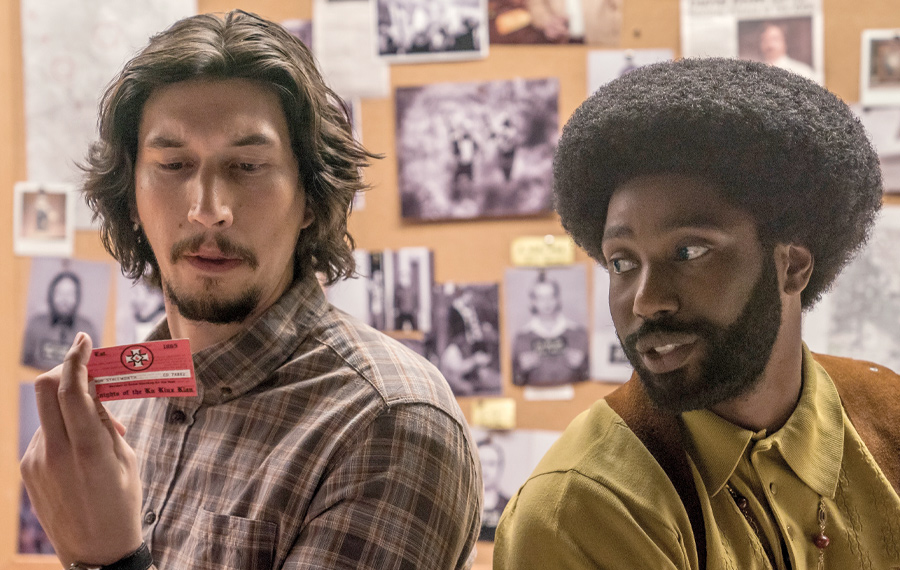
BlacKkKlansman,” Spike Lee’s 1970s-set film about a black police detective who poses as a white man to infiltrate the Ku Klux Klan, is nominated for six Academy Awards, including best picture, best director and best-adapted screenplay. It’s the first nomination for childhood friends Charlie Wachtel and David Rabinowitz, and it’s their first produced script.

Based on the memoir “Black Klansman” by Ron Stallworth, about a black man who posed as a racist in telephone conversations and enlisted his white colleague to stand in for him in person to carry out the deception, the film resonates in today’s America.

“It hits a nerve,” Wachtel said in a telephone interview with both writers. “It’s easy to see the parallels between what the movie is trying to say and what our current climate is today. Spike always said, ‘We have to connect the past to the present and make it contemporary.’ ”

Rabinowitz believes the film benefited from fortuitous timing. “We got the script to Spike through Jordan Peele, and once [Lee] got involved, he was able to make it quickly and release it on the on the anniversary of the Charlottesville rally,” Rabinowitz said.

The writers first discovered Stallworth’s story in a Facebook post. They contacted the author via his publisher and manager, and they received permission to adapt the memoir on spec.

“We worked with Ron Stallworth to develop the script. We did multiple drafts and sent him every draft. He gave us feedback on every page,” Rabinowitz said. One of the things they discussed was the tone, which strikes a balance between serious drama and absurd comedy. “While the absurdist elements of the story lend themselves to comedy, it had to be something that people took seriously,” Wachtel said. 

As with most screen adaptations, there were changes the writers suggested early on. While it was never carried out in real life, “We wanted to make the bomb plot real so they had a specific thing to investigate,” Rabinowitz said. The screenwriters also turned Stallworth’s gentile detective partner into Jewish Flip Zimmerman, who must pretend he’s a racist, anti-Semitic Holocaust denier to carry out the ruse.

David Rabinowitz (left) and Charlie Wachtel. Photo by Eric Charbonneau

“We wanted to make him Jewish for a few reasons, first as a storytelling device to give it more stakes and more drama,’” Rabinowitz said. “Just like Ron has to deal with a certain split identity, we wanted to mirror that in his partner. [Klan leader] David Duke emerges as the central villain in the story and for him Jews are enemy No. 1. And we’re Jewish, so it’s our way into the story. Ron was right on board from the beginning.”

The Zimmerman role was expanded when Lee and Kevin Willmott did their revision of the screenplay. Wachtel knew producer Shaun Redick, who had worked with Peele on “Get Out.” Peele signed on to produce and they did another rewrite based on Peele’s feedback. Peele brought the script to Lee, who continued to shape it according to his vision. All four writers share the Oscar nomination.

It’s a dream come true for Rabinowitz and Wachtel, who met in Hebrew school in East Brunswick, N.J., and always wanted to be filmmakers. Raised in Conservative Jewish families, they attended each other’s bar mitzvahs and made movies together for high school projects — writing, directing, producing and acting in them. 

Rabinowitz thought that a career in filmmaking would combine his interests in creative writing and movies, and he set about pursuing it after graduating from Quinnipiac University. For Wachtel, two family trips to Universal Studios in Los Angeles and Orlando made a big impact. “We took the tram ride and I got to see behind the scenes on movie sets. I was able to see that making movies was actually a business,” he said. He moved to L.A. nine years after graduation from American University and Rabinowitz followed in 2012.

Today, both describe themselves as culturally Jewish, but they do observe the High Holy Days. “The content of the film being what it is, even having this conversation with you, makes me proud to be Jewish,” Wachtel said. “It’s something that’s been a constant in my life.”

They also said they have writing “in their DNA.” Author and playwright Sholem Aleichem is Rabinowitz’s great-great-great-uncle on his father’s side. Wachtel’s mother, Shirley Russak Wachtel, is an author whose memoir “My Mother’s Shoes” is about her mother, a Holocaust survivor.

Wachtel has thought about adapting that story “down the line,” but the pair already have several projects in progress. Interest in their work has picked up considerably since they woke up to news of their Oscar nomination on Jan. 22.

“It’s extremely rare. The first script we sold got made into a movie and got nominated for an Oscar,” Rabinowitz said. “Winning would be huge but the nomination feels like a win already, just being invited there. As a new screenwriter, you take a lot of meetings and may compete with 10 other people to get a job. With a nomination, the number goes down, or you may not be competing with anyone. And the quality of the meetings goes up.”

Benefiting from this interest is the first script they wrote together, a basketball-themed drama called “Madness” that will soon go into production. They’re also writing “Thacher Island,” about the origins of the witness protection program, and a Cold War spy series about Operation Mongoose, the CIA’s secret operation to eliminate Fidel Castro when he took power in Cuba in 1959. They don’t only want to make films based on true stories, however. “We’re very open to different genres and styles,” Wachtel said.

They’re ready to take advantage of their newfound status in Hollywood. “David and I have a lot of goals. We’ve talked about forming a production company together. We each have interests in directing and becoming a showrunner for television, as well,” Wachtel said. “We like to think we’re just getting started.”

The Screenwriters Who Made ‘BlacKkKlansman’ Jewish Read More »
The Man Behind United Hatzalah, Saving Lives With Rapid Response Times

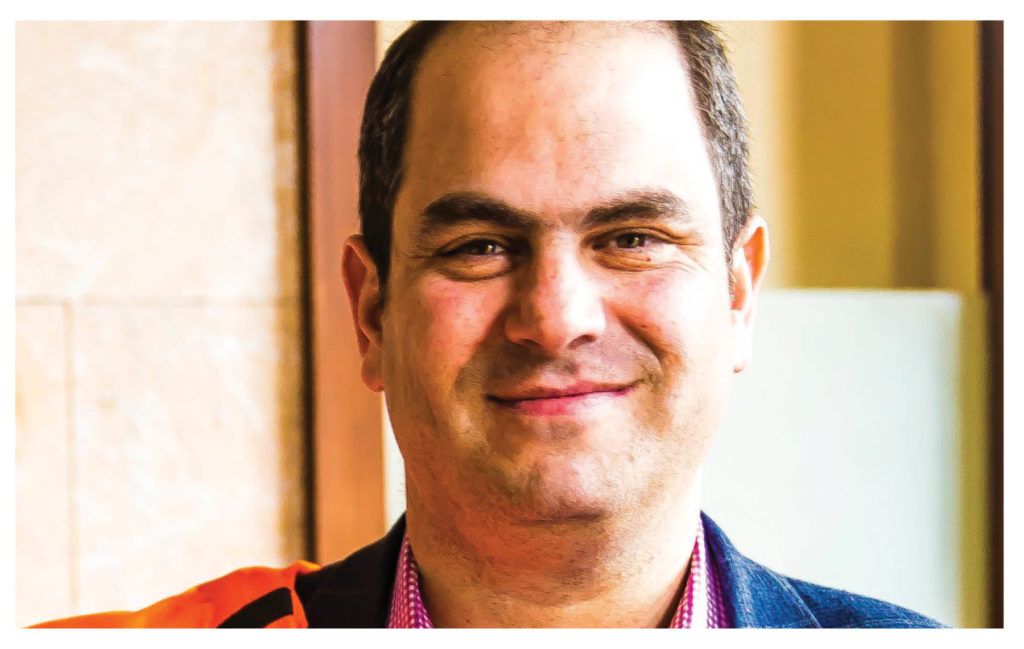
Eli Beer was just 7 years old when a bus exploded in front of him as he was walking home from school in Jerusalem. A wounded man pleaded with Beer to help him. Frightened and unable to help, Beer ran off. He tried to forget what he had seen but couldn’t. 

The incident motivated Beer, now 45, to dedicate his life to saving others. When he turned 15, he became a licensed emergency medical technician (EMT) and volunteered with an ambulance crew. But when it took him 21 minutes to cross Jerusalem in heavy traffic to reach a choking 7-year-old, a delay that resulted in the boy’s death, Beer decided to take matters into his own hands. 

Founded by Beer in 1992, United Hatzalah (the Hebrew word for “rescue”) is a nonprofit organization that runs solely on donations and is committed to saving lives in Israel and around the world with lightning response times. Hatzalah-trained volunteer EMTs use “ambucycles” — ambulances on motorcycles — to dodge traffic and provide lifesaving services free of charge. 

Today, the organization has grown to more than 5,000 volunteer medical responders treating over 300,000 people per year. It operates in 21 countries across Europe, Australia, South America and North America, and it’s coming to Africa soon. 

Ahead of United Hatzalah’s inaugural Los Angeles gala on Feb. 28, Beer spoke with the Journal about the organization and his plans to eventually bring operations to L.A. 

Jewish Journal: Why were you so confident this idea would work? 

Eli Beer: You could be the greatest ambulance and EMT crew in the world, but if you don’t get there in time, none of it matters. I never thought about a 90-second response time to everywhere in Israel as my goal. Initially, I thought about my neighborhood. About 4,000 live there, so I thought if I have 15 people responding to emergencies, that would be enough. Eventually, I thought we’d have to expand and form a network of volunteers that would be dispersed everywhere in Israel. 

JJ: Hatzalah is known for pioneering location-based GPS technology. How did that start? 

EB: The first time I saved someone’s life, when Hatzalah was just getting started, I got there in 30 seconds. I heard the emergency call from police scanners. I ran because it was a block away. We had to break into this field using chutzpah. Organizations like Magen David Adom (the Israeli version of the Red Cross) wouldn’t dispatch calls to us, even in my neighborhood, even though we were closer. But with police scanners, we could get there with no problem. 

“Whether or not you’re a Zionist, which side of the conflict you’re on, that isn’t a part of [United Hatzalah]. Anyone who wants to be part of this system that puts life before anything else can join.”

JJ: And you obviously upgraded from police scanners. 

EB: Uber, basically, unintentionally copied our model. The whole intention is not giving rides for free, but saving lives for free. Our app, which was developed before Uber and Lyft, notifies the closest 10 volunteers using 250 algorithms. 

JJ: I’d be remiss if I didn’t bring up the motorcycles. 

EB: That’s right. We’re the ones who invented the two-wheel “ambucycles.” It has everything an ambulance has, apart from the bed, except it’s on two wheels and can skip all the traffic, increasing response time. Technically, I’m the first one in the world who drove one. 

JJ: Who are your volunteers? 

EB: They are incredible people. Most of them come from low-income jobs or communities and they just want to make a big difference. They come from religious backgrounds, ultra-religious backgrounds and secular backgrounds. They’re Arabs, Muslims, Christians, Druze and Jews. 

JJ: You’ve established Hatzalah outposts all over the world. What goes into starting Hatzalah in a new territory? 

EB: The one who wants to start it has to be totally meshugge. It needs to be someone who’s willing to put a regular life aside for this mission. Once they have the right leadership in place, we work with the group. We bring them to Israel and get them set up with everything they need. Then they can go back to their country and start recruiting people, getting the right equipment, working with 9-1-1 dispatchers.

JJ: Will Hatzalah be coming to Los Angeles? 

EB: We’re slowly starting to come to the United States. Right now, we’re in Jersey City. We originally started there four years ago, mainly serving the Jewish community. There’s a Hatzalah crew in Los Angeles but they’re technically not affiliated with us. They’re mainly serving the Pico-Robertson and La Brea-area Jewish communities. We’re friends with them, though. They visit us in Israel and we visit them. Soon, though, our plan is to expand to New York, Los Angeles and other places in the States. 

JJ: Why is Hatzalah holding a gala in Los Angeles at the end of this month? 

EB: We want more support and more awareness for the mission. Jay Leno is one of our biggest supporters. He loves our mission and backs us big-time, so we decided to do a gala there and honor him. We’re just hoping to get a lot of people, especially young people, involved in our organization, and we’re going to make the gala a lot of fun. 

JJ: What are you hoping to highlight to the Los Angeles Jewish community? 

EB: Saving lives. We’ve treated 3.5 million people. They all got amazing help and no one had to pay for it. But what’s right up there is the diversity. Once we opened up to let just anyone in with a good heart, not just Jews, that’s when we changed the name to United Hatzalah. Not only do we save lives, but we’re able to bring all different types of people in Israel together. It’s an unbelievable display of tikkun olam. Many people only see Israel’s bad sides. It also has a lot of beautiful sides. We’re bringing a volunteer to the gala. She’s a Muslim woman with five children who has never been outside of Israel. We’re also bringing an ultra-religious Jewish woman. Whether or not you’re a Zionist, which side of the conflict you’re on, that isn’t a part of this. Anyone who wants to be part of this system that puts life before anything else can join. It’s a beautiful thing. n

The Man Behind United Hatzalah, Saving Lives With Rapid Response Times Read More »

What’s Happening: Dancing, Comedy, Roseanne Barr

FRI FEB 22

Mental Awareness Shabbat 
Hoping to normalize and de-stigmatize mental health issues, Temple Ahavat Shalom holds a Mental Health Awareness Shabbat. The evening begins with dinner and social worker Pam Farkas discussing today’s teenager and mental health issues. Worship services follow, addressing self-care, mental health and insights from Jewish wisdom. Rabbi Arturo Kalfus, Cantor Ken Cohen, Rabbi Dalia Samansky, cantorial soloist Beth Wasserman Rosenfeld and rabbinic student Jonah Sanderson lead services. Guests bring their own meals. Dessert provided. 6 p.m. dinner, 7:30 services. Free. Temple Ahavat Shalom, 18200 Rinaldi Place, Northridge. (818) 360-2258.

Rabbi Sharon Kleinbaum

Special LGBTQ Guest
Beth Chayim Chadashim (BCC) welcomes Congregation Beit Simchat Torah Senior Rabbi Sharon Kleinbaum, who leads the country’s largest LGBTQ-friendly synagogue in New York City. Kleinbaum, who in 1994 installed BCC Rabbi Lisa Edwards, speaks during the Ruach Chayim Shabbat musical service. Guests are invited to honor Edwards for her 25 years on the pulpit before her planned July 31 retirement. The evening begins at 6 p.m. with “Shabbat Dinner in the Neighborhood” at Fu’s Palace, 8751 W. Pico Blvd. Dinner, $15–$20. Services follow at 8–9:30 p.m., Beth Chayim Chadashim, 6090 W. Pico Blvd. (323) 931-7023.

SAT FEB 23

Sweethearts Ball
Singles and couples ages 50-and-older meet for the Sweethearts Ball Dinner Dance Party at Stephen Wise Temple. More than 300 rock-and-rollers are expected to dance the night away to the music of Tommy Tassi & the Authentics, who play top hits from the 1950s, ’60s and ’70s. Dinner included. No reservations required. On-site parking. 7–11 p.m. $25 (cash only) at the door. Stephen Wise Temple, 15500 Stephen S. Wise Drive. For information, contact John at (310) 204-1240 or johnseeman@aol.com.

“A Funny Thing Happened…”
Beit T’Shuvah stages a stand-up comedy night, called “A Funny Thing Happened on My Way to Rehab!” The event, which features up-and-coming comedians, supports the organization’s pay-what-you-can addiction recovery program. 7 p.m. $15 suggested donation. Valet parking provided. Beit T’Shuvah, 8847 Venice Blvd., Los Angeles. (310) 204-5200.

Netanel Goldberg

“Sacred Sounds Unbound”
Temple Emanuel of Beverly Hills and Temple Beth Am debut their musical series, “Sacred Sounds Unbound,” featuring Israeli musician Netanel Goldberg. Adept on guitar, percussion and vocals, Goldberg is known for leading prayer sessions and healing circles in Israel. Rabbi Jonathan Aaron, Rabbi Adam Kligfeld, Rabbi Cantor Hillary Chorny and Cantor Lizzie Weiss introduce the program. 7–10 p.m. $18. Temple Emanuel of Beverly Hills, Greer Social Hall, 8844 Burton Way, Beverly Hills. (310) 288-3737.

SUN FEB 24

Heroes to Heroes Founder
Judy Isaacson Elias, founder of Heroes to Heroes, which sends Israel Defense Forces (IDF) veterans to assist American combat veterans suffering from post-traumatic stress disorder (PTSD), shares her story during a breakfast program at Shomrei Torah Synagogue. With the aid of both Israel and IDF soldiers in the past nine years, Heroes to Heroes has aided more than 200 U.S. soldiers suffering from PTSD. 9:45 a.m. Free. Includes continental breakfast. Shomrei Torah Synagogue, 7353 Valley Circle Blvd., West Hills. (818) 854-7650.

Lisa Robins

“The Giving Life”
Three women philanthropists share where their passions for giving have taken their lives, during a panel discussion organized by the Jewish Women’s Theatre program at The Braid. The panelists are Jill Black Zalben, director of the Stanley and Joyce Black Foundation; Ilyse Teller, board chair of the Concern Foundation for Cancer Research; and Natella Royzman, director of charitable planning at the Jewish Community Foundation of Los Angeles. Additionally, a short performance, starring actress Lisa Robins, dramatizes how the daughter of the president of Sears & Roebuck became the grand dame of philanthropy in New Orleans. The gathering includes a light brunch. 10 a.m.–noon. $20. The Braid, 2912 Colorado Ave., No. 102, Santa Monica. (310) 315-1400.

Community Service Day
In honor of Jewish Disabilities Awareness and Inclusion Month, the Jewish Federation of Greater Los Angeles’ Community Service Day offers a range of service opportunities: At Vista del Mar Child and Family Services, volunteers of all ages and abilities prepare for Purim by assembling gratitude gift baskets for firefighters and first-responders. At Jewish Family Service Chaverim and HaMercaz, work with Shalom Institute’s Shemesh Farms on projects that include gardening and karaoke. At ETTA, volunteers 11 and older make no-sew fleece blankets. At Sinai Temple, the Miracle Project and Beit Bracha organize an interactive day of theater games, musical performances and more. Times and locations: 10 a.m.–noon, Vista del Mar, 3200 Motor Ave.; 10 a.m.–noon, Jewish Family Service, 12821 Victory Blvd., North Hollywood; 10:30 a.m.–12:30 p.m., Sinai Temple, 10400 Wilshire Blvd.; noon-2 p.m., ETTA, 13034 Saticoy St., North Hollywood. Contact the Jewish Federation at (323) 761-8000 or visit the website for additional information.

Barr and Boteach Talk About Their Trip to Israel
Roseanne Barr and Rabbi Shmuley Boteach discuss their recent trip to Israel, an intimate account of their life-changing journey. Jewish Journal Publisher and Editor-in-Chief David Suissa moderates the conversation. 8 p.m. $15 presale, $20 door. Limited seating. Morry’s Fireplace, 9118 W. Pico Blvd., Los Angeles. For more information and tickets, click the link above.

Parsha Posters

Jewish Street Art
Artist and graphic designer Hillel Smith directs a spray-paint stencil workshop at Temple Isaiah. Smith, creator of weekly parsha posters in the synagogue’s lobby, starts with a discussion about art as a way of expressing personal and communal identity and highlights Jewish approaches to art throughout history before teaching how to design, cut and paint stencils. 1–2 p.m. Free. Temple Isaiah, 10345 W. Pico Blvd., Los Angeles. (310) 277-2772.

MON FEB 25

“Secrets of Erotic Lust”
In his ongoing effort to solidify marital relationships, Rabbi Shmuley Boteach examines “Three Secrets of Erotic Lust,” drawing on the recent book, “Lust for Love,” which he wrote with actress Pamela Anderson. 6:30–8:30 p.m. $20. Nessah Synagogue, 142 S. Rexford Drive, Beverly Hills. (310) 273-2400.

WED FEB 27

“Doing Jewish”
Wilshire Boulevard Temple screens the documentary “Doing Jewish: A Story From Ghana,” about Gabrielle Zilkha, a young Jewish woman from Canada who sets out to be a volunteer in Africa and finds herself surrounded by Christians as Rosh Hashanah approaches. She keeps traveling and searching and encounters a group in Ghana, the Jews of Sefwi Wiawso, who practice circumcision, keep kosher and seek acceptance in the Jewish world. 7:30 p.m. Free. Wilshire Boulevard Temple Irmas Campus, 11661 W. Olympic Blvd., Los Angeles.  (213) 388-2401.

“From India to Indiana”
Music by the late composer Walter Kaufmann is the centerpiece of “From India to Indiana: Melding Music,” a blend of classical music from the West with traditional music of India. Kaufmann, who lived from 1907–84, fled from Czechoslovakia to Bombay with the rise of Nazism. He came to the U.S. in 1957 and taught at Indiana University before retiring. The Grammy-nominated ARC Ensemble performs Kaufmann’s work. 5:30 p.m. pre-concert talk and performances; 7:30 p.m. concert. Free. UCLA Herb Alpert School of Music, Schoenberg Hall, 445 Charles E. Young Drive East. (310) 825-0174.

THU FEB 28

Stephen Fried
Author, journalist and teacher Stephen Fried discusses his latest book, “Rush,” which delves into the life of one of America’s lesser-known Founding Fathers, Benjamin Rush, and concludes that Rush deserves to be rated with the great U.S. leaders. In a presentation at American Jewish University, Fried discusses his research into previously unpublished letters that uncovered impressive facts about this protégé of Benjamin Franklin. 7:30 p.m. $10. American Jewish University, Sperber Community Library, 15600 Mulholland Drive, Bel Air. (310) 440-1572.

Rabbi Joseph Telushkin

Rabbi Joseph Telushkin
Rabbi Joseph Telushkin, one of the most influential authors of Jewish books, and Stephen Wise Temple Rabbi David Woznica, discuss a range of topics, including: Israel, God, the role Judaism can play in shaping our interpersonal and familial relationships, Jewish humor and what it teaches about the Jewish people, and the use of words in private and public discourse. The program is presented in cooperation with Israel Bonds, which attendees will have the opportunity to purchase. 7:30 p.m. $15 temple members, $20 general. Stephen Wise Temple, 15500 Stephen S. Wise Drive. (310) 476-8561.


Have an event coming up? Send your information two weeks prior to the event to ryant@jewishjournal.com for consideration. For groups staging an event that requires an RSVP, please submit details about the event the week before the RSVP deadline.

What’s Happening: Dancing, Comedy, Roseanne Barr Read More »

NewGround Awards, Zimmer Museum Farewell

NewGround: A Muslim and Jewish Partnership for Change honored recipients of its Trailblazer and Change-maker awards at a luncheon at the Skirball Cultural Center on Feb. 10. 

The Suzy and Wally Marks Jr. Trailblazer Award was presented to Shiza Shahid, the founding CEO of the Malala Fund, and Rabbi Reuven Firestone, a professor of medieval Judaism and Islam at Hebrew Union College–Jewish Institute of Religion.  

The Suzy and Wally Marks Jr. Change-maker Award went to NewGround’s professional cohort of 2015, who were the alumni behind the “Two Faiths One Prayer” video, which brought Jews and Muslims together for prayer.

Aron Kader, comedian and founding member of The Axis of Evil Comedy, provided entertainment.

More than 300 people attended the event, helping the organization to nearly reach its fundraising goal of $140,000.

“[The] Suzy and Wally Marks Jr. Trailblazer Awards luncheon reminded us all of what is possible when individuals have the opportunity to really know one another, person to person, and then create something bigger by building on those relationships,” Aziza Hasan, executive director of NewGround, said in a statement. 

Established in 2006, NewGround seeks to strengthen Muslim-Jewish ties in Los Angeles through a leadership program for high school students, a fellowship for professionals, events, internships and other programs.


Young visitors in Toddler Town Spanish Class with Museum Educator Maritxell Carrero at the closing celebration of the Zimmer Children’s Museum. Photo by Elaine Lee Photography

More than 500 adults and children turned out to say farewell to the Zimmer Children’s Museum by Sharewell at the Jewish Federation of Greater Los Angeles building in Beverly Grove on Feb. 10.

After two decades of operating at that location, the museum is relocating
to Santa Monica Place and changing its name to The Cayton Children’s Museum. A grand opening is scheduled for June 1.

Members of the community dropped by to take one last hop in the ball pit, leave a handprint or sign their yearbook as part of an art activity where children and families could leave their mark.

 “The Zimmer Children’s Museum has been a good friend, almost a family member to so many who have visited us over the past 20 years,” Esther Netter, founder and CEO of ShareWell, told the Journal. “Kids have dressed as rescuers, celebrated Shabbat and countless birthdays, and practiced being the best version of themselves.”

Performer Mista Cookie Jar treated a packed house to a lively, yet bittersweet show. Amid some tears was excitement for the next chapter of the museum.

“While we are sad to see the Zimmer close its doors, we are lifted by the anticipation of the new Cayton Children’s Museum by ShareWell,” Netter said. “Inspired by the generosity of Andrea and Barry Cayton, and Andrea’s father, Jona Goldrich, the Cayton teaches each of us that we are responsible for the other and that each of us has the capacity to make the world a better place. With our new site comes expanded capacity, greater accessibility and visibility. We are ready.”

— Debra L. Eckerling, Contributing Writer


From left: Women’s Guild Cedars-Sinai Symposium Chairs Robyn Field and Jane Gavens; speakers Wendy Walsh, Kerry Johnson and Jackie Lacey, honorary chair Dorothy Salkin, Judge Valerie Salkin and Women’s Guild President Shelley Cooper. Photo courtesy of Women’s Guild Cedars-Sinai

The Women’s Guild Cedars-Sinai Symposium 2019 was held on Feb. 7 at the Cedars-Sinai Harvey Morse Auditorium.  

Approximately 200 people attended the event chaired by Women’s Guild board members Jane Gavens and Robyn Field and advisory chair Dorothy Salkin. 
The theme was “Gender: Relationships and Power,” and the group of speakers included Kerry Johnson, chair of communications studies at UCLA; Wendy Walsh, a psychologist and journalist who helped give rise to the #metoo movement; and Los Angeles County District Attorney Jackie Lacey.  

Los Angeles Superior Court Judge Valerie Salkin moderated the gathering.

The attendees started the morning with a sound bath performed by yoga guru Evan Cooper.

Attendees included Women’s Guild President Shelley Cooper; Women’s Guild past presidents Gina Furth, Judy Briskin, Beverly Firestein and Lorette Gross; and Women’s Guild board members.

Since 1957, the Women’s Guild Cedars-Sinai has brought together women philanthropists who are devoted to raising funds toward the clinical and research priorities of Cedars-Sinai Medical Center. 


From left: Hebrew Helpers team Ronit Aranoff, Rabbi Keara Stein, Wendy Jackler, Rachel Moran, Debbie Jaffe, Sigi Gradwohl, Melissa Raub, Marnina Wirtschafter, Robyn Altman, Sarah Grondlund-Jacob and Hebrew Helpers founder Todd Shotz. Music Director Justin Stein in the background. Photo by Stephanie Waisler, Hebrew Helpers

On Feb. 10, more than 160 people assembled at Busby’s East for an event marking the 13th birthday of b’nai mitzvah learning company Hebrew Helpers. 

Among those in attendance were students and their family members, as well as many of the Hebrew Helpers “mentors” who have worked with Jewish students to create a meaningful bar or bat mitzvah experience. The event also marked the official launch of the Mitzvah Learning Fund, a nonprofit that will provide small grants to individuals seeking to access personalized Jewish education or to educators working to create new curricula. 

Since its founding in 2005, Hebrew Helpers has mobilized its 42 mentors to help students connect with their bar or bat mitzvah learning. As of January 2019, the organization had helped create 534 services for bar and bat mitzvah students in Boston; New York City; New Jersey; Pennsylvania; Maryland; Washington, D.C.; Richmond, Va.; San Francisco, Los Angeles and San Diego.

The event featured a display of all the past students’ names, formatted to look like text in a Torah scroll; musical presentations by Hebrew Helpers mentors and former students; and speeches by board members, many of whom paid tribute to the vision of Hebrew Helpers founder.

“Every single person in this room has a story about how you’ve brought them Judaism in a way that they’ve never ever felt,” said Rabbi Sherre Hirsch, addressing Shotz and sharing her own experience as a three-time Hebrew Helpers parent. Hirsch, also a Mitzvah Learning Fund board member, presented Shotz and Hebrew Helpers with an honorary citation from the city.

Shotz called the launch of the Mitzvah Learning Fund “the fulfillment of a longtime dream.” 

“As Hebrew Helpers has grown, I have met many families who were seeking Jewish learning but felt they couldn’t afford it,” he said. “Now, through small grants for learners and educators, the Mitzvah Learning Fund will bring these uniquely personal and custom-crafted Jewish educational opportunities into logistical and financial reach.”

“The Mitzvah Learning Fund is going to make the ancient new,” said longtime community professional Rhoda Weisman, a member of the Mitzvah Learning Fund board. “Life is so expensive. Everyone needs a little help. We’re going to have so many adults learning.”  

— Esther D. Kustanowitz, Contributing Writer


Want to be in Movers & Shakers? Send us your highlights, events, honors and simchas. Email ryant@jewishjournal.com.

NewGround Awards, Zimmer Museum Farewell Read More »

Tuxedo Wine Wrapper for Your Oscar Party

The nominees for Best Way to Present Wine as a Hostess Gift are: the paper or plastic bag it came in; a gift bag from the 99 Cents Only Store; a decorative bow on the neck; and this tuxedo wine wrapper. And the winner is … the tuxedo wine wrapper, of course. It’s what all the A-list wine gifts are wearing on the red carpet this season. 

What you’ll need:
White felt
Hot glue
Black felt
Red felt


1. At crafts stores, felt sheets come in standard 9-by-12-inch sheets, which is a perfect size for a typical wine or champagne bottle. Wrap a white piece of felt lengthwise around the bottle and hot glue together the ends of the felt. Fold down the top of the felt to create a collar, and hot glue it in place.


2. Fold a black piece of felt in half crosswise, and cut a triangle in the corner on the edge where the two halves meet, i.e., not the folded edge. This cut triangle will create the lapels for the tuxedo.

3. Wrap the black piece of felt around the bottle over the white “shirt” and hot glue the ends together to close the tuxedo jacket. Fold down the top of the felt as you did with the white felt to create the collar and lapels for the jacket. Snazzy!


4. Cut a bow tie shape out of red felt and hot glue it to the top of the shirt. By the way, you just won Best Party Guest.


Jonathan Fong is the author of “Flowers That Wow” and “Parties That Wow,” and host of “Style With a Smile” on YouTube. You can see more of his do-it-yourself projects at jonathanfongstyle.com.

Tuxedo Wine Wrapper for Your Oscar Party Read More »

Keeping Women’s Hearts Healthy

According to the Centers for Disease Control, heart disease is the leading cause of death in women in the United States, and with February being Women’s Heart Month, the Barbra Streisand Women’s Heart Center at Cedars-Sinai Smidt Heart Institute is focused on raising awareness about heart health. 

Cedars-Sinai cardiologist Janet Wei mentioned three things that the institute is focusing on this month: Ischemia and No Coronary Obstructive Artery Disease (INOCA), younger women having heart attacks, and factors that can contribute to heart attacks. 

Women need to be aware of Ischemia and No Obstructive Coronary Artery Disease, Wei said. “Around half of the women who have symptoms of ischemia (chest discomfort and shortness of breath) and undergo an angiogram (an X-ray of the blood vessels), actually do not have any major blockages in their arteries. In the past,” Wei said, “[they] have been given a pat on their back and told their chest pain is not due to [their] heart.” 

As such, she said, women need to be pro-active and ask their doctors to do what is necessary to get to the root of the problem. That could include more extensive testing or even having the doctor take a closer look at their angiogram.

INOCA, Wei explained, is also associated with heart attacks through damage to the heart from poor blood flow, as well as a potential future risk for heart failure. 

Wei also addressed the issue of younger women dying from heart attacks. “We want women to be aware that just because you’re young, doesn’t mean you are not likely to have a heart attack,” she said.

“Over 80 percent of heart disease is preventable. Go see your doctor. Understand what your risk factors are.”

— Janet Wei

She added there are also potential heart risks down the line for women who have undergone difficult pregnancies, including high blood pressure, diabetes, pre-term delivery (before 37 weeks) and pre-eclampsia. 

Other factors for potential heart disease women should be aware of, Wei said, are premature menopause (before age 40), inflammatory conditions (rheumatoid arthritis or lupus) and being treated with certain therapies for breast cancer including radiation to the heart.

They should also be aware of and understand their cholesterol levels and blood pressure, Wei said, stating that normal systolic blood pressure should be less than 120 mmHg, and normal diastolic blood pressure should be less than 80 mmHg. “If [blood pressure] is elevated, they should see a doctor about how to [adjust] their lifestyle,” she said. 

Wei recommended searching online for the ASCVD (atherosclerotic cardiovascular disease) risk calculator. Women from ages 40 to 75 can input their age, blood pressure and cholesterol, as well as factors such as diabetes and whether they smoke. The calculator estimates their risk of having a heart attack within the next 10 years. 

Wei said the Institute also recommends regular exercise and a heart-healthy, Mediterranean-style diet. Any moderate aerobic activity at least 30 minutes, five times a week helps reduce the risk of a stroke, heart attack and heart failure. 

A Mediterranean diet, Wei said, includes five to six servings of fruits and vegetables a day, and focusing on whole grains (wheat bread, brown rice) rather than simple, processed carbohydrates (cookies, cakes, white pasta). You also can have a handful of nuts, and focus on the good fats from avocados and olive oil, as well as the good fats from fish. 

“Over 80 percent of heart disease is preventable,” Wei said. “Go see your doctor. Understand what your risk factors are.”

Keeping Women’s Hearts Healthy Read More »

Duke Student Newspaper Under Fire for AIPAC Editorial

Duke University’s student newspaper, The Duke Chronicle, is being criticized for a Feb. 15 editorial regarding AIPAC (American Israel Public Affairs Committee) that critics say crossed the line into anti-Semitism.

The editorial argued that while Rep. Ilhan Omar’s (D-Minn.) Feb. 10 tweets on AIPAC featured “ill-conceived wording,” she is correct that “AIPAC has a considerable influence over American politicians and legislation.”

“The firestorm of events surrounding Omar’s correct assertion that a powerful lobbying group hold sway over politicians is indicative of just how difficult it is to have substantive conversations about Israel’s occupation of Palestine,” the editorial states. “The representative didn’t even delve into how AIPAC has ensured that Israel remains one of the top recipients of U.S. foreign aid without having to answer for the 295 Palestinians killed and 29,000 injured by Israeli forces in 2018. Nor did she demand attention be paid to multiple reported war crimes committed by the settler state.”

The editorial also said it was “dangerous” for people to conflate anti-Semitism “with critiques of Israel’s settler colonial practices.”

“This false binary hinges on an anti-Semitic conflation of Judaism with Zionist settler colonialism and it negates the possibility of important conversations that are long overdue, given the hostility that student groups who advocate for Palestinians are met with,” the editorial states. “It also erases the radical activism of many Jews around the world who have bravely stood against both Israel’s settler colonialism and the U.S.’s imperial policies, like Jewish Voices for Peace.”

The editorial said it was “imperative” to show “solidarity” with the Palestinians by “participating in local divestment efforts.”

Since then, there have been three op-eds published in the Chronicle lambasting the paper’s editorial board, two of which directly accused the editorial of being anti-Semitic. In a Feb. 16 op-ed, students Max Cherman and Ezra Loeb, both of whom are members of Duke Israel Public Affairs Committee (DIPAC), said the editorial “embodies 21st century anti-Semitism.”

“While criticism of Israel is not inherently anti-Semitic, the Editorial Board, nevertheless, engages in hurtful anti-Semitic tropes,” Cherman and Loeb wrote. “By labeling Israel a ‘settler colonialist project,’ the Editorial Board denies the right for a Jewish State to exist and crosses the line into anti-Semitism. The label of ‘settler colonialism’ disregards Jewish history, including the fact that Jews have had a continuous presence in the Land of Israel and the Middle East for two thousand years.”

Cherman and Loeb also criticized the editorial for “falsely accusing Israel of genocide,” arguing that the editorial didn’t mention that “while Israel goes to great lengths to avoid civilian death, Israel’s enemies actively target civilians.” They also noted that AIPAC does not donate money to politicians or work on behalf of the Israel government, the organization reflects the majority of Americans’ support for Israel.

“The notion that AIPAC’s role in politics is ‘outsized and damaging’ further engages in anti-Semitic tropes,” Cherman and Loeb wrote. “The trope of ‘Jewish power’ has been used for millennia to ‘punch upwards’ against Jewish bankers, store owners, and ‘racial infiltrators,’ and has led to some of history’s worst instances of oppression.”

Duke student Davin Bialow similarly noted in a Feb. 19 op-ed that the editorial demonstrated how anti-Zionism can be “a veil for underlying sentiments of anti-Semitism.”

“The characterization of Israeli policies toward Palestinians as “settler colonialist” is inflammatory and historically problematic in its own right,” Bialow wrote. “On the other hand, invoking characterizations of Israeli policy as “murderous” and ‘genocidal,’ along with the article’s blatant implication that Israel is somehow responsible for contributing to racism and murder of black people in America, is beyond offensive. It is anti-Semitic propaganda that is unworthy of this university and its wonderfully diverse student body.”

Bialow added that it was “problematic” that none of the members of the Chronicle’s editorial board are Jewish.

“It is totally illegitimate for a group of non-Jewish individuals to define anti-Semitism for the rest of us,” Bialow wrote. “It is shameful and offensive that the board believes it has the right to decide what does and does not constitute anti-Semitism. I hope everyone, regardless of religion or ideology, can recognize why it is entirely inappropriate and unacceptable for a group that has never been subjected to anti-Semitism to dictate the terms of Jewish suffering. “

Max Labaton, a managing editor for the Chronicle, did not directly accuse the editorial of anti-Semitism in a Feb. 18 op-ed but argued that “we can criticize Israel without delegimitizing the Jewish state.”

“Calling Israel a ‘settler-colonial’ state trivializes the painful history of Jewish persecution and ignores the fact that Jews lived in Israel before being expelled by the Babylonians and then the Romans,” Labaton wrote. “For 2,000 years, the Jewish people lacked a state. Jews immigrated to Israel in the late 19th and early 20th centuries because they were persecuted in Europe. During this time, America offered only limited safe haven to persecuted Jews. In the mid 20th century, Arab governments, such as those in Egypt and Iraq, expelled local Jewish populations. Jews did not arrive in Israel to colonize Palestinians; they came to flee persecution.”

Labaton also argued that anti-Zionists “believe that centuries of persecution and the lack of a secure homeland still do not justify the creation of a Jewish state in the land where Jews had lived for thousands of years.”

“Anti-Zionism means holding Israel to different standards than other countries. This pernicious ideology goes beyond reasonable critiques of Israeli policy, to suggest that Israel should not exist as a state for the Jewish people,” Labaton wrote. “Anti-Zionism and anti-Semitism are inseparable.”

Labaton concluded his op-ed by stating, “Our community should move on from relying on tired anti-Semitic tropes that seek to delegitimize Israel to a more constructive debate about how activism can promote an end to seven decades of conflict and ensure that Israelis and Palestinians can peacefully coexist.”

The Chronicle did not respond to the Journal’s request for comment as of publication time.

Duke Student Newspaper Under Fire for AIPAC Editorial Read More »

Obituaries: Jewish Activist Al Vorspan, 95 and Holocaust Survivor Robert Geminder, 83

Al Vorspan, a leader of the group that eventually became the Union for Reform Judaism and was lauded as the “personification of Reform Judaism’s social-justice efforts,” died Feb. 12 in New Paltz, N.Y., four days after his 95th birthday. 

In the 50-plus years since Vorspan helped create the Religious Action Center for Reform Judaism (RAC) and the Commission for Social Action, he encouraged the Reform movement to take stands on issues including civil rights (he was arrested alongside Rev. Martin Luther King Jr. at a 1964 march in Florida), the Vietnam War, Soviet refuseniks and Israeli-Palestinian relations. He wrote that he was motivated to take up these causes because “as Jews [we] remember the millions of faceless people who stood quietly, watching the smoke rise from Hitler’s crematoria…. We know that, second only to silence, the greatest danger to man is loss of faith in man’s capacity to act.”

Vorspan established the RAC in 1953 because he believed the nearly 1 million Jews who were members of Reform congregations “could be a real force … could transform history” but needed someone or something to bring them together and mobilize them. Working with Rabbi Eugene Lipman, he traveled across the country, organizing congregations and urging them to take sides in the burgeoning civil rights movement. In the process, he attracted leaders of the community to his cause, including future Supreme Court Justice Arthur Goldberg and future Ohio Sen. Howard Metzenbaum. 

Rabbi Rick Jacobs, president of the Union for Reform Judaism, called Vorspan “one of the towering giants of Jewish social justice,” adding that he “blazed a trail of courage and conscience that so many of us have walked…. Our Reform movement and our world are bereft, for he cannot be replaced.”

Vorspan was remembered as a man who followed his beliefs wherever they led him, and who was not afraid to speak his mind, even if it meant offending his fellow Jews. Although he was an ardent Zionist, in 1988 he wrote an article in The New York Times Magazine decrying the Israeli treatment of Palestinians. “Israelis now seem the oppressors, Palestinians the victims,” he wrote. But he also was able to defuse any situation with humor. Many of those who worked alongside him recalled him cheering up colleagues with a joke, then laughing heartily.

  Born Albert Vorspan on Feb. 12, 1924, in St. Paul, Minn., he served in the U.S. Navy during World War II. In 1946, he married Shirley Nitchun. They remained married until her death this past September. Vorspan’s late brother, Max, who died in 2002, was well known in the Los Angeles Jewish community as a rabbi and a professor at American Jewish University. His nephew, Rabbi David Vorspan, is the founding rabbi of Congregation Shir Ami in Woodland Hills, and founding rabbi of de Toledo High School in West Hills.

Vorspan is survived by his four children, Chuck, Robby, Kenny and Debby; eight grandchildren and two great-grandchildren.

Reports from the Jewish Telegraphic Agency, ReformJudaism.com and the Union for Reform Judaism contributed to this story.


Robert Geminder had his share of Holocaust horror stories: seeing more than half of his town’s fellow Jews shot and buried in mass graves; being spirited out of the ghetto under his mother’s skirts; being forced to hide alone at a farm; subsisting on leftover livestock feed and raw eggs; escaping from a train just outside of Auschwitz. But Geminder, who died Jan. 27 at the age of 83, is remembered by his family and friends for the joy, optimism and love of people he brought to their lives. 

That’s not to say he forgot the terrors of the Holocaust. Geminder was on the board of the Los Angeles Museum of the Holocaust (LAMOTH), a leader of Holocaust Memorial Day parades, and traveled the world telling his story, most prominently at Yad Vashem in Jerusalem. His love of education was so great that after retiring, he received a teaching certificate at the age of 70 and taught math and science in Inglewood. 

Geminder was born on Aug. 3, 1935, in Wroclaw, Poland, the second son of Mano and Bertl (his older brother, George, was born in 1933). The family owned apartment buildings and lived comfortably. After the Germans invaded Poland in 1939, the family was forced east to Stanislawow (now Ivano-Frankivsk, Ukraine), moving to escape the German army until being forced into the ghetto in 1941. After escaping, Geminder was hidden in a farmhouse and reunited with his family 10 weeks later. In 1944, they returned to Warsaw. They emigrated to the United States in 1947 and settled in Pittsburgh, where Geminder graduated from Carnegie-Mellon University in 1957. A year later, he moved to Los Angeles to work in the aerospace industry. In 1959, he married Judy Strauss; they had three children: Mindy born in 1964, Ellen in 1965 and Shia in 1969.

At her father’s memorial, Ellen said she and her siblings were the “three luckiest kids in the world.” Her father insisted on celebrating all family events, no matter how small. He made their home a welcoming place for their friends — even inviting them along on family vacations — and was a generous source of support and guidance.

His influence extended far beyond his family. Among the lives he touched was that of a young Muslim boy who, after hearing Geminder speak, wrote to thank him for teaching that “it’s OK to be different,” to “love who I am and never change” and to “help my people and country.” 

Widowed in 2011, three years later Geminder met Gabriella Karin, a fellow survivor. They soon became inseparable, and participated in the annual March of the Living trips, during which they told their stories. Michelle Gold, a fellow board member at LAMOTH, said the two of them became “the ultimate example of positivity, hope and dignity.” Karin called him “a beautiful miracle” who  “brought great joy and happiness” into her life. 

Beth Kean, LAMOTH’s executive director, remembered Geminder’s humor and vitality. Even at 80, she said, he could be seen tooling around in a Corvette, an 80th birthday present to himself. Ellen joked that her father was “busier than  (her and her partner) put together.” Kean said that the museum was “grateful to have had Bob in our lives, and for everything that he did for our community,” and promised to preserve Geminder’s story and legacy. “He will be missed terribly, but his indomitable spirit will continue to live on, and his memory will always be honored at our museum.”

The Geminder family contributed to this story.

Obituaries: Jewish Activist Al Vorspan, 95 and Holocaust Survivor Robert Geminder, 83 Read More »

Obituaries: Feb. 22, 2019

Rishel Alpert died Jan. 17 at 93. Survived by daughter Gaby (Ramon) Galindo; son David; 4 grandchildren; 6 great-grandchildren; brother Iz (Nadine) Levy. Mount Sinai 

Donald Behrstock died Jan. 19 at 83. Survived by daughter Karna (Morris); stepdaughters Denise (Bruce), Cathy (Louis); son Brandon (Soo-Jin); stepson Warren (Penelope); 4 grandchildren. Hillside

Alan Saul Canter died Jan. 25 at 82. Survived by wife Elizabeth; daughter Jacqueline (Randy Schnitman); son Marc Steven (Lesa); 5 grandchildren. Mount Sinai

Julia Chernock died Jan. 24 at 95. Survived by daughter Robin (Steven); son Richard; 4 grandchildren; 2 great-grandchildren. Hillside

Marion Cohen died Jan. 22 at 92. Survived by daughters Andrea (Nathan), Diane (Francis) Nataf; 4 grandchildren; 2 great-grandchildren; sister Anna Mae (Ted) Haas. Mount Sinai

Adam Douglas Cole died Jan. 20 at 47. Survived by mother Dianne. Mount Sinai

Marilyn Ruth Conn died Jan. 23 at 88. Survived by daughters Teri (Sean) Jenkins, Sandy (John) Murrah; son Jim (Cande); 5 grandchildren; 3 great-grandchildren; sister Dianne (Ralph Shaffer) Miller Shaffer; brother Lee Abrams. Mount Sinai

Harold Diner died Jan. 19 at 100. Survived by daughter Melinda Susan; son Evan (Ronnee Sass); 3 grandchildren; 6 great-grandchildren. Mount Sinai 

Rissa Drucker died Jan. 22 at 85. Survived by husband Gilbert; daughter Elizabeth; sons Andrew (Caren), David; 4 grandchildren. Hillside

Robert Friedman died Jan. 17 at 88. Survived by daughter Lisa Beth (Jonathan); son Marc (Kim); 4 grandchildren; sister Adrienne; brother Arthur. Hillside 

Brian Garfield died Dec. 29 at 79. Survived by wife Bina. Mount Sinai

Blanche Gazin died Jan. 17 at 98. Survived by daughter Rochelle; son Glen; 3 grandchildren. Hillside

Ethel Harmatz died Jan. 15 at 92. Survived by daughter Deborah Williams; son Mitchell (Julieanne); 3 grandchildren. Mount Sinai 

Ida Harris died Jan. 24 at 103. Survived by daughters Gertrude (Hal), Sharon (Bob); 3 grandchildren; 4 great-grandchildren. Hillside

Elisabeth Haskell died Jan. 22 at 73. Survived by husband John; son David. Hillside

Eleanor Hirschberg died Jan. 26 at 89. Survived by daughters Janis Plaskoff, Vicki (Clifford) Bercovich, Leslie (Michael Friedman); 4 grandchildren; 2 great-grandchildren. Mount Sinai 

Yana Janasi died Jan. 17 at 52. Survived by daughter Alezie Abutayeh; mother Valentina Dzhanash; sister Diana Shakov. Mount Sinai

Lee Kaplan died Jan. 24 at 65. Hillside

Sidney Kline died Jan. 15 at 87. Survived by daughters Carrie (Jerry) Kline Shapiro, Sandy (Ralph) Rodley; 5 grandchildren; 4 great-grandchildren. Mount Sinai 

Frida Kostinskaya died Jan. 19 at 91. Survived by daughters Anna Grischenko, Valentina Startseva; 4 grandchildren; 2 great-grandchildren. Chevra Kadisha

Mollye Levinson died Jan. 21 at 99. Survived by sons Gary (Eileen), Mark (Annette), Joel; 2 grandchildren. Mount Sinai 

Elias Liberman died Jan. 19 at 83. Survived by wife Miriam; daughters Laura (Mitchell) Keiffer, Melinda (Michael) Sachs; son Jason (Marci); 8 grandchildren; brother Jose (Esther). Mount Sinai 

Bruce Lelie Lucoff died Jan. 17 at 77. Survived by daughters Marin (Jeffrey) Kokin, Jordan (Stuart) Miller; 5 grandchildren; brother Terry (Guien). Mount Sinai 

Larisa Marmer died Jan. 16 at 79. Survived by daughter Tanya (Alex) Kutasevich; 4 grandchildren. Mount Sinai 

Lawrence Miller died Jan. 19 at 85. Survived by wife Rochelle; daughters Karen (Tim), Kathy (Chuck); 4 grandchildren; brother Phil (Sally). Hillside

Ray Pivo died Jan. 4 at 90. Survived by wife Ada; daughter Jacqueline (John) Bulder; sons Ron (Joanne), Jonathan (Gitel Leah); 10 grandchildren. Chevra Kadisha

Betty Rose Muller died Jan. 10 at 88. Survived by husband Arthur; sons Bill (Judy), Eric (Kathryn); 4 grandchildren. Mount Sinai 

Robert Ivan Ross died Jan. 28 at 77. Survived by wife Joan; daughter Rochelle; sons Noah Franklyn, Randy; brother, Oliver Ross. Mount Sinai

Edmund M. Sayers died Jan. 5 at 94. Survived by wife Molly; sons Marrick, Jeffrey (Marjorie); 4 grandchildren. Hillside 

Stuart Schlig died Jan. 19 at 85. Survived by wife Arlene; daughters Debbie (Bob) Wambach, Audrey (Bennett) Miller; son Mark (Katie); 5 grandchildren; 5 great-grandchildren; sister Maureen Vague; brother Gerome. Mount Sinai 

Susan Shapiro died Jan. 26 at 75. Survived by husband Lawrence; daughter Sari (Steven) Wasenberg; sons Edward (Barbara), Richard (Kelly); 5 grandchildren; sister Nancy (William) Cole; brother Marvin Hersh. Mount Sinai 

 William Shedlov died Jan. 20 at 91. Survived by stepson Rick. Hillside

Sandra Werdscheim Solomon died Dec. 22 at 83. Survived by daughter Leslie (Jeff) Klonoff; son Gregg (Leslie); 5 grandchildren. Mount Sinai  

Joseph Sulc died Jan. 18 at 90. Survived by sons Richard, Gerard (Teri); 2 grandchildren; 3 great-grandchildren; sister Fanny Bouter; brother Armand. Mount Sinai

Fred P. Startz died Jan. 8 at 84. Survived by wife Maryanna Anderson Startz; daughters Robin (Jonathan) Jesseman, Audrey, Norma (Dane) Throop; 7 grandchildren; son-in-law Dean Stevens. Mount Sinai  

Selma Wax died Jan. 20 at 92. Survived by daughters Nancy, Bobbi; 1 grandchild. Mount Sinai 

Richard Zaitlen died Jan. 23 at 72. Survived by wife Nan; sons Noah, Zachary, Benjamin; 4 grandchildren; brothers Warren, Roger. Mount Sinai 

Obituaries: Feb. 22, 2019 Read More »

‘Rush’ Resuscitates a ‘Footnoted’ Founding Father

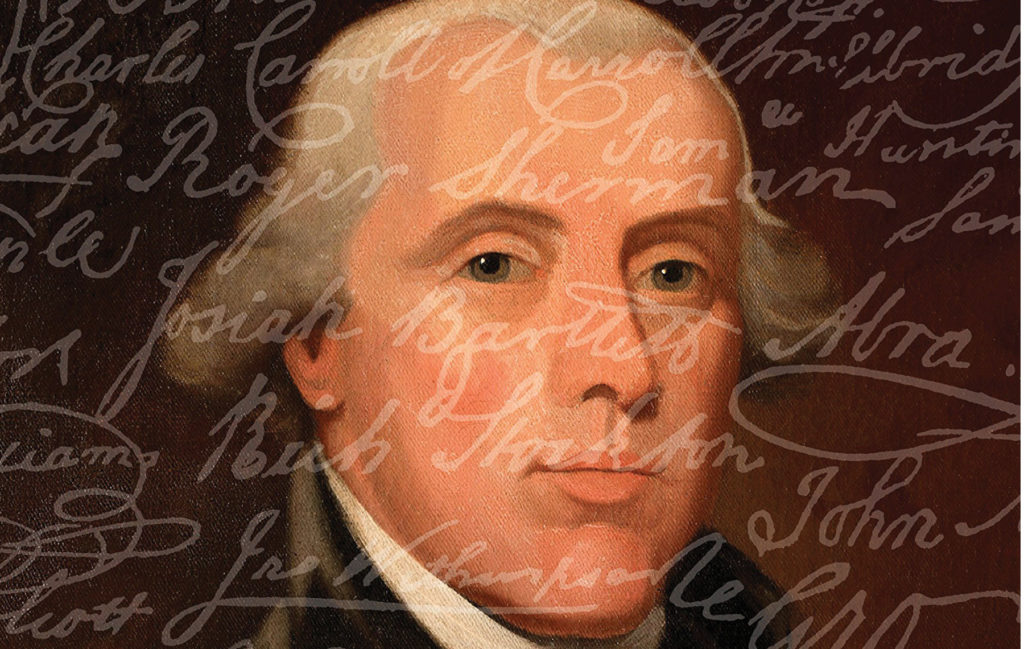
Among the remarkable individuals whose names are recorded as signers of the Declaration of Independence, Benjamin Rush has been mostly overlooked. Of course, he was a physician rather than a politician, as we discover in “Rush: Revolution, Madness, and Benjamin Rush, the Visionary Doctor Who Became a Founding Father” by Stephen Fried (Crown), a biography with the color, detail and pace of a compelling historical novel. 

From the first page, Fried conjures up Rush as a flesh-and-blood human being rather than a steel-point engraving. “[T]all, lean, and handsome with active blue-gray eyes and an aquiline nose,” Rush is described as a man with a notably large head who was “overfull of ideas he couldn’t keep to himself.” He graduated from the college we now call Princeton at the age of 14, studied medicine in Edinburgh and London, set up his medical practice at the age of 23 and took his seat in the Second Continental Congress at age 30. 

“Energized by the contagious spirit of the congress, Rush went on to serve the revolution as a doctor, a politician, a social reformer, an educational visionary, and even an activist editor,” writes Fried. “The struggle, he said, would be to balance ‘science, religion, liberty, and good government.’ He would spend the rest of his life trying to embody that balance.”

Rush figures importantly in the early history of the United States. He was a protégé of Benjamin Franklin and a mentor to Thomas Paine. He was a confidante of our first presidents, “who came to rely on Rush for medical care, intellectual stimulation, and the best local gossip,” as Fried writes, and who were perfectly willing to confide even their “bathroom habits” to the good doctor. When Meriwether Lewis was preparing for his daring journey of exploration of the Far West, President Thomas Jefferson sent him first to Benjamin Rush for a short course in field medicine from the man who had come to be regarded as “the American Hippocrates,” which made Rush “the de facto medical director for the Lewis and Clark expedition.”

“At a moment when government in the United States seems to be an amateur sport, Benjamin Rush reminds us that experience, expertise and a commitment to the pursuit of scientific truth are essential to the preservation of democracy.”

Rush recognized, for example, that good medicine is arguably more important than advanced weaponry in an army: “Fatal experience has taught the people of America the truth … that a greater proportion of men perish with sickness in all armies than fall by the sword,” he wrote in a pamphlet on military medicine, and he urged Gen. George Washington to inoculate the Continental Army against smallpox. He was both “intrigued and horrified” by alcoholism and the “lunatics” who were put on display to members of the public who paid an admission fee to gawk at them. “He wanted, once and for all, to dispel the view of ‘madness’ as a failure of will or belief or philosophical perspective, and to recast ‘mental derangement’ as a disease of the brain,” concludes Fried.

Rush championed the separation between church and state in the new American democracy. “He believed in the Bible as a tool for teaching morality, but he was knowledgeable about other belief systems as well and respected them,” Fried explains. “He had studied the Old Testament, the ‘Hebrew Bible,’ and counted Jews among his friends and patients. He had long lived among Quakers, who didn’t believe in taking any religious oaths. He greatly respected many physicians and scientists, starting with William Cullen in Scotland and Benjamin Franklin, who were skeptical about organized religion.”

Yet Rush is not depicted as a plaster saint. Fried points out that Rush possessed “an oversized ego.” Although Rush was an active participant in the American Revolution, he once insisted that George Washington “must be invested with dictatorial power … or we are undone.” Although Rush played a prominent role in the ongoing struggle to prevent recurrent epidemics of yellow fever, Alexander Hamilton complained that Rush employed a harsh but ineffective treatment of purges and bloodletting.

Rush, like many of his contemporaries, clung to some crackpot ideas. For example, he insisted that “the highest degrees of civilization” can revert to “the savage life.” Just as “[t]he individuals of the human race are once men, and twice children,” he wrote, “nations are once civilized and twice savage.” According to Fried, Rush believed that proof could be found among Native Americans, Jewish people and African-Americans.

On his death in 1813 at the age of 68, Rush was revered. “O my friend, my friend, my ancient, my constant, my unshaken Friend, My Brother, art thou gone, gone forever?” keened John Adams. “Who can estimate thy worth, who can appreciate thy loss? To thy Country, to thy Family, to thy Friends, to Science, to Literature, to the World at large? To a Character which in every relation of Life shone resplendent?” Not long afterward, however, “He became a footnoted founder, a second-tier signer,” as Fried observes. “As a result, many Americans know very little about Benjamin Rush.”

At a moment when government in the United States seems to be an amateur sport, Rush reminds us that experience, expertise and a commitment to the pursuit of scientific truth are essential to the preservation of democracy. For that reason alone, “Rush” offers not only a glimpse into the time and place that gave us the constitutional democracy that our presidents swear to defend, but also — and perhaps more importantly — a reminder of what is at stake when they fail to do so. n

Stephen Fried will appear at the Sperber Community Library, located at American Jewish University, to speak about and sign copies of “Rush” at 7:30 p.m. on Feb. 28. To register, call (310) 440-1246 or go to visit the page.


Jonathan Kirsch, author and publishing attorney, is the book editor of the Jewish Journal.

‘Rush’ Resuscitates a ‘Footnoted’ Founding Father Read More »