You’re never too young to start changing the world.
It’s this thinking that propelled a 27-year-old MIT graduate to co-found Founders Bootcamp for teenagers last year.
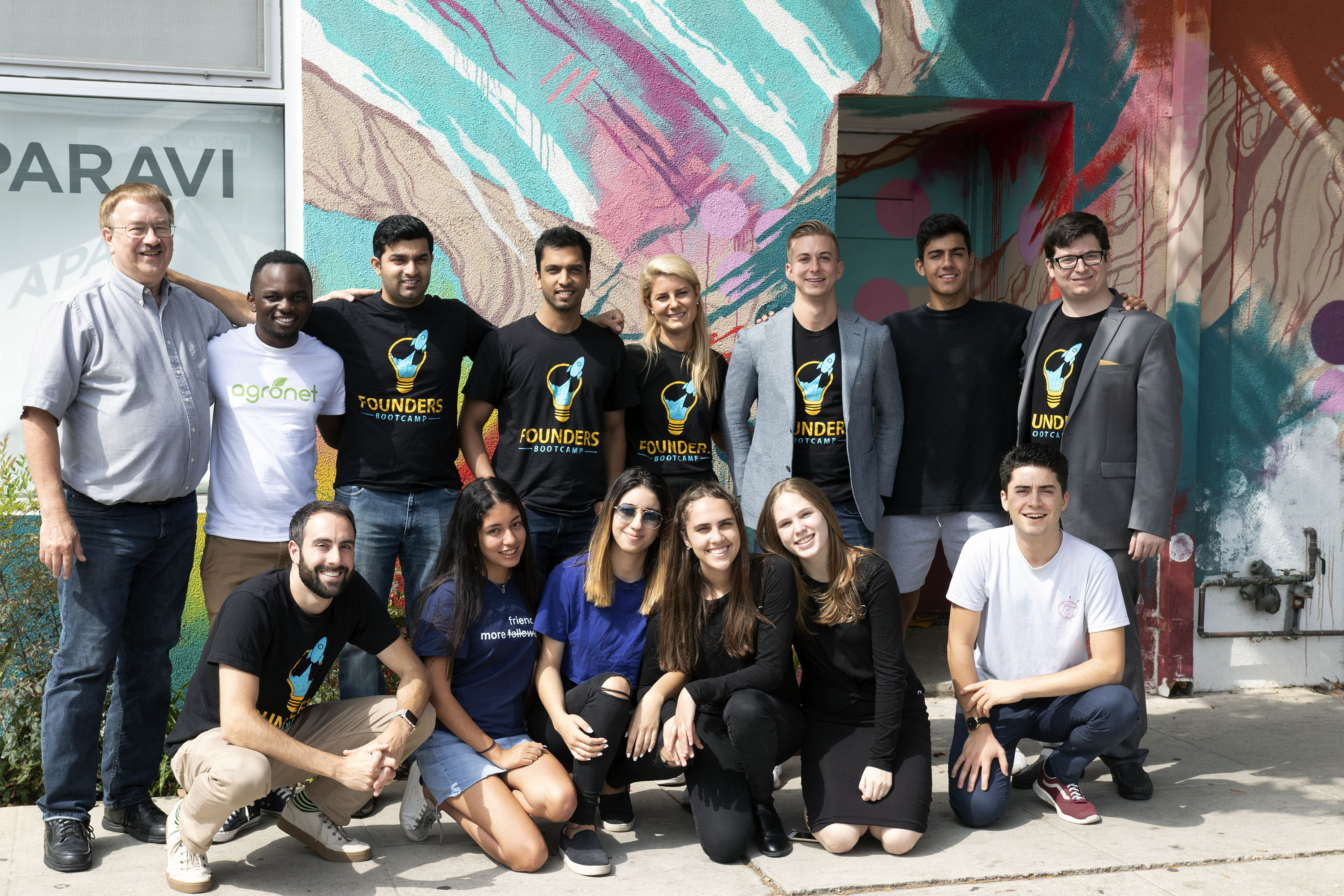
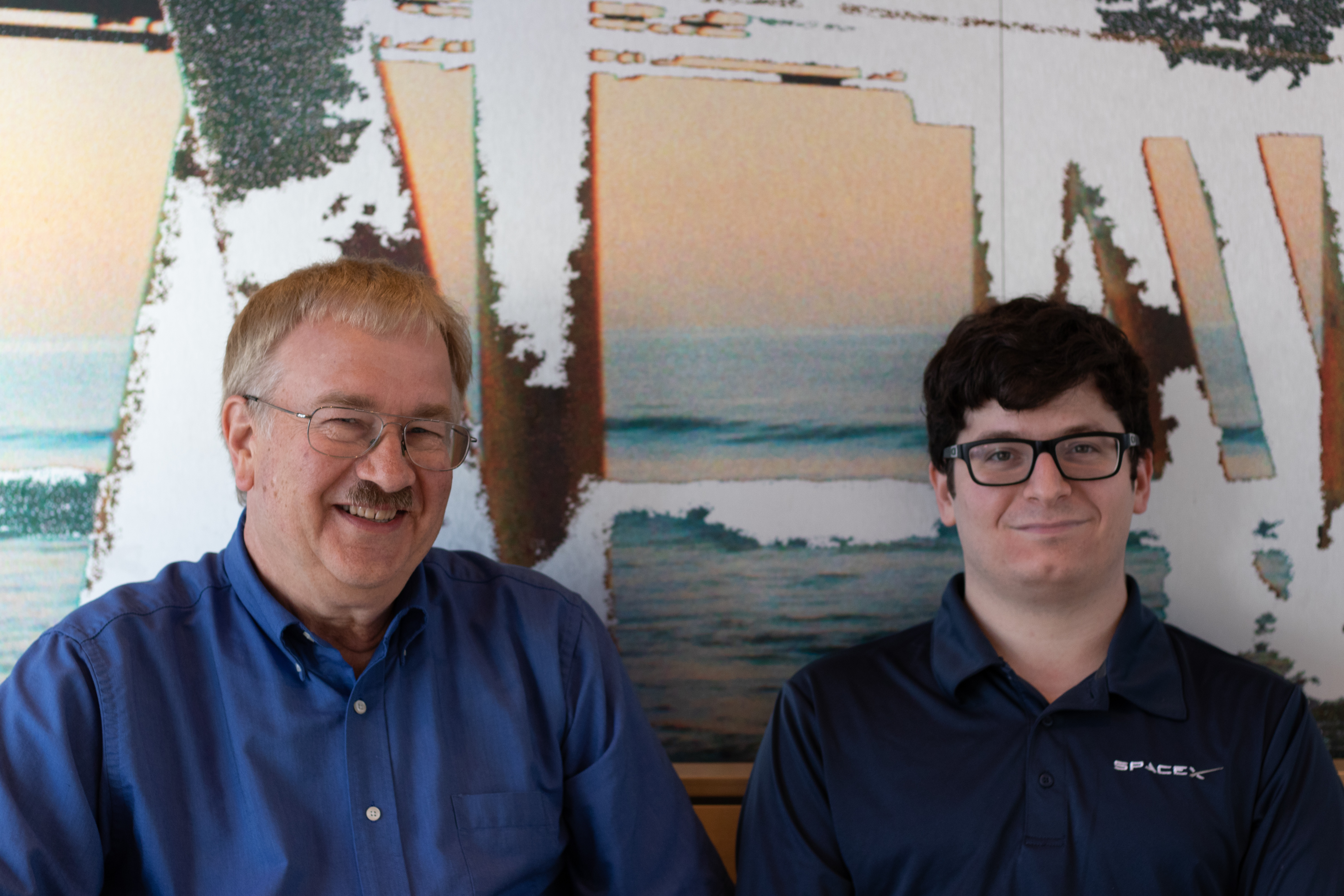
MIT and Milken Community School graduate Richard Dahan, now 28, conceived the program with his former Milken science teacher and mentor, Roger Kassebaum.
Founders Bootcamp is a first-of-its-kind accelerator and venture capital fund designed specifically for high school students. Teams applied to be part of the program in January of this year, and there were 1,100 applicants from 26 countries.
The selected teams were paired with MBA students at UCLA or recent graduates, who worked with them remotely and acted as their mentors. In April, the teams were whittled down to five finalists, who then participated in an eight-week summer program in Los Angeles.
In August, the finalists pitched their startups to an audience of advisers and investors at an event at UCLA’s Anderson School of Management. In October, the same teams will participate in a demo day in Silicon Valley.
Two teams are already “mind-blowing success stories,” Dahan told the Journal. He singled out students from Harvard-Westlake and Brentwood schools, who worked together on Trill, a safe and anonymous social network app that builds communities and, according to its website, “is perfect for anyone grappling with issues, thoughts, or ideas they aren’t ready to publicly share, or are not supposed to be sharing. This especially includes people in countries with restricted or censored internet, people in the LGBT+ community, and people dealing with the stigma around mental health issues.”
The app already has 10,000 users and has garnered media attention and venture capital interest.
The second major success Dahan cited was Agronet, created by teams from Malawi and Zimbabwe. Agronet is an e-marketplace for agriculture in Africa that connects farmers directly with crop buyers, eliminating predatory middlemen. It already has received support from Malawi’s government.
The three other startups that participated in the UCLA event were Loop, a party-hosting app created by students from Milken; Hero, which is jewelry that deters assault by sending an alert when activated, that was created by students from YULA Girls (which the Journal reported on in March when they won a grant for their device); and WaterPoint, a portable machine that inexpensively delivers water by extracting it from the moisture in the air.
WaterPoint was created by students from France, Israel, the Palestinian territories, the Czech Republic, Vietnam, Brazil, Belgium and the United States, all of whom attend the Eastern Mediterranean School in Israel.
Dahan said he believed all five teams are on track to build viable companies.
The idea for Founders Bootcamp came about after Dahan, who graduated from MIT in 2012 with a degree in engineering, returned to Los Angeles in 2016 and reconnected with Kassebaum.
When Milken reopened the Guerin Institute for Advanced Sciences in September 2016. Kassebaum, who considered Dahan one of his star students, invited Dahan to the grand opening. Dahan said he was particularly impressed with the quality of the Milken lab and the abilities of its students.
“Richard was my robotics team captain during high school,” Kassebaum said. “In those days, it took us four weeks to get a robot to move and drive. With [Milken’s new] Fab Lab, students are able to design, fabricate, assemble and drive a robot in one day. Students do all of the design work — coding, electrical, fabrication. Seeing how capable high school students are, we decided that [they] have what it takes to start their own companies.”
What was supposed to be “a 10-minute conversation between a student and his favorite high school teacher turned into a six-hour conversation,” Dahan said. “We saw that a bunch of funds, VCs [venture capitalists], accelerators were geared toward college students, but there were none really geared toward high school students.”
“Our educational model is thousands of years old. The elders in the village helped the youth. We want to surround the students with the expertise and the guidance to keep going forward in their area of passion.”
— Roger Kassebaum
That’s when the pair decided to launch the pilot for Founders Bootcamp in the summer of 2017. However, the teams were all Los Angeles-based. Students came from Milken, Shalhevet, Hamilton High, Luskin High, Harvard-Westlake, High Tech Los Angeles high school, Stephen Wise Elementary and STEM Academy Hollywood.
The students learned from a variety of speakers including former Keurig CEO Nick Lazaris, Clutter founder Bryan Thomas, former U.S. Ambassador Frank Baxter, Super Bowl-winning linebacker turned venture capitalist Ryan Nece, and multibillionaire Michael Milken. They then formed teams and created their startups with $5,000 in seed money, donated by Dahan and Kassebaum. By the end of the program, the students had collectively acquired more than 25,000 users and secured over $1 million in signed investment commitments.
This year, along with opening up the competition to students worldwide, teams received $50,000 in startup funds. Kassebaum explained that while the funds are still provided by himself and Dahan, they have 5 percent equity in each of the teams’ companies. They also are planning to create a venture capital fund for accredited investors to put money into the student companies.
“Our educational model is thousands of years old,” Kassebaum said. “The elders in the village helped the youth. We want to surround [the students] with the expertise and the guidance to keep going forward in their areas of passion.”
Dahan added, “Nothing would give us greater pleasure or greater satisfaction than if entrepreneurship programs spread out to high schools throughout the country and eventually the world.”