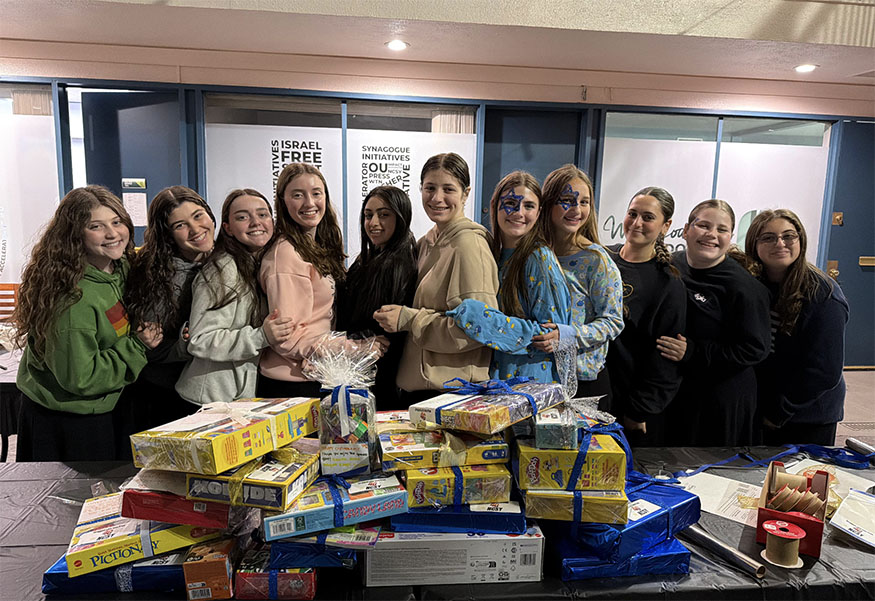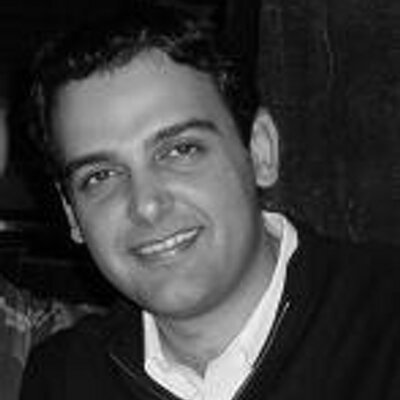
“You teach me Persian, and I’ll teach you Hebrew,” quipped Rabbi Hillel Benchimol to the crowd.Nearly 150 Iranian Jews of various ages had gathered at the Nessah Synagogue in Beverly Hills on Oct. 29 for the third session of a free five-week crash course in Hebrew.
Also known as “Read Hebrew America,” the course has been picked up by nearly 700 synagogues in North America during last 10 years through the National Jewish Outreach Program (NJOP), a nonprofit organization based in New York. The objective is to promote Hebrew learning among American and Canadian Jews who have lost touch with their Jewish identities.
While this is the first year Nessah has participated in the program, its leaders said the free Hebrew course has attracted more than 600 local Iranian Jews to its first three sessions.
“I was really amazed that so many people from this community really want to learn Hebrew and reconnect with their heritage,” said Benchimol, who has been teaching the 90-minute classes on Monday nights since Oct. 15. “You don’t typically see this large of a turnout for Hebrew classes from the Ashkenazim.”
Ilya Welfeld, a spokesperson for the NJOP said her organization was “extremely pleased with the large response” they have received at Nessah. On average, roughly 20 to 80 people attend the “Read Hebrew America” courses in the United States.
Surprisingly, the majority of individuals in attendance for the classes at Nessah were between the ages of 50 and 70. They said they wanted to learn Hebrew because they had been unable to do so previously, due to the difficulties of trying to re-establish themselves in America during the last 25 years.
“I like how people of all ages from our community are here and wanting to learn Hebrew,” said Eliza Ghanooni, a 20-something resident of Beverly Hills. “I think Persian Jews are generally more traditional and have a stronger connection to Judaism.”
A small contingency of younger Iranian Jews were also in attendance and said they had come because they want to speak Hebrew fluently.
While the Nessah class was often sidetracked by individual questions and comments, Benchimol kept the group’s interest by making the group laugh at his witty comments and his efforts to pronounce odd Persian-language words.
“When you’re learning Hebrew, you’ve got to have fun with it, and we’re trying to keep it a light-hearted environment so people will want to come back,” Benchimol said.
A number of non-Iranian Jews visiting Nessah said they were impressed with the excitement Iranian Jews had exhibited in the Hebrew class, and as a result would continue to take the classes at Nessah.
“I’m here to improve my Hebrew because my bar mitzvah is coming up soon, and I want to be able to read from the Torah better,” said Yuji Hasegawa, of West Hollywood, who recently converted to Judaism. “Iranians are loud, but it’s good to see so many of them interested in learning Hebrew.”
Benchimol said after the remaining two sessions of the Hebrew classes are completed, Nessah plans to offer more advanced Hebrew language classes to adults in the coming months.
For more information on the “Read Hebrew America” courses offered at Nessah, call (310) 273-2400 or visit visit http://www.nessah.org