I expected to be dealing with an empty nest when my daughter started college. I projected my availability to friends who had yielded my attention during my childrearing years. I dragged writing projects onto my computer’s desktop to await the plane ride from NYU to the rest of my life. Instead, the levees broke in my hometown. I spent the next three months as a relief worker with the Red Cross and the New Orleans Jewish agencies in service to those displaced and/or traumatized by Katrina.
I expected to be dealing with the aftermath of Katrina when I returned to Los Angeles. I imagined myself as an advocate for the restoration of New Orleans, recounting the environmental deterioration, government malfunction, and dire future the hurricane signaled. Instead I was diagnosed with cancer. I now spend Mondays in a lounge chair, with an IV flooding my body with toxic, life-giving chemicals and much of the rest of the time in my bedroom reacting to their impact.
Despite the broken lives and landscapes and the mountains of debris, my time in the South brought personal healing. I am a writer and a psychotherapist. I spent the last 30 years mapping the territory of grief and redemption, a journey begun with wounds obtained in New Orleans. It felt that my personal and professional curricula had been a training program anticipating just this disaster. Indeed, I found that each day, despite tears and fatigue, my experience graced me with the ability to say, ” Hineni” (I am here) to the tasks to which I was called.
In Mississippi, I counseled shelter residents, dished out food, filled out relief forms and orchestrated art therapy for child evacuees. In New Orleans, I led Rosh Hashanah services for a congregation ranging from the barely affiliated to members of Chabad. In Baton Rouge, I led Shabbat services and taught religious school and adult education for those impacted by the disaster. I assisted Jewish Family Service with clinical and administrative work, hosted luncheons for displaced elders and helped with grant-writing and other projects.
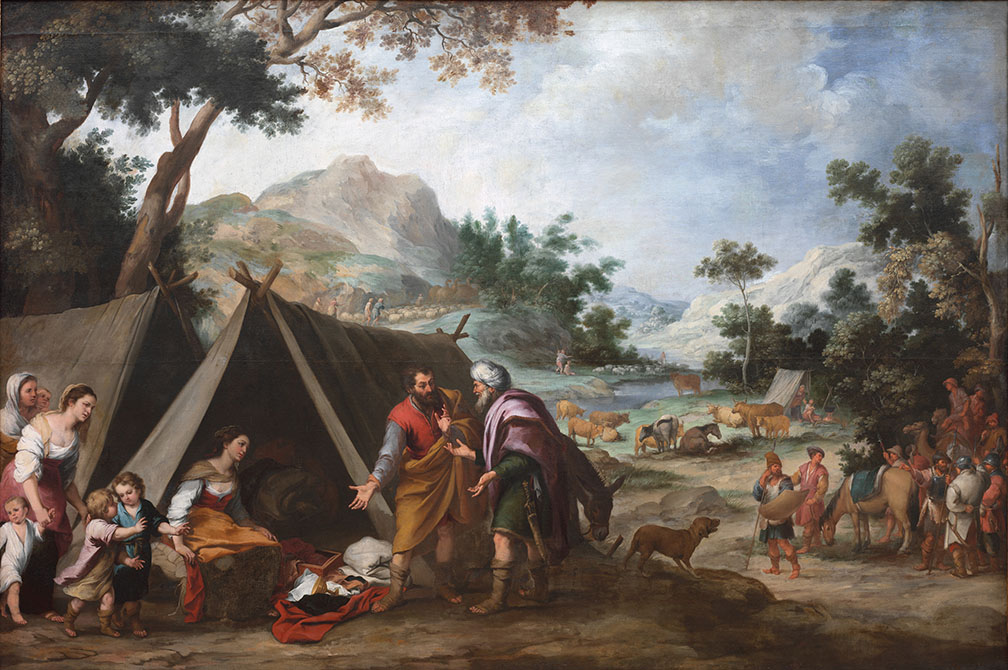
Shortly after Katrina, I awaited what was called “deployment” to the place where I would do my Red Cross duty. I chuckled because in the last years “deployment” has had, for this rabbinic student, a spiritual meaning. Rabbi Zalman Schacter-Shalomi, the founder of the Jewish Renewal movement, says that we are deployed at birth, sent forth like arrows, to walk in God’s ways and make the world holy. There seemed a connection between my deployments, both in the Red Cross and the mystical sense. In both cases, personal will was superseded by a greater will. I wanted to go to Gulfport, but I needed to await my assignment, determined by the greater need and not my own desire. This is also the spiritual task: to quash the desires that keep us from “walking in God’s ways,” aligning ourselves with God’s will. In both cases, spiritually and professionally, I am challenged to choose paths not determined by the needs of my ego, but by the needs of the place — hamakom. In this case, the place was the Gulf South, but HaMakom is also a name of God. In connecting deployments and HaMakoms, I made my commitment to hineni.
Was I prepared to say hineni, the word that Abraham and Moses said when they answered God’s call? Hineni’s literal meaning is an unequivocal acceptance of what is asked. It also implies a faith that I came to understand more deeply in the Red Cross shelters in Mississippi, where I met people who had waited out the storm and its 30-foot waves on their rooftops and in trees. Their homes reduced to straw, they were living in a room with a 150 others. But there were two phrases I heard from person after person: “This is God’s will” and “I am blessed.” Liberal Jews don’t speak this way. I had to translate.
At first I thought that by saying, “This is God’s will,” they were saying “God did this to me,” implying a God that doles out punishment and reward with a direct hand. This doesn’t work for me. I have seen too many bad things happen to good people.
After tragedy, people want desperately to make sense of what happened. It can be unbearable to live with the discomfort that the workings of the universe are a mystery. But we learn to make peace with the fact that we will never have answers for life’s biggest questions and we accustom ourselves to an ambiguous universe, embracing what lies ahead, without being tormented by the past.
“It’s God’s will,” doesn’t mean “God singled me out and did this to me.” It means, “What will I do with what I have?” Saying “It’s God’s will,” we accept and move on. To say “I am blessed” in the midst of catastrophe implies a commitment to go forward without the torture of second-guessing and self-blame. We choose hope instead of despair. We say ” hineni.”
And now, as I sit, not on the bimahs of congregations to whom I had hoped to bring messages of Katrina, but on the chemo-couch, I am again challenged to say ” hineni.” If I could say it in Mississippi, I have to say it here.
Anne Brener, author of “Mourning & Mitzvah: Walking the Mourners’ Path through Grief to Healing” (Jewish Lights, 1993 and 2002), is an L.A. psychotherapist and spiritual director. She is a rabbinical student at Hebrew Union College-Jewish Institute of Religion and on the faculty of The Academy for Jewish Religion.