We have a tendency in the Jewish world to jump very quickly to the meaning of things. A good example is the tradition of counting the Omer, the 49 days from Passover to Shavuot. This odd ritual is loaded with symbolic meaning. You can read many commentaries on how the 49 days are a period of spiritual preparation for the awesome experience of receiving the Torah on Shavuot, how each day represents an opportunity to repair our impurities, and so forth.
But while I do enjoy the jump from ritual to meaning, there’s also something to be said for the value of a story itself. Where does this unusual ritual come from? And what can it tell us about our people and our tradition?
It turns out it all started with a little barley.
The Jews were very much a people of agriculture during biblical times. Their Whole Foods was really whole foods. Their ability to work the land, especially for the making of bread, was a matter of holiness and survival. It was an elaborate process: Oxen helped plow the land, seeds were sown by hand, grain was reaped with a sickle and brought to a threshing floor, where it was ground and then winnowed of debris, and so on until a beautiful loaf of bread was born.
There was a sense of miracle about all this. Our ancestors were intimately aware that growing food could never happen without the raw gifts from God, from rain and earth and wind, to the sun, fire and animals. Finding ways of thanking God was a dominant theme of the time, and bringing sacrifices to the Temple was one of the holier ways. It’s not well known that many of these sacrifices did not involve animals but agricultural produce.
The tradition at harvest times was to bring as an offering a part of that harvest. Each Jewish farmer, for example, was required to bring to the Holy Temple the first of each fruit that ripened on his farm.
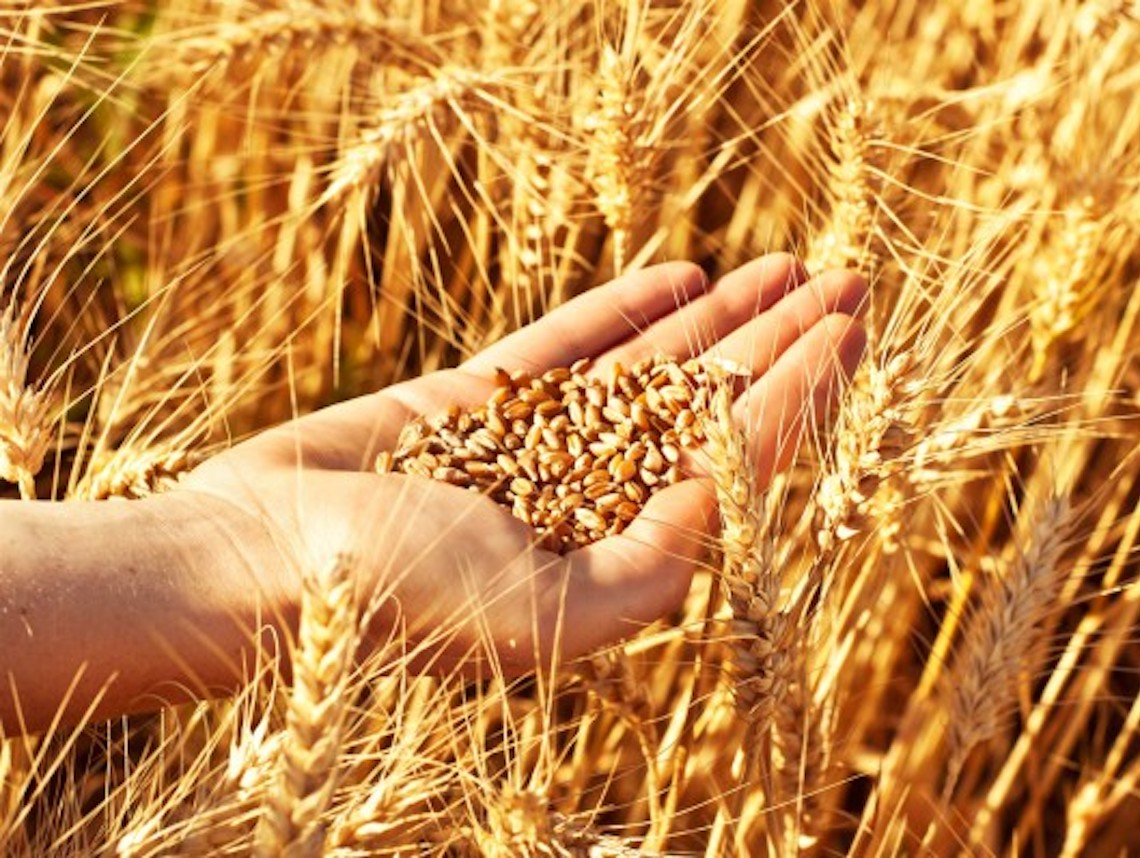
Which brings us back to barley, the crop harvested at Passover at the beginning of the harvest season. To show gratitude to God and pray for continued blessings, on the second day of Passover, our ancestors would bring an omer (“sheaf”) of barley to the Holy Temple.
Forty-nine days later, on Shavuot, the kohanim (priests) would bring two loaves of bread as an offering to God. These loaves came from wheat, which was considered a higher-grade crop than barley. One interpretation for the ritual of counting the 49 days is that it was a way of ascending from the humble barley crop to the majestic loaf of bread.
It makes sense, then, that Shavuot would be the time to celebrate the receiving of the Torah. The Torah is God’s ultimate gift to our people — the spiritual loaf of bread that has kept us nourished for millennia.
The Jews were very much a people of agriculture during Biblical times. Their Whole Foods was really whole foods.
The power of this gift is not just that it is full of fascinating stories and moral ideas, but that these stories and ideas are embodied in concrete rituals that keep us connected to God and our ancestors.
After the destruction of the Second Temple in 70 C.E., the Jews were faced with perhaps their greatest challenge: How do you continue a tradition of rituals without the physical structure upon which so many of these rituals revolved?
How do you suddenly shift to a new way of thanking God after doing it the same way for centuries? And who decides on this new paradigm?
The sages of the Talmud did. It was the centuries of talmudic debate and argument that created Judaism 2.0 and enabled the tradition to survive without its physical core.
One of the ways we bring offerings to God in our days is through prayers and the recitation of blessings. It’s not the same, of course, as bringing a sheaf of barley to a magnificent structure in Jerusalem, but that’s not the point.
The point is this: Holy Temple or not, can we still strive for holiness? And can we honor the rituals that help us strive for that holiness?
Finding personal meaning when we practice the rituals is one way to honor them. Another is to delve into the stories in which these rituals are rooted.
I love seeing how far our ancestors went to honor God. I love imagining the elaborate process they went through as they trekked from the fields to the Temple to thank their Creator for the simple miracle of barley.
And I especially love that a few thousand years later, we’re still talking about it.
David Suissa is president of TRIBE Media Corp./Jewish Journal and can be reached at davids@jewishjournal.com.