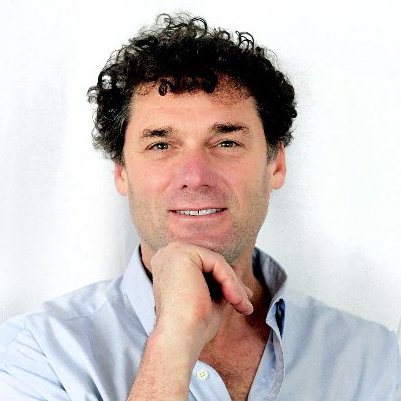
Late last June, Avi Linden went to Johannesburg, South Africa to visit family. By his own admission, he carried with him the smug attitude of an Israeli immigrant who had left an insecure existence in a crime-ridden city for the safety and security of the Jewish homeland.
He returned a few days later to find that his synagogue, Ya’ar Ramot, north of central Jerusalem, had been torched.
On Saturday night, June 24, an arsonist’s flames destroyed chairs, pews, prayer books and holy texts at the Conservative synagogue. Fortunately, the fire department’s quick response saved the ark, the Torah scrolls and the rest of the building. The damage to the building shook Linden far less than the idea that, in all likelihood, the person who set fire to his synagogue is Jewish.
Linden, a business manager for an Internet company, was in Los Angeles last week, combining a business trip with a round of interviews and speaking engagements about the fire. He visited Temple Beth Am, Adat Ari El, and The Jewish Federation, among others. Direct and engaging, he briefly entertained the idea that the arson was the work of, say, an Arab terrorist or a youthful hooligan. “Look, we don’t know who did it,” he said. “But we know who didn’t condemn it.”
A day after the attack, legislator Meir Porush of the charedi United Torah Judaism bloc accused the Conservative movement of being responsible for the blaze. Other Orthodox leaders and newspapers insinuated the attack was part of a smear campaign against them.
Linden scoffs at the thought that the thriving 100-family shul, founded 16 years ago, would offer itself up as a kind of paschal sacrifice in the country’s religious wars. “There is prejudice against the Orthodox,” he admits. “It cuts both ways. But the fanaticism generally comes from one side.”
The Monday following the arson, Linden was witness to a hopeful sign. Some 200 Israelis gathered at the shul to denounce what took place. Among them were rabbis from neighboring Orthodox shuls and Israel’s Minister of the Interior, Michael Melchior. The evening of speeches was called “Put Out the Fire,” referring to Israel’s ongoing ideological conflict among Jews of varying beliefs. Of course, that fire has been burning for years and may only get hotter as non-Orthodox movements gather strength among Israelis. “There are a lot more attacks on synagogues than you might think,” Linden said. “A lot go unreported.” It didn’t hurt that among Ya’ar Ramot’s members are numerous journalists.
Another heartening sign for Linden was the response of Jews outside Israel. Messages of concern poured in, as did many donations.
Some of the donations will go to outreach programs with Orthodox Jews, though Linden admits they often end up bringing together the converted. He doesn’t believe these attacks are the result of some conspiracy. But whatever loose cannons go off are undoubtedly primed, he said, “by the atmosphere of charedi leaders despising us.”
One key might be changing the education in the yeshivas. An Orthodox friend of Linden’s who was appalled by the attack was even more distressed that her children thought it no big deal. She was educated in the States, her children in Israel.
In any case, Linden took the opportunity to thank supporters for their concern and donations. While the actual fire and smoke-related losses will be covered by insurance, the small congregation has had to hire full-time night security guards and is considering installing a perimeter fence. These are expensive, but they might just become the cost of being a Jew in the Jewish state.
For more information or to make a tax-deductible donation, contact Ya’ar Ramot at yramot@actcom.co.il or write The Foundation for Conservative Judaism in Israel, P.O.Box 23250, Jerusalem, Israel 91231.