

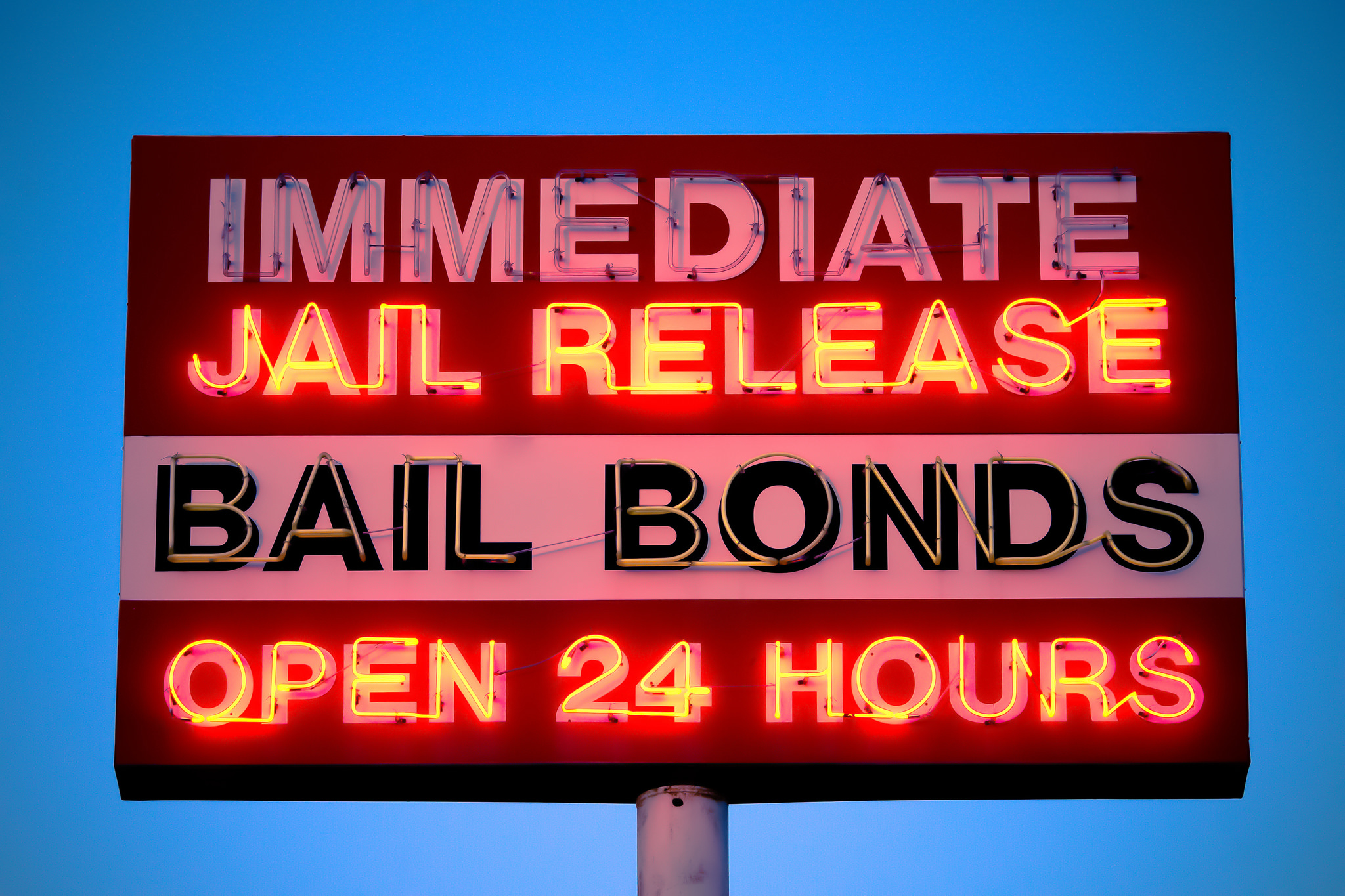
In the Holiness Code of the Torah, we are enjoined “not to favor the poor or show deference to the rich” (Leviticus 19:15). Yet the United States criminal justice system today clearly favors the wealthy. Our bail system violates both the American principle of innocent until proven guilty, and the Jewish command to create a justice system that upholds every individual’s human dignity.
Suppose you get arrested because of mistaken identity, or for a violation that is ultimately determined to be minor. But after going to court, you are exonerated. Even in these scenarios, once you are arrested, you are detained in jail before your trial. To be released, you must pay the bail that is set for your alleged crime. If you can put up the money, you are free to walk out the door, and if you appear in court or are found innocent, your money is returned.
But what if you don’t have the money? You have two choices. You can remain in jail for weeks, months, maybe years awaiting trial. While you await trial, you are unable to go to work, care for family members, or continue with your daily life. In order to get out, you might well reach a plea bargain, pleading guilty to a crime you may not have committed, which will stain your record permanently.
Or you can go to a bail bondsman and put down 10 percent of your bail, which you will never get back and will have to repay with interest. And if you don’t have the 10 percent, you will have to borrow it and repay that amount with interest, as well. The average bail is set at $50,000. In other words, your wealth will determine whether or not you are able to go free. The rest of the world except for the United States and the Philippines has abandoned the money bail system, recognizing that it serves no purpose other than to discriminate against poorer defendants.
The rest of the world except for the United States and the Philippines has abandoned the money bail system.
Once you are incarcerated, even if it is only for a few days, you are likely to lose your job as well as custody of your children and your housing. And, of course, these problems disproportionally affect communities of color.
California’s bail system is not only a gross injustice, it is an ineffective process. Putting up money for bail is supposed to ensure that a person accused of a crime shows up in court. However, California has lower court appearances than the rest of the country.
The Reform Jewish Rabbis and lay leaders with Reform CA — a project of the Religious Action Center of Reform Judaism — support a remedy to this situation: SB 10, the Money Bail Reform Act. This bill would replace money bail with pre-trial assessment to determine what kind of threat this person poses to the community and how likely the defendant is to appear in court. If the person is deemed low-risk, they are released until their trial date. More effective ways to make sure someone shows up for trial can then be employed, including text or phone reminders, ankle bracelets and supervision by a community group.
The California Senate passed SB 10 last year, and it awaits a vote in the Assembly in the coming weeks.
Bail bondsmen are typically backed by large, multinational insurance companies. In conjunction with sheriffs and other law enforcement groups, these businesses have lobbied hard to prevent passage of this legislation last year because they profit handsomely off of the current bail system. We encourage folks to counter this lobbying by calling their State Assembly members, urging them to vote “yes” on SB-10.
If we truly believe that all people are created b’tzelem Elohim, in God’s image, and that all people are thus entitled to respect and dignity, then we must act now to reform California’s bail system. Passing SB 10 will enable us to ensure that in California, no one is held in jail simply because they cannot afford bail.

































