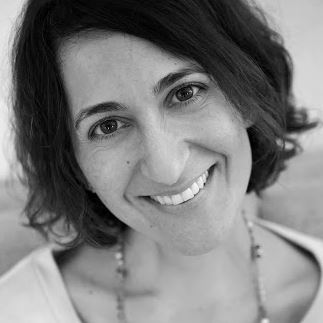

“It’s so great that you can be such a happy person,” she said as we watched our boys’ basketball game.
The woman had just read my latest blog post — a particularly painful one detailing how my rare, progressively debilitating neuromuscular disease was increasingly contaminating my daily life.
Her comment caught me off guard. She was well intentioned, yet I felt annoyed and defensive.
What exactly did she mean? People with disabilities or hardships can’t also be happy? Because l let myself feel pain and sadness, I can’t also feel gratitude and joy? Is it that hard to imagine one could be happy despite living inside a slowly deteriorating body?
The results revealed that more than money, fame or career success, it is close relationships that keep people happy.
I paused. I wondered if I was judging her too harshly. Did I once think like her?
When I was diagnosed with GNE myopathy (also called hereditary inclusion body myopathy) at age 29, the prospect of physically wasting away over time was terrifying. But even more so was the fear of never again feeling truly happy in an authentic, carefree, unadulterated way. Back then, I didn’t believe that slowly losing my strength and mobility over time was compatible with happiness.
The past 12 years of living with this disease have shattered my preconceived notions of what’s required to live a happy life. I used to believe that everything needed to be OK in order to feel OK. I hadn’t yet learned that life could be simultaneously uncertain, scary, frustrating, fulfilling and satisfying.
But how? Society convinces us that if we look a certain way and acquire the right job, car and house, we can achieve happiness. And yet what happens when the job is lost or the house burns down or the beautiful face is disfigured in a tragic accident? Or when an ultra-rare disease with no treatment or cure strikes in the prime of your life? What becomes the source of your happiness when things happen that are beyond your control?
Harvard researchers have spent the last 80 years conducting one of the world’s longest longitudinal studies in an effort to answer that very question. Starting in 1938, as part of the Harvard Study of Adult Development, scientists began collecting data on the physical and mental health of 268 Harvard sophomore men. Over time, the study has expanded to include their wives and offspring.
The results revealed that more than money, fame or career success, it is close relationships that keep people happy. Close ties to one’s family, friends and community “protect people from life’s discontents, help delay mental and physical decline, and are better predictors of long and happy lives than social class, IQ, or even genes.”
Relationships are potent therapeutics, but there is no shortcut to feeling closely connected to another human being. Emotional intimacy is messy. It is uncomfortable. It requires you to put your guard down and be vulnerable. It also puts you at risk for the pain of rejection.
But it is a temporary discomfort in the service of longer-term comfort. There is no substitute for feeling truly emotionally safe with someone. Secure attachments to others cushion us from the sharp, jagged edges of the inevitable pain and loss in life.
As someone who now lives with a disability, I no longer have the luxury of choosing when I want to be vulnerable out in the world. I walk slowly and awkwardly, wearing my leg braces and holding a cane. I ask people for help constantly. I am dependent on others in a way that most able-bodied adults don’t experience until well into old age.
This is not the way I ever imagined my life would go, but this is the way it’s going. I don’t know how I’ll feel in 10 years if I’m wheelchair-bound and having trouble dressing, bathing and feeding myself. What I do know is that my willingness to be vulnerable, my openness to sharing my feelings and my receptivity to the compassion of others is what has allowed me to remain my happy self.
At times it feels easy; other times, it’s excruciating. But the benefits always seem to outweigh the costs.
Dr. Jennifer Yashari is a board-certified psychiatrist in private practice in Los Angeles.