Maybe it is thinking about the New Year that brings up the subject. Or maybe because the holiday season is a time when families come together and talk. For whatever reason, within the last few weeks NPR did a story on “The Conversation Project,” and the LA Times had an Opinion piece on “The Conversation.” You know what I mean — that difficult conversation about what we want at the end of our life.
I know how important it is for families to have “the conversation.” I sit in too many hospitals rooms with dying congregants whose adult children don’t really know for sure what their parents wanted and I see the family pathology that emerges when these grown up children disagree with each other. I also know that things happen that we can’t control, that sometimes a beloved partner suffers from Alzheimer and no longer recognizes his wife or her husband and adult children and friends are often not supportive of choices that are made.
So it was time for my husband Richard and me to have “the conversation” with our adult children and their partners. Ours is a blended family. Our children didn’t grow up together, and because we married ten years ago when they were nearly grown, the kids don’t really know each other. They live far away from each other and from us. It was important for us to have them together, to hear what we wanted at the end of our lives.
So, for the very first time, we took them away on vacation, together (though unfortunately, Richard’s son couldn’t join us). We warned them about “the conversation” in advance. They all joked: there is no such thing as a free lunch or a free vacation! We shared some wine and tequila. And then the two of us read a document we had prepared called “The Five Wishes.” It asks five questions: Who is the person or who are the people I want to make care decisions for me when I can’t? What kind of medical treatment do I want or don’t want? How comfortable do I want to be? How do I want people to treat me? What do I want my loved ones to know?
Some of what Rich and I want is the same; some of it is different. I want to have people in my synagogue told that I am sick and I want them to pray for me, even if what they pray for is an easy transition to death. Rich doesn’t. If I were in a situation close to death and life support treatment would only delay the moment of my death, I don’t want that treatment. Rich would want it if his doctor thought it could help.
The kids asked lots of questions: What if you change your minds? Would the situation be different if this happens before you get really old? The kids and their partners talked about their grandparents’ deaths and their feelings about how they had died. And then they asked for blank copies of the Five Wishes because they realized it would be good for them to think about these questions for themselves.
The hardest part for me, surprisingly, was the wish for what we wanted our loved ones to know. Rich was clear that he wanted his family, friends and others to know that he has forgiven them for when they may have hurt him in life. I am not yet ready to issue a blanket statement on forgiving everyone who has hurt me, which led us gently into a conversation about forgiveness and reminded me that I have a bit more work to do around the issue. We talked about organ donation and burial versus cremation, and whether the children thought “visiting” would be important to them. And we talked about how we would want to be remembered. Finally we talked about Alzheimer’s and dementia. We told our kids that if one of us no longer could recognize the other, our understanding of love meant that we would want the healthy partner to be free to live a full life.
Later in the week, just before we lit the Shabbat candles, we turned “the conversation” into a short ritual. We read out loud our Brit Ahuvim, the promises we made to each when we married. And then we added a new provision to our covenant:
“Now, ten years after we first entered into out Brit Ahuvim, we reaffirm the commitments we made then , and , in the presence of our children, we add another:
We declare that if one of us should become ill with such serious dementia or Alzheimer’s disease that it becomes impossible to recognize our partner, and that this condition is attested to by two doctors and one rabbi, the other one of us should feel free to live as full a life as possible including having other intimate relationships. That freedom in no way compromises the promise we have made to honor and to care for each other physically and financially as we grow older. We make this declaration because each of us believes that loving each other includes granting this freedom to pursue new intimate relationships even as we honor our commitment to be present to each other as we age. “
Then we lit Shabbat candles as we do each week: one for each of our children and their partners, along with the traditional two. And then we blessed our children, not in absentia as we do each week, but in their presence, our hands on their heads, whispering the blessing that each of them is to us both.
“The Conversation” is not just a conversation; it is a sacred conversation . It will lead to blessing. I urge you, no matter how old you are, to have this sacred conversation with those you love this new year.
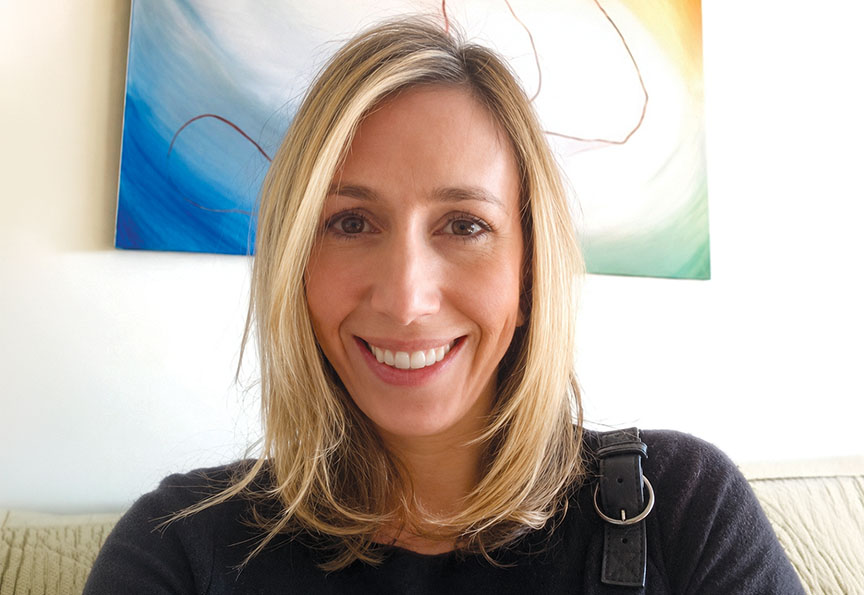
Laura Geller is senior rabbi at Temple Emanuel of Beverly Hills.