Jews tend to attract either admiration or resentment. There’s no reason to be shocked by this. Any group that punches above its weight attracts attention, usually of the negative kind.
“If you know anything about history, you know that whenever a small minority has been successful out of proportion to their numbers within a society, the mob may turn on them,” cultural commentator and author Rod Dreher writes in his latest Substack. “Jews became so dominant in finance because in Catholic Europe, they were not subject to the anti-usury restrictions on Catholics. So they became bankers because that profession was open to them as it largely wasn’t to Christians. And they got good at it. Why should they be ashamed of it?”
Similarly, he adds, “Jews traditionally excelled as classical musicians and scholars because their culture valued classical music and scholarship. Why should they be ashamed of their success?”
Indeed, why should Jews be ashamed of their success?
Here’s one answer: because we assume that victimhood will gain us more sympathy. After all, that is what works for everyone else, doesn’t it? Whether you’re a victim of racism, colonialism, imperialism, homophobia, transphobia, Islamophobia, otherism, ableism or misogyny, to win the narrative battle these days you must be a Great Victim.
Naturally, when antisemitism spiked in the wake of Oct. 7, Jews took their place in the Victim Olympics to gain their share of the victim loot. Hundreds of millions of activist dollars have been spent in the hope of convincing the world that “Yes, we may be successful and punch above our weight, but that doesn’t mean we can’t be victims!”
Since we have so much antisemitic evidence on our side— as groups like the ADL and scores of others have dutifully reported—we assumed the evidence would speak for itself. We assumed the world would see that the world’s oldest hatred had once again reared its ugly head and feel some of our pain.
We had the facts and history on our side. What could go wrong? How is it possible that after such a huge investment in fighting antisemitism, it only keeps getting worse?
How is it possible that no matter what we do, so much of the world still doesn’t buy our victim story?
They barely bought it when 1200 innocent souls were massacred in Israel on Oct. 7 and another 251 were taken hostage. Sure, there were expressions of sympathy, but most of that evaporated by the time Israel decided to eradicate the source of the massacre.
Today, not only are Jews and Israel shut out from the Victim Olympics, they’re now on top of the Pariah Olympics.
Instead of learning from this astonishing failure, we’ve responded by doubling down and continuing to play the victim game, hoping perhaps that by some miracle the world will eventually see our point when they see the facts.
But let’s not forget that there were also facts that made Israel look bad– and in any case, facts don’t stand a chance against emotional truths.
Dreher’s point— “whenever a small minority has been successful out of proportion to their numbers within a society, the mob may turn on them,” is an emotional truth that is engrained in the heart of the Jew-hater.
We can disseminate a million facts that the rise in Jew-hatred is criminal, alarming, disproportionate, unfair, malignant and even unacceptable, but as we’ve seen all too well, it won’t make much difference.
We can even argue that Jew-hatred is a danger for non-Jews (canary in the coal mine and all that), and it still won’t matter to the mob.
So, given that we have so little left to lose, what is the alternative to playing in the Victim Olympics?
I see only one: the Success Olympics.
This doesn’t mean, I must quickly add, denying and ignoring the rise in antisemitism.
It means fighting as winners and not losers.
It means owning our success.
It means, also, going easy on the “antisemitic trope” accusations every time someone dares mentions our success and, yes, our influence.
What’s wrong with influence if it’s earned?
Jews have spent the last century working hard to achieve success in virtually every field. That has given us influence. Why should we deny that influence just because it reminds us of old antisemitic tropes?
The key point is that nobody is buying the denial anyway. We can bang our collective heads against the wall telling the world that “we don’t have that much influence!” and it won’t matter. Why? Because we do have influence.
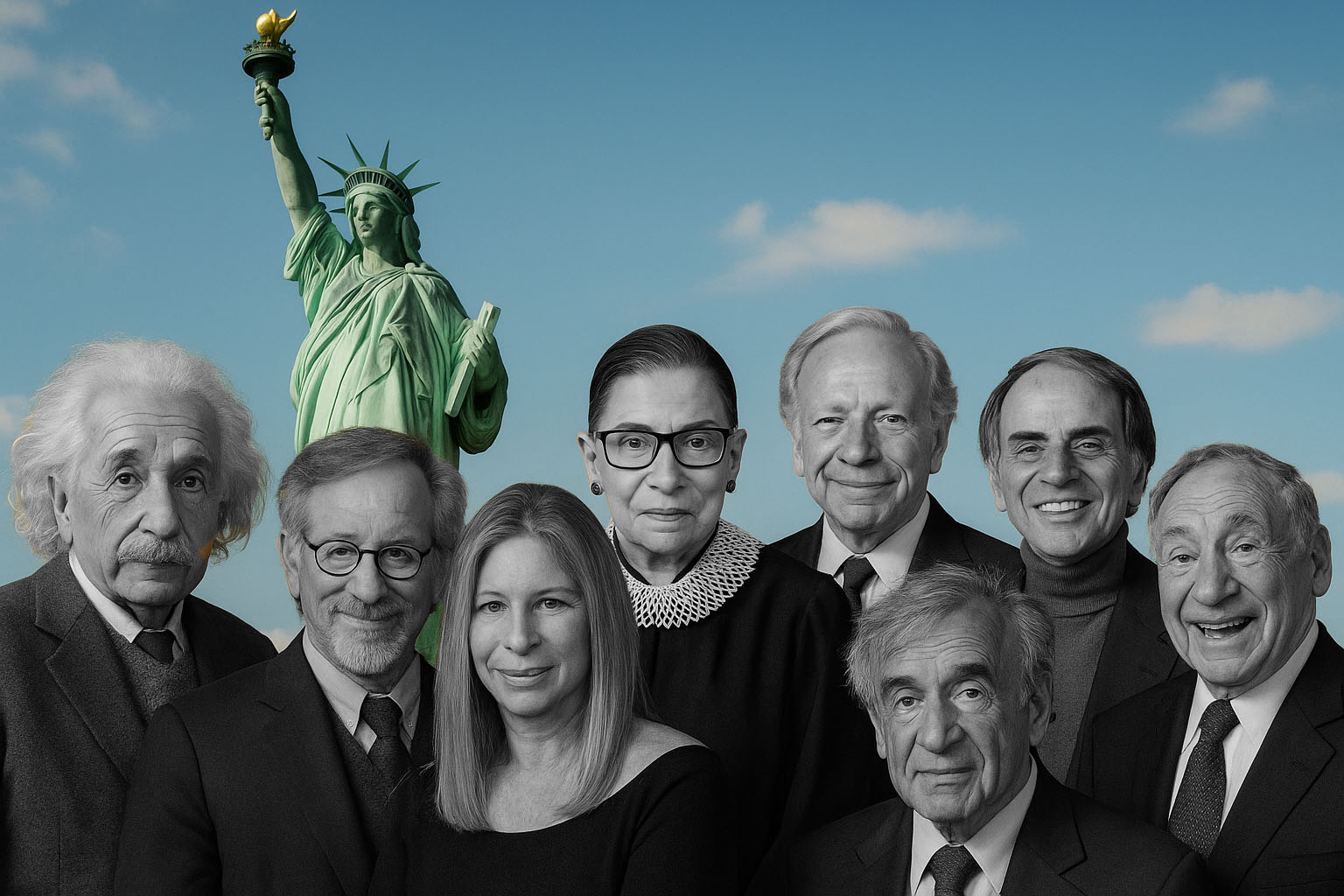
Working hard to gain influence is the American way. Jews are the embodiment of the American Dream. It still amazes me that despite all the bad news about the rise of antisemitism, Jews are still contributing to American life way out of proportion to their numbers.
Jews continue to have significant influence on music, the arts, publishing, science, media, technology, medicine, academia, the law, civic life, social activism and virtually every aspect of American society.
I’ve never understood why we make such a huge deal of Holocaust education and Holocaust memorials, but totally ignore teaching in our schools and communities the value of the American Dream and how Jews have benefitted from its aspirational ideal. Why can’t strong Jews be as important to our education as weak Jews?
There was a time not long ago that Jewish accomplishments were a source of admiration. However, a perfect storm of circumstances—success being devalued as “white privilege,” victimhood becoming an aspiration and source of power, growing paranoia from the right about America First, and so on— made it easy for haters to reframe those accomplishments in a sinister light.
We’ve learned the hard way that the more money we invest in changing those perceptions, the more the world hates us. Antisemitism may differ depending on whether it comes from the left or right, but regardless of where it comes from, we need to fight back with a winning posture.
Telling Jews to fight antisemitism with pride is not enough. We’re still fighting on the enemy’s terms, playing in the Victim Olympics.
We need to be proud Jews playing in the Success Olympics.
It’s about knowing where to make the most noise. Antisemites must pay a price for their antisemitism, yes, but that fight doesn’t need a whole lot of noise. We can trust our legal eagles to use the law to take care of haters. Our activists must continue without hysterics to expose media bias and make those who unfairly single out Jews and Israel pay a price. But we must aim higher.
What needs to change is our body language and our attitude. That’s where most of the noise must come from. We are not just proud Jews who fight haters but proud Jews who love America and champion the American Dream. We are not just proud Jews who seek security for Jews but proud Jews who champion the liberal values that make our country exceptional.
This is not about empty triumphalism but about acknowledging our value and responsibility to humanity.
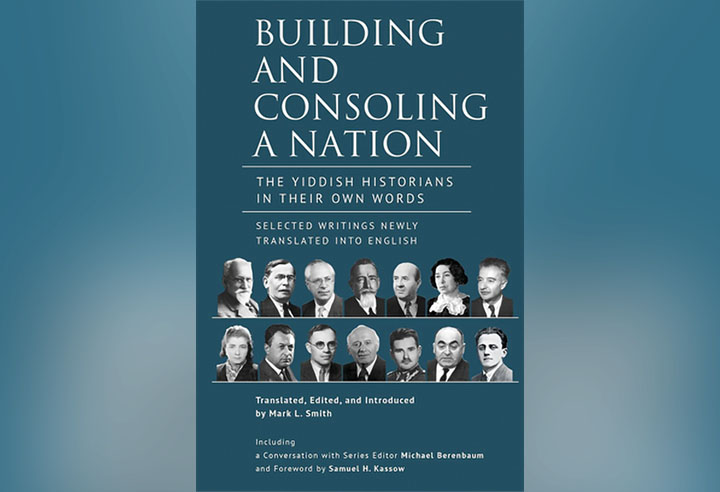
In his essay, Dreher mentions the book “The Jewish Century” by Yuri Slezkine.
Slezkine, he writes, “argues that the 20th century was fundamentally ‘the Jewish Century’ because modernity involves the world becoming more like the Jews—urban, literate, mobile, intellectually agile, and occupationally flexible.
“[Slezkine] frames Jews historically as a quintessential ‘Mercurian’ people: nomadic service providers (traders, intellectuals, professionals) living among ‘Apollonian’ food-producing majorities (settled agrarian societies). In pre-modern Europe, Jews were outsiders specialized in Mercurian roles due to restrictions on land ownership and guild membership, which honed skills in literacy, argumentation, and adaptability.”
Jewish success is rooted in these deep historical truths. Denying those truths in the service of a modern fetish for victimhood has not served us well.
We might as well own our success, fight the haters with a winning posture and let the chips fall where they may. Others can decide whether to admire us or resent us. But at least we can stop giving Jew-haters the satisfaction of seeing Jews as weak victims, and may even regain that crucial thing we lost: our mojo.