I was visiting a Christian hospital the other day that glittered with Christmas decorations. The whole vibe was in the Christmas spirit, except for one thing. Instead of “Merry Christmas,” people kept wishing me, “Happy Holidays!”
Maybe because the person I was with introduced me as a Jew (“he’s with the Jewish Journal”), people didn’t want me to feel “excluded.”
Christmas, after all, is not my holiday.
But here’s the thing. I love living in a country that has a whole bunch of holidays, like Christmas. I love that some Americans honor Kwanzaa, a celebration of African-American culture, while my people celebrate the eight days of Hanukkah. I love honoring Muslim friends during Ramadan and Christian friends during Easter.
At the hospital, every time someone said, “Happy Holidays,” I responded with “Merry Christmas.” I wanted them to know that I’m honoring their holiday and the country we share that gives us the freedom to do so.
And yet, at the same time I can see how there’s something very American about saying “happy holidays.” Because we’re a nation of immigrants where peoples from around the world brought their own customs and traditions, but where “becoming American” was also a shared aspiration, “happy holidays” became a gesture of national kinship– a reminder that “we’re all in this together.”
The trend has accelerated in recent years as we’ve become more sensitive to any “microaggressions” that might offend cultural sensibilities. A neutral greeting like “happy holidays” fits perfectly into this new ethos.
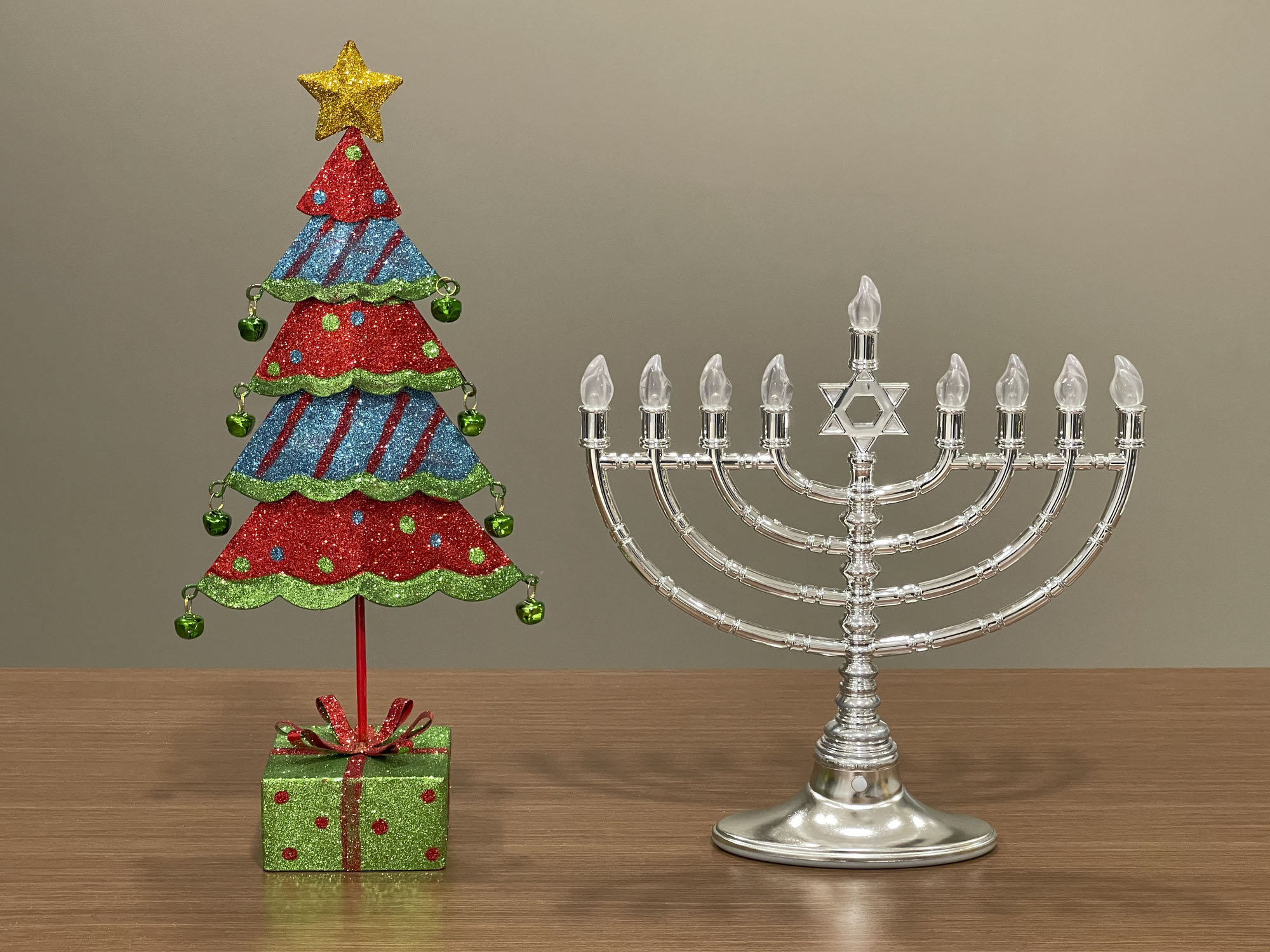
At this time of year, when the holidays of Christmas, Hannukah and Kwanzaa overlap, this cultural dilution is especially prevalent. If you’re not sure what someone celebrates (if anything), why take a chance to possibly offend them?
“Happy holidays” is our end-of-year catch-all greeting that keeps us all out of trouble.
We lose something, however, with this cultural dilution. We lose the magic of difference; the magic of living in a multicultural society where we can share and learn about our differences. Words like “Christmas” “Kwanzaa” and “Hanukkah” are so much more meaningful than “holiday.”
I’m thinking maybe we can start a clunky new trend with “happy whatever holiday you celebrate.”
Shabbat shalom.