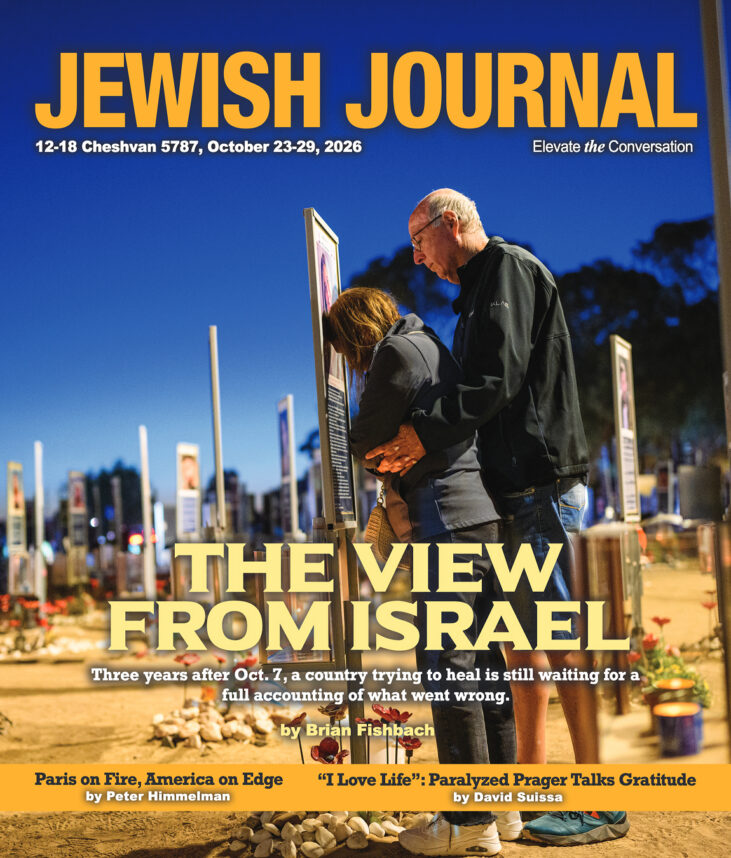
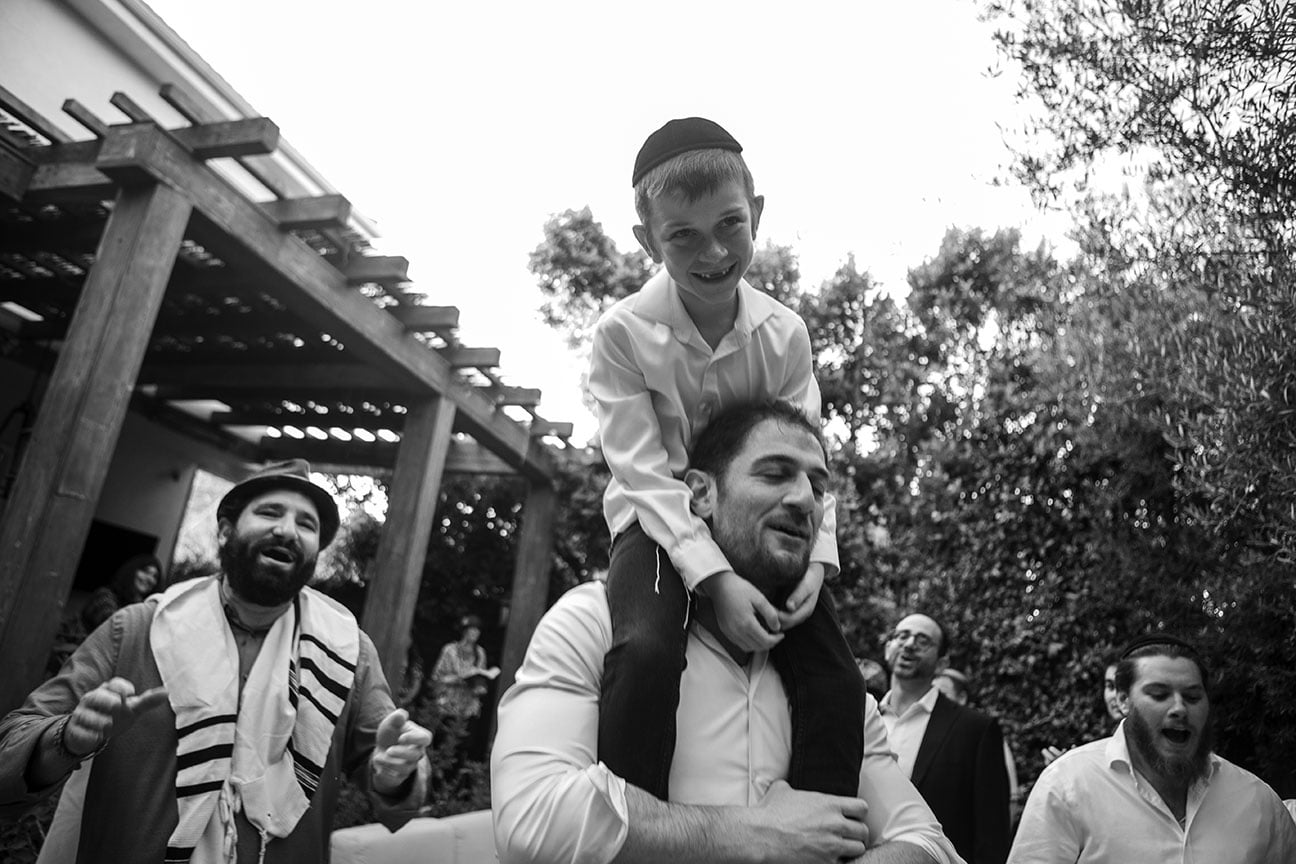
To read the cover story on The Happy Minyan, click here.
I had spent a week in the mystical city of Tzfat in northern Israel, and I kept thinking to myself, “This is as far from Los Angeles as I can imagine.” Everything about the place — the tiny, winding alleyways, the ancient synagogues and architecture, the stone archways, the sacred air, that sense of coziness you feel when everything is so physically close — was the antithesis of L.A.
But then something unusual happened that swung me right back to LaLa Land.
It was during the Succot holiday. I had walked into the Art Colony synagogue and the first thing I saw were these three guys in a state of spiritual ecstasy. They were singing “Ashiveinu,” one of my favorite Carlebach melodies. They had surrendered to the moment. They were exploding with joy. It was infectious.
“Hah, this is Tzfat,” I thought. The place was so holy that this kind of elevated spirituality was to be expected.
What I didn’t expect, though, was that the moment would transport me back to my Pico-Robertson neighborhood. As I watched the three guys singing with spiritual abandon, I got a deja vu. The singing was so joyful and uplifting that it reminded me of a scene many years ago in L.A. when three guys were singing the exact same melody with the exact same intensity. It was David Sacks, Yehuda Solomon and Jeff Rohatiner, longtime members of The Happy Minyan.
The scene in the Tzfat synagogue was virtually identical to what I remembered seeing at The Happy Minyan: Three Jews, separated by 8,000 miles and centuries of Jewish history, singing an amazing melody with the same joy and elation.
Here I was wallowing in an ancient, mystical town and my mind had wandered off to a karate studio storefront on Pico Boulevard. The scene in the Tzfat synagogue was virtually identical to what I remembered seeing at The Happy Minyan: Three Jews, separated by 8,000 miles and centuries of Jewish history, singing an amazing melody with the same joy and elation.
It turns out the prayer is from a verse in Lamentations, which we also recite on Tisha B’av, our most somber day of the year. In Judaism, apparently, no matter how somber things get, joy is never that far behind.
After returning to L.A., I called David Sacks, an expert in joy himself, to tell him the story. It clearly moved him. I have repeated the story many times since. On the surface, it’s one of those odd stories that make little sense: I went to Tzfat and it reminded me of Pico? Say what?
The story, of course, holds a deeper meaning that many of us often take for granted: Joy and holiness are portable. They depend on motivation, not location. We have the power to transform any space. To be sure, places like Tzfat provide the holy well from which we drink. They’re like filling stations that replenish us with holiness and joy, so we can take that spirit everywhere we go.
For the past 33 years, The Happy Minyan has brought that spirit to Los Angeles, through the venerable melodies and teachings of the late Reb Shlomo Carlebach. True to form, they have spread their joy in countless odd locations in the Pico-Robertson area, from private homes to synagogue subrentals to karate storefronts to, most recently during COVID, members’ backyards. They always yearned for something more stable.
So, when they announced recently that they were finally “settling down” on Pico Boulevard with a dedicated location, it was exciting news for a humble little shul with a talent for survival. It gave us an opportunity to tell their story, which we are doing this week with a cover story written by our Community Editor Kylie Ora Lobell.
“Having our own dedicated space means more concerts, more gatherings and more Torah learning,” Naomi Solomon, executive director of the shul and wife of Yehuda Solomon, the shul’s chazzan and popular lead singer of the Moshav band, told the Journal in our cover story. “We’ve been dreaming of this for years and now, with God’s help, it’s finally here.”
The irony is that a shul whose style was never dependent on location will now have a great location. In a sense, the real news for the community is not just that The Happy Minyan will have a new location, but that [after 33 years] they are still with us to share their unique Chassidic-bohemian vibe.
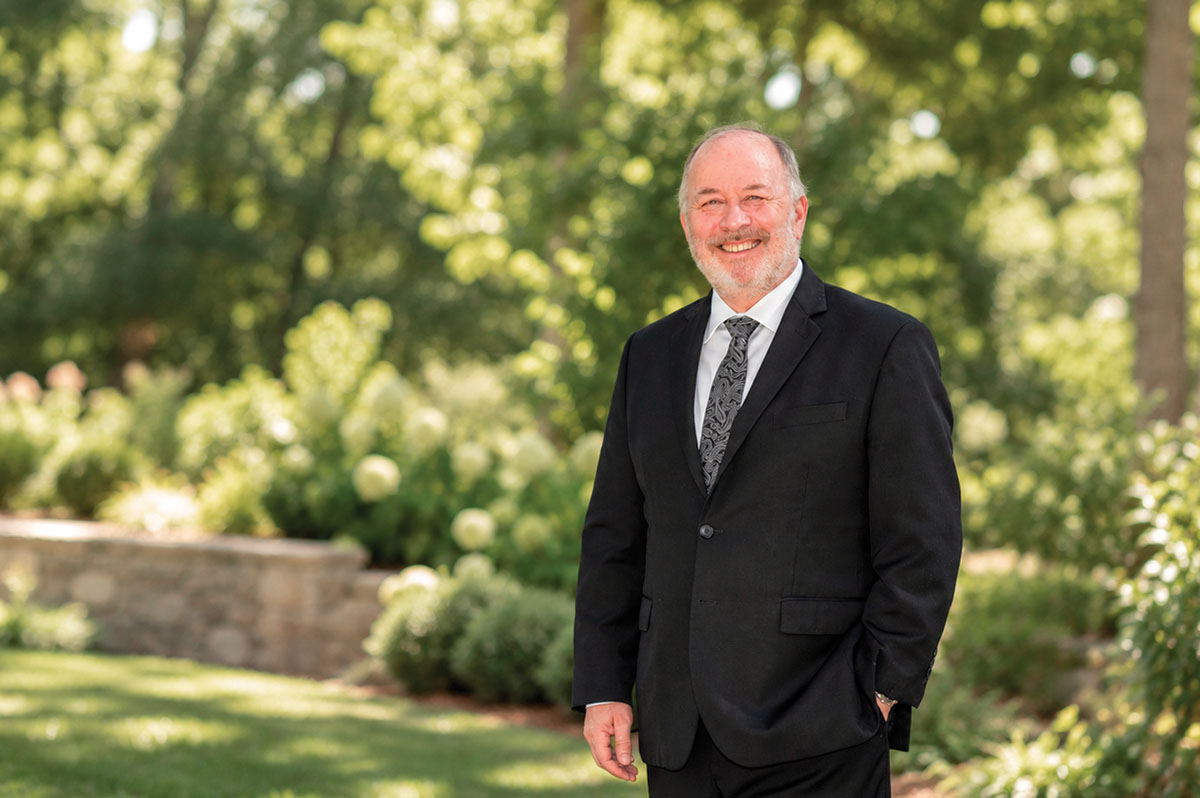
“At the Happy Minyan, prayer is a participatory sport,” Sacks, one of the co-founders, told the Journal. “You’re singing, dancing, eating, sharing with others and enjoying prayer. There really is a sense that you are not just observing Shabbos — you are celebrating it.”
At a time when stories of isolation, depression and loneliness have grabbed so many headlines, a coming out party for a shul that celebrates Judaism in such a joyful way seems like just what the doctor ordered.
At a time when stories of isolation, depression and loneliness have grabbed so many headlines, a coming out party for a shul that celebrates Judaism in such a joyful way seems like just what the doctor ordered.
That is true whether you live in Los Angeles or are visiting from Tzfat.