fbpx

August 4, 2022

The Secular Socialist Zionist Who Insisted on Mourning on Tisha B’Av

It’s become an annual modern ritual. Every summer, before Tisha B’Av, the 9th of Av, many serious Jews wonder whether to still fast on this day commemorating the First and Second Temples’ destruction—along with many other persecutions Jews endured on that day over the millennia. Especially in a united Jerusalem, with Israel about to celebrate its 75th anniversary, it seems anachronistic to recreate our grandparents’ despair yet again. One Jerusalemite friend fasts, keens, prays—but ends the fast four hours before sundown, toasting modern Israel with biblical readings emphasizing that when redemption comes, the mourning will end. This religious dispute goes far beyond how rigorously one adheres to Jewish law. This debate, about how to remember history, and what to forget, gets to the heart of the Zionist revolution—and some democratic dilemmas today too.

In 1934, Berl Katznelson, an avowedly secular Socialist Zionist living in Tel Aviv, criticized members of his youth movement for going off to camp on Tisha B’Av. In embracing Zionism as the Jewish people’s national liberation movement, these young revolutionaries happily rejected their suffocating, depressing, religious upbringing. They ate on Yom Kippur. They had bread on Passover. And, instead of  wailing on Tisha B’Av, they celebrated the Jews’ return to Zion—even before Israel’s establishment. Each assault on tradition affirmed their status as New Jews, not those pathetic, passive, pious, persecuted Yids they fled in “Galut,” exile.

Katznelson himself enjoyed impeccable revolutionary credentials. Born in 1887 in a village called Babryusk, located in today’s Belarus, he plunged into turn-of-the-century Russia’s rousing Marxist debates. His universalist crusade for equality, however, never weakened his ties to the Jewish people or his Zionist dreams. Arriving in Palestine in 1909, he joined the trickle of “Second Aliyah” ideologues building the land—and being rebuilt by it too.

This sincere socialist first worked as a farmhand. Eventually, his skills as labor organizer, speaker, writer, editor and co-founder in 1925 of the workers’ daily newspaper, Davar, made Katznelson the bard of Socialist Zionism. His fatal aneurysm in 1944 at age 57 deprived Labor Zionists of a defining figure. Today, it leaves him more forgotten than friends who established Israel four years later, including David Ben-Gurion.

Still, although Golda Meir enjoyed remembering his “lovely smile,” Katznelson was fuming that summer of 1934. True, he was not the first revolutionary to find younger revolutionaries too revolutionary, but he had a point. In a Davar column entitled “Destruction and Detachment,” Katznelson attacked these Tisha B’Av revelers for failing to “wail about our destruction, our enslavement, our embittered exile.”  What’s the value of a national liberation movement, he wondered, if it isn’t rooted in its people’s rhythms, and only remembers how to forget?

For Socialist Zionists, he insisted, the Ninth of Av has the same significance as it has for every Jew. We all lost our land, our freedom, our hope when the Romans destroyed the Second Temple in 70 CE, triggering the 1900-year-exile Zionists sought to end.

Ultimately, Katznelson forgave these young amnesiacs. But, he warned, there is no salvation in our movement of national salvation for those with “no instincts for the national spirit, for historic symbols, for enduring cultural values.”

Still fuming, Katznelson soon decided to confront the intellectual rot underlying this cancelling of history. The result was what may be his most memorable essay, “Revolution and Tradition.”

First establishing his revolutionary credentials, Katznelson catalogued the many rebellions flowing from their Socialist Zionist revolt against Jewish homelessness and powerlessness. We’re rejecting “the worship of diplomas among our intelligentsia,” the older Jewish socialist intelligentsia’s “assimilationist utopia,” and bourgeois Europeans’ “rootlessness and middlemanship,” he rejoiced. But good revolutionaries don’t just smash toys like children having a temper-tantrum. Recoiling from Nietzsche’s nihilism, already fearing Hitler’s Nazism, Katznelson warned that erasing the past often yields a barbaric present. Even revolutionaries need balance.

Juggling, Katznelson taught that people are “endowed with two faculties—memory and forgetfulness. We cannot live without both. Were only memory to exist, then we would be crushed under its burden. We would become slaves to our memories, to our ancestors. Our physiognomy would then be a mere copy of preceding generations. And were we ruled entirely by forgetfulness, what place would there be for culture, science, self-consciousness, spiritual life?”

Were only memory to exist, then we would be crushed under its burden. We would become slaves to our memories, to our ancestors.

Katznelson’s “revolutionary constructivism” rejects the rigidity of “archconservatism” and the anarchism of primitive “pseudorevolutionism.” Instead, he said, we sift.

“A renewing and creative generation does not throw the cultural heritage of ages into the dustbin,” he preached. “It examines and scrutinizes, accepts and rejects. At times it may keep and add to an accepted tradition. At times it descends into ruined grottoes to excavate and remove the dust from that which had lain in forgetfulness, to resuscitate old traditions which have the power to stimulate the spirit of the generation of renewal. If a people possesses something old and profound, which can educate man and train him for his future tasks, is it truly revolutionary to despise it and become estranged from it?”

Initially, Katznelson speaks Marxist, sounding very theoretical. He ends by sounding downright rabbinic, sermonizing, using the Jewish calendar to uncover his people’s true character. “The Jewish year,” he reasoned, “is studded with days which, in depth of meaning, are unparalleled among other peoples. Is it advantageous—is it a goal—for the Jewish labor movement to waste the potential value stored within them?” Instead, he suggested, we “must determine the value of the present and of the past with our own eyes and examine them from the viewpoint of our vital needs, from the viewpoint of progress toward our own future.”

First, delighting in his peers’ Zionist journey from bondage to freedom, he analyzed Passover. Celebrating the storytelling m’dor l’dor, from generation to generation, Katznelson crafted two sublime sentences that should be required reading at every seder. “I know no literary creation which can evoke a greater hatred of slavery and love of freedom than the story of the bondage and the exodus from Egypt,” he wrote. “I know of no other remembrance of the past that is so entirely a symbol of our present and future as the ‘memory of the exodus from Egypt.’”

Returning to his summer-time obsession, Tisha B’Av, Katznelson noted how Polish and Russian exiles in Paris and elsewhere assimilated quickly, forgetting their identities. By contrast, “the Jewish nation … remains unvanquished by two thousand years of dispersion.” That is because “Israel knew how to preserve the day of its mourning, rescuing the date of its loss of freedom from oblivion … On each anniversary burning tears were shed and each generation expressed its pain.”

Remarkably, the non-Jewish Polish national poet, Adam Mickiewicz, attended synagogue every Tisha B’Av to “join the Jews in their mourning over the loss of their motherland.” As a thwarted nationalist, Mickiewicz appreciated this exercise in memory-making and national conscious-raising. He “understood the power and depth of Tishah b’Av.”

Finally, refuting those who wanted to celebrate the revitalized homeland on Tisha B’Av, Katznelson warned that too many Jews remained endangered, from the physical threats in Europe and Arab lands, to the spiritual threats through assimilation in “capitalistic France” and elsewhere. Taking a leap of hope, Katznelson left open the possibility of dramatic change once the Jews experience a “complete liberation from bondage—including its liberation from the oppression of class by class.” But, even if salvation were to come, he hoped “that each child born in liberty and equality, unacquainted with hunger and material oppression, shall know the sufferings of all preceding generations.”

“Revolution and Tradition” explains why Jews should commemorate Tisha B’Av, even in freedom. Reading Katznelson today underscores the Zionist revolution’s many miracles: 88 years later, most Jews wake up every day free and comfortable, especially after millions found refuge, and dignity, in Israel, which now houses the world’s largest Jewish community. More broadly, Katznelson appreciates history and memory as essential glues uniting communities, bucking up the people. He therefore warns against conservatives too stuck in the past as well as progressives who trash the past. Today, we see how such blinders create conservatives who fail to conserve institutions, and progressives who don’t believe in progress.

Katznelson’s middle path is constructive. Destructive either-or fanaticism offers one-way tickets to barbarism. Liberal democracies require sifting, remembering and forgetting, looking backward and forward, embracing just enough from the past to be rooted and wise, while dreaming just enough about the future to be ambitious and creative.


Professor Gil Troy is the author of The Zionist Ideas and the editor of the three-volume set, “Theodor Herzl: Zionist Writings,” the inaugural publication of The Library of the Jewish People, to be published this August marking the 125th anniversary of the First Zionist Congress.

The Secular Socialist Zionist Who Insisted on Mourning on Tisha B’Av Read More »

Four Hundred and Eighty Years – a Poem for Tisha b’Av

Four hundred and eighty years had passed
before the Temple could be built,
like buildings, years must be amassed
to be for time, not space, a quilt.
Four hundred eighty years once more

would pass before it was destroyed.

Despite attempts made to restore
it fell once more into a void,
its site now used by Ishmael
for mosque and golden-covered dome.
Quilted, time is like a tale

repeated like a palindrome.

On Av’s ninth day, that’s known as Tisha,
we hold as fast as to deep wells
to time, each faster a well-wisher
who’s hoping that the tale he tells
on it will have a happy ending,
and that a message old and deep
will be the one this day is sending

to all the Jews who on it weep.

Then time’s great “happy ever after”
is seen by all as its profound
inclusion, turning it to laughter
which comes because it rolls around,
just like inclusions of the tales
the Bible tells us, nearly all
wrapped by conclusions, happy tails

we wag when we bad times recall.

Their symmetry is far less fearful
than tigers’ eyes, for though beginnings
of tales it tells are often tearful,

there’s laughter in most final innings.

א  וַיְהִי בִשְׁמוֹנִים שָׁנָה וְאַרְבַּע מֵאוֹת שָׁנָה לְצֵאת בְּנֵי-יִשְׂרָאֵל מֵאֶרֶץ-מִצְרַיִם בַּשָּׁנָה הָרְבִיעִית בְּחֹדֶשׁ זִו, הוּא הַחֹדֶשׁ הַשֵּׁנִי, לִמְלֹךְ שְׁלֹמֹה, עַל-יִשְׂרָאֵל; וַיִּבֶן הַבַּיִת, לַיהוָה. 1 And it came to pass in the four hundred and eightieth year after the children of Israel were come out of the land of Egypt, in the fourth year of Solomon’s reign over Israel, in the month Ziv, which is the second month,  that he began to build the house of the LORD (1 Kings 6:1)


Gershon Hepner is a poet who has written over 25,000 poems on subjects ranging from music to literature, politics to Torah. He grew up in England and moved to Los Angeles in 1976. Using his varied interests and experiences, he has authored dozens of papers in medical and academic journals, and authored “Legal Friction: Law, Narrative, and Identity Politics in Biblical Israel.” He can be reached at gershonhepner@gmail.com.

Four Hundred and Eighty Years – a Poem for Tisha b’Av Read More »

Bee Aware – A poem for Devarim

And the Amorites, dwelling in that mountain, came out
towards you and pursued you as bees do
– Deuteronomy 1:44

Everyone I know has been stung by a bee
at one point or another. Not you yet?
This is not meant to be prophecy.

When a bee pursues you, you don’t realize it
until it’s already happened. Until its stinger
has penetrated your skin.

Could this have been avoided?
Probably not. We’re rarely aware when
we’ve intruded on its territory or

have been perceived as a threat.
The stinging, the first indication that
anything was wrong.

It is the immediate hours following
as our lip swells (In my case it was
my lip. What can I learn from this since

this is where all my words come from?)
that we learn the consequences of our
intrusion. Did we even need the honey?

A group of ancient Israelites were
pursued like bees. They didn’t heed
the warning which, had they done so,

would have prevented a brutal stinging.
If your goal is to cross the river
better to not go after the bees.

We need them more than you know.
Moving from flower to flower
they make everything happen.


God Wrestler: a poem for every Torah Portion by Rick LupertLos Angeles poet Rick Lupert created the Poetry Super Highway (an online publication and resource for poets), and hosted the Cobalt Cafe weekly poetry reading for almost 21 years. He’s authored 25 collections of poetry, including “God Wrestler: A Poem for Every Torah Portion“, “I’m a Jew, Are You” (Jewish themed poems) and “Feeding Holy Cats” (Poetry written while a staff member on the first Birthright Israel trip), and most recently “The Tokyo-Van Nuys Express” (Poems written in Japan – Ain’t Got No Press, August 2020) and edited the anthologies “Ekphrastia Gone Wild”, “A Poet’s Haggadah”, and “The Night Goes on All Night.” He writes the daily web comic “Cat and Banana” with fellow Los Angeles poet Brendan Constantine. He’s widely published and reads his poetry wherever they let him.

Bee Aware – A poem for Devarim Read More »

Painting with Vegetables

I was chopping vegetables for dinner one night when a broccoli floret fell on the floor. Before my dog could grab it and scarf it down, I picked up the piece of broccoli, wondering if it qualified to be saved under the “5 Second Rule.” I decided not to include it in that night’s stir fry, and instead use it for painting. That’s right, painting. It’s fun to play with your food when it creates such interesting patterns with paint. 

There are a few different vegetables that work well with painting. And worry not, it only takes a tiny piece, or even discarded scraps, to do the trick, so you’re not wasting food. 

Just dip the vegetables in paint, and apply to paper. Perhaps this will inspire you to create art with other scavenged items from the kitchen. Think lemon peels, ends of carrots, apple cores, celery leaves or the empty shells of pomegranates..You’ll never look at your grocery list the same again.

Broccoli florets create a beautiful splatter pattern. Use it to paint delicate flowers that look like hydrangeas or baby’s breath.
Cauliflower florets create more solid splatter, perfect for leaves and an impressionistic version of flowers.
The cut ends of baby bok chop create rose shapes.
Use the stem of the broccoli floret to draw lines or details within the flowers.

Jonathan Fong is the author of “Flowers That Wow” and “Parties That Wow,” and host of “Style With a Smile” on YouTube. You can see more of his do-it-yourself projects at jonathanfongstyle.com.

Painting with Vegetables Read More »

Diller Teen Fellowship, Guardians Real Estate Dinner, Cedars-Sinai Ranked No. 2 Nationally

Approximately 350 Jewish teens from 16 communities in six countries arrived in Israel on July 4 for a three-week seminar as part of a year-long Diller Teen Fellowship, an immersive and international leadership program for teenagers from across Israel and the world.

Among those in the program were 20 students from Los Angeles.

Savyon Petel was one of 20 local students in the recent Diller Teen Fellowship. Photo by Dror Miller, courtesy of Diller Teen Fellowship.

“Diller has given me the unique opportunity of getting to meet other Jewish teens from around the world, but also the foundation on how to build a Jewish identity,” Savyon Petel, 16, a student at Los Angeles Center for Enriched Studies and one of the participants in the fellowship, said. “It’s so special that a diverse group of teens can come together and share their thoughts, stories and experiences. I feel so lucky to be a Diller Teen Fellow.”

The trip to Israel lasted through July 24, and Patel joined students from Jewish communities worldwide, including Miami, Chicago, San Francisco, Baltimore, New Jersey, Philadelphia, Boston, Pittsburgh, Toronto, Montreal, Melbourne, Johannesburg, Cape Town, Buenos Aires and the United Kingdom.

Providing Jewish students with the opportunity to explore their collective Jewish identity, the Diller Teen Fellowship has been cultivating new generations of Jewish leaders since 1998. It started when the late philanthropist Helen Diller observed the effectiveness of existing leadership programs for young professionals and saw the need to reach potential leaders much earlier, when they are in the critical teenage years. Today, there are more than 6,500 Diller alumni worldwide.


Cedars-Sinai Medical Center was ranked the No. 2 hospital in the nation and No. 1 hospital in California in U.S. News & World Report’s “Best Hospitals 2022-23” rankings.  
The U.S. News rankings are based on patient outcomes, patient experience, technology, reputation and a variety of other health-related measures.

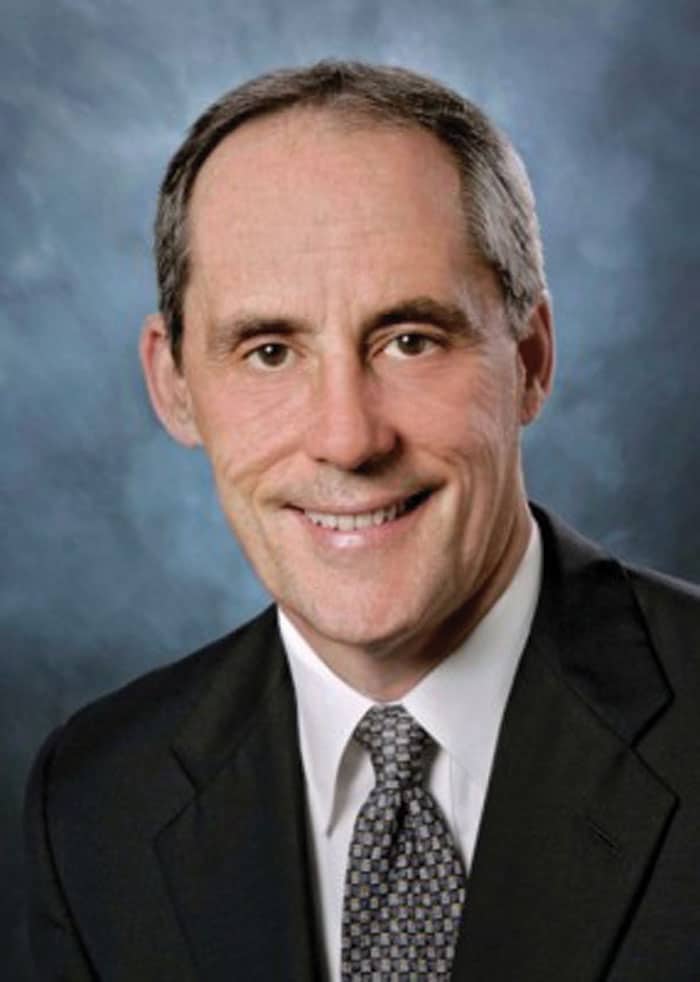
Cedars-Sinai CEO Thomas Priselac

Cedars-Sinai, founded as a Jewish hospital, had 11 specialties ranked nationally, including cancer, cardiology, geriatrics, neurology, orthopedics and pulmonology, according to the hospital rankings released July 26. This means the hospital is among the nation’s top medical centers in these clinical areas, according to a Cedars-Sinai.

The medical center’s leadership said the recognition by U.S. News reflected the hard work and commitment of the hospital’s staff.

“Thanks to the dedication of our physicians, nurses, academic leaders and thousands of others on our staff, Cedars-Sinai continues to provide innovative healthcare, enhanced by our commitment to pioneering research, teaching and education,” Cedars-Sinai CEO Thomas Priselac said. “We are proud of Cedars-Sinai’s contributions to our diverse Los Angeles community as well as nationally and globally.”


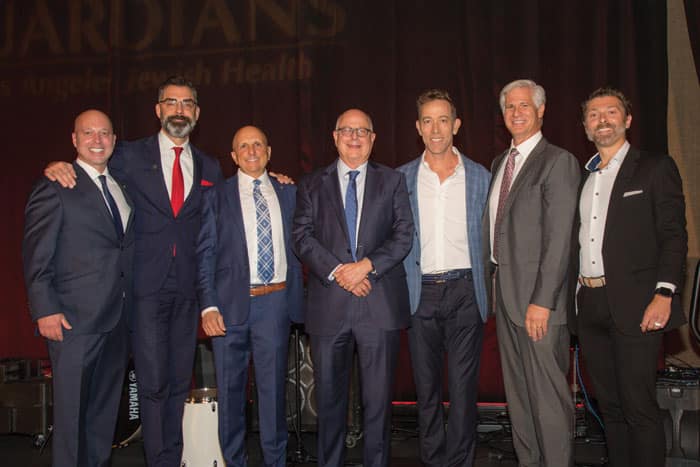
From left: Zane Koss, Peter Steigleder, Anthony Behar, Michael Hackman, Kenny Stevens, Dale Surowitz and Andrew Westling attend Guardians of Los Angeles Jewish Health’s annual Real Estate Dinner. Courtesy of Guardians of Los Angeles Jewish Health

On July 28, the Guardians of Los Angeles Jewish Health honored Michael Hackman of

Hackman Capital Partners at the group’s annual Real Estate Dinner, held at the Fairmont Century Plaza.

Event Co-Chairs Anthony Behar, Kenny Stevens and Andrew Westling welcomed the crowd of more than 500 influential businesspeople and philanthropists to celebrate Hackman for his good works throughout the community. 

Meanwhile, Guardians Co-President Peter Steigleder spoke about the group’s support of Los Angeles Jewish Health, formerly the Los Angeles Jewish Home, since 1938, and Co-President Zane Koss presented a special award to Hackman. 

Upon receiving the honor, Hackman discussed the importance of Los Angeles Jewish Health in caring for more than 4,000 older adults in need each year.

Los Angeles Jewish Health CEO Dale Surowitz and Honorary Event Chair Michael Koss also spoke about the meaningful work of Los Angeles Jewish Health and encouraged attendees to give generously to the cause. 

Guests enjoyed delicious food and drink and live music while raising over $1 million to the support the Guardians, which provides support for members of the community who are served by Los Angeles Jewish Health through residential and community-based programs. 

The Guardians host a variety of philanthropic, networking, and social events.

Diller Teen Fellowship, Guardians Real Estate Dinner, Cedars-Sinai Ranked No. 2 Nationally Read More »

Showcasing the Jewish Food of Italy in a New Book

Everyone loves Jewish food and Italian food. 

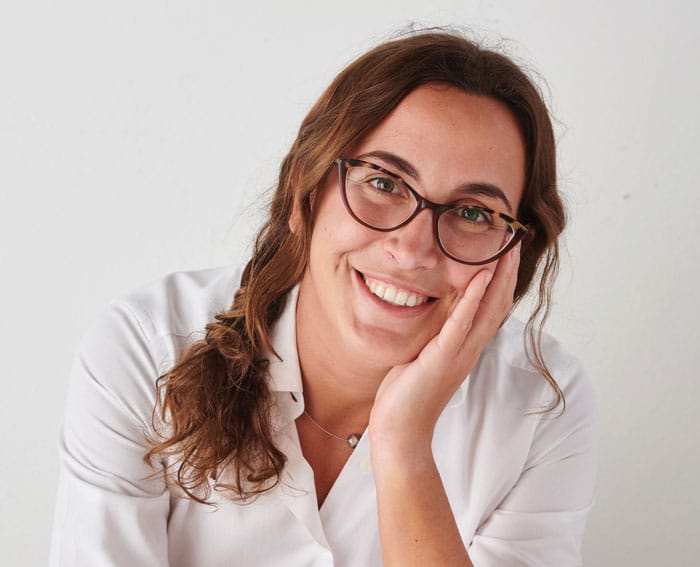
“It’s the best combo,” Benedetta Jasmine Guetta, author of “Cooking alla Giudia: A Celebration of the Jewish Food of Italy,” said. “It’s like if you had a bubbe who is also Italian. How much better can you get?”

An Italian food writer and photographer, Guetta, 33, who grew up in Milan and now lives in Santa Monica, has become an ambassador of Jewish Italian cuisine. 

With a collection of kosher recipes from all regions of Italy, “Cooking alla Giudia” illustrates how the Jews changed Italian food.

“Jewish Italian food is a thing of its own,” the author said. “Our cuisine is very specific in that it’s Italian in its flavors, but it’s also very Jewish in its adherence to the regulations and its specificity for the Jewish holidays.”


 While it’s very different compared to what people in the U.S. think of as Jewish – for  instance, Italian Jews do not eat matzo balls, Guetta said –  it’s still the homey and cozy food of the Jews combined with the colorful Mediterranean style of the Italian culinary tradition.

“Most of the Jewish population of Milan, as of today, is the result of immigration in the 1960s and the 1970s,” she said. “My family came from Libya and many Jews came from Iran [and] Lebanon, so the community of Milan is a mixed bag.”

Guetta, who owns Café LOVI in Santa Monica, has taught the recipes of the cuisine to people in cooking schools, synagogues and community centers. Her food journey started in 2009, when she co-founded the Labna blog with Manuel Kanah.

Excerpted from Cooking alla Giudia by Benedetta Jasmine Guetta (Artisan Books). Copyright © 2022. Photographs by Ray Kachatorian.

“Labna was born as a collection of recipes from the cooking classes that I was teaching with a friend of mine,” Guetta said. “We didn’t set out to be a Jewish blog, but there was so much interest and enthusiasm that we ended up writing a lot about that.”

From there, Guetta started researching Jewish food in general, and then, specifically, the Jewish food of Italy. She visited Jewish communities throughout Italy, recording recipes for her knowledge, the blog and eventually the book.

“The Jewish communities of Italy are also very small so, for example, the Jewish community of Venice is [made up of around] 400 people,” she said. 

Many of the residents are older. “I was chatting with all of these really cute grandmas,” Guetta said. 

She felt it was almost her duty to preserve their recipes for the next generation. 

“There’s a bit of a gap in the way these recipes are going to be passed on, and I do have a vivid sense that a lot of those recipes would have died with these people,” she said.

Some of Italy’s best-known dishes are Jewish in origin, Guetta said, but little is known about them. For instance, it was the Jews who taught Italians to eat the eggplant. 

“Eggplant Caponata is this excellent dish that people think of as Italian, but it’s actually of Jewish origin; people just don’t know it,” Guetta said. “It’s one of those dishes that have obviously a Jewish history that I wanted to sort of claim back [for] the Jews.”

Caponata alla giudia
Eggplant and Vegetable Stew
Excerpted from “Cooking alla Giudia” 

“Caponata is somewhere between a cooked salad and a vegetarian stew that vaguely resembles ratatouille. It’s one of the most ancient preparations of Sicilian cuisine, and it likely has Jewish origins, indicated by the presence of eggplant in the dish. As you slowly cook the eggplant with tomatoes, celery, olives, capers, and herbs, it all turns into a savory, briny mix, one that tastes even better the next day.

Serves 4

3 eggplants
Kosher salt
1½ onions
2 celery ribs
5 cherry tomatoes
¼ cup (60 ml) extra-virgin olive oil
2 garlic cloves, smashed
1 cup (200 g) chopped ripe tomatoes
or canned diced tomatoes, with
their liquid
2 tablespoons mixed black and green
olives, pitted
1 tablespoon capers
½ cup (120 ml) white wine vinegar
1 tablespoon sugar
Sunflower or peanut oil for deep-frying
Freshly ground black pepper
5 basil leaves

Cut the eggplants into ¾-inch (2 cm) cubes. Transfer them to a colander, salt generously, weigh them down with a plate, and let drain for 30 minutes.

Cut the half onion into very thin slices. Cut the whole onion into chunks roughly the same size as the eggplant cubes. Cut the celery into chunks and cut the cherry tomatoes in half.

Pour the olive oil into a large nonstick skillet set over medium heat, add the sliced onion and garlic, and cook for about 3 minutes, until the garlic is slightly browned. Add the celery, tomatoes (both cherry and chopped), olives, capers, and the chopped onion to the pan and cook for 10 minutes, until the vegetables begin to soften. Add the vinegar and sugar and cook for another 10 minutes. Remove from the heat.

Remove the plate covering the eggplant and squeeze the eggplant in the colander to remove any remaining liquid.

Pour 1 inch (3 cm) of sunflower or peanut oil into a large saucepan and warm over medium heat until a deep-fry thermometer reads 350°F (180°C). You can test the oil by dropping a small piece of food, such as a slice of apple, into it: if it sizzles nicely but doesn’t bubble up too wildly, the oil is ready. (An apple is said to help minimize the smell of the frying oil, so I generally go for that, but any bit of food will do.)

Add only as many eggplant cubes to the pan as will fit in a single layer without crowding and fry until golden, turning often. Remove the eggplant with a slotted spoon and spread out on a paper towel–lined plate to drain. Cook the remaining eggplant cubes in the same manner, adding more oil if needed.

Once the fried eggplant has drained, add it to the pot of vegetables. Season with ½ teaspoon salt and pepper to taste, adding a bit of water if the vegetables look dry, and cook the caponata over medium heat, stirring frequently, for 5 minutes.

Stir in the basil leaves, remove from the heat, and let the caponata cool to room temperature before serving.

Caponata keeps well in the fridge, in a bowl covered with plastic wrap or in an airtight container, for 3 to 5 days; it can also be frozen. Leftovers can also be used to dress pasta, in which case, add either grated Parmesan cheese or mozzarella, torn into small pieces, to the caponata.”

Showcasing the Jewish Food of Italy in a New Book Read More »

Punk Singer Shira Yevin Working for the Next Generation of Women in Music

Shira Yevin isn’t just a punk rock singer. She is an entrepreneur, activist and artist — a true multi-hyphenate.

Yevin is the embodiment of hustle in the music business. In 2020, she founded Gritty in Pink, a female-led organization that empowers and connects diverse women in all aspects of the music business, from the artists to the recording engineers to the sales people at the merch stand. 

According to Gritty in Pink, only 21.6% of music industry professionals are female artists, 12.6% are female songwriters and only 2.6% are female producers. The numbers were even lower back in 2004 when Yevin took a stand that would change her life forever. She was working for the Truth Campaign (to stamp out teen smoking) as the MC for their stand at the Vans Warped Tour, a traveling punk rock music festival, and she noticed that nearly all of the punk bands were made up of men. 

“I would ask people, ‘Where are the girls?’ And some of the people I would ask would say, ‘Well, girls don’t play this kind of music,” Yevin said. “I was like, ‘I know that’s not true.’”

Yevin would bring the subject up to Kevin Lyman, the founder of the Warped Tour, who loved the idea of an all-female rock stage, but it wouldn’t likely take shape until the 2005 Warped Tour. Not wanting to wait another year, Yevin took matters into her own hands as lead singer of her band Shiragirl. 

“We drove our pink RV into the [Warped Tour] grounds in Fullerton, set it up across the skate ramp and started playing,” Yevin said. When Lyman noticed, Yevin and her bandmates held their breath, fearing retribution. 

Instead, Yevin’s bold move earned them a spot playing on the rest of the summer festival’s tour. 

“I always was a person that gave people an opportunity, you know, and [Shiragirl] kind of barged it, which is cool,” Lyman told The Journal.  “The easy thing was letting them do the first one. But when they wanted to do more, [I said] let’s see if [Shira] could pull it together. And she did.”

By the 2005 Warped Tour, there was a stage dedicated solely to female bands, the Shiragirl Stage.

“We had over 250 girl bands [during the 2005 Warped Tour],” Yevin said. “We came back in 2006, and Joan Jett was on the tour.”

Shiragirl would go on to tour over the subsequent years, opening for punk legends including NOFX, Joan Jett and Rancid. In 2018, the Shiragirl stage returned for the final full-summer Warped Tour.

She did theater at Kutsher’s Camp Anawana, a Jewish summer camp in the Catskills. With Gritty in Pink, she gets the opportunity to perform and give a leg up to other women to do the same. 

Looking back, it comes as no surprise that Yevin would combine her talents in such a way. When she was a student at the University of Pennsylvania, she majored in both communications and theater. She wasn’t always into singing. As a child, she was much more into ballet, jazz and tap dancing. She did theater at Kutsher’s Camp Anawana, a Jewish summer camp in the Catskills. With Gritty in Pink, she gets the opportunity to perform and give a leg up to other women to do the same. 

She brought her business pitch to Lyman for feedback. 

“I made a 20-page [pitch] deck and I brought it to Kevin and I had this huge vision — and it wasn’t just a tour,” Yevin said. “I wanted to do an online network and a media content studio and lifestyle products.”

Lyman was impressed and encouraging. He said whenever he meets with Yevin, he can just “sit there and be a sounding board or a mentor to her as she’s building out her newest projects.” To this day, Lyman describes Yevin as family. 

“Now with what Shira’s doing with Gritty in Pink, you have to give her a complete credit where credit is due, and she just keeps moving forward,” Lyman said. 

During the early days of the COVID-19 pandemic, Gritty in Pink organized a virtual concert series called “Gritty Rock Live” (GRL, a play on the 1990s MTV show TRL — “Total Request Live”). GRL would bring over 200 female musicians to fans via live-streams and Instagram-live fundraisers. 

In addition to consulting and advising one-on-one with females in the music industry, Yevin organizes concerts. She created the annual Gritty in Pink All-Girl Jam, featuring dozens of female-fronted musical acts as well as the internationally-touring “Punk Rock and Paintbrushes” art festival.  

“She’s very passionate about moving females forward in all sorts of things in business, as well as in the music industry. And she took that lead and she does with all the best intentions,” Lyman said.

Yevin’s impact in the music industry is apparent. The Gritty in Pink team is growing. Clients include pop singer Juno, punk band Bad Cop Bad Cop, hard rockers Doll Skin, bassist Eva Gardner, R&B singer Shea Diamond and indie rocker Madeline Rosene. Gritty in Pink has over 250 artists with 27 million collective followers on Instagram and TikTok. 

The Shiragirl Stage is even immortalized in a Warped Tour exhibit at the Rock and Roll Hall of Fame in Cleveland. 

Yevin is doing all she can to ensure a place for females in every aspect of the next generation of the music industry. 

“[There are] a lot of emerging artists, and we have seen artists that we scouted out in the beginning and they go on to, touring the world,” Yevin said. “And I have an incredible team. It’s not just me. The team really has an eye for talent. And so we’re proud of that.”

Gritty in Pink’s next All Girl Jam is on Thursday, September 15th at 7:00 pm at The Echo. Tickets are free but you must register before attending: https://www.eventbrite.com/e/all-grl-jam-90s-tickets-395022130827

Punk Singer Shira Yevin Working for the Next Generation of Women in Music Read More »

UN Commission of Inquiry Member Apologizes for “Jewish Lobby” Comment

United Nations Human Rights Council (UNHRC) Commission of Inquiry [COI] member Miloon Kothari wrote a letter apologizing for his “Jewish lobby” comments that were criticized as being antisemitic.

The letter, dated August 4, featured Kothari expressing “regret” and that he would like to “unequivocally apologize” for his use of the term during an interview with the anti-Israel site Mondoweiss. “My intention was to denounce the relentless and vitriolic personal attacks against the members of the Commission on social media and some publications, launched to delegitimize and undermine its work,” Kothari wrote. “It was completely wrong for me to describe social media as ‘being controlled largely by the Jewish lobby.’ This choice of words incorrect, inappropriate, and insensitive.”

Kothari also stated that his other comment in the Mondoweiss interview questioning Israel’s membership in the U.N. was meant to focus on Israel’s “non-compliance” with “UN decisions related to its obligations under international law.” “At no place in the interview did I question the existence of the State of Israel,” he wrote. “On the contrary, throughout the interview I have defended the existence of the State of Israel. This is fully consistent with the position of the Commission.” Kothari reiterated his apology toward the end of his letter. “I have always condemned discrimination in all its forms, including through antisemitism, and I do so again now.”

Jewish groups did not accept Kothari’s apology.

“Kothari’s ‘apology’” for his #antisemitic and outlandish anti-Israel statements is too little too late,” Anti-Defamation League CEO Jonathan Greenblatt tweeted. “It underscores the inherent bias of the COI—both its mandate and makeup. For the @UN_HRC to maintain any semblance of integrity, it must immediately dismantle the COI.”

B’nai Brith International tweeted that they are reiterating their call to remove “prejudiced members” from the commission.

UN Watch Executive Director Hillel Neuer said in a statement that he “rejects Mr. Kothari’s attempt to whitewash his use of a notorious antisemitic trope that throughout history has sparked deadly pogroms and worse, and his literal questioning of Israel’s membership in the UN. His request for the president of the Human Rights Council to ‘enable and protect’ the inquiry should be turned down.”

Neuer added: “Mr. Kothari is the first UN investigator in the history of the United Nations to be called out for antisemitism by the head of the Human Rights Council, the Secretary General, together with Britain, France, Germany, the US and 14 other countries. He has disgraced the council, and cast a shadow upon the United Nations as a whole. That Mr. Kothari is clinging to his post after he obliterated any semblance of the impartiality legally required for a UN investigator, shows that is also without self-awareness or shame.”

Emmanuel Nashon, Deputy Director General for Public Diplomacy at Israel’s Ministry of Foreign Affairs, tweeted: “The so-called apology of COI member Miloon Kothari is a pitiful and unconvincing maneuver, which does not cover up for a long record of anti-Israeli and anti-Semitic statements by him and the other COI members. They should immediately resign.”

Canadian U.N. Ambassador Bob Rae tweeted, “For the past ten days the [COI] Chair defended the remarks saying they were ‘taken out of context’. The Commission was biased from the outset. Everything since then, including this ‘clarification’ only confirms it.”

Human rights lawyer and International Legal Forum head Arsen Ostrovsky tweeted that Kothari’s “non-apology is entirely meaningless and predictable” and “came after almost 20 countries condemned him and a staggering 10 days after he made the initial remarks. Does it really take someone that long to recognize that saying ‘the Jewish Lobby’ controls the media is abhorrent, racist and antisemitic?”

NGO Monitor Founder Gerald M. Steinberg tweeted that Kothari’s “heinous antisemitism” is “not erased by a cut & paste ‘I’m sorry (that I got caught); my words were misunderstood’ letter. The COI was a disgrace from the beginning – it must be disbanded now.”

The commission is investigating the conflict between Israel and Hamas that occurred in May 2021.

UN Commission of Inquiry Member Apologizes for “Jewish Lobby” Comment Read More »

The Sound of Survival: A Look at Temple Beth Solomon of the Deaf

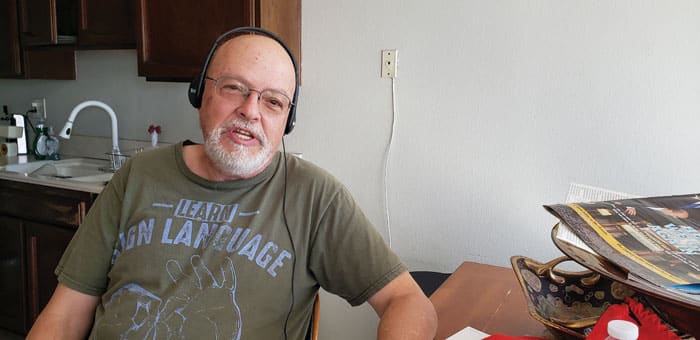
Michael Thal is spending his first year as president of Temple Beth Solomon of the Deaf (TBS) scouring the landscape for anyone interested in participating in Shabbat services. 

Founded in 1960, Beth Solomon is the world’s first synagogue for the deaf. But their heyday was so long ago that few of the original congregation survives; and attendance has declined. 

The aging of the congregation is not the only reason for the decline (although Thal does estimate the members’ average age is 84). The deaf community used to be more tight-knit, Thal said. But with advancements in technology, “it has kind of dispersed.” 

Last January, when Thal succeeded Joseph Slotnick, who served as president for three decades, he brought a stark message: “TBS is slowly dying,” he said. “I can’t allow a jewel in the necklace of Judaism to fail.”

Thal faces a tough challenge, but he is determined to build back a committed community.   “When they were in their 20s and 30s, they went to shul in Arleta in the North Valley,” he said. “They had a building. They educated their kids there. But, unavoidably, everyone got older and moved on.”

Sixty-two years ago, TBS presented a youthful, upbeat setting. Take founders Alvin and Marge Klugman. Alvin went deaf at age five, and Marge lost her hearing at 16, when she also lost part of her sight.  They were two of the pillars of TBS’ earliest days and were central to the community for 40 years. 

Libby Green, whose late husband Arthur was related to the Klugmans, said, “They were always leaders. [They were] creative, intelligent people. Nothing ever stood in their way.”  

Today, TBS’ services are in Temple Ahavat Shalom in Northridge. Attracting a minyan is rare, but Rabbi Warren Levy proceeds with services while Jan Seeley does sign language for the congregation. 

“[The] last time we got together, [which was] to celebrate our 62nd anniversary, quite a few people were there, about 30,” said Thal. “Normally, though, the number is more like six, 10 or 12, [and] mostly women.”

Unlike many deaf persons who lost their hearing early in life, Thal lost his at the height of his career in 1993, when he was 44 years old. He was a member of Temple Judea, a Reform synagogue in Tarzana, for 25 years. Even after losing most of his hearing and being forced out of a tenured sixth grade teaching position, he was determined to retain his temple membership.  

“Although I couldn’t understand a word of the rabbi’s sermons and I was incapable of following a service, I stayed,” Thal said. “My hearing daughters benefitted from the shul’s educational program and bat mitzvah lessons.” 

He confessed later that throughout those personally quiet years, he felt like an outsider.  “I was clueless about the activities going on in the room where I sat,” he said. Eventually, Thal recalled, Temple Judea offered headphones for its hard-of-hearing members. “But when one ear is deaf and the other severely impaired, headphones don’t cut it,” he said.

One Shabbat, Jan Seeley, an ASL interpreter, came to services at Temple Judea.  “She positioned herself near the bimah and signed for those with hearing issues,” Thal said. “Afterwards, I introduced myself and my wife Jila to Jan. She told us about Temple Beth Solomon, which was renting space for services at Temple Judea.” 

In the more than two decades since his retirement, Thal taught himself to be a writer. He has written six books. The most recent, “The Lip Reader,” was inspired by Jila. “But I changed everything,” he said. “We were together 16 years, and during that time, she told me stories about growing up deaf and Jewish in Iraq.” 

After Jila died, he sat shiva for her for a year. “When I went to the unveiling, I said to myself, ‘I have to do something. I am going to bring her back.’ So I took all of the stories she had told me, outlined my book, and it took me four years to write it, with a lot of tears.”

Taking a broader view as temple president, Thal said that “bright spots for deaf Jews are few and far between,” he says. “Why would the People of the Book fail to include deaf members in their fold?”

Frustrated, they go elsewhere.

“Today, I can actually understand the rabbi’s sermons through the help of Jan Seeley’s sign language. And the congregants speak my language. It’s nice.” – Michael Thal

“I joined TBS after my wife’s death to find other deaf Jews and a place to worship where I’d have a shot at understanding what was going on around me,” he said. “I’m glad I did. Today, I can actually understand the rabbi’s sermons through the help of Jan Seeley’s sign language. And the congregants speak my language. It’s nice.”

After TBS’s monthly services, tradition calls for an Oneg Shabbat.

“It’s in a quiet room,” says Thal. “When you walk in, you can hear a pin drop – because everyone is signing.”

While continuing his search for rebuilding membership a person or two at a time, Thal encourages those who know American Sign Language (ASL), or just want to witness how it works, to visit Beth Solomon the second Friday of the month. 

“You will enjoy the intimacy of the service, Rabbi Levy’s insightful sermons and biblical analysis and Jan Seeley’s interpretations,” he said.

Visit TBS’s website at https://www.facebook.com/tbsdeaf for email the president at michaelthal@icloud.com.

The Sound of Survival: A Look at Temple Beth Solomon of the Deaf Read More »

A Moment in Time: Keep Looking Forward

Dear all,

Last weekend, members of Temple Akiba joined me for a Paddle Boarding excursion in Marina del Rey. (Thank you to Kathryn, our Program Director, for organizing!)

Having never done this before, I listened closely to our instructor who offered key tips for maintaining our balance.

”In short,” she said, “Just keep looking forward.”

(Mind you, in the photo above, I am looking down! It took a few reminders!)

The advice made so much sense. In life, when we look forward, we focus on our goals, we refrain from getting stuck, and we build vision with those around us.

Yes – we will stop now and then to look down and to look back. It’s inevitable (and also necessary). But remembering to look forward will ultimately enable us to realizing our dreams. And all it takes is a moment in time.

With love and Shalom,

Rabbi Zach Shapiro

A Moment in Time: Keep Looking Forward Read More »