In recent weeks, legislators across a broad political spectrum have been raising questions about Jeffrey Epstein’s child sex trafficking empire, asking who were his clients? The media, likewise, has been awash with stories of conspiracies and cover-ups following the Justice Department’s statement that Epstein did not keep a client list.
While many media stories have focused on Trump’s interactions with Epstein prior to their falling out in 2004, there is a much more important story that should not be overlooked, especially for those in the Jewish community.
As a Jewish woman who has devoted her life to writing about child sexual abuse in the academic literature and for the popular press, I was deeply troubled by the horror Epstein visited upon innocent under-aged girls, which included rape, sodomy and forced performance of perverse sexual acts. Yet, when reading the headline stories of Epstein’s suicide, I found myself troubled by his ending of his life. He was a Jew and I couldn’t push that out of my mind, no matter how hard I tried.
Nor could I dismiss the eerie coincidence that he took his life about 12 hours before the onset of Tisha b’Av, the saddest day on the Jewish calendar when we commemorate the destruction of the Holy Temple by following the rituals of mourning and committing to a 24-hour fast. Perhaps most eerie is that one of the reasons for the destruction of the Holy Temple, particularly the First Temple, was that the Jewish community had descended into sexual depravity, along with murder and idolatry. Epstein, taking his life hours before the start of Tisha b’Av makes it especially hard to escape the fact that his existence on earth was ironically defined by the same sexual depravity that had brought about the desecration of the Holy Temple. Epstein, whose life of sin was now squarely before the world for everyone to see.
I had a brief encounter with Jeffrey Epstein myself. It was sometime in the ‘90s when I was at my parents’ home in Brooklyn. My father was a prominent rabbi whose synagogue, The Jewish Center of Brighton Beach (where Nicolas Cage would later be filmed in “Lord of War”), was a stone’s throw from where Jeffrey Epstein grew up in the Seagate section of Brooklyn. My father would often be called upon to privately counsel those facing the difficulties of public life. As a member of the clergy he kept these matters strictly confidential.
One day I recall how the phone rang at the Brooklyn home. I took the call. It was Jeffrey Epstein on the line asking to speak to “the rabbi” about a “highly personal matter.” Epstein was noticeably upset. I could see my father was visibly shaken after the call and I knew something was wrong. My father never uttered a word because confidentiality was sacrosanct to him as a member of the clergy.
Years later when I read the headline news reports of Jeffrey Epstein having strangled himself with his bedsheets at the Manhattan jail where he was awaiting trial on child-sex trafficking charges, I realized that this detestable child-sex trafficker who had reached out to my father for rabbinic guidance so many years prior might have actually taken his life to spare the Jewish community from a “shanda” – profound community shame.
Having taken his life hours before the start of Tisha b’Av makes it hard to escape the fact that Epstein’s suicide might have arguably – and in the most twisted way – been a “sacrificial” act – a way of effacing his memory so that he would not bring down the Jewish people. For Epstein, he may have left the world because his shame as a Jew had become too burdensome to bear. If so, his strangling of himself may have been his last attempt to smite the enemy from within. And that would have been his last message as a Jew who had fallen into an abyss of shame.
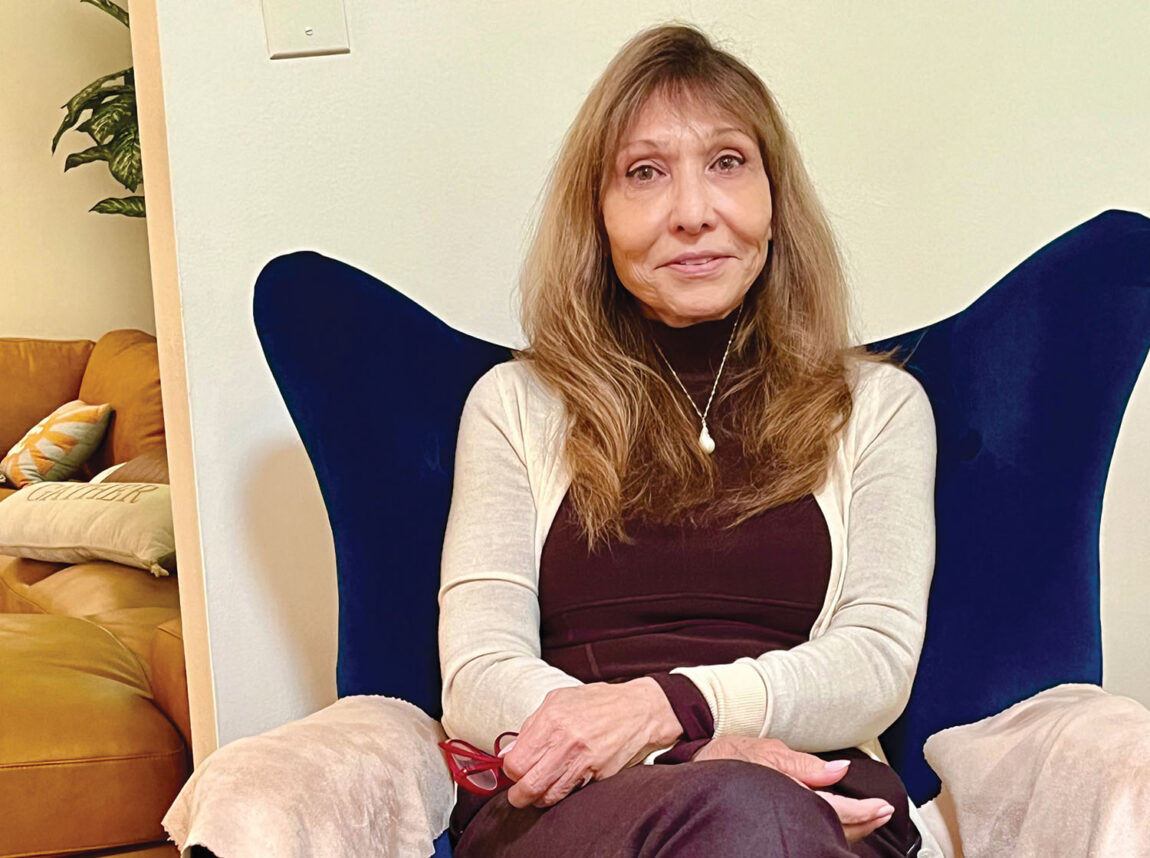
Amy Neustein, Ph.D. (Sociology) is the author/editor of 16 academic books. Her two books on child-sex abuse are “From Madness to Mutiny: Why Mothers are Running from the Family Courts –and What Can Be Done about It” and “Tempest in the Temple: Jewish Communities and Child-Sex Scandals.” She resides in Fort Lee, NJ.