The frigid wind off the Hudson River had teeth. Winter in New York chills one’s social life. No one lingers, and small talk becomes a luxury.
But stepping inside the 150th Westminster Kennel Club dog show at the Javits Center, the temperature warmed up in more ways than one.
There were gorgeous, friendly dogs everywhere, alert, curious and generous with their unflinching affection for humankind. And with them, breeders, groomers and trainers who were excited to tell about their dogs.
Marvel at the site of a beautifully bred pup and watch their handler’s eyes light up. Pause to admire a stunning coat or regal posture and a story is sure to follow. The dogs themselves love it too, tails wagging, receptive to attention from all who are willing to bestow it. Inside, the cold instantly thawed, replaced by a deeply satisfying feeling of belonging.
I went looking for theology and religious upbringing, not in the form of doctrine, but in stories. What they shared wasn’t so much driven by scripture. They spoke about ethics learned at home and responsibility learned by doing, with kindness as a sort of moral baseline. Still, in three conversations, two with Jews and one with a Christian, belief and identity did show up, not as a sermon, but more as a frame.
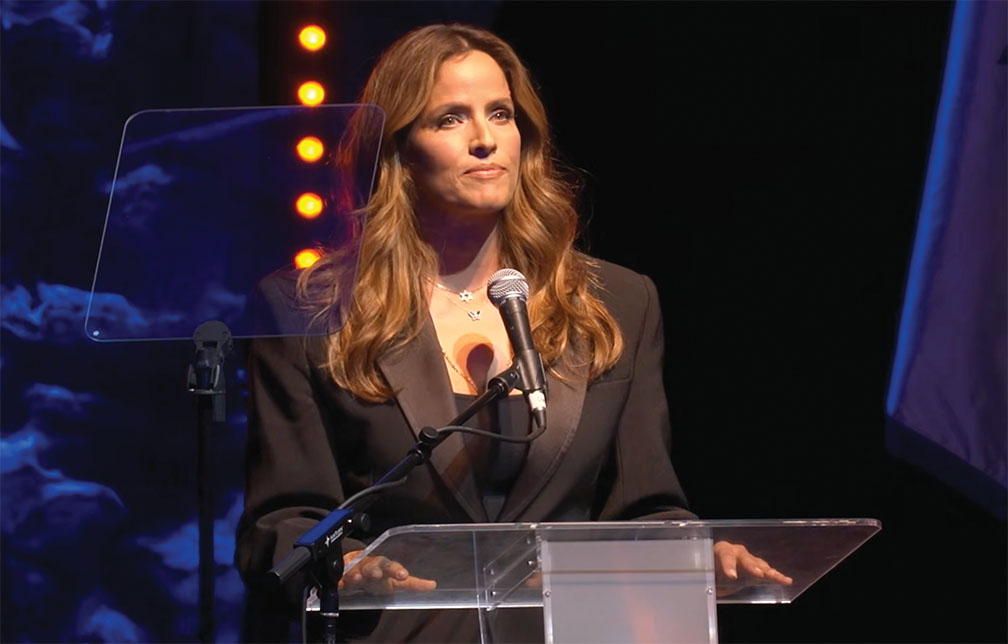
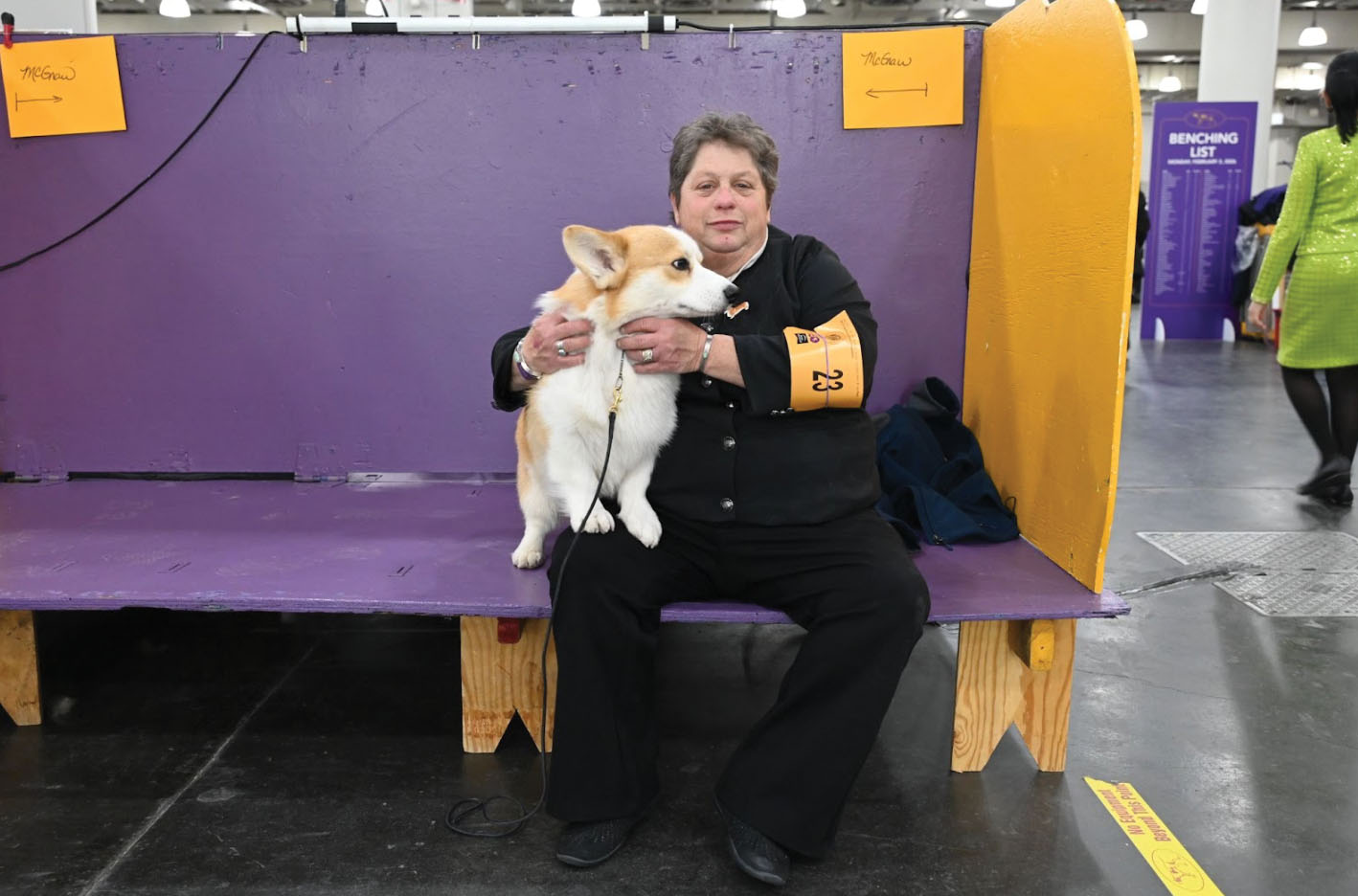
The clearest voice belonged to Ellen Burleson, a dog trainer from Cotati in Sonoma County, in town with River, a corgi she described as “a nice young dog” at the start of his career. She spoke quickly, with the confidence of someone who has lived inside the structures of the sport long enough to explain them plainly. A championship, she said, is “very involved” — 25 points, earned through a series of eliminations. Dogs are judged against a written standard, not against each other, and the standard can be exhaustive: “It’s 30 pages,” she said, explaining the corgi’s head shape in terms of geometry. The standard for a corgi is a face shaped like an equilateral triangle measured from ear tip to ear tip to nose.
She also said what matters most is what no standard guarantees. “This is a subjective sport,” she said. “The ring is like a giant slot machine. Sometimes you come up lemons, and sometimes you come up diamonds.” It was the kind of line that only lands if you’ve spent years trying to find a rational distinction between effort and luck.
When the conversation shifted away from technique and toward values like stewardship, kindness, discipline, Burleson was practical. Asked whether her upbringing shaped her ethics, she didn’t acknowledge a direct connection between Judaism and dog training.
“I think being Jewish is … kind of an odd thing in the sport as it is,” she said. “Where I live, there’s not a lot of Jews … and I’m painfully aware of antisemitism where I live, you know, now more so in this climate of politics.” And then she did something telling: she refused to make the ring into a battleground for that anxiety. “Dogs are dogs. We don’t talk religion. We talk dogs,” she said. “My dog. Your dog. It doesn’t matter, he could be purple. A good dog is a good dog.”
A dog doesn’t care who you are, Burleson said. “Dogs don’t care what your religion is,” she said. “They don’t care if you’re fat. They don’t care if you’re thin. They care if you’re unhappy. And they care if you’re happy. This dog will protect me with his life … How many people do you know would do that? But your dog will.”
What she offered was a faith-adjacent ethic without the language of faith: devotion modeled by the animal, returned by the human through consistency and care. Her Judaism entered the conversation not as theology but as social reality. What it feels like to be “painfully aware” of prejudice, and how her response was to find peace in her dog’s refusal to judge, and in her own commitment to care for him.
If Burleson’s Jewishness functioned as context, Eric Steel, who also identified as Jewish, spoke about belief as something seemingly even more than religion.
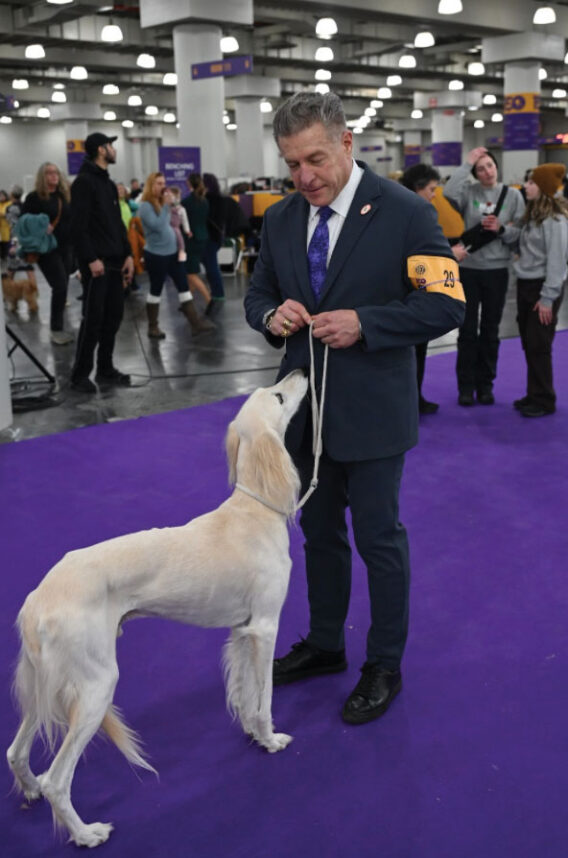
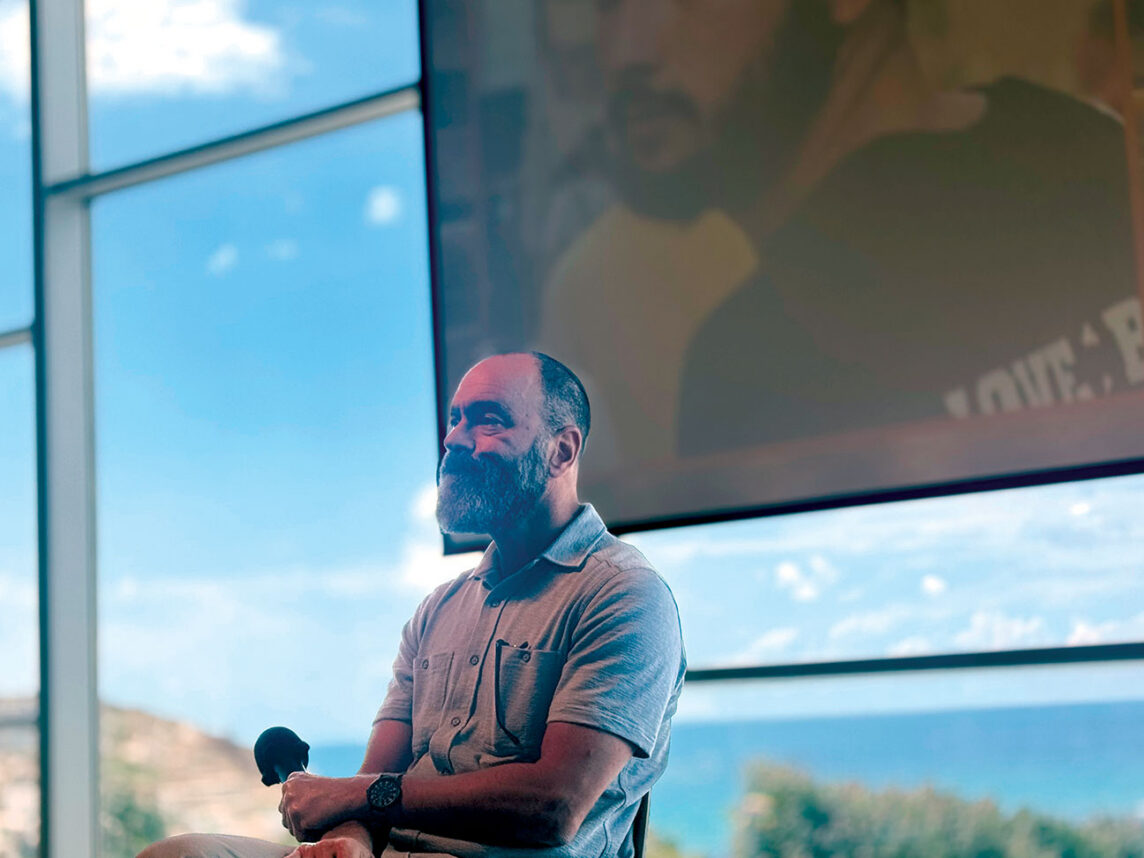
Steel lives in Amagansett “all the way out on the end of Long Island,” and he has lived with saluki dogs for more than half a century. His earliest memories were of walking his dogs before school, wearing “a jacket and tie,” being pulled into the dirt, going home to change. The longer he spoke, the more he described dog training less as behavior modification than as a kind of attentiveness. The “biggest thing,” he said, was learning to “trust your … animal, empathetic self … the part of you that just feels the way a dog would feel like.” That understanding didn’t come from a parent or a program. “No,” he said, when asked if he learned it from his mother. He learned it “from the dogs,” he said.
When the questions turned to culture and religion, Steel didn’t attach himself to a doctrine. Salukis, he said, are “really ancient … the oldest breed of domesticated dogs.” The word “tradition” came up, but to him it meant lineage rather than ritual. “Thousands of years ago, somebody cared about them enough to make sure that they survived,” he said. “I guess I like to think that I’m part of that tradition … that’s why I’m a breeder. I mean, I expect … my dogs will be in the pedigrees of dogs hundreds of years from now.”
That kind of statement can sound grand until you hear what it’s anchored to: the repetitive, unglamorous acts that actually keep a breed alive. The feeding, exercising, training, protecting, choosing pairings and endless patience. Steel’s ambition wasn’t just to win the show, at least not in the way spectators imagine. It was to participate in an intergenerational chain of caretaking that outlasts a human life.
The most explicitly theological voice came from Ashley Waters, a handler from Indiana who spoke of work with dogs in a vocabulary of purpose. When asked what she learned growing up, she described obedience and agility training as a practice of attention: getting dogs “really focused and engaged” and making training fun.
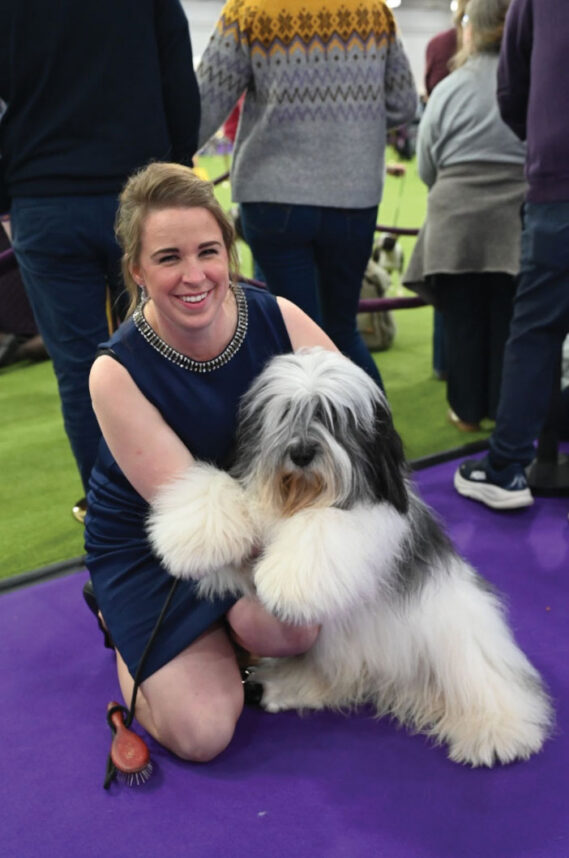
Then, when asked about morality and religion, she didn’t hesitate. “Every time we’re working with dogs … is an opportunity God gives us,” she said, “to not only work with the dogs, but to have fun with the owners and the people around.” She sees training as a sort of offering: “We try to do our work unto the Lord,” she said. “For some of the more difficult dogs,” she said, “we pray through it and have patience.”
Waters doesn’t claim her dog shares her religion. When asked whether her dog had the same religion she did, she said no. “I think of them as a creation that God made,” she said, “and … they have an important part in life … to make people happy.” In her account, the dog is not a moral agent in a human sense. Her dog is a responsibility that she protects with faith and belief.
Taken together, the three conversations formed a pattern I hadn’t expected when I walked in from the cold. The link between religion and dog training wasn’t a set of distinctive rituals or a consistent theological position. It was the way faith, identity and ethics repeatedly came up when they tried to explain why they love their dogs so much.
For Waters, Christianity shapes how she practices patience and tolerance. For Burleson, Judaism appears as a social marker that her dog’s radical impartiality erases. And for Steel, the language of belief dissolved into lineage and responsibility for a breed’s continuity throughout time.
What connects all three is stewardship. The belief that a dog is not an object but a life worth celebrating, and that care is a moral practice whether it’s grounded in God, tradition, or family code.

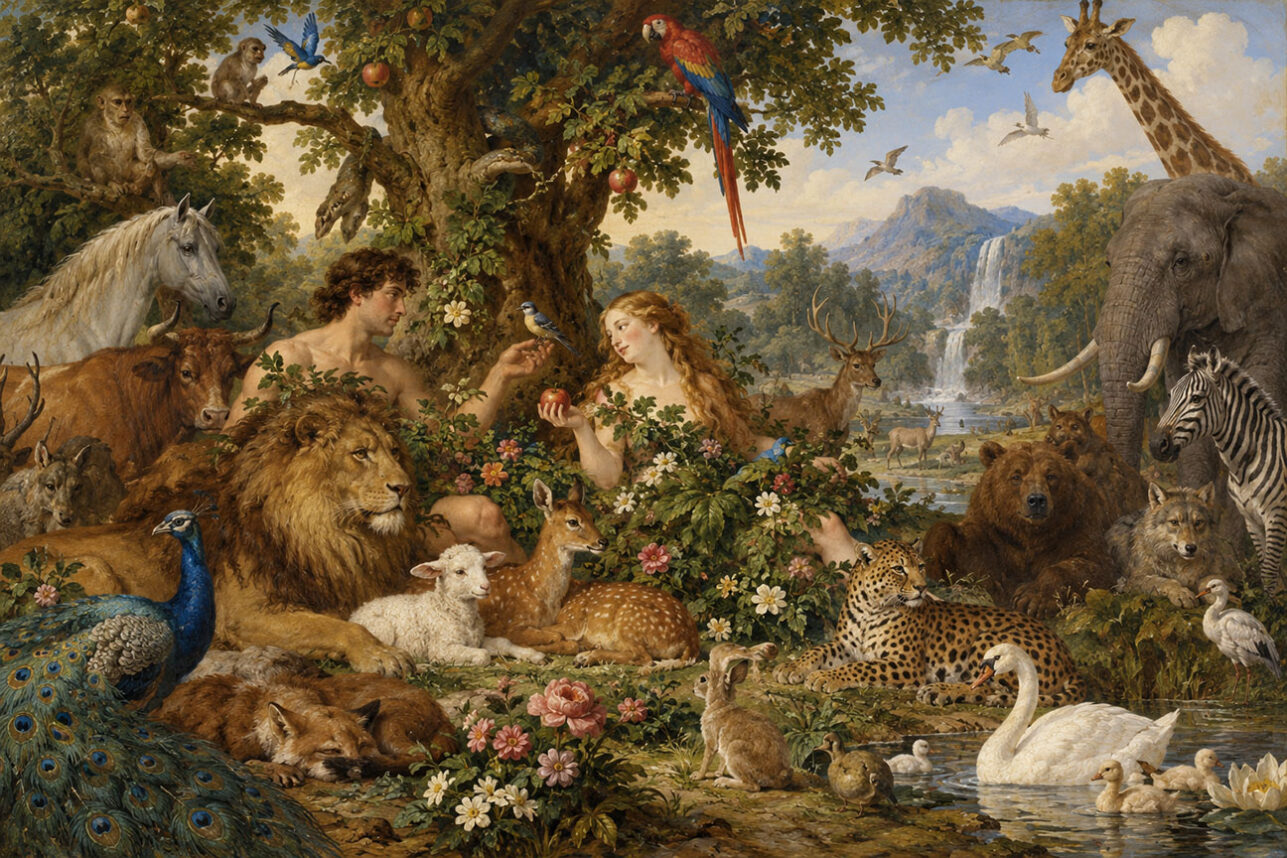
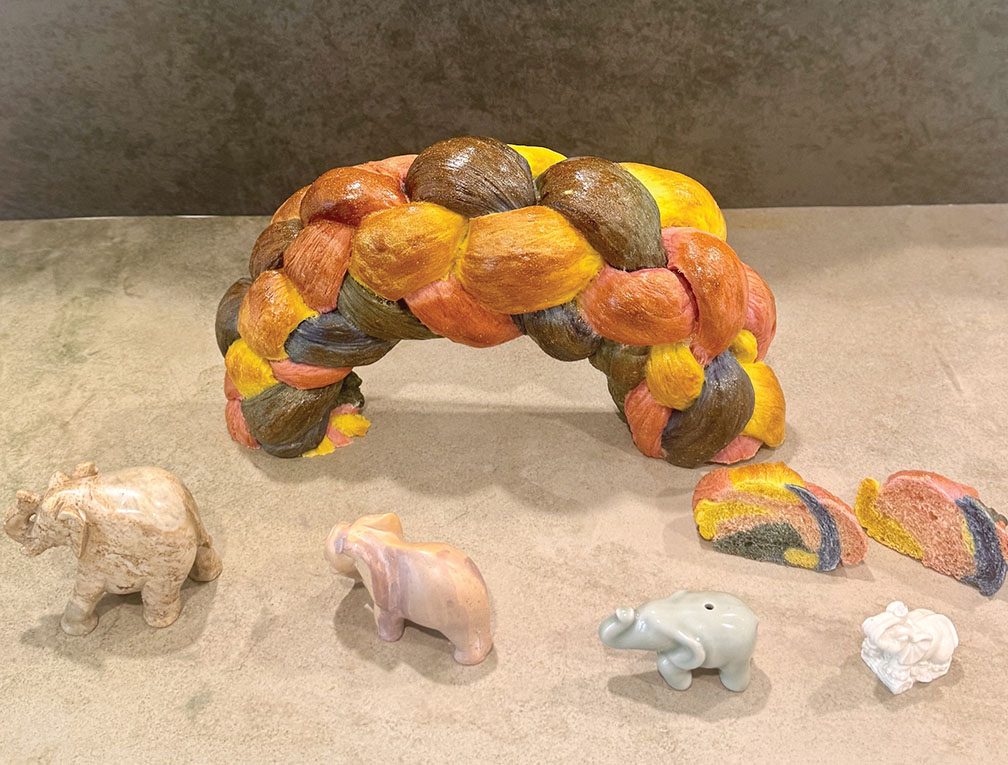
That theme was echoed, more quietly, by Tammy Tomlinson, who came from Ligonier, Pennsylvania with Daniel, a golden retriever who won the Sporting Group at Westminster in 2020. She traced her beginnings to “more of a country type thing” where children learn animal care, she said. When asked about values, she said “animals came first” and that ethics matter “in all aspects of your life.” For me, her comment brings to mind Noah’s symbolic stewardship of all creation.
In the end, the story I found at Westminster — through the words people chose, and the things they refused to claim — was a shared understanding that care is not sentimental. It is taught. It is practiced. And sometimes, when you ask someone why they do it, you can hear the shape of a life behind the answer: a religion, a culture, a childhood, a family code, an ancient tradition.
Eric Schwartzman is a journalist, SaaS founder and advisor focused on owned media, information integrity, narrative discovery, and how ideas are amplified and distorted across modern information systems.