
When I hold a book in my hands, I enjoy one of life’s most sublime pleasures. With limited time for pleasure reading, I choose carefully before hunkering down between the covers of a book. Some writers awe me with their talent, and I savor their finely crafted sentences by rereading them many times.
I have two orphaned Kindles sitting uncharged in a dark bedroom drawer. While e-readers and audiobooks have opened the world of books to many who enjoy taking their libraries “to go,” for me, holding a book in my hands makes my reading experience feel more personal. I like the elemental, physical reality of a printed book, and can better appreciate its cover artwork, interior layout and fonts, the quality of the paper, and even its trim size. Somehow, I also feel more connected to the author, who labored long and hard to produce this work.
Swiping a screen to turn a page feels soulless compared to actually turning each page with my fingertips.
Swiping a screen to turn a page feels soulless compared to actually turning each page with my fingertips. “Real” books are also simpler. I can fan through pages to find a particular section faster than I can by clicking on a device. I like attaching my flotilla of tiny, colorful sticky notes to significant pages when I am reading for the purpose of writing a review.
I ditched my e-readers not only because I missed the tactile experience of holding a book but because I found that my retention wasn’t as strong. I’m not alone. Research studies consistently show that reading on paper correlates to higher comprehension and recall than reading digitally. This is true even for college students who have grown up tethered to digital devices.
Sure, you can upload a tremendous library of more than 3,000 books on an 8 GB e-reader, but wouldn’t your bookcases look a little lonely? Books do furnish a home. They give it color and personality. In religious Jewish homes, bookshelves can seem intimidating, brimming with tall, heavy, leather-bound sets of the Talmud, along with prayer books, Torah commentaries, biographies, history, and more. (Ikea shelving need not apply.) These days, websites such as Sefaria have become valuable digital repositories of Jewish literature and commentary. Still, I’d much rather read a Torah commentary from a Chumash and daven from a siddur rather than from an app. Call me sentimental, but I believe that these pages carry spiritual history: the echoes of the diligent study by individuals to learn Torah, and the echoes my family members and I have left behind on well-worn pages where we have poured out our hearts in praise, thanks, and heartrending pleadings.
Traditional Torah study is often done in person and in pairs with the holy books in front of them. Each partner discusses, dissects, or even vehemently disagrees about what Ramban really meant, adding a live, physical dimension to a spiritual and intellectual quest. The words on the pages speak through the ages.
Our living room features our Torah and history books, while virtually every other room features writers through the ages and across genres: from Shakespeare to Rabbi Jonathan Sacks; Edith Wharton to P.G. Wodehouse; Graham Greene to Malcolm Gladwell. I like seeing solid books on our shelves, reminders of the vast array of writing talents available to us, and sparking memories of how these books have impacted our lives. The trick is making room for the new books I can’t resist.
Digital books will never replace printed books. In fact, bookstores are climbing back from the industry’s dire straits of recent years. Hundreds of independent bookstores have opened since COVID. Barnes & Noble, under new direction, is retooling their existing and new stores to cater to local needs. Each new store opening affirms that a love of reading, and especially of printed pages bound between two covers, is timeless.
I’m usually in the middle of several books at once and tend to leave them around the house. From my bedroom nightstand or the small table between the living room club chairs, I can almost feel a neglected title calling out jealously, “Leave that other book alone. We haven’t finished our story yet! Come back!”
I always do.
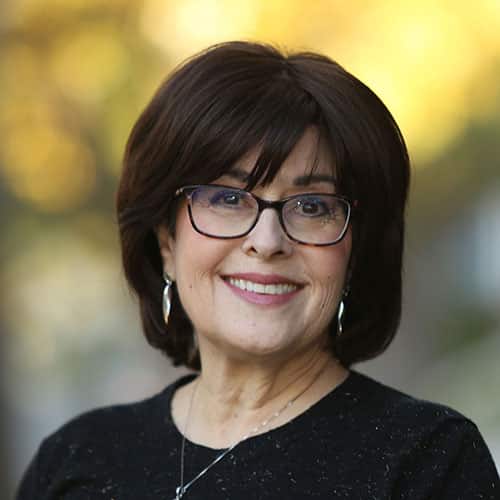
Judy Gruen is the author of several books, including “The Skeptic and the Rabbi: Falling in Love With Faith.” Her next book, “Bylines and Blessings,” will be published in February 2024.