
We have been hearing — and telling — jokes about Jewish mothers and Jewish cooking for most of our lives. But what if it turns out that our moms were on to something, and it turns out that matzah brei and brisket and latkes were actually the foundation to our future as a people? New research suggests that more than our religious beliefs and practices, more than our participation in community events and Jewish organizations, or even our children’s education and upbringing, the most unifying aspect of Semitic life in America is our affection for Jewish food.
The Keren Keshet Foundation recently released a study in which they asked American Jews about what their Jewish identity means to them and how they participate in Jewish life. The results show an increasingly bifurcated community, in which we are becoming more and more divided in our religious, cultural, political and child-rearing beliefs and practices.
The number of Jewish Americans has remained fairly constant in recent years, and the percentages of those who say that being Jewish is important to them has continued to remain at very high levels. But the ways that we demonstrate that commitment are shrinking at a noticeable rate.
For many of us, our Jewishness has become more a matter of convenience than of commitment.
The frequency we attend religious services or observe the Sabbath has fallen dramatically. 56% of us rarely or never go to synagogue for services (only one -third of us even have a family member who belongs to one) and roughly three-quarters of American Jews do not recognize Shabbat in any religious way. Disturbingly, 41% of Jewish Americans believe that religious organizations in America “do more harm than good”.
These disagreements tend be most noticeable between those who affiliate with different branches of Judaism. The percentage of Orthodox Jews among the American Jewish population has remained steady for many years. But the number of self-identified Conservative and Reform Jews has dropped precipitously in the last decade, while those who claim no affiliation to any of the branches has risen by more than 10 percent since 2013. Today, almost half of all American Jews do not see themselves as belonging to any of the three major sects.
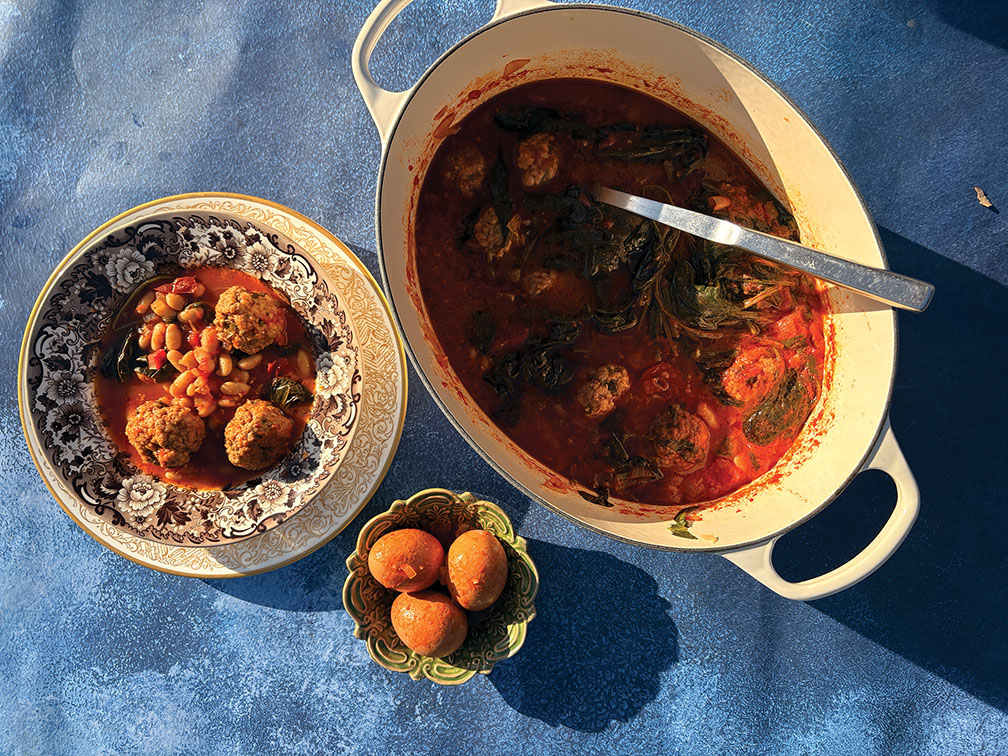
But if we no longer see the sanctuary as a cultural touchpoint, we seem to have replaced in with the kitchen. Almost two-thirds of American Jews cite cooking and eating Jewish food as a way of connecting with their heritage and culture. This far outpaced any religious or community-based activity in terms of relevance to Jewish identity, suggesting that for many of us, our Jewishness has become more a matter of convenience than of commitment.
This division becomes even more disconcerting when we look to the future. Just as American Jews have come to dramatically different conclusions on religious practices and community engagement, these same splits are growing when it comes to our children’s education. Enrollment in “supplemental” Hebrew schools (those that meet late afternoons or on weekends to complement a secular education) has dropped by an astounding 45% since 2006, according to a new report released by The Jewish Education Project. During that same time, more than one-quarter of these schools have closed.
While attendance at these Hebrew schools has dropped by almost one-xhalf in recent years, there has been almost as large an increase in enrollment in Jewish day schools, where children study Jewish topics for at least part of the day. Most of the students switching to these day schools come from either Orthodox or other more religiously devout families, which means that the divide between religious and secular Jews will only grow wider in the future.
In addition to book learning, children also benefit from their schooling to develop social skills and to develop tolerance and respect for those who are different from them. But isolating our children from each other at such young ages does not bode well for their ability to cooperate in the face of future challenges and threats to our community. As much as we all love Jewish cooking, it might not be enough to hold us together as a people forever.
Dan Schnur is a Professor at the University of California – Berkeley, USC and Pepperdine. Join Dan for his weekly webinar “Politics in the Time of Coronavirus” (www.lawac.org) on Tuesdays at 5 PM.