As Israel prepares for its fifth national election since 2019, the voters of that country are proving that familiarity does indeed breed contempt. An exhausted electorate is predicted to turn out in historically low numbers, and the news media in both Israel and the United States has devoted far less coverage to this contest than ever before. But for those in either country who are not paying close attention to the campaign, it would be entirely fair to say that they are not missing very much at all.
What is clearly not changing is Israel’s continued shift to the political right. For over a decade, voters there have made it clear that they prefer a more conservative approach on economic policy and international relations, driven primarily by the ongoing struggle to protect the population against terrorist attacks. The two prime ministers who have held the position since Benjamin Netanyahu’s departure last year have essentially governed on a philosophy of “Bibi-ism without Bibi”, co-opting much of Netanyahu’s agenda while offering a respite from the legal and constitutional controversies that have followed him for many years.
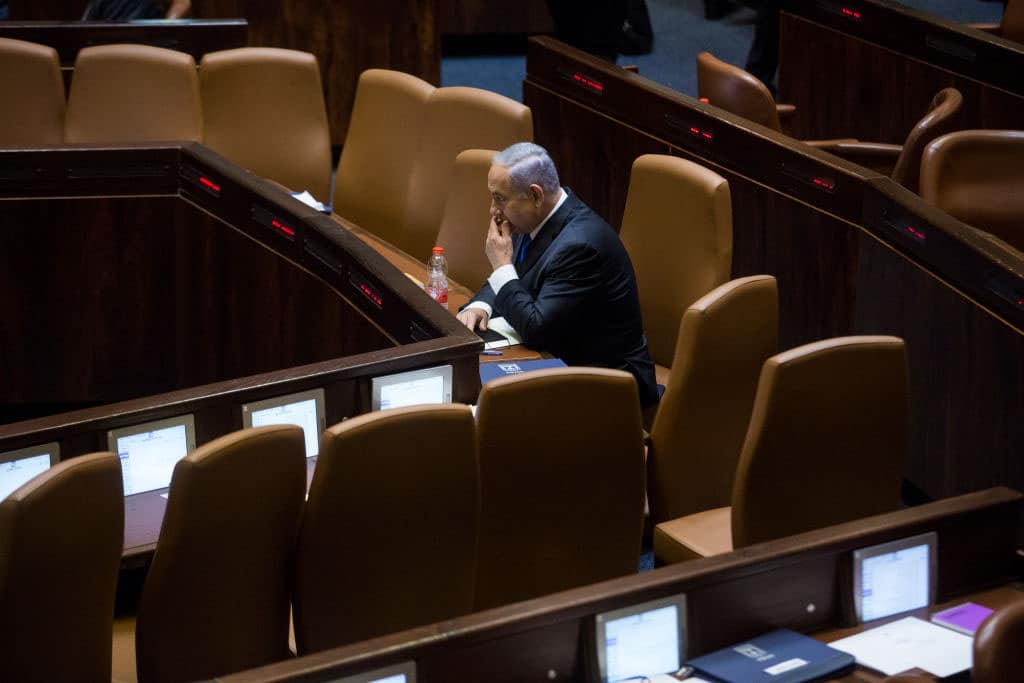
The upcoming vote is once again less a matter of ideological difference between the candidates than another referendum on Netanyahu himself.
The upcoming vote is once again less a matter of ideological difference between the candidates than another referendum on Netanyahu himself. The country is split fairly evenly between those who want him to return to office and those who want to see most of his policy priorities pursued under a different leader. The relatively small number of left-leaning voters will end up as part of the opposition coalition, so Netanyahu is reaching to far-right allies in his efforts to achieve a governing majority. But there is little serious discussion of a liberal governing agenda: most of those who would prefer such an alternative are largely resigned to being outnumbered voices in a non-Bibi coalition.
Netanyahu’s supporters tend to be more motivated, so he may have a small advantage as election day draws closer. The greatest suspense seems to be less whether he will attract more support than his opponents, but whether he will reach the 61-seat majority threshold in the 120 member Knesset. Right now, the smart money answers the first of those two questions affirmatively and sees the second as unlikely.
Israel’s system of government requires a non-incumbent to assemble 61 seats to become prime minister. Otherwise, the current occupant of the position remains in office until a candidate does achieve that majority. This home field advantage may be the only way that Yair Lapid stays in office, at least temporarily, unless he finds a way to motivate liberal and Arab voters who prefer him to Netanyahu but have not demonstrated a great deal of enthusiasm. Otherwise, Netanyahu’s strongest challenge may come from Defense Minister Benny Gantz, whose efforts to lure Bibi’s loyal religious voters appears to be making progress. But regardless which of these three men ultimately prevails, or whether a compromise or spoiler candidate emerges, the most important challenges that Israel faces going forward will not significantly change, nor will Israel’s likely course of action to confront those challenges.
The fracturing of America’s relationship with Saudi Arabia represents a real threat to the anti-Iran coalition that has defined Middle Eastern politics in recent years, and Iran’s new role in support of Russia in the war against Ukraine greatly complicates Israel’s involvement in that conflict. The growing secularization of diaspora Jews has weakened the affinity toward Israel among Jews in the U.S. and elsewhere and will require a fundamentally different approach from Israel’s leaders to maintain their support. And while Israel’s economy remains strong, the global downturn in the technology sector presents a threat as well. But it’s hard to see how any of the leading contenders would approach any of these issues in a significantly different way from each other.
The one important variable that does depends on the outcome is Netanyahu’s legal fate — and any accompanying potential changes to Israel’s constitution. But for most of the country and most of the world, the difference between the old and new bosses is actually fairly small.
Dan Schnur is a Professor at the University of California – Berkeley, USC and Pepperdine. Join Dan for his weekly webinar “Politics in the Time of Coronavirus” (www.lawac.org) on Tuesdays at 5 PM.