fbpx

October 26, 2022

What the Headlines Can’t Tell Us About the Western Wall

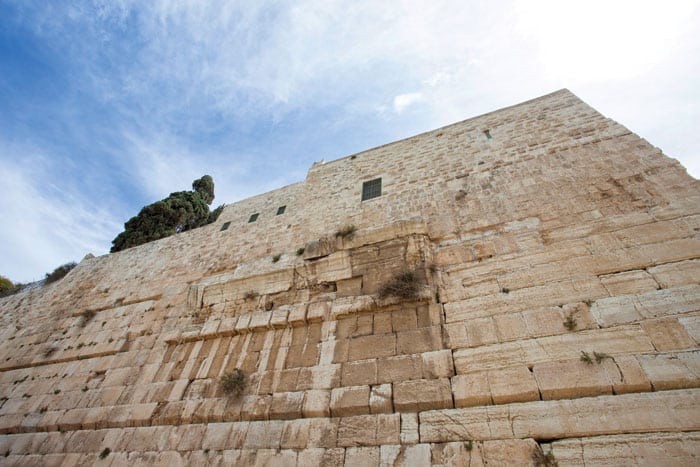
Robinson’s Arch is the contemporary name for a portion of the Western Wall in Jerusalem, named for the remains of a large stone archway that once jutted out from the southwestern corner of the Temple Mount complex.

It is distinguished by other features as well. For one, it lies outside the security checkpoints that demarcate the Western Wall Plaza. It would be easy to imagine that these checkpoints designate the boundaries of Judaism’s most important archeological site, but this isn’t true. In this case, the painting extends beyond the frame.

The area is crisscrossed with ramps and platforms that keep one elevated above the ground. The landscape beneath has been torn open by archeologists to reveal the countless stone fragments of a lost and broken ancient world.

It has been suggested that this area be officially designated for non-Orthodox, egalitarian prayer. This plan has not yet been implemented, though Robinson’s Arch already serves this purpose unofficially. Not everyone appreciates this, as was demonstrated recently when ultra-Orthodox rioters stormed the site on two different occasions to cause chaos.

These stories dominated Jewish news outlets for weeks. The Haredi rioters targeted bar and bat mitzvah ceremonies, tearing up prayer books, and spitting on their fellow Jews. 

As all of this was coming out, I was readying myself to move back to Israel after two years away. These stories filled me with dread about Israel’s future and also, perhaps, my future in Israel.

The culture war, it seemed from the headlines, was being lost. After all, in a few short decades, the ultra-Orthodox will be nearly half of Israel’s population. It won’t be long — in the grand scheme of things — until they are the majority. These rioters will move from disrupting bar and bat mitzvah ceremonies to passing laws forbidding any non-Orthodox Jewish services in the state. 

I found myself imagining how people from the future will marvel at old pictures of Tel Aviv — pictures of young, attractive people laughing at cafes and lounging on the beach — the same way people today marvel at old pictures of Tehran from before the revolution.

As I walked through the streets of Jerusalem, I marveled at what seemed like a miraculous sight — so many Jews being Jewish in so many different ways. 

When I arrived back in Israel, however, what I saw didn’t accord with what I had read, and my dire prognostications about Israel’s theocratic future suddenly seemed less certain. As I walked through the streets of Jerusalem, I marveled at what seemed like a miraculous sight — so many Jews being Jewish in so many different ways. 

I was equally moved when I visited Robinson’s Arch. I arrived early in the morning and was the only person there. I put on my Tallit and Tefillin and began to pray. By the time I reached the Shema, a few small groups were beginning to arrive. They set up shop at various tables. All in all, four different families showed up — each one to celebrate a bar or bat mitzvah. They came with Torah scrolls and photographers and rabbis from non-Orthodox denominations. At the center of each service was a young person who had trained diligently for this day. 

When I had finished praying, I stayed to watch the ceremonies. Everything went off without incident. No rioters came to desecrate these holy occasions with noisemakers and taunts. When they were finished, they packed up their Torah scrolls and went home. 

As I walked back up the hill to my apartment, I remembered the story of the wicked King Balak in the book of Numbers. In this story, Balak hires the prophet Balaam to curse the Israelite people, who he has deemed a threat. Balaam consults with God, who tells him that he mustn’t curse the Israelites for they are a blessed people. He relates this to Balak, but Balak insists that they at least give it a try. 

His plan is an interesting one: he continues to take Balaam to ever higher vantages on a mountain — areas from which only a fragment of the Israelite camp can be seen, hoping that this will make a difference.

First, “Balak took Balaam up to Bamoth-baal. From there he could see an edge of the people” (Numbers 22:41). Still, Balaam would not curse the Israelites, and so Balak tried again, this time taking Balaam higher still to “to the peak of Peor, which overlooks the wasteland.” 

After several location changes, Balak gives up — perhaps realizing that he is up against forces bigger than himself.

His strategy, however, wasn’t such a terrible one. A change in perspective can change everything. Our perspective can be limited or expanded. When it is expanded so that we can see more detail, nuance, and context, we tend to soften our judgements. When our perspective is limited, on the other hand, our judgements become hard and fixed.

In the case of Robinson’s Arch, I had confused news with reality. In the case of Israel’s Haredi population, I had conflated the “edge of the people” for the whole. 

In the case of Robinson’s Arch, I had confused news with reality. In the case of Israel’s Haredi population, I had conflated the “edge of the people” for the whole. 

It is the purpose of journalism to take us — the readers — to a vantage point from which we may observe something that is happening in the world, perhaps something very far away. This, of course, can be done in one of two spirits. A higher vantage can be used to expand our perspective, as when God sends Moses to the peak of Mount Nebo to take in the holy land in its entirety (Deuteronomy 34:1). But a higher vantage can also be used to obscure, as in the case of Balak. 

I don’t mean to minimize the seriousness of the disruptions that took place at the Western Wall. Sociological fractures in society, when they become violent and aggressive, are a threat to all of us — and a threat to Israel’s viability as a safe and vibrant Jewish homeland. 

That said, we would all do well to remember that what we see in the headlines is partial. It is an “edge of the people” or a glimpse of “the wasteland” but it isn’t everything. 

Sometimes, you need to go see for yourself.


Matthew Schultz is the author of the essay collection “What Came Before” (2020). He is a rabbinical student at Hebrew College in Newton, Massachusetts.

What the Headlines Can’t Tell Us About the Western Wall Read More »

A Divine Partnership Between Heaven and Earth

I had been dreading this week for quite a while, not just because the Jewish holiday season has ended nor because the weather has turned much colder.

This week, my siblings and I reached the prescribed 12-month mourning period for our beloved mother, Shirley Eskind Fingerman z”l.  We know how fortunate we were to be comforted and strengthened by fond memories and stories of her 100-year life.  Though, to be sure, losing a parent at any age leaves a hole and has an enduring impact. 

Observing the various Jewish traditions over the course the year under normal conditions always takes effort, and certainly the continued pandemic marathon added unforeseen complications.  I have planned my daily schedule and my various travels with much more care in order be able to recite the Mourner’s Kaddish daily in the presence of a necessary minyan (quorum of ten).  

In some ways, this obligation consumed my time and my thoughts and allowed me to hold my mama close and to not fully let go.  The words of Rabbi Maurice Lamm z”l, author of what many consider the definitive guidebook, “The Jewish Way in Death and Mourning,” rang very true for me:  “Put simply: the Kaddish is a spiritual handclasp between the generations, one that connects two lifetimes.” I had been dreading the end of this period because it meant I had to finally move on, past the mourning to the next phase, without a prescribed roadmap or an exacting timetable.  I realize I may not have fully processed the enormity of her loss until now and I felt anxious about finally letting go.  

A convergence of three recent coincidental reflections — in my mind, divine inspirations connecting heaven and earth — has helped me put the puzzle pieces together for moving forward.

First, during Elul, the last month of the Jewish calendar and for most of Tishrei, the first month of the new Jewish year, we recite Psalm 27 twice per day.  One line jumped out to me like never before.  The tenth verse states, “Were my father and my mother to forsake me, the LORD will gather me.”  I felt this was happening to me in real time!  My parents had now both passed away and now G-d will be there to make sure I am not alone.  Wow!

Second, in my evolved understanding of our Rabbinic teachings, the Kaddish works in two directions, creating a partnership of sorts.  On the one hand, the mourner recites that Kaddish to help elevate the neshama (soul) of the departed loved one.  On the other, we hope that by our dutiful recitation, the departed will go higher (l’aylah) in the heavenly court to become an effective advocate for ourselves and our families.  

Throughout the year, the standard Mourner’s Kaddish contains the word l’aylah meaning ‘higher’ or ‘above and beyond’.  Yet, between the Jewish High Holidays of Rosh Hashana and Yom Kippur which we just observed, we add a second l’aylah in our prayers — l’aylah l’aylah meaning ‘higher and higher’ or ‘exceedingly beyond’.  The coincidence of adding this extra plea as I approached the end of my mourning period also touched me deeply.

The third reflection came just this week, on the holiday of Simchat Torah (Rejoicing the Torah), which marks the completion of the annual cycle of Torah readings and the immediate beginning of the new cycle.  This day also happened to mark my final day as a mourner. Imagine that!  As I officially ended my mourning period, simultaneously I joined along with the entire Jewish people to immediately begin once again.  It felt as if my mother was letting go of me after our final year ‘together’, confident I would find my way forward — blessed by her life, comforted by the community and rituals of Jewish life, and inspired to begin anew.

Emerging from a year of mourning, I am filled with gratitude for the many partners who have helped me through this process.

Emerging from a year of mourning, I am filled with gratitude for the many partners who have helped me through this process:  to my home congregation, the Young Israel of Fort Lee and our Rabbi Zev Goldberg, for my colleagues and friends who supported me, and to my family, who experienced and mourned our shared loss each in their own way. 

I have found renewed strength through our traditions and by the recent signs of the divine partnership between heaven and earth.


Jeremy J. Fingerman is the CEO of the Foundation for Jewish Camp.

A Divine Partnership Between Heaven and Earth Read More »

The Kanye Precedent

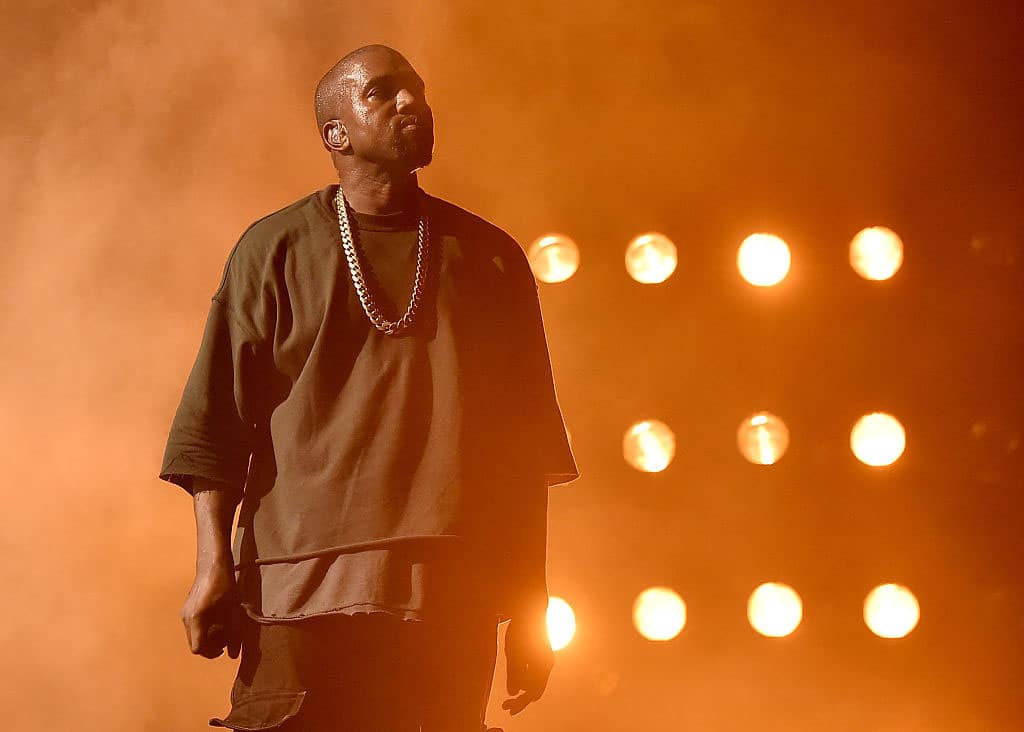
It’s been the perfect storm of spiraling hate. A celebrity rapper making raw, anti-Semitic verbal attacks for more than two weeks. Tapping into every age-old trope about Jewish power, control, and greed, Kanye (Ye) West has creatively intertwined Louis Farrakhan with the Elders of Zion. And he’s not done.

Sure, there’s never been a shortage of celebrity anti-Semites, from Coco Chanel to Mel Gibson. And sadly, much of what Kanye has said is fairly mainstream in the rap industry. Jay-Z, Ice Cube, and Snoop Dogg have all said similar things.

But this was an unstoppable barrage of hate. And he’s been going after his own managers.

What it all led to was unprecedented: brands and celebrities began responding to him as though anti-Semitism was a form of racism. Which of course it is, but Jews have never had the luxury of an equitable, social justicey response to hate.

Until now.

First, French fashion house Balenciaga cut ties. Then his talent agency, Creative Artists Agency, announced that they are no longer representing him. Then MRC studio executives announced that they would not proceed with the distribution of their recently completed documentary about him, with a scorching statement: “Kanye is a producer and sampler of music. Last week he sampled and remixed a classic tune that has charted for over 3,000 years—the lie that Jews are evil and conspire to control the world for their own gain.”

Then Adidas, GAP, Universal Music—the list is now quite long. And the response has been across the political spectrum.

Not extremists on either end of course. Congresswomen Ilhan Omar and Rashida Tlaib have yet to comment on the Kanye affair, and the Goyim Defense League made it well known that white supremacists agree with the black rapper with a “Kanye is right about the Jews” banner on the Los Angeles freeway. To emphasize the point, a bunch of supremacists offered the drivers below a Nazi salute.

But Kanye managed to bring together moderates on both sides—quite a feat.

Indeed, the response is setting a historical precedent: this is how companies and celebrities should respond to every anti-Semite with power and influence, just as they would to every racist.

Not surprisingly, Kanye, Candace Owens, and others have tried to spin the backlash as confirmation of their beliefs: See, those Jews *do* in fact have space laser-type power to control the media, political, and financial worlds. As Yair Rosenberg put it: “Anti-Jewish bigotry is a self-sustaining cycle. The anti-Semite claims that Jews control everything. Then, if they are penalized for their bigotry, they point to that as proof.”

But even the counter-backlash has been limited. So far, we don’t see much evidence of it beyond Kanye’s and Candace’s fans, but that’s not to say that even that won’t lead to violence.

The interesting question: Could the Kanye Precedent have a further-reaching positive effect? Could it begin to dilute the now well-entrenched anti-Zionism on campuses or the anti-Semitic-laden ethnic studies curriculum? Could talk about “Jewish privilege” in any context now be met with, at the very least, silence?

Will the Democratic Party finally begin to treat Omar and Tlaib as the racist bigots that they are? Will both parties now begin to call out any politician for anti-Semitism just as they would for racism? Will both parties begin to attack the extremism within their own parties just as they attack the extremism in the other party? Will the partisan media follow suit?

One can hope. What’s clear: it’s now going to be fair game to Kanye whoever deserves it.

This is not “cancelling.” Cancel culture blossomed from leftist dogma: the idea that you can’t say anything that doesn’t follow the leftist orthodoxy. But hate speech is not a difference of opinion. Hate speech inexorably leads to violence, as both Jews and blacks know all too well. Hate speech may indeed be “protected” by the First Amendment—but that doesn’t mean it’s ok.

I do want to personally thank Kanye for one other thing. He called British TV host Piers Morgan a “Karen” for arguing with him. And with that, Kanye used his power and influence to turn my much maligned name—which in Hebrew means “glorious dignity”—into a compliment. Kanye: I owe you.


Karen Lehrman Bloch is editor in chief of White Rose Magazine.

The Kanye Precedent Read More »

An Immigrant On The Brink of Election

“Rule Number One: Don’t Discuss Politics with an Israeli.” Several Israelis gave me this advice upon my announcement that I would be moving to Tel Aviv this fall. If I barely spoke the language, if I had not served in the IDF, and if I had never feverishly texted my friends to make sure they were safe after a terrorist opened fire at a local bar, then it would be best to listen, rather than to speak. After all, what could be more obnoxious than an American immigrant arriving at Ben Gurion Airport and wasting no time in spouting off his opinions about who Israelis should vote for and which issues they should care about most? Such behavior is regarded as self-indulgent and arrogant, I was warned. Since officially becoming an Israeli, I have learned that “Rule Number One” is strict for a reason, as it originates in a fundamental difference between how Israelis and Diaspora Jews (most commonly Americans) view the Jewish state. 

At the time I am writing this, I have been an Israeli for exactly one month. Every day since my arrival here has been plagued by the hellfire of Israeli government bureaucracy. I’ve needed to (and still need to) sort out banking, housing, healthcare, Hebrew school classes, my work schedule, my passport, phone plan, and how to transport large pieces of furniture for the lowest price available. Needless to say, it’s been a challenge. The Israelis around me are fumbling with similar headaches, though usually with better Hebrew. If Tel Aviv was once a playground for me, reserved for vacations, now it is beginning to appear the way most Israelis see it: merely ground. On this ground, parents run to pick up their children from school, young people struggle to pay rent, and the line for the supermarket is too damn long and nobody cares that you have a meeting in ten minutes. “The banality of special,” I have coined this feeling. Yes, everyone living here knows they are in the Holy Land. Yes, we know we are the Jewish people’s wildest dreams come to life, and yes, we are reminded every day that this city is perhaps the most spectacular achievement in the modern world. Yet we carry on with our lives in the same way as people all over the world because what else would we do?

Israeli Jews are the symbolic Jews, the Jews who would decide the fate of the Jewish people around the world, the Jews who were on the frontlines of grand political and spiritual battles.

When considering their Israeli cousins, American Jews see only the special, and little of the banal. Israeli Jews are never just people to us. It is hard to imagine them going through the same quotidian motions of any average New Yorker. Israeli Jews are the symbolic Jews, the Jews who would decide the fate of the Jewish people around the world, the Jews who were on the frontlines of grand political and spiritual battles. Israel was a morality play, where good and evil were expected to clash in flashing headlines on a regular basis. In the Spring 2021 Edition of Sapir Journal, Dr. Einat Wilf considers a phrase, “Disneyland of Hate,” which characterizes those not living in Israel’s view of the land between the river and the sea.  She writes: 

For those outside the actual Israeli-Palestinian conflict, it was a safe — Disneyland — way of experiencing a roller coaster of intense emotions missing from their dull post-peace lives. In a world that is actually more peaceful than ever, and where negative, violence-related emotions, such as hatred — and especially hatred of groups and collectives — are less legitimate than ever, the continuing acceptance of hatred for Israel endures.

If boredom of one’s own political reality is in fact a catalyst to some people vocally hating Israel, then perhaps it also leads American Jews to grow more obsessed with Israel. Many American Jews still imagine the land of milk and honey as if it were a perpetual scene in the film “Exodus” with Paul Newman’s dashing blonde hair. We invest a great deal of emotional energy in Israel, because for many of us, it is a fantasy of maximum importance. It is fantasy that reminds us we are Jewish and that we are special, especially in a society increasingly obsessed with group identity. 

In 2021, author Ben Judah wrote a review of “The Netanyahus” by Joshua Cohen, a fictionalized historical Jewish drama for which Cohen earned the Pulitzer Prize. Judah explains how he relates to Cohen in that they are both obsessed with Jews: with thinking about Jews, reading about Jews and writing about Jews. But Judah becomes more introspective later in his piece, writing:

“We’re not really obsessed with Jews. We’re obsessed with dead Jews, or we’re obsessed with Israelis … Wherever the energy is in American Jewish letters right now—from the anti-Zionist polemics in Jewish Currents to the anti-anti-Zionists polemics in Tablet—it is about Israel. Wherever the crazes are—’Fauda,’ the secret missions of the IDF, ‘Shtisel,’ the secret lives of ultra-Orthodox Jerusalem — it is not about us as Americans, as Diaspora Jews, but them.

Judah continues: “It’s almost like we’ve lost interest in ourselves, out here, in America, as a culture. That the Big Jewish Novelists, who decorate Cohen’s endorsement page, have taken to writing about Israel reflects something bigger. That after the big joke in ‘Curb Your Enthusiasm’ got old — that being Jewish in America after assimilation meant nothing but cringe — there was nothing left to say.”

Herein lies the disconnect between how Israelis and American Jews understand Israel — the disconnect that leads to the creation of Rule Number One. The last thing any Israeli wants to hear is a grand pronouncement on how to make peace with the Palestinians from someone who has never even been to Israel. They do not want to hear their existences dramatized and romanticized in westernized stage productions. 

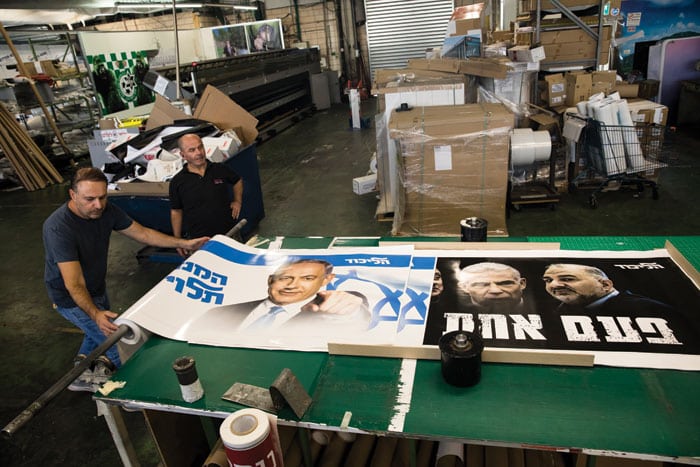
On the other hand, I would not be telling the truth if I said that right before a pivotal election in Israel, I did not feel defensive of my fellow arrogant Diaspora Jews. In seeing posters of Netanyahu’s Likud Party on my way to the coffee shop, watching protests with the green flags of Meretz marching down Rothschild Boulevard, and keeping up with the latest news of the maritime border agreement between Israel and Lebanon, I cannot help but feel there is a part of this dynamic that Israeli Jews do not understand. Quite simply, Israelis fail to grasp what Ben Judah writes of in his review of “The Netanyahus,” that American Jews, especially those who are more secular and more assimilated, find incredible meaning in the trials and tribulations of Israel.

But in considering the dilemmas of the Jewish state, American Jews are taken to a world outside of the blue and white Hanukkah decorations at CVS, to a world where our Jewishness actually matters.

This incredible meaning did not spring from nowhere. American Judaism used to be defined by Yiddish newspapers, theater, great novelists, great strides in medicine and entertainment, and was emboldened by the accomplishment of seizing the American Dream and making the most of it. Most of that, unfortunate as it is, is gone. “Maybe those novels of the immigrant experience can’t be written by people like us anymore,” Judah continues. “Perhaps they can only be written by Mexican American or Asian American writers and we should stop trying. We’re just too much a part of the furniture.” But in considering the dilemmas of the Jewish state, American Jews are taken to a world outside of the blue and white Hanukkah decorations at CVS, to a world where our Jewishness actually matters. We feel connected to our history, to our families, and to our people. 

I have a wonderful community of friends here in Tel Aviv. Some of us speak Hebrew, some only a little, some not at all (but learning). Some of us served in the IDF, some of us did not. Some of us came from South Africa, some from Boston, others Melbourne or Russia. Our conversations at the bars outside of Dizengoff Square are routinely enveloped in rigorous discussion about politics: the prospects of Itamar Ben-Gvir becoming a minister in the next government, about what really failed in the implementation of the Oslo Accords, and about how long the secular Israeli public will continue financing the Haredi community without organized protest. These discussions do more than stimulate our minds and sharpen our knowledge about current affairs. They remind us why we made aliyah. They remind us of what our values are, what our purpose is in this country, and what being Jewish means to each. They inspire our careers in journalism, activism and non-profit work, and motivate us to seek out new opportunities in different fields. They encourage us to further acclimate into Israeli culture, so that we will have more credibility in presenting innovative ideas and commenting on the news of the day. With this perspective in mind, I hope Israelis can slowly see a bit more benefit to their obnoxious Jewish counterparts, who chose to pack up and leave to Israel and to become engrossed in its complexities rather than succumb to the ever-attractive pull of assimilation in their home countries.

The upcoming Israeli election is an example of the disconnect between the banal and the special. To Israelis, elections have been a yearly occurrence for quite some time. Campaign commercials have been clogging their televisions for what feels like forever, so why should the nauseating merry-go-round of “who will be PM?” take center-stage in any conversation? To most Israelis, there is hardly anything remarkable about voting in the world’s only Jewish country, the only expression of Jewish self-determination. They forget that Rabbi Moshe Yekutiel Alpert, so moved by the experience, dressed in his Shabbos clothes to visit the ballot box on the morning of Israel’s first election in 1949. He wrote that he carried his Israeli identification card to the voting booth as if it were the Torah on Simchat Torah and that after the deed was done, he let out a joyous Shechechyanu—“Because after thousands of years or more of exile, that since the six days of creation, we have never been blessed with such a day, to be able to go and vote in the Jewish state. Blessed is the One who has kept us alive, sustained us, and brought us to this time.”

I relate to Rabbi Alpert. As an American who did not grow up here, I am absolutely exhilarated to see which way this country bends on November 1st. I am becoming less embarrassed in saying this. Growing up, I did not have the parables of Bernard Malamud or the stories of Henry Roth that waxed on Jewish-American life in tenement buildings. I didn’t have Phillip Roth’s musings on the place of American Jews during World War Two. I didn’t see Fanny Brice on stage, and I didn’t have access to a Freiheit newspaper edition at my local corner store. This was all part of the past, commentary on the Jews of yesterday. I was so submerged in the American melting pot that there was hardly any difference between my family and the other ingredients. This cultural emptiness, compounded with a lack of interest in Jewish religious ritual or the lessons of the Talmud, was a perfect recipe for yet another American Jew giving up on his identity. 

But that is where the wonder of Israel comes in. In Israel, unlike in the United States, the Jewish story feels in motion, evolving and changing dramatically what seems like every day. Every Jew who lives in Israel has a direct stake in the destiny of a nation. Their choices determine what kind of country Israel will become, which affects every Jew living all over the Diaspora in one way or another. To American Jews reaching desperately for a way to connect with the tribe, such a prospect is irresistible. 

Famed Soviet refusenik Natan Sharansky once said of Jews who have no connection to faith and simultaneously no connection to Israel that their grandchildren will not be Jewish — will not feel Jewish. This is undoubtedly true. As the wave of secularity crashes over the heads of younger generations, without an attachment to a particular Jewish nationality, what else is left? So no, I cannot in good conscience adhere to Rule Number One. I will not just keep quiet and eat my shakshuka and post pictures of the beach and the Old City on Instagram. I connect to Judaism by learning everything is there is to know about what makes Israel tick, by engrossing myself in scholars of Israeli history and in polemics on the State of Israel today. If we encouraged such engagement among more young Jews in the Diaspora, perhaps on the college campus we would all get better at defending Israel, perhaps we would feel more tethered to our identities, and perhaps we would make the Jewish State much, much stronger.


Blake Flayton is the New Media Director and Columnist at the Jewish Journal.

An Immigrant On The Brink of Election Read More »

To Bibi or Not to Bibi

As Israel prepares for its fifth national election since 2019, the voters of that country are proving that familiarity does indeed breed contempt. An exhausted electorate is predicted to turn out in historically low numbers, and the news media in both Israel and the United States has devoted far less coverage to this contest than ever before. But for those in either country who are not paying close attention to the campaign, it would be entirely fair to say that they are not missing very much at all.

What is clearly not changing is Israel’s continued shift to the political right. For over a decade, voters there have made it clear that they prefer a more conservative approach on economic policy and international relations, driven primarily by the ongoing struggle to protect the population against terrorist attacks. The two prime ministers who have held the position since Benjamin Netanyahu’s departure last year have essentially governed on a philosophy of “Bibi-ism without Bibi”, co-opting much of Netanyahu’s agenda while offering a respite from the legal and constitutional controversies that have followed him for many years.

The upcoming vote is once again less a matter of ideological difference between the candidates than another referendum on Netanyahu himself. 

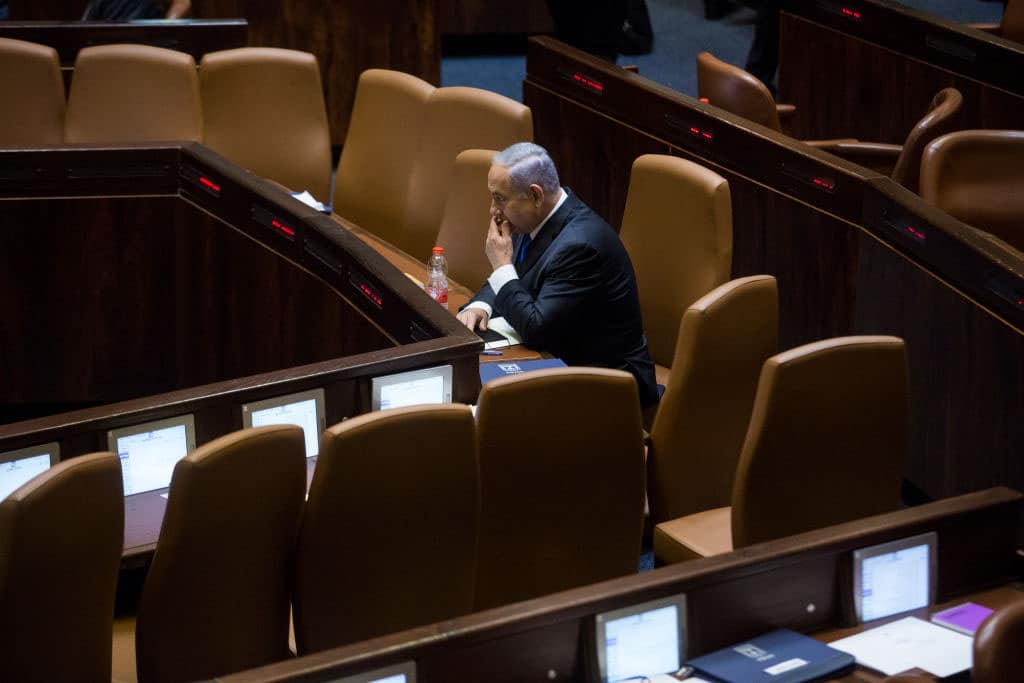
The upcoming vote is once again less a matter of ideological difference between the candidates than another referendum on Netanyahu himself. The country is split fairly evenly between those who want him to return to office and those who want to see most of his policy priorities pursued under a different leader. The relatively small number of left-leaning voters will end up as part of the opposition coalition, so Netanyahu is reaching to far-right allies in his efforts to achieve a governing majority. But there is little serious discussion of a liberal governing agenda: most of those who would prefer such an alternative are largely resigned to being outnumbered voices in a non-Bibi coalition.

Netanyahu’s supporters tend to be more motivated, so he may have a small advantage as election day draws closer. The greatest suspense seems to be less whether he will attract more support than his opponents, but whether he will reach the 61-seat majority threshold in the 120 member Knesset. Right now, the smart money answers the first of those two questions affirmatively and sees the second as unlikely.

Israel’s system of government requires a non-incumbent to assemble 61 seats to become prime minister. Otherwise, the current occupant of the position remains in office until a candidate does achieve that majority. This home field advantage may be the only way that Yair Lapid stays in office, at least temporarily, unless he finds a way to motivate liberal and Arab voters who prefer him to Netanyahu but have not demonstrated a great deal of enthusiasm. Otherwise, Netanyahu’s strongest challenge may come from Defense Minister Benny Gantz, whose efforts to lure Bibi’s loyal religious voters appears to be making progress. But regardless which of these three men ultimately prevails, or whether a compromise or spoiler candidate emerges, the most important challenges that Israel faces going forward will not significantly change, nor will Israel’s likely course of action to confront those challenges. 

The fracturing of America’s relationship with Saudi Arabia represents a real threat to the anti-Iran coalition that has defined Middle Eastern politics in recent years, and Iran’s new role in support of Russia in the war against Ukraine greatly complicates Israel’s involvement in that conflict. The growing secularization of diaspora Jews has weakened the affinity toward Israel among Jews in the U.S. and elsewhere and will require a fundamentally different approach from Israel’s leaders to maintain their support. And while Israel’s economy remains strong, the global downturn in the technology sector presents a threat as well. But it’s hard to see how any of the leading contenders would approach any of these issues in a significantly different way from each other.

The one important variable that does depends on the outcome is Netanyahu’s legal fate — and any accompanying potential changes to Israel’s constitution. But for most of the country and most of the world, the difference between the old and new bosses is actually fairly small.


Dan Schnur is a Professor at the University of California – Berkeley, USC and Pepperdine. Join Dan for his weekly webinar “Politics in the Time of Coronavirus” (www.lawac.org) on Tuesdays at 5 PM.

To Bibi or Not to Bibi Read More »

In Hollywood, Bringing Antisemitism Out of the Shadows

The question of antisemitism is one that has traditionally made Hollywood profoundly uncomfortable as an industry full of Jewish people who would rather not talk about Jews, Jewish people, Israel or – God forbid – antisemitism.

Why that’s true requires a Ph.D. in psycho-Semitism (if that were a thing), but Kanye “Ye” West has managed to get shut out of much of Hollywood this past week after a series of anti-Semitic rants that have been embraced by hate groups and spread over social media. He’s lost his agency (CAA), his lawyer at Brown Rudnick and lucrative partnerships with fashion giants such as Balenciaga and others.

Also on Monday, MRC announced the cancellation of an already completed, $2 million documentary called “The Myth of Ye” that it had financed and produced and hoped to sell for as much as $10 million in distribution revenues. Director Zach Heinzerling sought to explore the relationship between the rapper, who legally changed his name to Ye, and the media – whether he is used by the press, or uses them for his own purposes. Whether he’s crazy, or just crazy like a fox.

The topic would seem extremely timely except for the fact that Media Rights Capital’s (MRC) leadership decided they would not be part of amplifying anything Ye had to say. Instead, MRC co-founders Modi Wiczyk and Asif Satchu, along with Chief Business Officer Scott Tenley, scrapped the project — even though Ye had no stake in it whatsoever (a rationale that Netflix cited on Monday to defend keeping its “Jeen-Yuhs” docuseries on the streaming service).

“It was a decision we had to make,” Wiczyk told WaxWord. “It was a business and moral decision and forced us to think about it. It gave us a platform to speak, we felt we have to do our part. We have been very troubled over the last couple of years over this ‘second lie,’ antisemitism 2.0, this rhetoric that is putting a wedge between Jewish people and Black people,” he continued. “The lie that if you support Israel you must be a racist.”

Wiczyk, who is Jewish (though I hesitate to share that fact because why should it matter), and Satchu (who is Muslim, which again is a fact that I hesitate to share because it also doesn’t matter) have been watching with concern the rise of both antisemitism and a more virulent strain of anti-Zionism in recent years.

“I have seen the full intersection of Israel and the Jewish identity,” Wiczyk said, adding that the BDS movement — promoting boycotts, divestments and economic sanctions against Israel — “has brought it to the mainstream. A lot of people are saying ‘Zionists are racists, but I’m not anti-Semitic.’ That’s ridiculous. It’s the mainstreaming of antisemitism, using anti-Israel as a smokescreen, a Trojan horse for antisemitism.”

What should Hollywood do about it?, I asked.

Since the very origins of Hollywood, the Jewish individuals who have figured prominently in the film industry’s leadership have been hesitant to call attention to their religion.

It’s a sticky problem, he admitted. Since the very origins of Hollywood, the Jewish individuals who have figured prominently in the film industry’s leadership have been hesitant to call attention to their religion.

Discrimination against people of color has been, all agree, a pressing concern in entertainment and beyond. But antisemitism has also decisively reared its head more recently.

Just this weekend, a right-wing hate group unfurled banners supporting Ye’s remarks on a Los Angeles freeway, and Wiczyk was among those across the city who received anti-Semitic literature in his mailbox.

The Anti-Defamation League has just released alarming figures tracking 2,717 anti-Semitic incidents in 2021. “It’s the highest total we’ve seen in 47 years,” Jonathan Greenblatt, CEO of the ADL told me on Monday. “That’s a 34% increase, year over year, and almost triple whatwe saw in 2015.” 

Doing nothing does not seem like a good course.

“Hollywood has been very articulate and on the case about traditional antisemitism,” Wiczyk said. “Many of us have been confused about how to talk about Israel and Palestine. How that intersects with being Jews in America. And how a given person’s opinions may reflect on their view of civil rights in general. I think that’s a complicated conversation that people have been very scared of having.”

He went on: “The next step in the conversation has to be to create a safe space for people to be critical of Israel and in defense of Israel in ways that are healthy and do not label them beyond their opinions of the situation.”

I don’t know exactly how that figures into canceling the Ye documentary, but it’s certainly a way to bring an uncomfortable discourse out of the shadows.


Sharon Waxman is founder and editor-in-chief of The Wrap, a premier site covering Hollywood. Reprinted with permission.  

In Hollywood, Bringing Antisemitism Out of the Shadows Read More »

Twenty-Five Head-Scratching Questions About Jews, Israel and the Middle East

Writing a weekly column isn’t for the faint of heart or the perpetually bored. Sometimes, I tire of attempting to write heartfelt words and reflections week after week. Therefore, I’ve devoted this week’s column to asking readers 25 head-scratching questions about Jews, Israel and that harmoniously peaceful corner of the world known as the Middle East:

1. If Jews control the media, why does the media generally depict Israel in such a harsh and even untruthful manner, and in the same vein, if Jews control the world, why isn’t the world more sympathetic toward Jews?

2. If Jews are white, why do the Ku Klux Klan and other white supremacist groups chant “White Power” while demanding their demise, and if Jews aren’t white, why are they excluded from progressive groups that vow to protect non-whites?

3. Why do Jew-haters get to keep their jobs, but those who espouse prejudiced views toward other groups are canceled? Case in point: Why has it taken more than two weeks for Adidas to drop Kanye West? (Thanks to Balenciaga, though).

4. Given that the regime in Iran is currently butchering protestors, including young girls, why have Iranian diplomats still not been expelled from any Western countries, with the exception of one (see below)?

5. Why did Iran conduct a major cyberattack against Albanian government websites (yes, Albania) last month, resulting in the expulsion of diplomats from the Iranian embassy (and can the rest of Europe take a cue from Albania)?

6. Why did the ACLU (American Civil Liberties Union) just ask the Supreme Court to overturn Arkansas’ anti-boycott (BDS) law against Israel, citing concern for Palestinians’ rights, but the organization hasn’t uttered a single word about Iranians dying to protect the civil liberties of their fellow citizens?

7. Now that Canada has officially banned the senior leadership of the Iranian Revolutionary Guards Corps (IRGC) from entering the country, does that mean these terrorists were free to visit Canada before?

8. If senior IRGC leaders have been banned, can medium-level, junior level or even mediocre members who nevertheless show some promise still enter Canada?

9. Speaking of Canada, why did Ottawa allow the son of Iran’s Vice President for Women and Family Affairs (G-d help those women and families) to live and work freely in British Columbia for years, but deny visas for relatives of Iranians killed aboard a downed Ukrainian airliner when they wanted to attend memorial services in Canada?

10. And nearly three years after that horrific plane crash mentioned above, why did Iran shoot down Ukraine International Airlines Flight 752 in January 2020, killing all 176 on board?

11. Why don’t more people know that Qatar’s U.N. Ambassador, a woman named Hend Al-Muftah, has previously called Jews “enemies” and gay people “disgusting,” and, given the fanatics that are allowed to speak on campus today, exactly when will Al-Muftah be invited to speak freely at an American university?

12. If Israeli scientists discovered a cure for cancer, would BDS supporters who suffer from cancer take advantage of the treatment?

And wouldn’t it be ironic if Israel, which Iran’s leaders have called “a tumor” and “a cancerous cell” for decades, were to discover a cure for cancer?

13. And wouldn’t it be ironic if Israel, which Iran’s leaders have called “a tumor” and “a cancerous cell” for decades, were to discover a cure for cancer? Would Iranian leaders say that Israel cured itself?

14. If Iranian Supreme Leader Ayatollah Ali Khamenei dubbed this year as “the year of knowledge-based production,” does currently denying internet access to 86 million citizens help attain such lofty goals?

15. Speaking of the Ayatollah, why has he been tweeting messages in Spanish every few days, using the Twitter handle “Ayatolá Jameneí” and praising Latin American countries for “standing up against direct colonization”?

16. Why did MSNBC’s Mehdi Hasan recently interview Congresswoman Ilhan Omar as part of a segment about antisemitism, if StopAntisemitism.org crowned Omar “Antisemite of the Year” in 2019?

17. Really, Ilham Omar as an expert on antisemitism? That’s like sending Colonel Sanders to speak about obesity.

18. Why hasn’t there been a Women’s March in America in support of Iranian women?

19. Why are so many children and other relatives of the Iranian regime (some 4,000, according to IRCG commander Morteza Mirian) enjoying life abroad in America, Canada and Europe? Is it that unbearable to live in Iran? (That was actually two questions).

20. And why do so many adult children of Iranian mullahs — the same clerics who seem obsessed with matters of modesty — like to drive Maseratis in plain sight of oppressed and impoverished Iranians, and from where do their supposedly modest-means families obtain such ridiculous wealth?

21. Has the adult child of a mullah ever been pulled out of his or her Maserati and beaten up by the average, irate Iranian?

22. Why didn’t LGBTQ rights groups condemn the recent horrific murder of a gay Palestinian man who was living in Israel as an asylum seeker, and who was kidnapped to the West Bank City of Hebron, where he was beheaded?

23. And why did a gay Palestinian man feel safer in Israel than in the Palestinian territories?

24. If the current 22 member-states of the Arab League collectively cover an area of five million square kilometers, is there space on the face of the earth for Israel’s 22,000 square kilometers to also exist?

25. And finally, why don’t I ever receive compliments on my Persian-style matzah ball soup?


Tabby Refael is an award-winning LA-based writer, speaker and civic action activist. Follow her on Twitter @TabbyRefael.

Twenty-Five Head-Scratching Questions About Jews, Israel and the Middle East Read More »

Keeping the Faith in the Land of The Free

Hello, my name is Robin Hanasab. My relationship with the Wise Community began in the 7th grade, roughly three decades ago. At the time, for me, it was the natural next step in my Jewish education. Growing up in a traditional Persian Jewish household, who escaped from Iran to pursue religious freedom, there was no other option.

I felt fortunate to enter the community at that time and it didn’t take long to form lasting bonds.  It was a nurturing environment that taught strong Jewish values and thankfully, our lives were full. Full of love, support and resources to allow us to develop both academically and spiritually.

After graduating, I studied business at USC, and law at Loyola Law School. Within a few years, Jessica and I were married and shortly after that we welcomed Talia into our lives. When it came time to start thinking of schools, Wise was the only option for us. We knew we wanted our daughter (and eventually our two boys, Jacob and Joey) to grow up on this campus, on this hill, in this community, forming those same special bonds with the people who will eventually be their lifelong friends. I knew this because those kids that I met in 7th grade are still my closest friends today. Many are here today with their kids, growing up alongside ours.  At Wise, my childhood community has come full circle, L’dor v’dor, from BEING the kids to RAISING the kids. We are raising the next generation and have chosen this school and temple as our partner.

These last couple years have been difficult for everyone.  Like many other schools and communities in Los Angeles, we were separated from each other for much of the last three years. Some communities GREW apart, some FELL apart. But not this one. We have grown closer than we’ve ever been, and I’m not just referring to the kids. This community understands that it takes a village to raise these children and the Wise families have shown their commitment. I am proud to be part of this group that continually shows up for our school, for our temple, for our children, and for the continuity of Jewish life.

I am constantly reminded by my father, that as Jews in America, we have it easy. He reminds me that we can never forget what our people have gone through for us to have this freedom and we better not take it for granted.

He once told me a story that really put this sentiment into perspective.

It took place here, shortly after we arrived in the US. He invited a non-Jewish acquaintance visiting from Iran to Shabbat dinner at our home. The guest clearly didn’t appreciate Shabbat dinner and said to my father “Hanasab, khaylee Jude Shodee,” which translates to – Hanasab, you’ve become TOO Jewish. Obviously, he did not mean this as a compliment. Now, what was more surprising than this antisemitic statement made in our own home, ON SHABBAT, was my father’s response. He said, “It’s thanks to you I’m like this. In Iran we had people like you constantly calling us Jew, never letting us forget who we are. It’s not like that here. I have to try harder here so my kids never forget they are Jews.”

From that, my father reminds me that we are blessed with the DUTY to pass on our Jewish values to the next generation, and blessed with THIS place to do it. Whether we are combating antisemitism or assimilation, we need Wise Temple, Wise School and the Wise community as a primary resource. The Temple Clergy and School Administration show up each day with this very mission by

  1. Educating our youth to be PROUD JEWS
  2. Continuing to educate our members with lectures, services, and other educational opportunities, and
  3. By actively working in the community to combat antisemitism.

Now more than any time in my life, there is a greater need to strengthen the Jewish community.

Wise Temple and Wise School are the place that make the Jewish life and the Jewish community a priority. It truly is a big tent, welcoming people from all walks of life and giving us a safe home to learn from each other and grow with each other.

I’m standing here today in the same place where many of you have celebrated your highest highs and some of your lowest lows, where brilliant clergy, speakers, and world leaders have shared their knowledge and debated opinions. Generations of Jewish life have been interconnected through holidays, events, carnivals, weddings, bar and bat mitzvahs, simchas and sadness. It’s an honor to share this space with you all and try to do my part to participate in this community.

So, when someone asks why they should donate more than they already give for their tuition, or why they should even pay for temple dues when they can just buy tickets to the big events, the answer is simple. Because what we’re doing here at Wise is bigger than us, and the commitment to the continuity of Judaism is year-round. It takes more than just showing up for the main event.

This is the place that makes sure we don’t lose touch with our Jewish culture, lifestyle and religion. This is the place that instills these values in our children that will stay with them for the rest of their lives. This is the place where we meet our best friends, and grow our families as a community. Nothing is more important than that. So please open your hearts and answer the call to support this place that does so much for us in return.

Thank you

Keeping the Faith in the Land of The Free Read More »

Wasted Ballots and Towering Baseballs

It’s a good thing we have the mainstream press to thank whenever antisemitism pervades our politics and culture. When Jews are in trouble, rest assured that the media will shine a light and blare those sirens.

Okay, occasionally they miss. No major newspaper or broadcaster covered the Holocaust while the gas was ambient and the ovens were fully lit. Journalists did report on the Dreyfus Affair in France, but the coverage was mostly slanted against the falsely-accused French-Jewish officer, even discrediting Emile Zola, who came to Dreyfus’ defense.

More recently, attacks on Hasidic Jews, especially if committed by young males of color, go unreported. The flirtation of Black podcasters, rappers, athletes, community activists and fashion moguls with Nation of Islam evangelist, and Jew-hater of the first order, Louis Farrakhan—and with libelous stereotypes, generally—is never considered newsworthy. The increasing visibility of Black Hebrew Israelites, who harbor antisemitic creeds reminiscent of the Black Power Movement, is an absolute non-story.

And then there’s the antisemitism cleverly disguised as a human rights issue on behalf of Palestinians. The media doesn’t quite view it that way. Jewish students bullied on college campuses? Not notable. And the plight of Jews living in Europe who can’t go to a soccer match without feeling that they stepped into a 20th-century pogrom? Well, that’s not the goal of the press. Red cards are only handed out, if at all, to antisemites on the extremist right.

Perhaps the media hasn’t really been all that reliable, or vaguely interested, in reporting antisemitism after all. “Democracy Dies in Darkness” and “All the News That’s Fit to Print” are wonderful slogans, except that Jews often die in daylight, and Jewish lives, apparently, are unfit for headlines. 

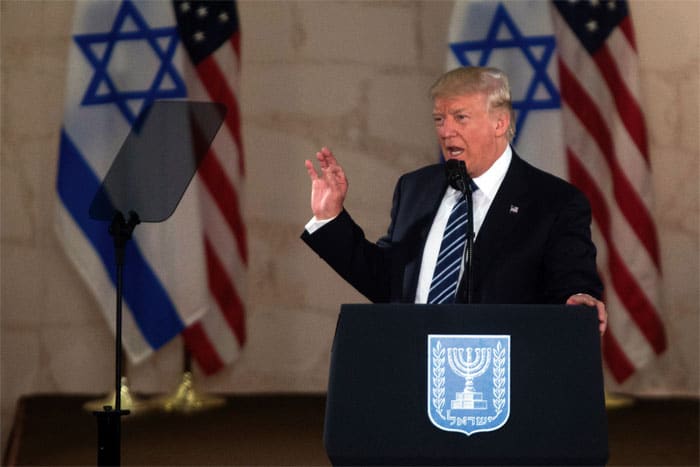
So what a surprise it was this past week when the gatekeepers of news and information went Code Red in defending Jews from an existential enemy: Donald Trump. That’s right: the press took a break from belittling Joe Biden and instead uncommonly attacked Trump—for being an antisemite. Mainstream Jewish organizations cheered them on in reprimanding the former president for promoting canards, breeding contempt for, and threatening American Jews.

The man who courts the extreme right while playing with his Jewish grandchildren, the story goes, castigated American Jews for not showing him enough appreciation. After all, as he claimed, no other American president offered such unstinting support for the Jewish state. 

His list of grievances continued. American Jews too sparingly hold Israel in their hearts. He warned that they might one day come to regret their indifference to the one country on the planet created as an antidote to antisemitism, and would accept them as citizens the instant they deplaned from Ben Gurion Airport. Finally, he remarked that Evangelical Christians exhibit more devotion for Israel than do American Jews.

The audacity to badger Jews about how they should feel about a foreign land.

Except for one thing: He’s right, and nothing he wrote is antisemitic. 

Most American Jews give Israel very little thought, even if they tell you that they like knowing it exists. Most American Jews have never stepped foot in Jerusalem, and have no intention of ever doing so. American Jews, especially Progressive Democrats, will openly criticize Israel for all manner of moral infractions merely to snag an invite to a cool Hollywood party, or to improve their tenure prospects at any number of universities where Jew-hatred is now part of the core curriculum.

Oh, yeah, and Christians with the Rapture on their minds do, in fact, love Israel more than most American Jews.

Trump might be an awful messenger for all sorts of reasons why voting for him is unthinkable for many Americans, but he did preside over a monumental, transformative shift in American foreign policy in the Middle East. His achievements were simply stunning: finally moving the American Embassy to Jerusalem where Congress directed it be moved back in 1995; recognizing Israeli sovereignty over the Golan Heights; decertifying the disastrous Iran Deal; spearheading the Abraham Accords; and, perhaps most importantly, informing the Palestinians that their petulance and violence will not be rewarded, and that they are not all that relevant to regional stability.

His largesse didn’t translate into votes. Seventy percent of American Jews voted for Biden, even though it appears that Trump may have performed better at the ballot box than many Republican candidates who came before him.

No matter. The man bruises easily, his impulses can’t be curbed, and he insisted on registering his disappointment in American Jewry on social media.

And there is nothing wrong with that. Jews don’t have to vote for him, but thanking him may have been the courteous thing to do. Have Jews lost their manners, unable to behave politely simply because Trump is so exceptionally impolitic? Jewish organizations now browbeat him for invoking the sinister canard of “dual loyalty.” 

But that’s not what he charged. He wasn’t accusing Jews of placing America and Israel on an equal plane. On the contrary, his indictment was that Jews fail to show any loyalty to Israel at all!

Are Italian- and Irish-Americans required to renounce any special feelings they might possess for their motherlands? Jews, however, are expected to demonstrate that being Americans means that they must sever any affinity for their ancestral homeland. Worse still, they must denounce Israel in order to prove their moral worth.

Is there any wonder that there is no Jewish equivalent to a Congressional Black Caucus? Unlike Black members of Congress, or Asian, Arab or other ethnic elected representatives, does anyone really feel that Senators Chuck Schumer, Diane Feinstein and Richard Blumenthal, or Representatives Jerold Nadler, Adam Schiff and Jamie Raskin are actually representing Jewish-Americans? They are far too fearful of being primaried out of office by progressives to their left. Ferociously they cling to dwindling political capital at the expense of the moral courage necessary to stand up for Jewish interests.

For all the talk about conspiratorial Jews bent on world domination, you don’t see much coordinated efforts by Jewish leaders actually fighting for Jews.

For all the talk about conspiratorial Jews bent on world domination, you don’t see much coordinated efforts by Jewish leaders actually fighting for Jews.

Ironically, there are lessons to be learned from Jewish professional baseball players. They seem to have no qualms at all about dual loyalty. As many as one dozen Jewish Major League Baseball players have joined Team Israel in the upcoming World Baseball Classic. Apparently, they didn’t require much of a sales pitch. Nor are they in anguish over Israel’s politics.

If only elected Jewish leaders could swing for the fences so willingly.

Wasted Ballots and Towering Baseballs Read More »