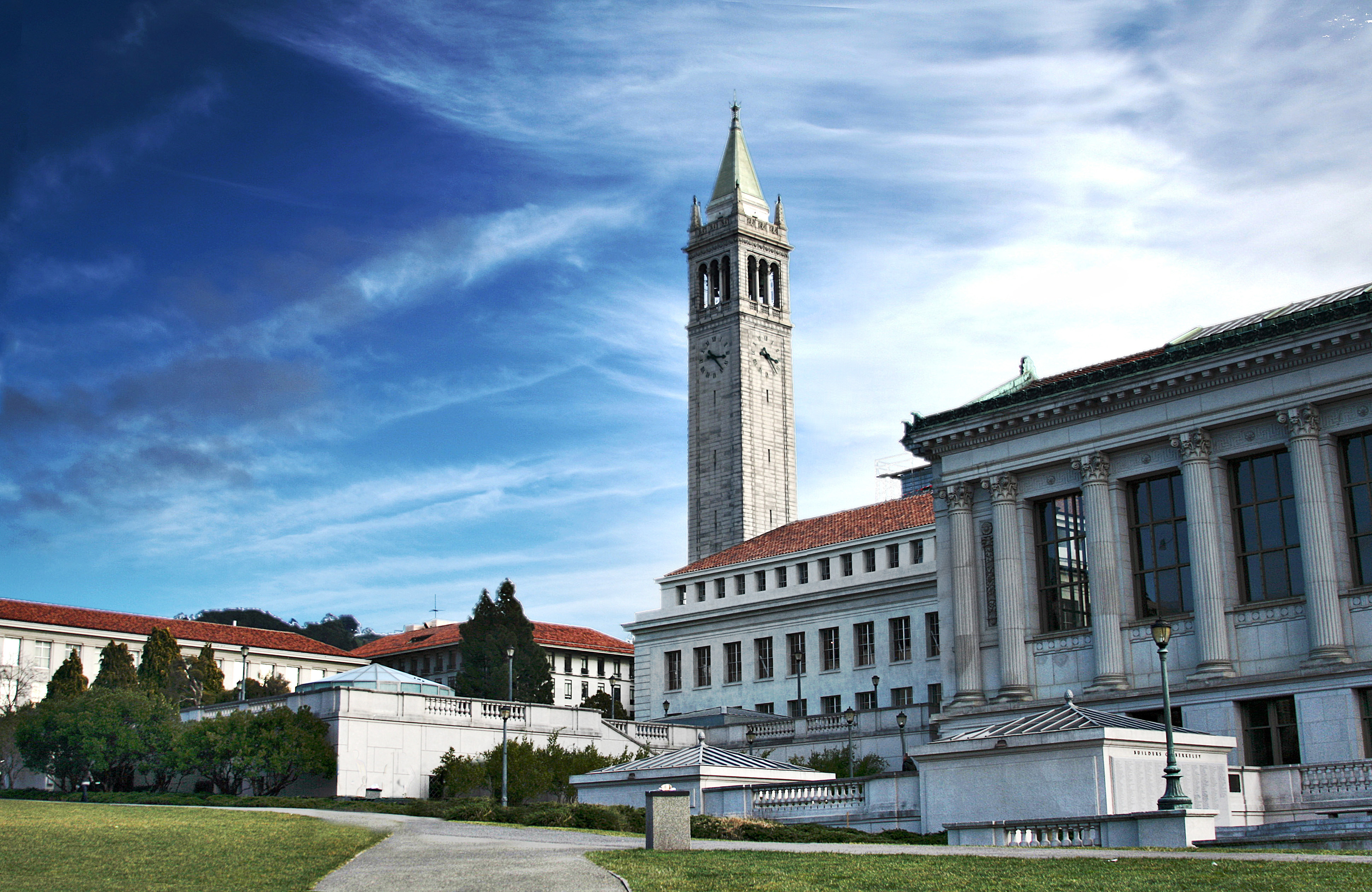
The steady stream of anti-Zionist and antisemitic outrages on U.S. college campuses continues unabated. The most recent controversy to seize public attention has been at the University of California-Berkeley’s law school, where several student organizations have voted to prohibit pro-Israel speakers from participating in their events. But somehow the debate within the Jewish community seems to be about the appropriate level of outrage to direct toward this ban, as opposed to the ugly bigotry at the core of the student groups’ decision.
At best, this is a small number of angry and misguided graduate students who are venting their unhappiness about the geopolitics of the Middle East. At worst, this is an alarming number of supposedly well-educated young people from one of the nation’s most respected law schools creating a quasi-official doctrine that allows them to publicly hate Jews.
The loudest critics of what they see as the school’s insufficiently aggressive action against the ban warn of the potential for a “Jewish-free” zone at Berkeley. While many those advocating for the eradication of pro-Israel sentiments from campus would undoubtedly like to see such a goal achieved, the likelihood of such apartheid actually being achieved is minimal.
But those who seek to minimize the problem do us no favors either. They point out that nine student organizations out of roughly 100 signed onto the ban, a small minority of the school’s enrollees. That data is accurate, but the fact that 11% of the future attorneys attending a law school of this caliber support such abject bigotry should set off considerable alarm bells for anyone who cares about the rights of any minority community – including Jewish Americans.
Both Kenneth Marcus, the founder and chairman of the Brandeis Center for Human Rights Under Law, and Berkeley Law Dean Erwin Chemerinsky care deeply about the safety of Jewish students and the ability of pro-Israel voices to be heard on campus and elsewhere. Marcus is right to shine the spotlight on the escalation of anti-Israel activity at universities across the country. Chemerinsky deserves credit for his work to balance the rights of freedom of speech and association with the need to push back against these repulsive sentiments at his school.
While we argue about the regulations that student organizations should follow, we are overlooking the broader societal and cultural trends that allow such hatred to fester.
But the dispute between the two men and their respective followers has shifted public attention away from the most menacing threat that the Jewish community faces. While we argue about the regulations that student organizations should follow, we are overlooking the broader societal and cultural trends that allow such hatred to fester.
Almost all of the Berkeley student groups in question represent various demographic communities that have historically been marginalized in mainstream political conversation. For many years, Jewish organizations worked hard to establish relationships and work together toward common goals so that these other communities saw Jews as a committed and reliable ally. But in recent years, we have allowed those relationships to wither, and as communication and coordination with these communities has fallen off, hostilities toward Jews and Israel from many minority groups and their leaders has rapidly grown. The result is an environment in which these young law students face no repercussions from their ideological allies for publicly advocating antisemitism but instead believe they will be politically rewarded.
Berkeley Law School is just a symptom (albeit a particularly visible one) of a much larger and more dangerous problem. These students did not develop a hatred of Israel and Jews on their own, but have been indoctrinated by political agitators who see knee-jerk intolerance toward Jews as an important exception to their conveniently selective commitment toward civil rights and social justice. We must fight this menace on every front – including the University of California – but we must also recognize that we will win achieve few meaningful victories until we develop a comprehensive strategy for the much broader and more difficult challenge.
Kenneth Marcus and Erwin Chemerinsky are on the same side of this critically important fight. I am proud to stand with both of them. But let’s remember that we must target our energies toward our common foes rather than each other.
Dan Schnur is a Professor at the University of California – Berkeley, USC and Pepperdine. Join Dan for his weekly webinar “Politics in the Time of Coronavirus” (www/lawac.org) on Tuesdays at 5 PM.