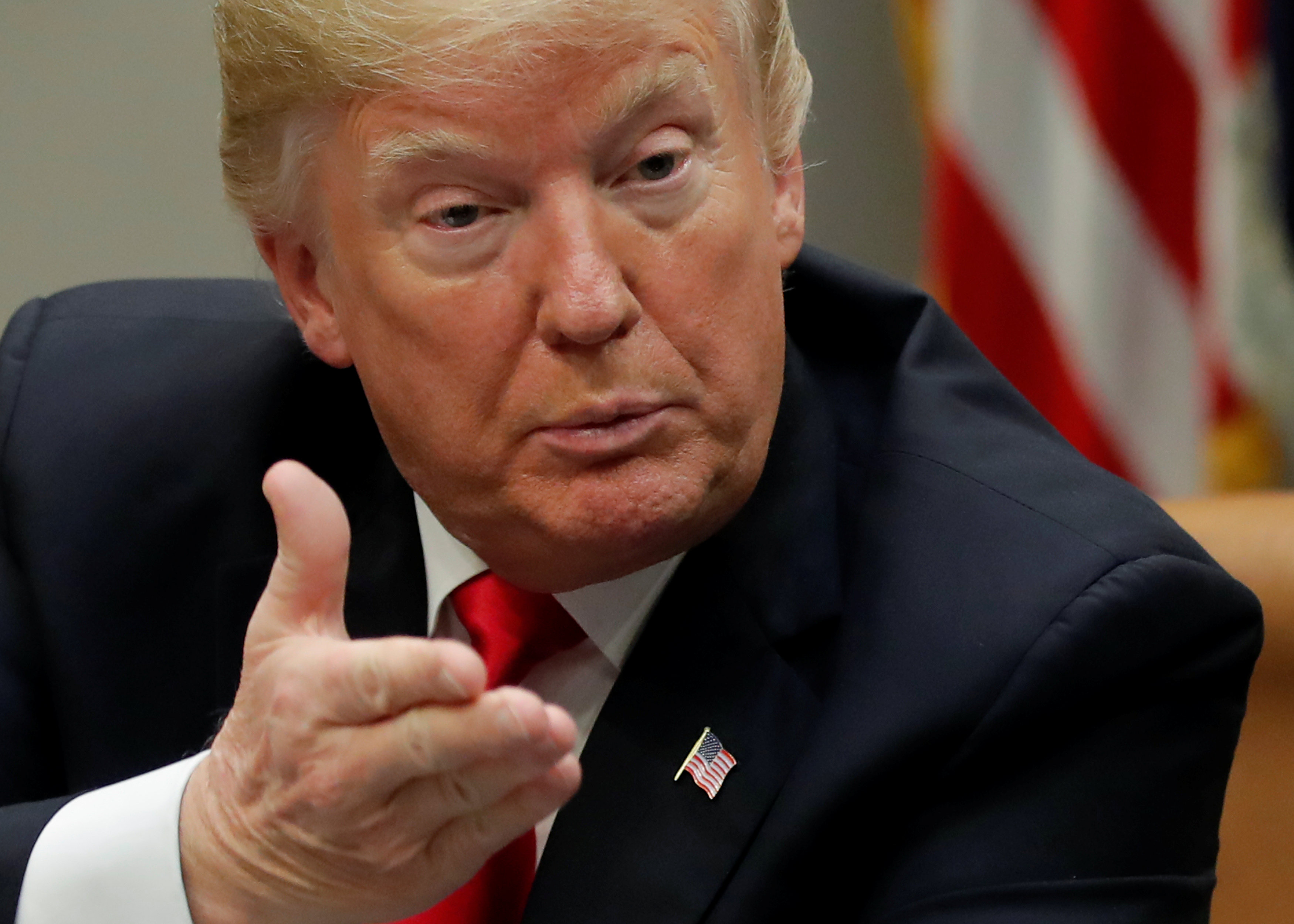
If ever a case could be made for a third party in American politics, it would be from the specter of next year’s presidential election being between Republican incumbent Donald Trump and a Jeremy Corbyn Democrat.
Events of the past few weeks remind us yet again that the same noxious brand of anti-Semitism infecting the British Labour Party led by Corbyn is strengthening its foothold in this country’s progressive circles. The Democratic presidential hopefuls’ failure to condemn Rep. Ilhan Omar’s most recent statements of intolerance toward the Jewish people speaks volumes about their party’s rapidly changing and increasingly worrisome dynamic.
Let’s be clear: None of the current or prospective Democratic presidential candidates is an anti-Semite. But when Omar, a Minnesota Democrat, launched yet another hateful screed February 27th — saying lawmakers and activists who support Israel hold “allegiance to a foreign country” — it was notable that none of them condemned her comments. Rather, it was House Foreign Affairs Committee chair Eliot Engel (D-N.Y.) who had the courage to object to her “vile anti-Semitic slur” and demand an apology.
Engel’s objection was followed by similar statements from a handful of pro-Israel congressional Democrats as well as a House resolution that offered a generic denunciation of anti-Semitism. But by the time this column went to press, there was only silence from the presidential aspirants.
To be fair, political cowardice in the face of naked bigotry has become a bipartisan pastime. When a hateful anti-Omar poster was hung recently in the West Virginia capitol during a Republican program, no member of the GOP congressional leadership was willing to denounce the perpetrator. (Local Republican officials deserve credit for condemning the attack.) And it’s common knowledge that Trump has no interest in calling out the haters on his side of the aisle, so much so that no Republican member of Congress did anything substantial to refute Michael Cohen’s testimony last week that Trump routinely used racist language to belittle African-Americans and other minorities.
“Voting for a bigot in either party is an appalling concept. Supporting a candidate who is unable or unwilling to stand up to anti-Semitism is only slightly better.”
The minority of American Jews who support Trump rarely try to defend the president’s personal behavior, pointing to his record on taxes or Israel as a reasonable tradeoff for his lack of character.
And now we see that Trump’s opponents are just as willing to look past the timidity of their party’s leaders in the face of anti-Semitism. Democratic presidential candidates don’t want to voice disapproval of Omar because they must balance their relationships within the Jewish community against their need to avoid alienating the growing number of party activists whose hostility toward Israel is now a progressive badge of honor.
Polls show that liberal Democrats sympathize with the Palestinians rather than Israel by almost a 2-to-1 margin, and no presidential hopeful can succeed without securing a portion of these votes. The result is that every one of the party’s candidates stays quiet when fellow Democrats suggest that American voters who support Israel are guilty of treason. But Democratic White House hopefuls should remember that John F. Kennedy confronted similar prejudice during his 1960 presidential campaign, when his opponents suggested the nation’s first Catholic president would prioritize his loyalty to the Vatican over his allegiance to the U.S. Constitution.
Voting for a bigot in either party is an appalling concept. Supporting a candidate who is unable or unwilling to stand up to anti-Semitism is only slightly better. The majority of American Jews consider Trump an unacceptable alternative. But until a Democratic presidential candidate chooses to follow Engel’s example, the question of who deserves the backing of pro-Israel voters will remain uncomfortably unanswered.
Dan Schnur is a professor at USC’s Annenberg School of Communication and Journalism, UC Berkeley’s Institute of Governmental Studies and Pepperdine University. He is the founder of the USC-L.A. Times statewide political survey and a board member of the Los Angeles Museum of the Holocaust.