
From a Tents to a Stairway to Heaven
Thoughts on Torah Portion Vayeitzei 2022 (adapted from previous versions)
I can imagine Jacob justifiably bemoaning his fate as he trudges toward Paddan Aram (the Caravan Route of Aram). Jacob was the one, the Bible tells us, who was the dweller in tents. The Midrash explains that this does not only mean that he dwelt in tents at the campsite, but rather that he studied in the tents of “Shem and Eber,” the mythical founders of the wisdom academy that paralleled the lives of the ancestors. The rabbis of the Talmudic era interpreted this to mean that he was the studious type, not a recluse, but certainly not a man of action.
Remember, he had learned from his mother (who, according to the Talmudic rabbis, received her oracle in that same study house of Shem and Eber) that “the older will serve the younger.” This rather opaque statement was taken to mean that the birthright from his father Isaac belonged to him, Jacob, not his fraternal twin, Esau. His mother Rebecca, the sister of Laban, devised a plan in last week’s Torah portion to trick his father Isaac to and get the birthright away from Esau, to where it is supposed to be, with Jacob.
Jacob perhaps assumed that he would get the birthright and then go back to his studies. Perhaps he thought that once he assumed the mantle of leadership when his father died, he would then just delegate most of his duties. Life happened while he was making those others plans. Instead of going back to his studies and delegating his work, he found that he had to hit Highway 61 to escape his brother’s murderous wrath. Back to the ancestral homeland in Paddan Aram he goes, to save his life – and to find a wife.
In this week’s Torah portion, Jacob finds himself on the road, a bit like his ancestor Seth’s brother Cain, a “na-ve-nad” – a wanderer, a man on the trail, in exile. Cain was exiled because he had murdered his brother, Abel. Perhaps the similarity was not lost on Jacob – in some symbolic way, he did kill his brother. The future that Esau imagined for himself was annihilated.
Jacob’s future, too, was annihilated. No more studying in tents. I think of Jacob on the road saying to himself, “Just a week ago, there I was, sitting in my tent, minding my own business . . .”
I can imagine Jacob ruing this fate, even the blessing of his father and the blessing of God. What blessing? Instead of enjoying the birthright, he will now have to struggle under the oppressive hand of that swindler, his uncle Laban. He falls in love, but does not get to marry his beloved Rachel at first – he is tricked into marrying Leah. He does finally get to marry Rachel, who some years later tragically dies birthing Benjamin just as Jacob returns to Canaan.
Jacob’s life does not go as planned. He thought he was a dweller in tents. He thought he would be happily married to his beloved. It did not turn out that way. He found himself in the vale of thorns.
At the beginning of his journey north, while on the road leaving Canaan, Jacob had a dream of a ladder rooted in the earth, the top reaching to the heavens, angels ascending and descending. God promised to be with Jacob. God, it seems, had not appeared to him in his dreams all those years he studied in the study house of Shem and Eber. Only on the road, in exile, did God appear to him. Jacob’s miserable fate broke him and then the light came in. He had planned for tents but was forced to trade a tent for a stairway to heaven.
Maybe somebody’s life goes as planned, but I have not met that somebody yet.
“Life” cares very little about our plans. But now what?
What many people do when life happens not according to plan, at least initially, is complain, grieve poorly, deny, fight the truth, anger at someone (or God), and eventually depress. Many people become bitter and check out. If life is a battle (as Psalms 144:1 seems to imply), then it seems we have to surrender. If life is the dealer, we’ve lost the game, to paraphrase Leonard Cohen.
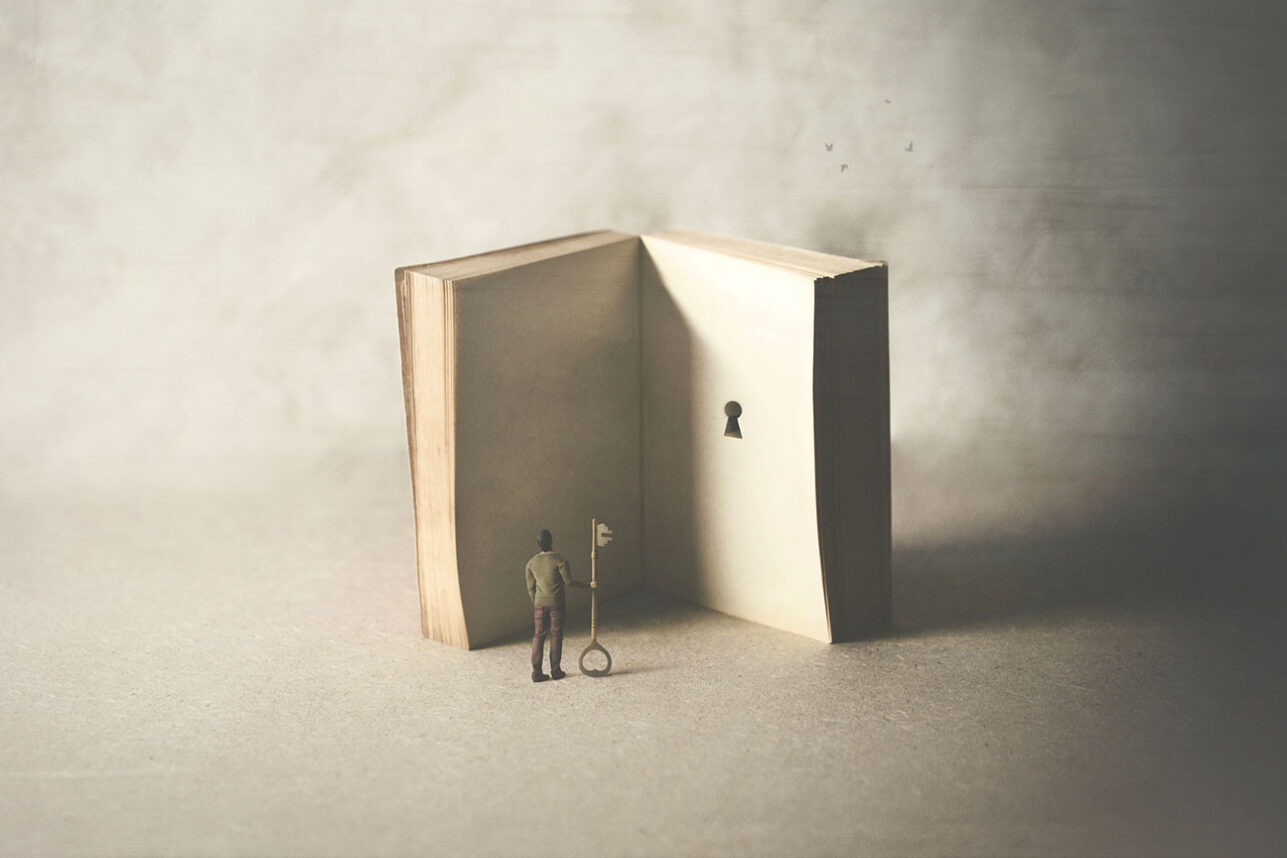
Another adage comes to mind: when some doors close, others open. More accurately, I think: When some doors close, we become aware of other doors, maybe obscured by our being fixated on the doors now locked.
As a counselor, I often find myself guiding people through the “now what?” One thing seems to be required: we must go deeper than the pain, deeper than the loss, deeper than the grief. The way through loss is depth. We live in a society that does not teach much about that depth, nor about the life of virtue that helps us retain our dignity when we suffer. Much of what I see is a “culture of complaint.” When things don’t go our way, we have to blame someone, typically ensuring that life doesn’t go their way, either. We need to punish. We take our loss out on them.
The need to blame, to punish, to complain is, for me, the indication of immaturity, a state of character that has little to do with chronological age. The complaining character has decided that they do not have the capacity for resilience, to hold the line work things through with virtue and honor. Blaming instead of growing, resenting instead of making a plan, maybe even only one day at a time, as an answer to the “now what?” The despairing person might exhibit addictive behavior, medicating the pain instead of going deeper than the pain. Despair seems to say, “Anything but dignity and depth.”
“Life is what happens while we are making other plans.” Eventually, it seems, you have to make a new plan or that unruly force we euphemistically call “life” will make a plan for us. Understanding that life might intrude again as well, one must come out of the blaming, complaining, unproductive grief, despair, and loss into a life of depth and wisdom, perhaps even deep well-being, and perhaps moments of bliss. This is hard work, sometimes bitterly hard. You can plan a life, but more deeply, we have to plan who we will become no matter what life delivers to us.
I wish I knew another way, but I don’t.