In the 2.5 years since Azerbaijan’s Karabakh region was liberated from 30 years of Armenian occupation, a growing number of mass graves have been discovered. Last week another hidden grave was found containing the remains of Azerbaijanis captured by Armenian forces during the initial invasions of the early 1990s, when Armenia invaded and ethnically cleansed 20 percent of Azerbaijan’s sovereign territory, killing 20,000 and expelling 800,000 Azerbaijanis from their ancestral lands. During the three-decade long occupation, Armenia razed to the ground 10,000 sq km of pristine nature, 900 historic villages and 7 cities throughout Karabakh.
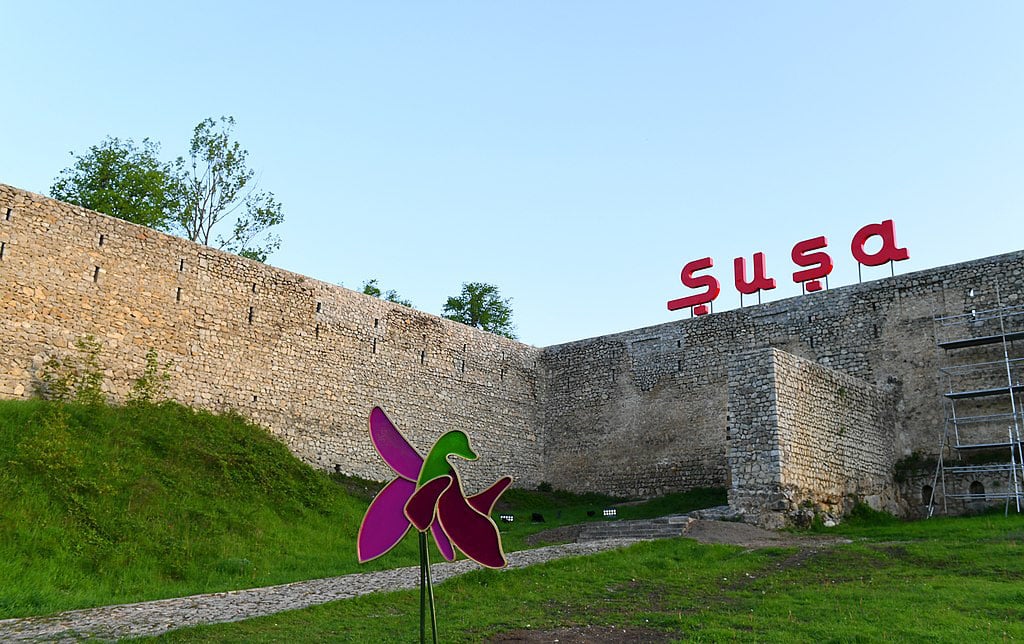
Since the brutal war began, over 4,000 Azerbaijanis, including 719 civilians (326 elderly, 267 women, and 71 children), from Karabakh have been listed as missing, and the most recent discovery dispels any remaining hope for the possible survival of those yet to be found. The latest mass burial site was found on August 15 in the city of Shusha, a town already well known in the context of the war; one of Azerbaijan’s most celebrated and heroic soldiers, Albert Agarunov, a Mountain Jew, was one of the last men standing in defense of Shusha, where he lost his life to the Armenian invasion.
Shusha’s mass grave was unearthed inside a pit of sewage on the grounds of the Shusha prison – infamous as a torture camp, where many Azerbaijani captives underwent unspeakable terror. Of the 17 victims disovered there, all showed definitive signs of torture. In the remains of 6 of the victims, nails were found, indicating that the victims were forced to swallow the nails as a component of torture and coercion. Similarly horrific, infirm victims were fed alive to pigs. These 17 join the 480 skeletons of Azerbaijani victims already found in hidden graves across liberated Karabakh. Many were executed en masse.
For the survivors waiting for answers, I cannot think of sadder news, however predictable it may be at this point. That predictability is one of the most shocking and disturbing components of these discoveries. Because in 2023, hidden mass graves containing the skeletons of recently tortured victims are hardly within the scope of what is acceptable, expected, or tolerable.
That these are not ancient discoveries, but evidence of acts committed in the last 30 years, and that so many of the discovered skeletons and fragments indicated death by torture – these are the elements of an absolute nightmare. Every single victim was, before encountering brutal savagery, a living, thriving human being – man, woman, or child. Such were the platitudes of this genocidal invasion against Azerbaijan – condemned by the United Nations, and the majority of global democracies.
Equally jarring, these discoveries of secret, mass graves of Azerbaijanis are hardly noticed today by global media and human rights community. Simultaneously, major western hubs are reporting on a completely propagated story, decrying a so-called blockade Armenia claims to be victimized by, but one that has been publicly proven to be entirely constructed and enacted by Armenia. Armenia is using the blockade prop to sway global voices and to pressure Azerbaijan to open up a transport route that will perpetuate the smuggling of arms and soldiers for the growing army of Armenian forces forming now in Karabakh, over 10,000 strong already, as we confront nearly 3 years since Armenia was compelled to withdraw from the areas of Azerbaijan it unlawfully occupied and signed ceasefire agreement. These are hardly the actions of peace.
What world do we live in today where the discovery of mass graves of innocents can go so shockingly unnoticed by the press, especially regarding a nation that shares deep alliance with the United States and Israel for as long as it has held independence; from a majority-Muslim champion of multicultural and multifaith harmony? Reflecting upon the Jewish and Israeli experiences with global media bias, it is heartbreaking to witness the same occur for another community; the mostly Muslim nation that has sheltered Jews from persecution for millenia, that is the ancestral homeland to hundreds of thousands of Christians and 30,000 Jews, who today still call Azerbaijan home and live peacefully together. And with countless burials of a similar kind hiding the remains of Jews and many others in places like Russia, this tragedy strikes several deep and painful chords for Jewish history.
As of today, Armenia still refuses to release any information about the location of the remaining mass graves, so they are only found through extensive, tireless search. Similarly, they refuse to provide maps for the over 1 million landmines they planted during the occupation and upon their exit from Karabakh with the clear goal of taking additional lives (over 300 Azerbaijanis have already fallen victim to these mines since 2020). The families and friends of the thousands still unaccounted for deserve to know the fate of those still missing, and to grieve, and to witness the perpetrators of these murders held accountable. The rest of the world has an obligation, a true moral and human imperative, to help. It starts with speaking out.