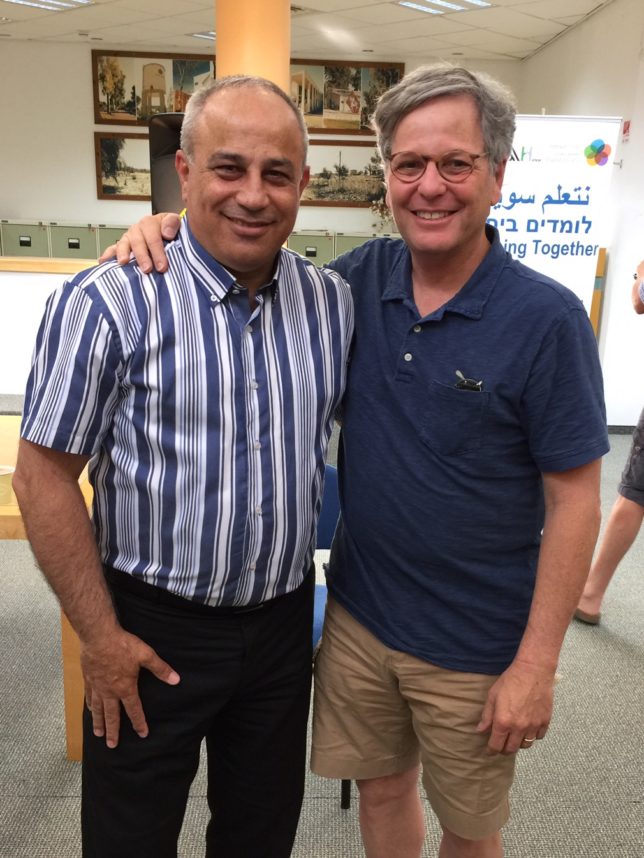
Among all the remarkable people we met this past week, first among equals is Mohammed Darawshe, the Director of Planning, Equality and Shared Society at the Givat Haviva Educational Center located inside the Green Line in the middle of the country.
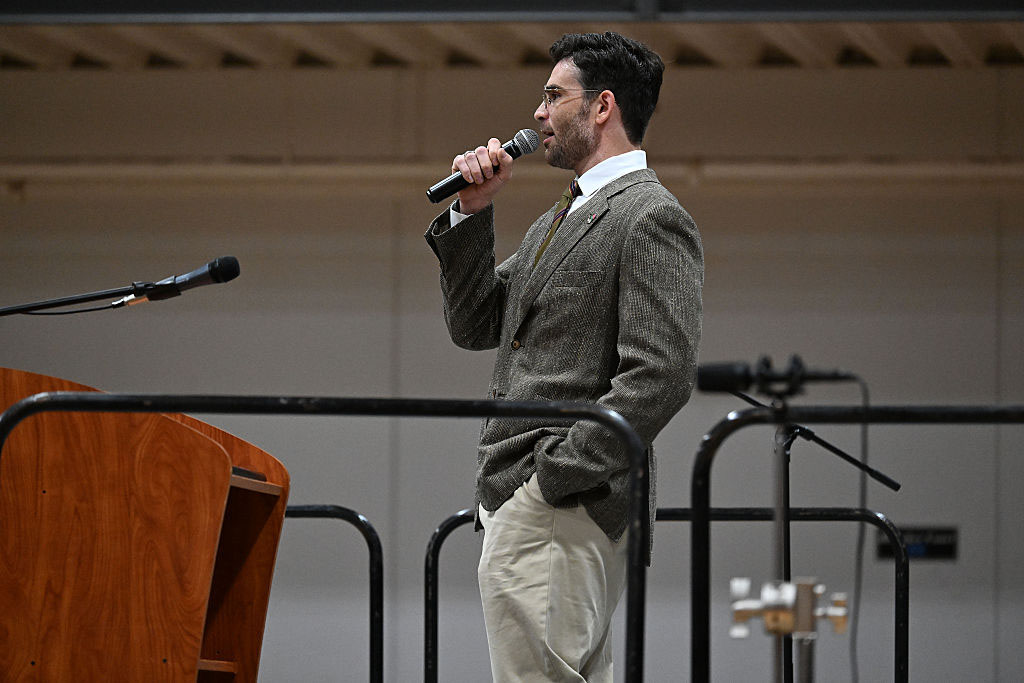
Mohammed had visited my congregation several months ago in Los Angeles, so when meeting him in Israel, it felt like two friends reuniting.
Givat Haviva houses The Center for a Shared Society which, as GH’s website notes “aims to build an inclusive, socially cohesive society in Israel by engaging divided communities in collective action towards the advancement of a sustainable, thriving Israeli democracy based on mutual responsibility, civic equality and a shared vision of the future.”
Givat Haviva’s work draws together neighboring Jewish and Arab municipalities to create ties and initiate joint projects in the fields of economy, education, and culture. It promotes joint educational projects and youth encounters, a joint industrial park, a river restoration project, establishment of a regional bike trail, and construction of a shared football stadium.
Every day, hundreds of Israeli Jewish and Israeli Arab students mingle together in joint classes and in social contact on GH’s educational grounds. One project called “Children Teaching Children” brings pairs of Arab and Jewish students together in intense dialogue to break down negative stereotypes of each other.
Mohammed initiated a program to introduce Jewish teachers into regional Arab schools and Arab teachers into regional Jewish schools that resulted in a dramatic reduction of racism in those communities. Givat Haviva fosters understanding of the “other” national group and nurtures the feeling that there is, indeed, a shared destiny between Israeli Jews and Israeli Arabs. So many of its programs rely on a partnership with mayors, municipal education department heads, school principals, administrators, and teachers.
One very effective program is called “Youth Delegations” in which three delegations of Jews and Arabs came together from local communities to interact with youth from Germany and Poland. The first European delegation visited Givat Haviva in early November, and the Israeli Arab/Jewish delegation visited Germany and Poland in late November. In Israel, the delegation focused on German Jews living in a Jerusalem seniors’ home and the students visited Yad Vashem. In Europe, the Arab/Jewish delegation toured Berlin together and focused on the plight of refugees of all four nationalities at the end of WWII.
The second delegation brought 18 Arab students from Baka el-Garbiya and Menashe who are active in youth movements with 12 German youth from the Einstein Gymnasium in Berlin. They spent 5 days participating in intensive workshops on “Dictatorship and Democracies – The Fragile Border between Them” and focused on the GDR period and democracy in Israel, Germany, and East Europe.
The third delegation, with 20 youth from Megiddo and Kafr Kara hosted their German and Polish peers for a week in December. They focused on “Dialogue Methods According to Martin Buber”, studied Buber’s biography and philosophy, and met with his granddaughter and great-granddaughter, Tamar Goldstein, a noted peace activist. They also met with Paul Mendes-Flohr, an expert on Buber’s philosophy.
Givat Haviva offers overseas English-speaking visitors Arab language study and to everyone studies in conflict resolution and mediation techniques.
Mohammed spoke to us at some length about a national study published in 2002 and acknowledged by former Prime Minister Ehud Olmert in 2007 that, indeed, Arab citizens of Israel are systematically discriminated against in virtually all areas of Israel’s national life even though they are granted equality as citizens according to Israel’s Declaration of Independence.
Fifty percent of Arab Israeli children live under the poverty line, so scholarship support, intensified Hebrew instruction, computer training, and classes given on the site of the Givat Haviva campus offer Arab students an opportunity to prepare themselves to succeed in an advanced Israeli economy and job market.
A special challenge is to raise the economic and employment status of Arab women through education, enhanced Hebrew language facility, all of which depends as well on building more child care programs in order to relieve Arab-Israeli women to be able to enter the workforce.
Givat Haviva has developed social and business programs for Jewish Israeli women to join in partnership with Arab women. One such program is called “Women cook for peace.” Meetings are held in each other’s homes to share traditional recipes, customs, holidays, cultures, and intimate social contact.
Another program brings together Jewish and Arab women entrepreneurs in a series of lectures about running businesses, accounting, taxes, contracts, and marketing.
Yet another program prepares Arab and Jewish women to run for public office in municipal elections by giving them the knowledge and skills to run campaigns, be effective in public relations, work with the media, to network, and fundraise.
Mohammed is the driving force behind much of what is taking place at Givat Haviva. Its programs have literally affected thousands of Israeli Arabs and Jews. He is right to pursue a goal in which equality between Israeli Jews and Arabs is achieved to stabilize and strengthen Israeli society as a whole.
Mohammed is considered a leading expert on Jewish-Arab relations and has presented lectures and papers at the European Parliament, the NATO Defense College, the World Economic Forum, the Club de Madrid, the US Congress, the Herziliya Conference, and Israel’s Presidential Conference. He is the recipient of the Peacemakers Award from the Catholic Theological Union, the Peace and Security Award of the World Association of NGO’s, and was the Leadership Fellow at the New Israel Fund.
Our time with Mohammed was inspirational for my synagogue group.