




fbpx

Yom Kippur: An Encounter with Death & Life!

[additional-authors]
September 25, 2012

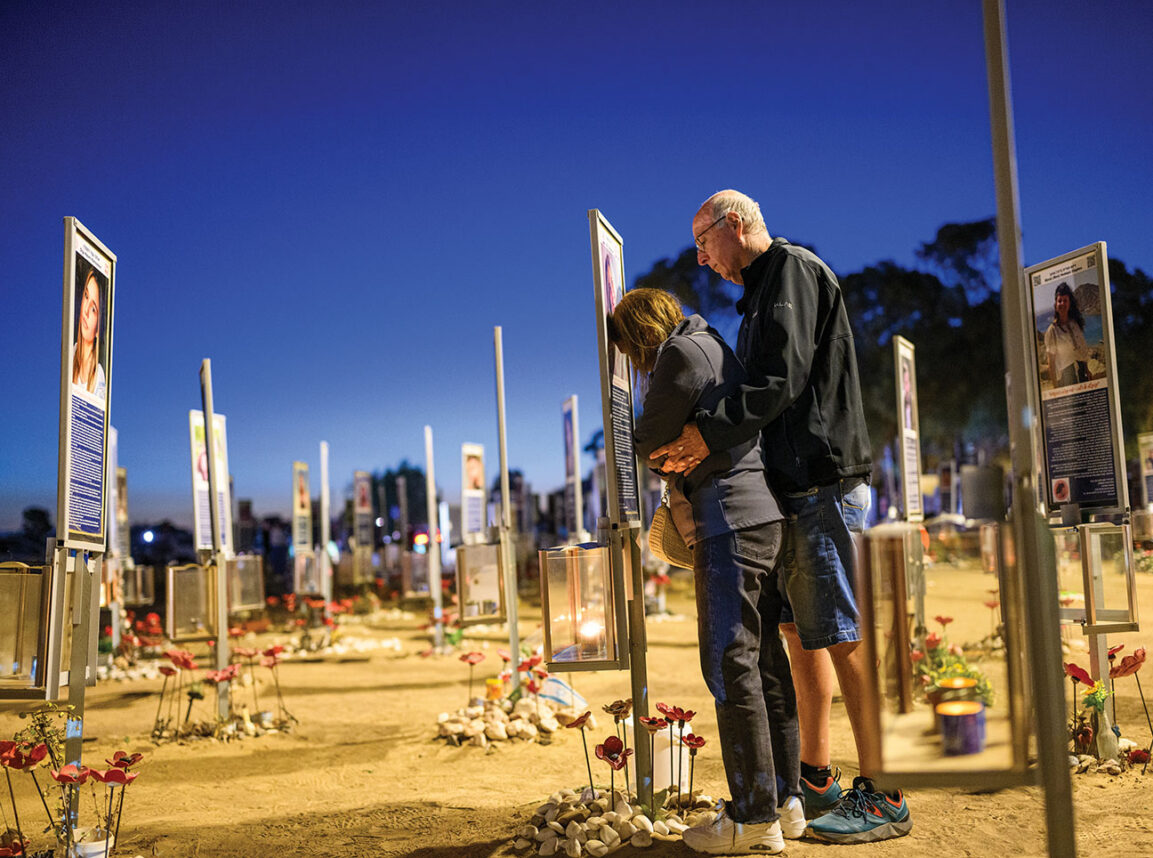
“Mitah v’Yom HaKippurim Michaprin.” The two ways to truly atone are Death and Yom Kippur. But are the two really so different? On Yom Kippur, we reject food and drink, similar to one close to death. We say vidui (our confessions) just like someone preparing to die. Many wear white on Yom Kippur—the kittel, the same plain shroud that one will be buried in. We remove ourselves from leather shoes, bathing, anointing, and marital relations on Yom Kippur again as though we are mourners.  Our lives are lived in our bodies. On Yom Kippur we step out of our bodies as if we were gone. We visit the cemetery at this time to honor those who have passed away and to soften our hearts to our mortality. We ask ourselves on Yom Kippur in Unetaneh Tokef: “who shall live and who shall die.”


One of the main goals on Yom Kippur is to encounter death. We spend one day reflecting on our mortality. When we fully embrace Yom Kippur, we have an encounter with death (a preparation for death). We are to be transformed by it; in preparing for death, we come to more deeply celebrate life. Even more, our transformation teaches us to reprioritize what really matters. As Sogyal Rinpoche once wrote: “Death is a mirror in which the entire meaning of life is reflected.”


One day of the year we accept the reality of death, but we are not like Buddhists who willingly embrace death. On all other days of the year, we mourn those who have passed, we protest the taking of lives, we prevent death by seeking cures and healing. But protesting death must not overtake us. Rather, taking ownership of life must. As the great French existentialist Simone de Beauvoir, wrote: “We are having a hard time living because we are so bent on outwitting death” (The Ethics of Ambiguity, 120).


So only on this day we let our guard go and embrace the inevitable to remind us that although our death must come someday, today we must live. We can best perform the mitzvah of u'varchata b'chayim, to choose life, once we are aware of the alternative and that there is a choice to be made.


There is an intimacy we achieve with our Creator when we approach death just as those on their death beds who lose their theological skepticism. In fact, we learn from the Talmud (Shabbat 88b) that those who experienced the revelation at Sinai directly from the mouth of G-d died in that moment and were brought back to life. It is only in a life/death transcendental moment that we can truly grasp certain truths.


Longtime hospice worker Kathleen Dowling Singh lays out the stages of dying in her book, The Grace in Dying. They are, according to her: Chaos, Surrender and Transcendence. Yom Kippur can be modeled off these three. We are in chaos during the night, and the early morning of Yom Kippur hits us like a ton of bricks. Then we begin to surrender once we realize that we are able to transcend our hunger and personal desires. Finally, we may reach transcendence in the late afternoon when we tap into our deeper potential to understand ourselves and the world.


If we “die” on Yom Kippur, then we go to olam haba (the next world). That next world paradoxically is actually olam ha’zeh (this world). We learn to live in this world as if it were the next world (in our near-death experience). We encounter death in order to live.


The Talmud in Moed Katan teaches the following story: “When Rav Nahman was dying, he begged Rava to implore the angel of death not to torment him. Rava replied, ‘But, Master, are you not esteemed enough to ask him yourself?’ Rav Nahman considered this for a moment, and then pondered aloud, 'Who is esteemed, who is regarded, who is distinguished' in the face of Death Himself? Then, after he died, Rav Nahman appeared to Rava in a dream. ‘Master, did you suffer any pain?’ Rava asked. Rav Nahman replied, ‘As little as taking a hair from milk. Still, if the Holy One were to say to me, ‘Go back to that world,’ I would not consent, the fear of death being so great.’”


On Yom Kippur we learn that we need not fear death. Rather, we must embrace death in order that we can affirm life in the deepest sense. May 5773 be a year of life! May we rededicate ourselves to enhancing the lives of all those around us!


Rabbi Shmuly Yanklowitz is the Founder and President of “>Jewish Ethics & Social Justice: A Guide for the 21st Century.” Newsweek named Rav Shmuly

Did you enjoy this article?
You'll love our roundtable.

Editor's Picks

Latest Articles

A Bisl Torah — All Over Again

Repenting includes examining and admitting our mistakes. Seeking forgiveness. Determining to do better. Being better. Every single day.

Hanging Out at the Jewish American Summit

Among the speakers, Adam Milstein, a real estate investor, philanthropist and co-founder of the fast-growing Impact Forum, urged attendees to frame antisemitism as an American issue and not just a Jewish issue.

A Festive French Roast

One of my favorite things to cook for the Jewish holidays is a beautiful French roast. It’s so very festive and is perfect to feed a hungry crowd.

The Genius of the Marx Brothers

Like the greatest satirists, such as Jonathan Swift and Mark Twain, they chose comedy over accusation to mock the folly of society and add levity to dark times. But their aim was not levity alone.

AKLA Rises

From a Local Experiment to a National Program: AKLA Expands Its Vision for Jewish Teens

Better Kisser Than a Cook

Sometimes love arrives ahead of you, in spite of you. Cooking slowly became a way of being there for the people I love. A wordless language that says: I see you. I hear you. You’re worth the onion-chopping.

Israel’s Brain-Drain Debate Is Asking the Wrong Question

If an experienced professional with rare expertise leaves Israel, the impact cannot be understood simply by adding another person to a brain-drain statistic. The more relevant question is how many people with comparable experience remain, how essential that expertise is and how easily it can be rebuilt.

A New Borscht Belt?

If renewed exclusion teaches us only to become more protective of Jewish work, we will have learned the wrong lesson from the original Borscht Belt.

More news and opinions than at a Shabbat dinner, right in your inbox.