 His mother, Susan Sontag was a famous intellectual. But for a woman of uncommon intelligence, her pursuit of truth stopped short of her own mortality—and her grieving son, David Rieff was left to pick up the pieces: “I wanted to write about my mother’s dying in terms of her rejection of death – a war against death – she was a person for whom the notion was intolerable, and she died unreconciled.”
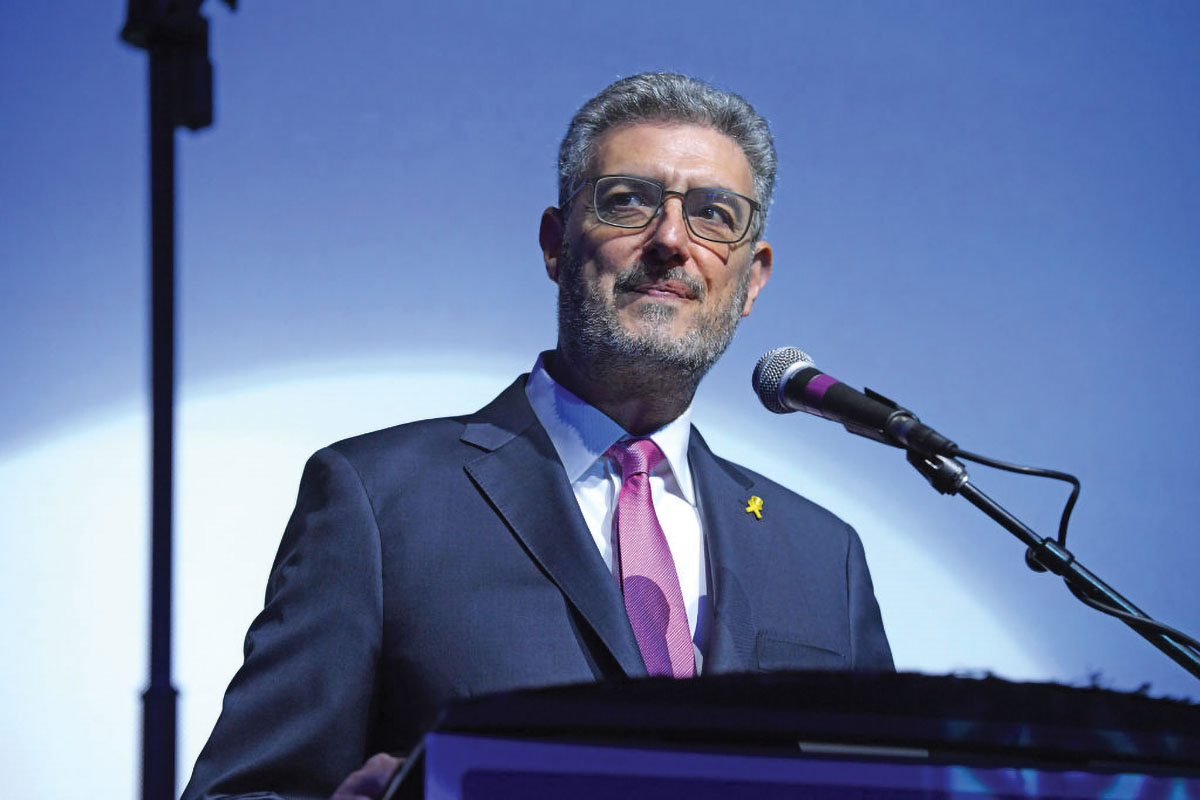
Sontag endured bouts of cancer for decades before an acute form of Leukemia ended her life in 2004. To reconcile his own inner turmoil, Rieff, also an accomplished writer (and his mother’s editor) chronicled his experience of her illness in “Swimming in a Sea of Death: A Son’s Memoir.” On Feb. 5, he appeared for ALOUD LA at Central Library downtown to discuss his new work with L.A. Times columnist Tim Rutten.
 Amidst a middle-aged crowd as eccentric as Sontag herself – with their streaks of silver hair, fringed suede jackets and French berets, Rutten announced Rieff would not read from his memoir because it was too painful. It mattered little to the present intelligentsia who just wanted to hear Rieff talk about his mom and then, talk about her themselves.
 The colorful crowd could not lift Rieff’s spirits. Before a room full of fans, Rieff was transformed from erudite intellectual to vulnerable son. Downtrodden, fidgety and visibly bemused by the probing questions about his mother’s illness and her death, Rieff was even less prepared to talk about her life: “I am not prepared to talk about Annie Leibovitz,” he declared during the Q&A.
Neither would Rieff discuss his relationship with his mother. Instead, the evening was quietly full of remorse: “There was no goodbye,” he said. “She died in inches horribly, but she left as if she died in a plane crash, a car crash – without instructions.” There would be no ‘goodbye,’ no utterance of ‘I love you’ in a certain tone. But that wasn’t the worst of it.
Sontag, “for whom the truth was this sacred center wanted to be told something different,” Rieff said. She refused to speak of death and even after an unsuccessful bone marrow transplant, lived as if she would survive. Her son was conscripted to be her cheerleader: “She needed me to tell her and make arguments for – hope.”
Hope was Sontag’s faith. She possessed an almost diabolical unwillingness to confront glaring certitudes about her death, and in the process precluded her son from preparing to lose a parent. “She really believed she would survive,” Rieff said.
Though she wasn’t religious, her primitive defiance of death, to instead—choose life—reflects that beneath her inconsolability, her instincts were Jewish ones. Among her great legacy, she also leaves behind a disconsolate son, his emptiness lining the pages of a book.