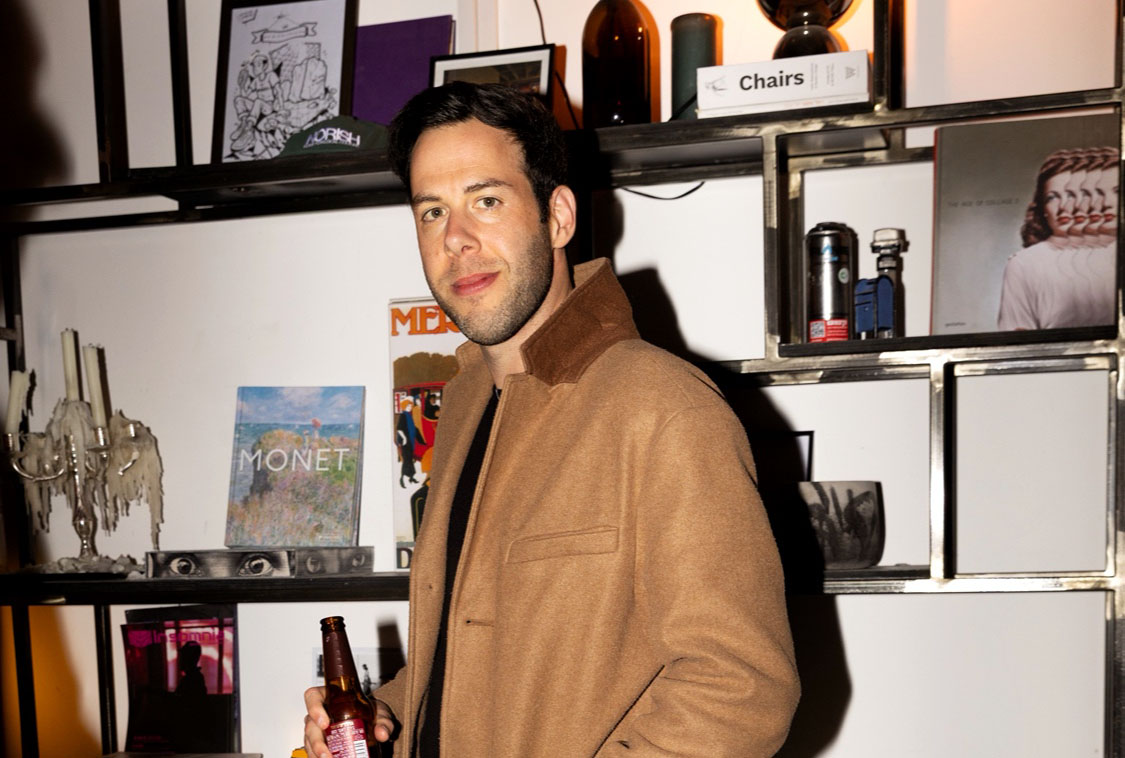
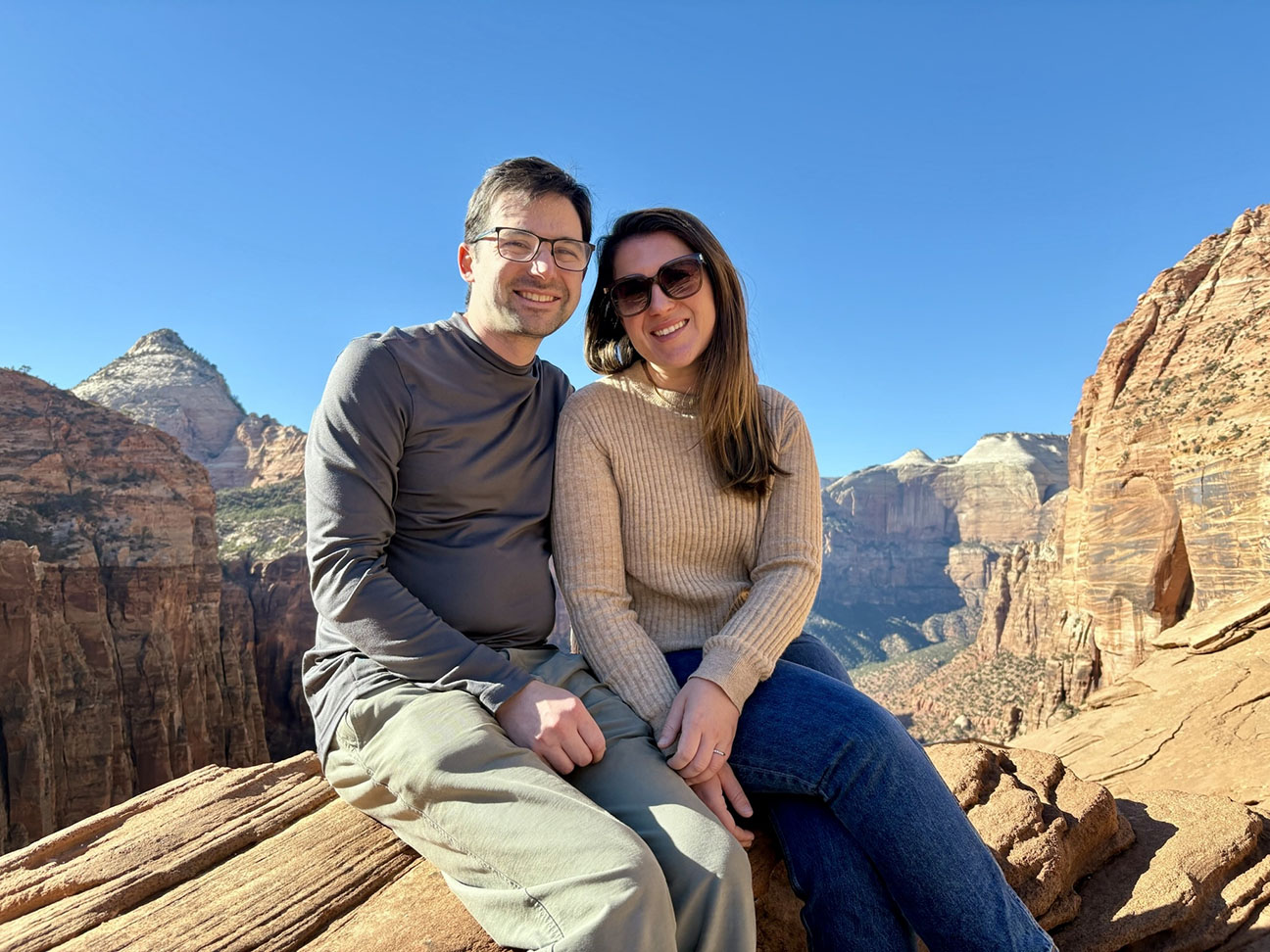
He works in Culver City, she in Beverly Hills, and their home is midway between the two communities. That’s balance – and love. Nearly everything seems intricately, purposely equally weighted in the four-year-old marriage between Rabbi Daniel Freedman and Rabbi Liora Alban.
Periodically one of them will mention a distinction between them but it’s usually insignificant as saying one puts on his left shoe first and the other dons her right shoe first.
During a recent visit to their apartment home, Rabbi Alban, an assistant at Temple Emanuel of Beverly Hills, casually remarked that “Daniel and I are very different. We think differently. We approach things differently.”
To which Rabbi Freedman, an assistant at Temple Akiba of Culver City, replied:
“Sometimes Liora will see me struggling with something because I am being so intellectual about it. She will use her mind of creativity and aesthetics to say, ‘Why don’t you step away from how you are looking at something?’”
Being married to a fellow rabbi, he said, “means there’s a place that you have an eternal partner who is supporting you, not just emotionally, but in all the ways you would want to be supported – in a way the person can go a level deeper and genuinely understand what you are going through.”
When was the last time you heard a husband or wife refer to an “eternal partner”?
“That is something that has made me into the rabbi I am,” Rabbi Freedman said. “I would not be the same rabbi if I had not been with Liora because she has seen things within me that I have struggled with. She has pushed me to see things differently in a way that a lay partner would not have been able to do.”
Okay, so there are distinctions. “We have different interests in the rabbinate,” Rabbi Alban said. “Our rabbinic theses were so different. I wrote mine on the use of visual art in building Jewish communities. Daniel wrote his on Jewish law, something very intellectual. Mine was much more creative, spirited and big-picture thinking. That’s a sign of distinction between us.”
Her husband, she said, is “very detail-oriented. I am much more big-picture thinking. Both strengths are important. That’s how we balance out each other. In lesson-planning, for example, we spend a lot of our time writing lessons for all ages. He is much better at finding the exact perfect text, like whittling down the lesson to the exact second whereas I am much more, like, ‘What do I want people to come away with? What’s the overarching goal?’ In those ways, we balance each other out. We make each other stronger for it.
“It’s like the Jewish chevruta (collaborative learning): You strengthen the other person. Here we are so different, and we strengthen the other person.”
Displaying the youthfulness and almost unrestrained vigor of a young couple in love, neither has any intention of diverting from his or her present path. “Maybe when I retire,” Rabbi Alban said, she will shift her focus. “Maybe I will become a docent at an art museum. Or teach art classes to children.”
Rabbi Freedman was equally emphatic. “I certainly do not see myself becoming an architect. I am still really interested in how space affects Jewish experience. It’s something I think about with education – in the way that our buildings are set up. They are not always conducive to the type of experience we want our learners to have.”
He would want space that is more flexible. “Many synagogues where I have worked have spaces that are not flexible, a sanctuary or a classroom with seating that is very fixed. I’d like to create spaces that are much more adaptable. I think about it all the time.”
Is there a way for the congregations of Temple Akiba or Temple Emanuel to understand you are married to a fellow rabbi? “Yes,” Rabbi Freedman responded swiftly, “because basically, when I do anything, I have another rabbi’s general perspective or experience in my mind. It’s hard to say that doesn’t impact the way I do or say things because I am married to another rabbi. Liora’s philosophy, her experience in another synagogue always are in my mind. I don’t exactly know how it comes out every day, but I do think it impacts my thinking.
“For example, Liora started teaching a weekly class. She has done that in two synagogues, and I have seen the way it creates a really nice bond to have that weekly learning. It made me want to try that experience for myself to see how it would impact my experience forming bonds with learners.
“I started to teach a Tuesday class (Torah Tuesdays) this year to see what it would be like to have a weekly learning experience rather than a short-term or monthly experience. It has been very nice. I have been able to teach (and reach) my adult students on a much deeper level.” That, Rabbi Freedman said, illustrates what he has learned from his wife.
Many couples come out of Hebrew Union College. Some endure. Most don’t. At Temple Emanuel, Rabbi Alban works with an intern who is part of a rabbinic couple. But don’t come to her with a life-changing question. “I would not advise one way or the other,” she said. “Is it serving you? Is it a healthy relationship? Does it feel good? Those are questions to ask – and answer.”
Her husband said if he were consulted, and someone wanted to know the full scope of such a relationship, he would be candid. “It is important,” said Rabbi Freedman, “to share ways it has been challenging for us. One is finding jobs that are enriching for each of us in the same place. A very big challenge.”
Rabbi Alban nodded agreement. “The biggest challenge is finding the right job(s) at the right time for both people,” she said. “We have had a winding journey. Our first jobs were four hours apart. I was up north and he was in Santa Barbara. We’ve never gotten our dream jobs at the same time. We always have had to make it work.”
How do you land dream jobs at the same time? “I feel extremely grateful,” she said, “because we are both in wonderful congregations, really close to each other. We are in a place where we really wanted to live. That is one in a million.”