
The Harvard Divinity School that’s been called,
Rabbi Wolpe informs us, the Woodstock of Cambridge,
arouses what should make all folk appalled,
the fear of crossing what I call a blame bridge,
the bridge that Rabbi Nahman said no life should be,
a highway to foul fears sans reasons and sans rhymes,
whose goal is blame that Jews are told quite shamefully
to wear, a weighty Magen David for the crimes
that never were committed by them or their tribe,
as if God is no longer their proud Magen David,
thereby preventing Jews to ask him to inscribe
their names inside His Book of their renewing seed,
this Book of Life into which Jews who’re faithful pray,
while fasting on Yom Kippur, to be saved and written,
permitted to survive if we God’s laws obey,
by no disasters wiped out or by haters smitten.
Schools of Divinity like Harvard’s don’t support
this goal, not programmed, as was not pre-Hitler Weimar’s,
by humane morals which to all folk should be taught,
protecting Jews from hateful anti-social climbers.
In “My Year at Harvard: Rabbi David Wolpe took a one-year position at the Harvard Divinity School. What he found was an institution rife with antisemitism and anti-Zionism. Now he tells his story,” Rabbi David Wolpe writes in The Jewish Journal, June 26, 2024:
The Divinity School has a very strong Protestant tradition, but is nonsectarian. Today you will find self-identified pagans, Buddhists, Sikhs, syncretic faiths, as well as Judaism, Islam Christianity, and many others. The notice boards are a pastiche of workshops in psychedelics, gender studies, ancient languages and slam poetry.
I was aware that the Divinity School had a reputation for being politically left even among the leftist bent of higher education. The usual explanation was that graduates, unlike those in other departments of the university, did not have to enter corporations or businesses that moderate any ideological excesses. Additionally, the Divinity School was both geographically and ideologically the most distant from the business school. These were the avatars of Harvard idealism. Or, as one professor wryly put it, “The Woodstock of Cambridge.”
Rabbi Nahman of Bratslav said: “The world is a very narrow bridge. The main thing is not to be afraid.”
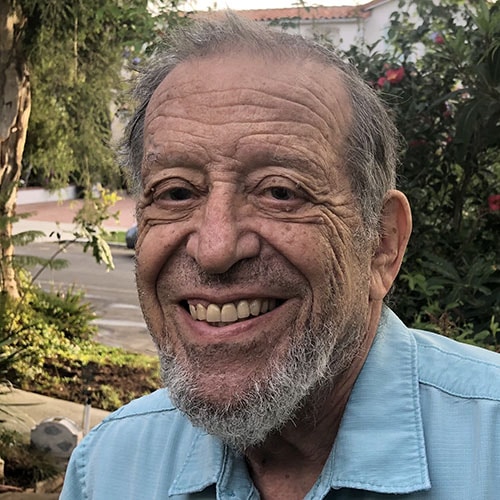
Gershon Hepner is a poet who has written over 25,000 poems on subjects ranging from music to literature, politics to Torah. He grew up in England and moved to Los Angeles in 1976. Using his varied interests and experiences, he has authored dozens of papers in medical and academic journals, and authored “Legal Friction: Law, Narrative, and Identity Politics in Biblical Israel.” He can be reached at gershonhepner@gmail.com.