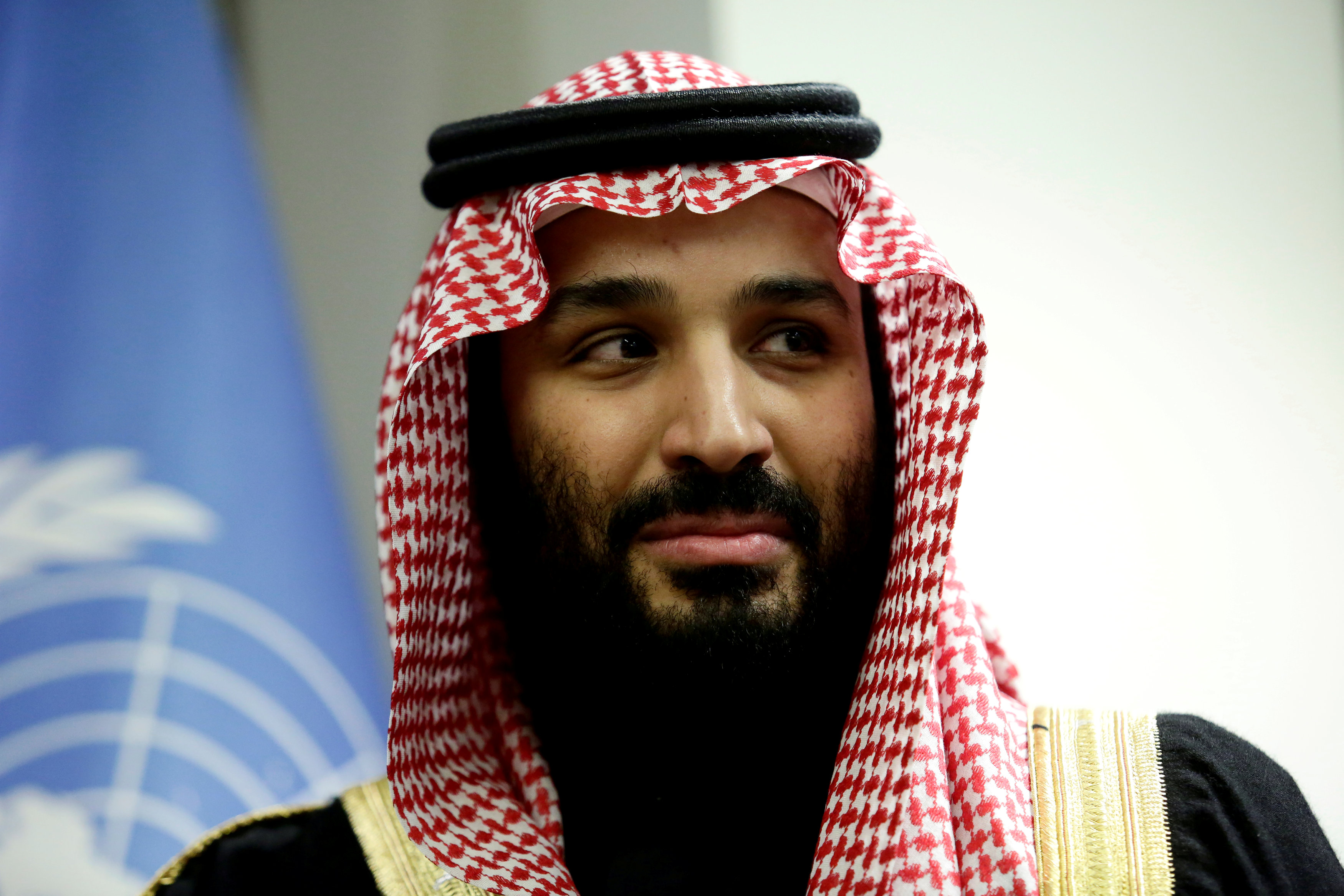
Saudi Crown Prince Mohammed bin Salman did something that is extraordinarily uncommon for an Arab leader: recognize Israel’s right to exist.
In an interview with The Atlantic’s Jeffrey Goldberg that was published on April 2, Salman declared, “I believe the Palestinians and the Israelis have the right to have their own land. But we have to have a peace agreement to assure the stability for everyone and to have normal relations.”
Goldberg followed up by asking Salman if he had any religious objections to Israel’s existence, prompting Salman to respond that the Gulf Kingdom is only concerned “about the fate of the holy mosque in Jerusalem and about the rights of the Palestinian people.”
“We don’t have any objection against any other people,” Salman said.
Goldberg proceeded to ask Salman about the “anti-Semitic propaganda” that is promulgated in Saudi Arabia, which Salman dismissed as a non-existent issue.
“Our Prophet Muhammad married a Jewish woman,” Salman said. “Not just a friend—he married her. Our prophet, his neighbors were Jewish. You will find a lot of Jews in Saudi Arabia coming from America, coming from Europe. “
The interview also featured Salman denouncing Iranian Supreme Leader Ayatollah Ali Khameini as making “Hitler look good.”
“The supreme leader is trying to conquer the world. He believes he owns the world. They are both evil guys,” Salman said. “He is the Hitler of the Middle East.”
Salman also criticized the Iran nuclear deal that was forged under the Obama administration.
“The economic benefits of the Iran nuclear deal are not going to the people,” Salman said. “They took $150 billion after the deal—can you please name one housing project they built with this money? One park? One industrial zone? Can you name for me the highway that they built? I advise them—please show us something that you’re building a highway with $150 billion.”
Salman added, “For Saudi Arabia, there is a 0.1 percent chance that this deal would work to change the country. For President Obama it was 50 percent. But even if there’s a 50 percent chance that it would work, we can’t risk it. The other 50 percent is war. We have to go to a scenario where there is no war.”
The full interview can be read here.
After the interview was published, Saudi King Salman, Prince Salman’s father, said through a state news agency that the Gulf Kingdom remains committed to “the legitimate rights of the Palestinian people to an independent state with Jerusalem as its capital.”
Israel and Saudi Arabia have never really had diplomatic relations, but Salman’s recognition of Israel is indicative of how the two countries and other Gulf Arab nations are being drawn into an alliance to fight the expansion of Iran and its proxies. The animosity between Iran and Israel is well known; Iran and Saudi Arabia are both vying for regional hegemony and establishing themselves as leaders of the Islamic world. There is also a major religious divide between Iran and Saudi Arabia, as the former is Shia and the latter is Sunni.