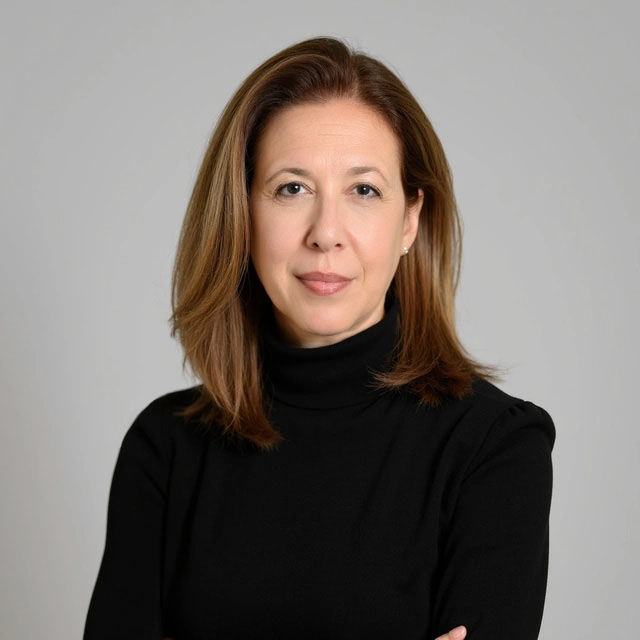
Fourteen years ago, District resident Laurie Strongin remembers, it seemed almost like “science fiction” the notion that you could “pick the baby you could get pregnant with.”
Moreover, cells from that newborn might save the life of her young son, Henry, who was suffering from a rare genetic disease, Fancomi anemia.
A new vitro fertilization procedure known as preimplantation genetic diagnosis (PGD) could potentially achieve both results, but it was ethically controversial. For guidance on whether to use it, Strongin and her husband, Allen Goldberg, turned to Jewish values.
PGD would enable doctors to select the right embryo for implantation, one that would allow Strongin not only to give birth to a child free of Fancomi anemia, but would also provide a perfect match for the stem cell transplant that Henry needed to save his life.
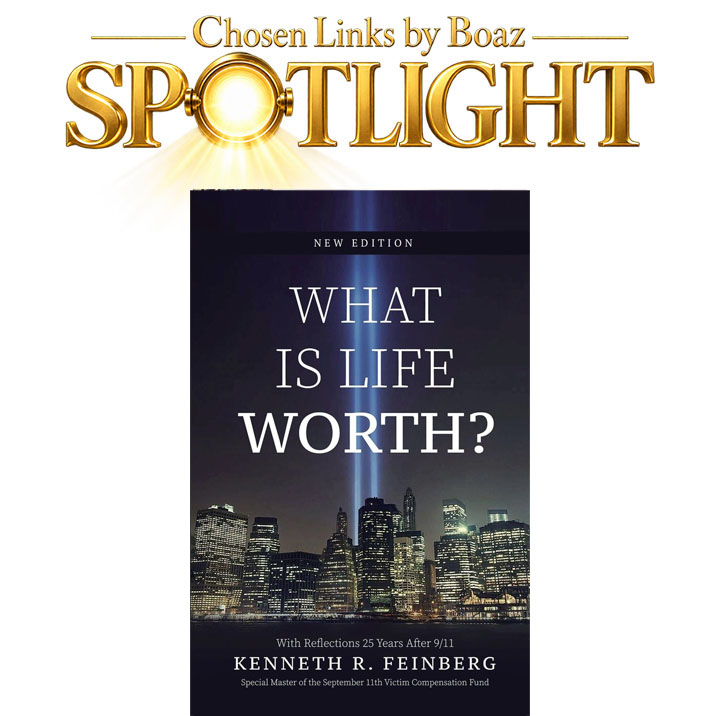
“Saving a life is held in the highest regard in Judaism,” Glover Park resident Strongin said in an interview in March discussing her new book, Saving Henry: A Mother’s Journey. “It was very clear to us, and consistent with that Jewish value in not only Henry’s life, but the baby’s life to not have this disease. … To us, the decision was clear.”
In the end, PGD wasn’t successful, although Strongin and Goldberg did later have another child Joe, now 8 naturally. Saving Henry tells the story of the in vitro process (now more common), but also recounts the life of Henry, who died at the age of 7 in 2002 and, said Strongin, was “such an incredible lover of life.”
Each chapter of the book, released in March by Hyperion, begins with a few items from the list of “Henry’s Favorite Things” everything from Batman and baseball great Cal Ripken Jr. to Shabbat Sing at Adas Israel’s Gan HaYeled Preschool. And Strongin said Henry’s zest for life “he looked at medical procedures as something to get over with to get back to what he was doing” inspired doctors and others he came in contact with to “work harder to find a cure.”
“I hope that will be inspiring and hopeful to any parent that reads the book, not just those facing a terrible illness,” said Strongin, 44,
Strongin, a D.C. native who grew up in Chevy Chase and graduated from Bethesda-Chevy Chase High School, said part of the book came from contemporaneous material she kept a journal during the PGD experience and sent e-mail updates to friends and family during Henry’s bone marrow transplant. After Henry died, she said she wove those together and “added Henry and his spirit and who he was as a person,” which she said helped her deal with the loss.
“I spent almost 24 hours a day with Henry the last couple years of his life,” she recalled. “It was an incredibly intimate relationship, and after he died, I still had a need to spend a lot of time with him. Writing about him fulfilled that need.”
“It was painful, but also a beautiful way to remember everything that was so wonderful” about Henry,” she said, noting that the book is “infused with those good times” with her son.
Strongin said, though, that she still is unable to write about the final few days of Henry’s life; to tell that part of the story, she used blog entries her husband wrote at the time.
Fancomi anemia, like Tay-Sachs, is considered a Jewish genetic disease because Ashkenazic Jews are disproportionately affected, said Strongin, who belongs to Adas Israel Congregation in D.C. About 8 percent of those who suffer from the disease are Jewish. The condition leads to blood failure, which necessitates a bone marrow transplant by the time a child is 6 or 7 years old.
Prenatal testing told them that Henry’s younger brother, the now-13-year-old Jack, would be born without the disease. But the chance of producing an embryo with the bone marrow match, but without Fancomi, was only 18 percent, and nine cycles of in vitro fertilization did not produce a pregnancy.
It was not easy going through IVF, a difficult physical and emotional procedure for any couple, especially those knowing that the life of one of their children hangs in the balance.
“It was an absolute real-life race against time,” said Strongin. “That sense of urgency [was] paired with higher and higher stakes as time went by,” as she and her husband watched Henry’s blood counts drop. But Strongin said she always looked to Henry and wondered, “What did I have to complain about?”
Henry eventually had a bone marrow transplant from an anonymous donor, but complications resulted. He died not long after his seventh birthday. As a menorah burned in his hospital room, his final words before being placed on a ventilator were “Mom, this is a very bad last night of Chanukah.”
They would be his last words; Henry died a few days later.
Since Henry’s death, Strongin, a former nonprofit executive, has created the Hope for Henry Foundation. The organization fills a need Strongin saw during Henry’s illness: hospital resources that lift children’s spirits and allow them to “laugh and have fun.” The foundation, operating in hospitals in the D.C. area, Baltimore and Philadelphia, provides patients with such things as birthday parties, iPods and cameras that allow them to send pictures to their friends.
And even after he was gone, Henry was still having an effect on others. At the young boy’s funeral, one of his doctors from Georgetown University Hospital sat down next to a then assistant rabbi at Adas Israel. Dr. Ali Mendelson and Rabbi Jeremy Winaker were engaged a year later, with Max Henry Winaker born in 2007.
“It was so beautiful,” said Strongin about the name. “It was such an incredible honor.”