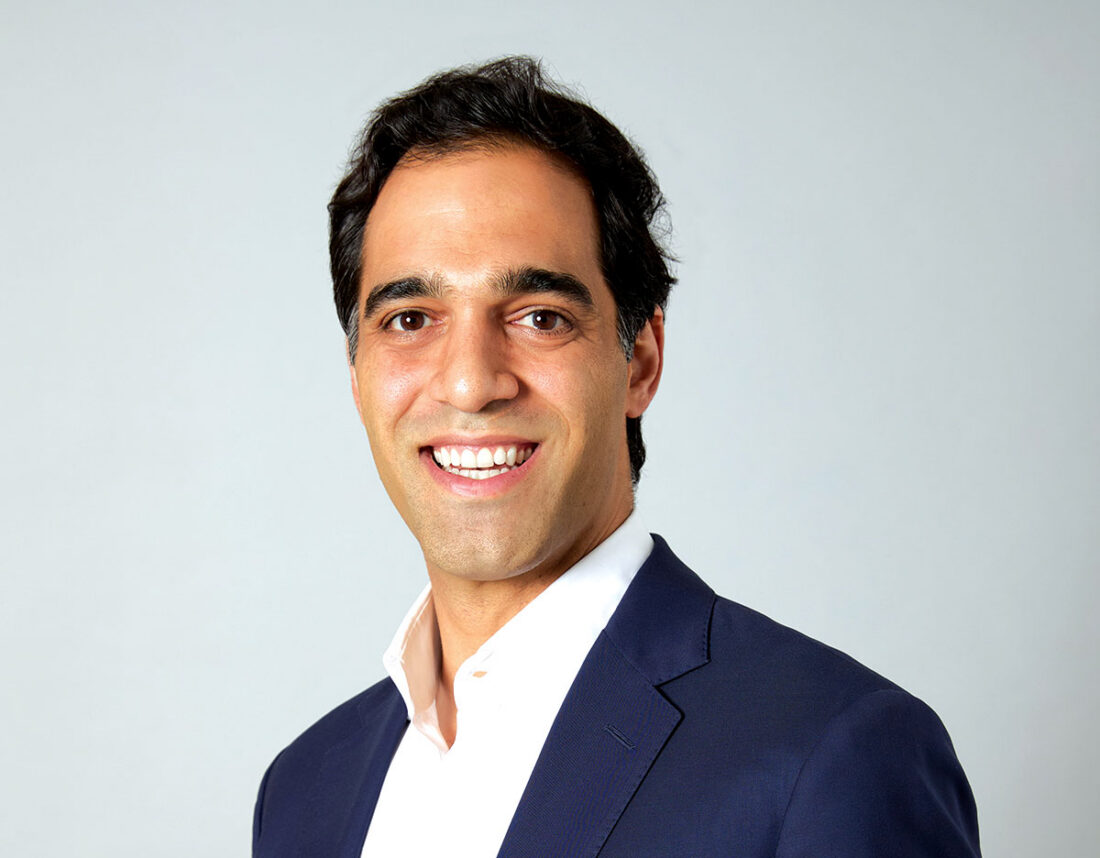
“I like to make films about Jewish heroes — especially Jewish heroes who break stereotypes,” documentarian Aviva Kempner said during a recent interview in Los Angeles.
 Aviva Kempner
Her 1998 film, “The Life and Times of Hank Greenberg,” profiles the renowned Jewish baseball slugger who refused to play on Yom Kippur; 2009’s “Yoo-Hoo, Mrs. Goldberg” spotlights the television pioneer Gertrude Berg; and now Kempner’s new documentary, “Rosenwald,” tells the almost forgotten story of the remarkable philanthropist Julius Rosenwald (1862-1932), a mogul of Sears, Roebuck & Co. who helped improve the lives of hundreds of thousands of African-Americans during the years of the Jim Crow South.
Merging archival footage with dozens of on-camera interviews (subjects range from Rep. John Lewis to the now-deceased poet Maya Angelou), the film traces Rosenwald’s groundbreaking work decades before the advent of the civil rights movement. Influenced by his progressive Chicago rabbi, Emil Hirsch — a founder of the National Association for the Advancement of Colored People (NAACP) — as well as by the writings of Booker T. Washington, Rosenwald partnered with African-American communities to build some 5,300 schools in impoverished areas of the Deep South. At a time when Blacks were being lynched for trying to get an education, some 660,000 children graduated from these “Rosenwald” schools — Lewis included, as well as law professor Anita Hill — and thus were better able to escape the grind of poverty. When the Ku Klux Klan burned down some of the schools, Rosenwald promptly helped to rebuild them.
When Rosenwald witnessed the dismal living conditions of Blacks who had fled the South for Chicago during the Great Migration, he provided seed money to build YMCAs in that city and around the country. And his Julius Rosenwald Fund, chartered in 1917, helped launch the careers of African-American artists such as authors Langston Hughes and Ralph Ellison, opera singer Marian Anderson and painter Jacob Lawrence, whose “One-Way Ticket: The Migration Series” is now on display at the Museum of Modern Art in New York.
In Kempner’s film, poet Rita Dove calls Rosenwald the pre-eminent supporter of arts and letters for African-Americans in the 20th century.
 Julius Rosenwald
Civil rights activist Julian Bond refers to Rosenwald’s efforts as “a wonderful story of cooperation between this philanthropist who did not have to care about Black people, but who did, and expended his considerable wealth to ensure that they got their fair shake in America.”
In fact, Rosenwald gave away approximately $62 million to African-American, Jewish and other charities before his death in 1932 at age 69, “which translates into about 1 billion of today’s dollars,” Kempner said. But today he remains mostly unknown, in part because he was loath to publicize his efforts.
Kempner herself was unaware of Rosenwald until she chanced to attend a conference on African-American and Jewish relations at the Hebrew Center on Martha’s Vineyard 12 years ago. “Suddenly, Julian Bond was talking about this Julius Rosenwald, and I was on the edge of my seat,” she said. “I was fascinated by this untold story of a Jewish-Black alliance.”
Kempner also was drawn to Rosenwald’s story for a more personal reason: As the daughter of a Polish Holocaust survivor, she has dedicated her career to presenting positive images of Jews onscreen.
“I was immediately intrigued by Rosenwald’s story of being an enlightened businessman who wanted to repair the world,” she said in her director’s statement. “The son of a German immigrant peddler, Rosenwald had humble beginnings and left high school to follow in his family’s business. Taking a business risk, he bought Sears and Roebuck … and rose to become the president by age 45.”
So, why was Rosenwald so concerned about the welfare of African-Americans in particular? Kempner said that in addition to the influence of his rabbi, the news of lynchings and cross burnings reminded Rosenwald of the terror shtetl Jews faced during pogroms. Moreover, Rosenwald grew up in Springfield, Ill., across the street from Abraham Lincoln’s home, and was profoundly influenced by Lincoln’s legacy of freeing the slaves.
“At a time when civil rights issues unfortunately still exist,” Kempner added, referencing the recent shootings in Charleston, S.C., “it’s imperative that Julian Rosenwald’s story be told now.”
“Rosenwald” opens in theaters in Los Angeles on Aug. 28