
Avrom Sutzkever resented
being asked to play his Stradivarius
in Hebrew. Nobody consented
to Yiddish, language spoken by nefarious
Neanderthal deniers of the tongue
that Abraham, his namesake, used
when speaking to a God he hung
around with, although when abused
by Abimelech, Aramaic
was surely what they used to speak
with one another. Not archaic,
– as Aramaic would become,
and Hebrew, too, before revived –
Yiddish language was the sum,
in medieval times derived,
from Hebrew, German and vernac-
ulars of every country where
Jews lived, then fled, and then came back.
Throughout the Ashkenazi air
was heard their mamma loshen speech,
until these Yiddish words were turned
by gas into a ghastly screech,
before six million speakers burned.
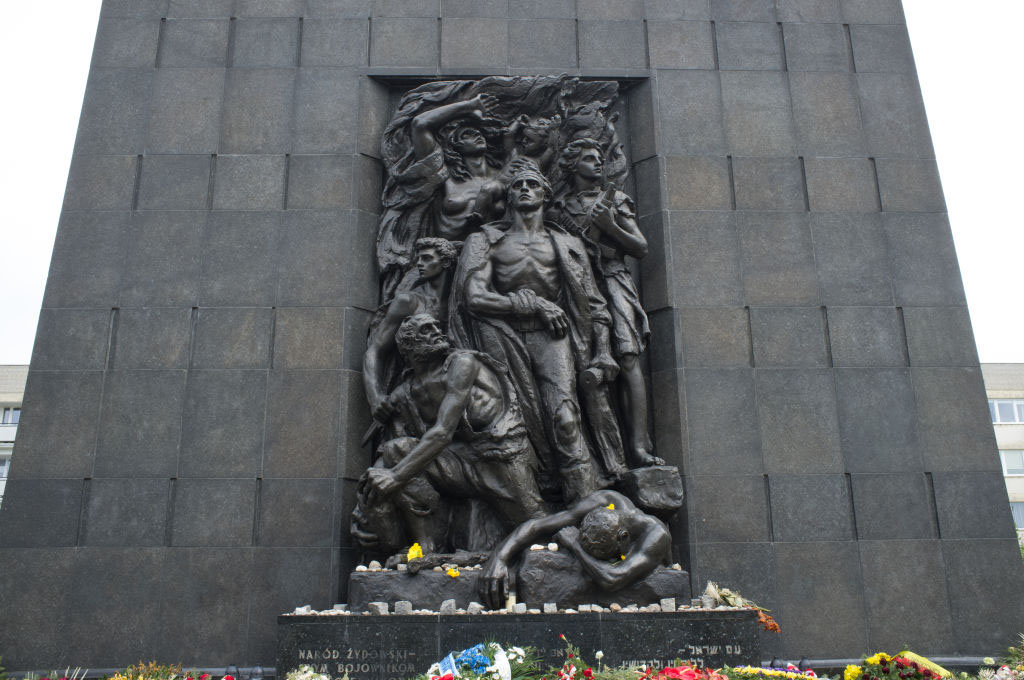
“A Yiddish poet must not die,”
wrote Sutzkever—-six million did,
their words lost, mostly every cry
in Yiddish—shver zu zayn a yid.
Avrom’s Stradivarius case
was shut after the Shoah when
the Hebrew harps allowed no space
for mamma loshen tongue or pen.
But times are changing, I believe,
and there’s good news for Avrom’s tongue.
Though for his death we all now grieve,
his words are likely to be sung
forever. After aharei mot
qedoshim, meaning: after killing
apotheosis may be what
becomes the fate, and so, God willing,
on Avrom’s fiddle we may play,
now posthumously recognizing
the instrument where he displayed
his gifts in sounds now sweetly rising,
as Hebrew has, from death’s dark shade.
I recalled this poem, which I composed twelve years ago, after hearing Ruth Wisse in a podcast in her series “Stories Jews Tell” discuss a Yiddish poem by Abraham Sutzkever, ”What Will Remain?” In his poem “The Fiddle Rose,” the neologistic ‘fiddle-rose’ symbolizes the poet and the music of poetry struggling to survive death, the Holocaust, and the pain and tragedy of the modern world.
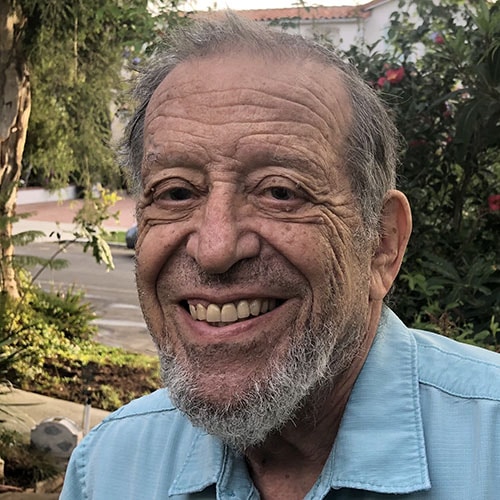
Gershon Hepner is a poet who has written over 25,000 poems on subjects ranging from music to literature, politics to Torah. He grew up in England and moved to Los Angeles in 1976. Using his varied interests and experiences, he has authored dozens of papers in medical and academic journals, and authored “Legal Friction: Law, Narrative, and Identity Politics in Biblical Israel.” He can be reached at gershonhepner@gmail.com.