
An Odd Thanksgiving Ode to Bret Stephens
To use a term that first was quoth
by Jewish Jerseyman, Phil Roth,
“American indigenous berserk”
doesn’t seem for me to work;
so unbemused by what’s occurring,
kosher carnivore, I’m not deferring
consumption of the annual turkey
that on Thanksgiving, unberserk,
I’ve been for years accustomed to
consume, an OU-faithful Jew,
and won’t be eating kosher bacon
frum Jews are eating now, such fakon
not—to use a British metaphor,
which blokes in Blighty still adore—
this Yiddish kopfer’s cuppa tea,
towards it as unsuppity
as towards supping with the devil,
behaving like, unfiddled, Tevyil,
not dancing on a roof or asking
a Rov’s who’s torah-multitasking,
vaccinated during covid,
giving multimaskers koved,
believing that since God said: “Don’t
eat pig,” Jews shouldn’t, so I won’t
eat food that many frummies fancy,
not even when its meat is plantsy,
puzzled by this paradox
which has, as Modern Orthodox,
intrigued me just as in Penzance
some pirates were, not by pork plants
but by a lad born on a leap
year day, and won’t berserkly sweep
away a law that high-tech tikkun
makes obsolete with pork that’s vegan.
Bret Stephens writes in the 11/15/21 NYT (“When the Next Thing You Know Is That You Have Covid”):
We’ve long lived in the land of what Philip Roth called “the indigenous American berserk,” so I guess there’s nothing too surprising here. In “Is That Kosher? Rabbis Debate Plant-Based ‘Pork’¨ WSJ, 11/15/21, Dov Lieber writes from Tel Aviv:
It might look like pork, smell like pork, even taste like pork—just don’t call it pork.
The arrival of fake, plant-based meat expanded the culinary horizon for many observant Jews in recent years. Faux cheeseburgers were suddenly on the menu at kosher restaurants without breaking the ban on mixing dairy with meat. Chili cheese fries became an option.
Could Impossible Foods Inc.’s fake pork also get a kosher seal of approval?
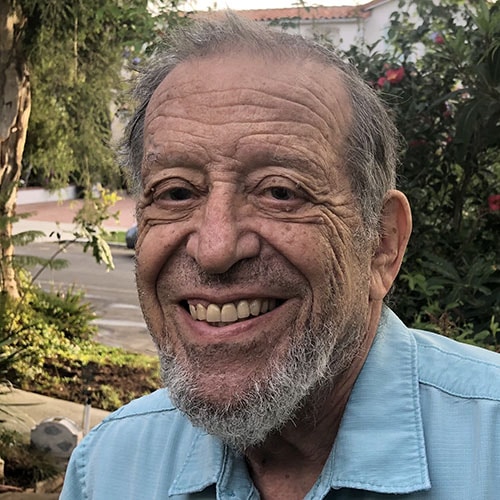
Gershon Hepner is a poet who has written over 25,000 poems on subjects ranging from music to literature, politics to Torah. He grew up in England and moved to Los Angeles in 1976. Using his varied interests and experiences, he has authored dozens of papers in medical and academic journals, and authored “Legal Friction: Law, Narrative, and Identity Politics in Biblical Israel.” He can be reached at gershonhepner@gmail.com.