fbpx

The Sunflower

The story itself is a laconic autobiographical statement that not only describes Wiesenthal\'s experience as camp inmate, but joins that experience to an excruciating ethical question about forgiveness. Now that Simon Wiesenthal is a legend and an icon, his modest story seems larger, somehow, and the republication of the book is a kind of commandment to read it again.
[additional-authors]
October 9, 1997

The Sunflower

On the Possibilities and

Limits of Forgiveness

By William Cutter

“The Sunflower” Revised and expanded, edited by Harry James Cargasand Bonny V. Fetterman. Schocken Books, New York, 1997) (Firstpublished in 1976, and translated by H. A. Piehler)

“The Sunflower” introduced Simon Wiesenthal to the world — in1969 in French, and here in 1976.

Simon Wiesenthal

The story itself is a laconic autobiographical statement that notonly describes Wiesenthal’s experience as camp inmate, but joins thatexperience to an excruciating ethical question about forgiveness. Nowthat Simon Wiesenthal is a legend and an icon, his modest story seemslarger, somehow, and the republication of the book is a kind ofcommandment to read it again.

Wiesenthal is forced — while a concentration camp inmate — tolisten to the confession of a dying Nazi soldier who begs forgivenessfor one atrocity and more while in full command of mind and spirit.The Nazi’s face hidden by bandages, his voice barely audible, hemeets an unseen and anonymous concentration camp inmate who has beenfreed from the confinement of a work gang in Lemberg, to standtrapped in the presence of one of Evil’s soldiers. Wiesenthal becomesa “double prisoner,” forced to ponder the dying man’s plea againsthis will. It is one of the rare instances in which a concentrationcamp inmate would prefer to


Did you enjoy this article?
You'll love our roundtable.

Editor's Picks

Latest Articles

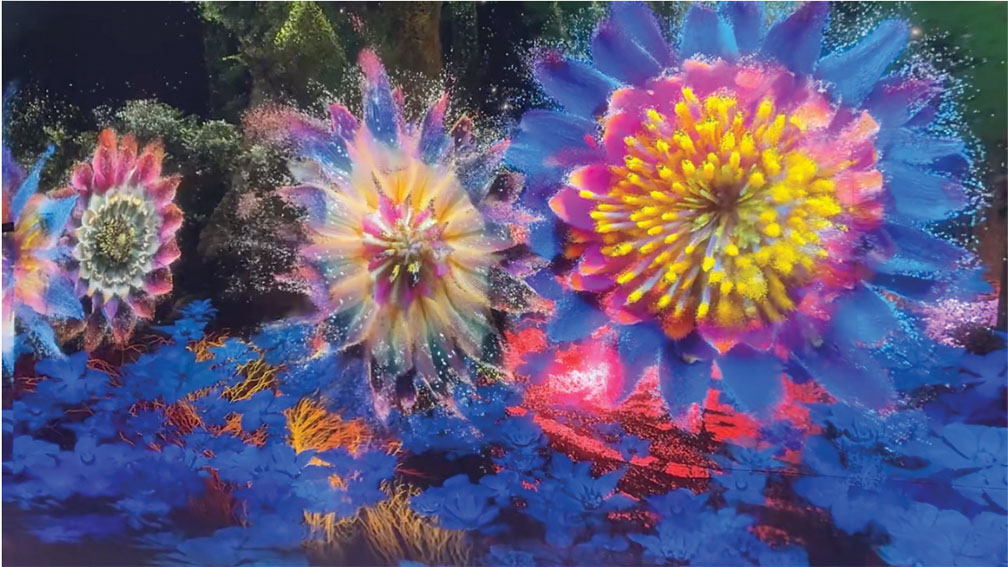
Three Dates to Dataland

I took three different dates, ages 6, 72 and 35, to see Dataland, the unusual digital art experience in downtown Los Angeles.

Hakol Shalom, All Is Shalom

This is the transcript of the speech Rabbi Dr. Bradley Shavit Artson gave at the 2026 AJU Gala on May 19, 2026.

A Slice of Aussie Heaven for the Jewish Day of Love

A classic Australian dessert chocolate coconut slice features a rich, dense, fudgy chocolate base packed with dried coconut, finished with a thick cocoa frosting and generously dusted with even more coconut.

The Empty Plaza and the Eternal Bond

This Tisha b’Av, as we mourn over the Temple once more, it is an occasion to consider what resonance the remnants of the Temple structure hold for us today.

Rosner’s Domain | A Leftist (Not) by Choice?

Coalition supporters want to define Eisenkot as a leftist because leftist is a title most Israelis do not want their Prime Minister to hold. But this definition has inherent limitations.

Life, Love and Tisha b’Av

As if life needed one more complication, my anniversary with life, my birthday, usually falls somewhere inside the Three Weeks, that narrow corridor of Jewish time when celebration starts to feel suspicious.

Echoes of Oct. 7 in ‘The Odyssey’

The film reminded me that an ancient poet could write about massacres but also about moral courage, while terrorists who dream of killing Jews can only think of going right to the massacre.

More news and opinions than at a Shabbat dinner, right in your inbox.