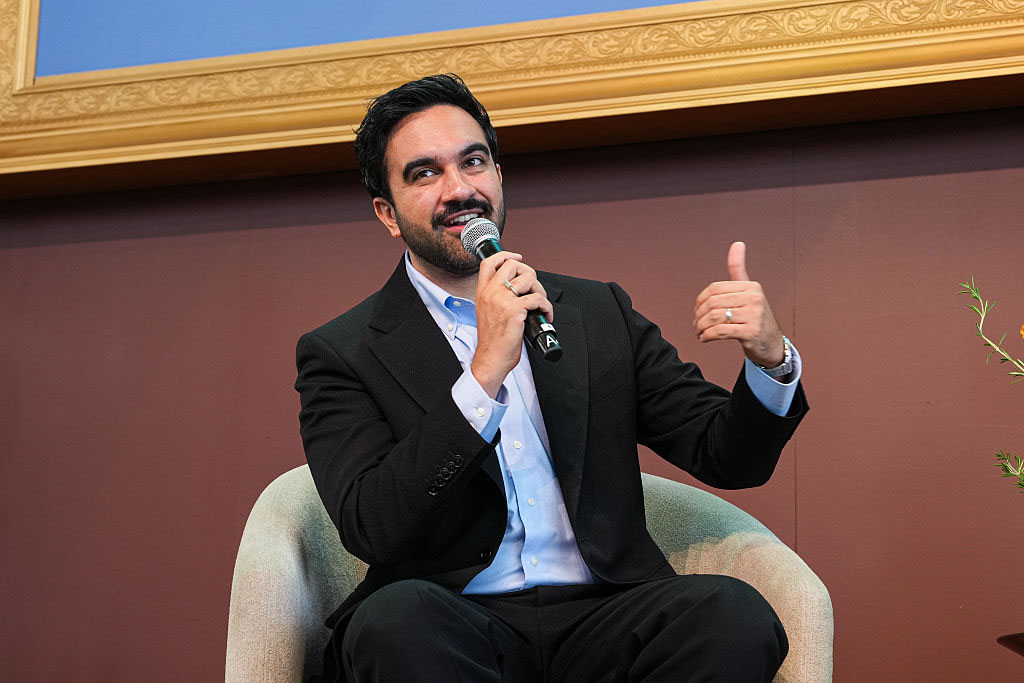
Norman Lear, who changed the face of American TV with landmark shows such as “All in the Family” and “The Jeffersons,” just wanted to talk about his mother.
The legendary writer-director-producer was speaking at a program that was part of the Skirball Cultural Center’s “Spotlight” series — which is devoted this season to television. And Lear, who has proved that politics and sitcoms do mix, was recounting his mother’s response to the news that her son had made the TV Hall of Fame.
“She said, ‘Listen, if that’s what they want to do, who am I to say,'” he said, with a laugh. “You learn to live with a little humility if you grow up with a mother like that.”
Lear, of course, doesn’t have to be humble. He’s been called the Philosopher King of American TV and has won four Emmys as the creator of several popular shows, including “Sanford & Son,” “Maude” and “Good Times.” But mom remained nonplused.
Once, when she was 89, he arranged to fly with her from the East Coast for a visit to his home in California. About 20 minutes into the flight, she asked a stranger to help her apply some eye drops.
Lear, incredulous, asked why she had requested help from a perfect stranger rather than from her own son.
“You have to be patient,” she said of the eye drops.
“What do you mean?” Lear demanded, with exasperation.
“Look, some patience,” she said, with disgust.
If Lear’s mother did not inspire the character of Edith on “All in the Family,” his father definitely informed the character of Archie Bunker, the arch-conservative, racist father-in-law to progressive son-in-law “Meathead” (Rob Reiner). Pere Lear was a blue-collar construction laborer who worked with an ethnically diverse crew but remained fearful of non-whites.
“To him, black people were shvartzes,” said Lear, founder of the liberal social-action group People for the American Way. “And he used to call me the laziest white kid he’d ever met. I’d shout back, ‘How can you put down a whole race of people to call me lazy?'” Lear’s father would respond that his son was also the stupidest white kid alive.
Lear’s big break in comedy occurred decades ago, when he telephoned the office of Danny Thomas’ agent and pretended to be a New York Times reporter. He told the secretary that he was on deadline and that he just needed to ask Thomas three questions. Could he have the comedian’s home telephone number?
The secretary complied, and Thomas was so impressed with the stunt that he asked Lear and his writing partner to provide material he desperately needed for a Friar’s Club gig.
Twenty years later, it took Lear, by then a veteran TV and film writer-producer, three years to get “All in the Family” on the air. The networks were frightened of the controversial sitcom that tackled racism and intolerance. Even when CBS aired the first episode in 1971, “the network had 200 switchboard operators standing by to handle the complaints,” Lear said.
In response to a question posed by a reporter at the Skirball, he said that the show’s sensibility is Jewish. “Dick van Dyke used to say that all humor is Jewish,” Lear said. “I don’t know if that was, because he had so many Jewish writers working with him, but what he meant was that if it’s a good joke, it’s got a Jewish curve to it.”