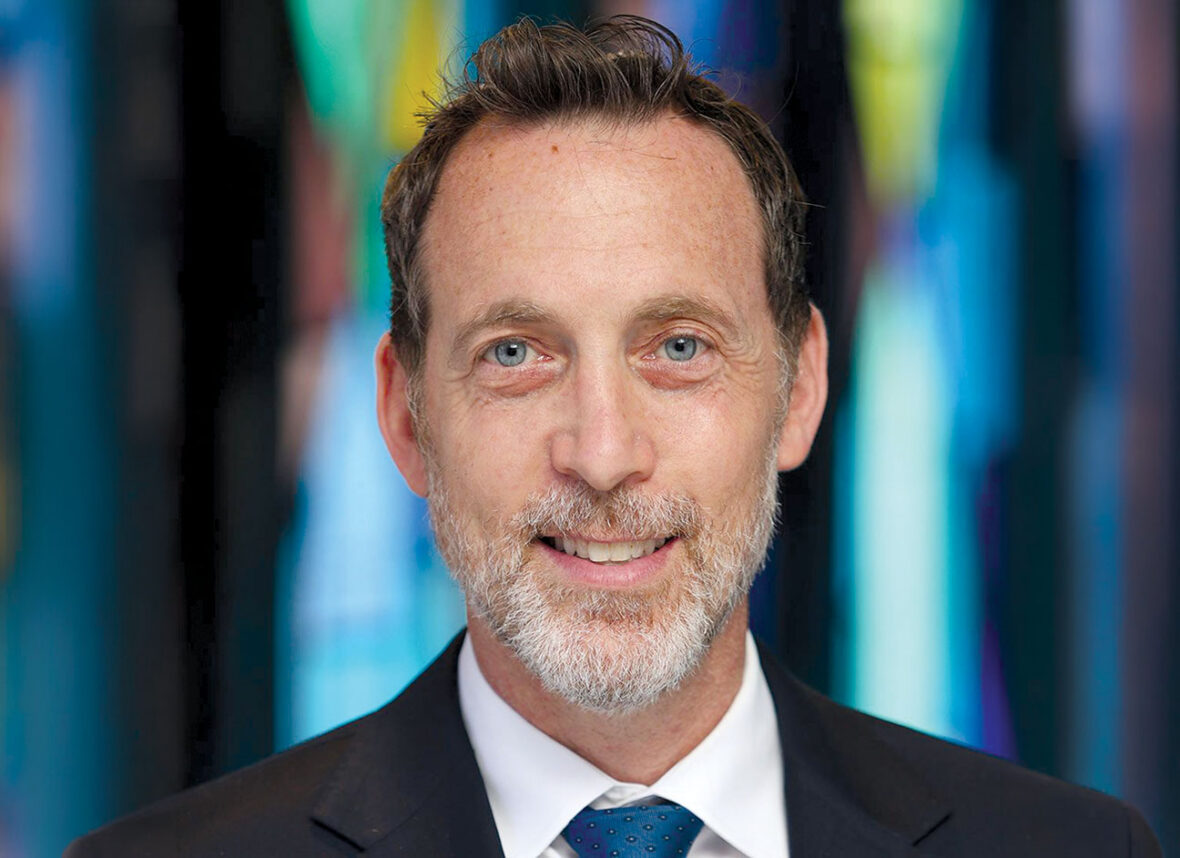
The message is not new, but it still smarts in Germany: The Catholic Church stood by during the Holocaust and full atonement is long past due. That’s the message of American scholar Daniel Goldhagen’s latest controversial book, which is under attack from the church.
Acting on complaints that a photo caption was incorrect, a German court recently issued a recall of some of the books in Germany. Goldhagen said the injunction was a ploy by the church.
"This is a desperate attempt on the part of the church to try and torpedo this book and avoid a real discussion," he said Oct. 11 at the Frankfurt Book Fair.
The photo was misidentified by the archive that provided it, Goldhagen told reporters at the fair. A new German edition is now in bookstores. The book is scheduled to appear in the United States at the end of October.
Goldhagen is known for his book "Hitler’s Willing Executioners" (Knopf, 1996), which argued that there was a unique German "eliminationist anti-Semitism" that allowed ordinary Germans to participate in the Holocaust. The book was a bestseller in Germany, although it was panned by critics and historians.
During an Oct. 13 presentation of "A Moral Reckoning: The Role of the Catholic Church in the Holocaust and its Unfulfilled Duty of Repair" (Knopf, $17.50) the extent of the disagreement between Goldhagen and church officials became clear. Before a packed audience in a Berlin theater, Goldhagen said that if it wishes to repair centuries of injustice that culminated in the Holocaust, the church must make the fight against anti-Semitism "a core teaching" alongside its traditional messages of "love and goodness."
Goldhagen’s book examines church actions and inactions regarding persecution of Jews in Nazi Germany and proposes radical acts of atonement, including issuing new editions of the Christian Bible
Hans Joachim Meyer, president of the board of the Central Committee of the Catholic Church, said at the Oct. 13 debate, "This is not an historical book [but] an agitator’s pamphlet."
Both Goldhagen and his critics were heckled during the debate.
On stage with Goldhagen and Meyer were Julius Schoeps, director of the Moses Mendelssohn Center for European Jewish Studies in Potsdam, and Georg Denzler, historian emeritus at the University of Bamberg. The discussion was moderated by Jan Ross, an editor for the weekly newspaper Die Zeit.
"It is false to say the Shoah could have been stopped by the church," said Meyer, who added that the church already had rejected its historical anti-Semitic teachings.
Schoeps agreed, but noted that German bishops successfully protested against the Nazi "euthanasia" program. Thus it is fair to say that the church could have done more to stop or slow the destruction of European Jewry, he said.
Denzler, a prominent Catholic critic of the church, joined Meyer in condemning Goldhagen’s work. Calling Goldhagen irresponsible for producing a work with "no source list," Denzler asked whether the author really believes that "the main message" of the Christian Bible "is to beat the Jews to death."
"My conclusions are difficult to listen to," Goldhagen said. He called the book "a moral, philosophical investigation" rather than a work of history.
"There is no argument about the need for a debate," Meyer said. "But is this a book that encourages debate?"
"Without it, there would be no debate," Schoeps replied, drawing cheers and boos from the audience.
The contentious atmosphere is bound to follow Goldhagen throughout his current tour of Germany and Austria. From Berlin he was to go to Hamburg, Cologne, Munich and Vienna.
At the Berlin presentation, Goldhagen said he had come to his latest subject by accident after being asked to review several new books about the church’s role during the Holocaust.
"I was dissatisfied with where they stopped and the questions they didn’t ask," Goldhagen said.
So he took on the task of "expanding the notion of restitution and repair from money to a discussion of moral issues. That had not been done in any systematic way," he said.
In the past 10 years, Catholic Bishops in several European countries have made official statements recognizing their shared responsibility for the fate of European Jewry under the Nazis. Pope John Paul II prayed for forgiveness in 2000, at Jerusalem’s Western Wall.
Both the Catholic and Protestant establishments in Germany have officially ceased any mission aimed specifically at converting Jews. And in September this year, the head of the German Bishops’ Conference, Mainz Cardinal Karl Lehmann, challenged the Vatican to open all its Nazi-era archives.
"I praise the church for what is has done, and for what Catholic clergy did to help Jews [during the Holocaust]," Goldhagen said. "But there is still much more to do."