fbpx

Young Women Take Over Religion

Maureen Dowd recently wrote about the Catholic Church\'s negation of women. It seems like that\'s a frequent headline: Women Negated by Religion. Or: Women Still Negated by Religion. Too often, it\'s true. It\'s true in enormous, striking, unavoidable ways that deny women ownership of their own bodies and prevent them from taking control of their own lives, let alone their communities. I hope I don\'t appear insensitive to this reality when I point out another, quieter, but equally unavoidable trajectory. For some women, leading a religious community is not only normal, it is a critical part of their experience of themselves as women.
[additional-authors]
April 19, 2010

From HuffingtonPost.com:

Maureen Dowd recently wrote about the Catholic Church’s negation of women. It seems like that’s a frequent headline: Women Negated by Religion. Or: Women Still Negated by Religion. Too often, it’s true. It’s true in enormous, striking, unavoidable ways that deny women ownership of their own bodies and prevent them from taking control of their own lives, let alone their communities. I hope I don’t appear insensitive to this reality when I point out another, quieter, but equally unavoidable trajectory. For some women, leading a religious community is not only normal, it is a critical part of their experience of themselves as women.

We live in a world of religious extremes, filled in and fleshed out by the necessary subtleties of people’s real-life experiences, in the spaces where religious ideals clash with or facilitate mundane existence. I performed a service at which a young Orthodox girl stared at me in open horror as I touched the Torah. In her mind, I’d contaminated the Word of God with my corrosive, forbidden femininity. And yet, the majority of students entering many seminaries are women.

Being a clergymember has always been about being a woman for me. I was trained by a woman clergymember, and the rabbi I work with now is a woman. I spent two years serving with a male rabbi, and, you know, I dealt. I am a lay cantor at a synagogue in central New Jersey. I’m twenty-four years old. I’ve been serving a congregation since I was fifteen. For those of you who don’t know what a cantor is, that’s the person who stands up on the bima (alter) with the rabbi and sings in Hebrew. OK, there’s a bit more to it, but that’s what you see when you walk into a synagogue. Jewish clergy come in pairs: rabbis and cantors.

Read the full article at HuffingtonPost.com.

Did you enjoy this article?
You'll love our roundtable.

Editor's Picks

Latest Articles

Lessons in Gratitude

The deepest expression of gratitude isn’t simply saying thank you for what we’ve received. It’s allowing what we’ve received to shape who we are, who we become, and how we treat others throughout our lives.

A Thanksgiving to Remember

The first holiday my family celebrated in Los Angeles was Thanksgiving. Although it was many decades ago, I can picture that day like it was yesterday and my heart bursts with gratitude for how meaningful and special that day was.

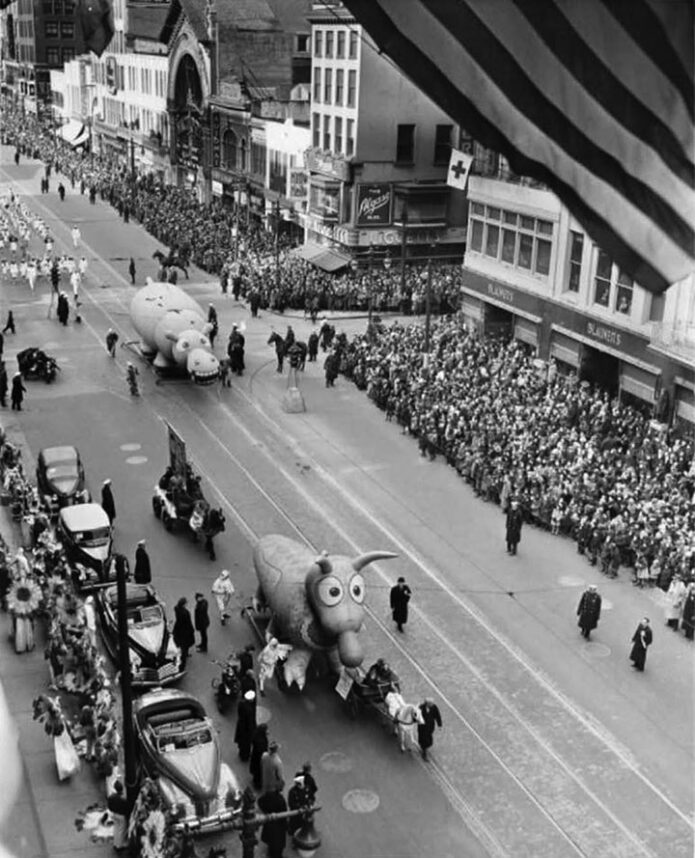
The Thanksgiving Parade and a Jewish Pennsylvanian

The Gimbel family had benefitted greatly from America, and for that they were grateful. A Jewish family, thankful for the freedom to pursue the American Dream, gifted the country, among its many contributions, its quintessential Thanksgiving public celebration.

From a Global People to a People of Israel

Today, 46% of world Jewry lives in Israel. In 2070, according to the forecast, 62% will live there. The U.S. share of world Jewry will drop from 39% to 26%, which numerically means 1.2 million fewer people.

More news and opinions than at a Shabbat dinner, right in your inbox.