fbpx

Appellate judge Kelly considered for Supreme Court

The White House is vetting federal appellate Judge Jane Kelly for a possible U.S. Supreme Court nomination to replace the late Justice Antonin Scalia, the New York Times reported on Wednesday, citing a person with knowledge of the process.
[additional-authors]
March 2, 2016

The White House is vetting federal appellate Judge Jane Kelly for a possible U.S. Supreme Court nomination to replace the late Justice Antonin Scalia, the New York Times reported on Wednesday, citing a person with knowledge of the process.

The FBI has been conducting background interviews on Kelly, the Times said, citing the unnamed source. Scalia, a long-serving conservative justice, died on Feb. 13.

The White House declined to comment on the report.

Kelly, a white woman and former public defender, has served on the St. Louis-based 8th U.S. Circuit Court of Appeals since April 2013. She was confirmed to the post by the Senate on a 96-0 vote.

She had been mentioned by legal experts as a potential nominee in part because her earlier nomination to the appeals court was supported by Iowa Republican Senator Chuck Grassley, the chairman of the Senate Judiciary Committee that would review any Supreme Court nomination.

Grassley said at the time that Kelly was “well regarded in my home state of Iowa” and that he was “pleased to support” her nomination.

Kelly, 51, served as a clerk for now-retired Judge David Hansen, a friend of Grassley who served on the 8th U.S. Circuit Court of Appeals.

Republican leaders have so far rebuffed President Barack Obama's appeal to hold confirmation hearings and a vote on a nominee, including in a face-to-face meeting on Tuesday at the White House that failed to budge them from their vow to block anyone he offers for the job.

Republicans say the decision on who to nominate should be left to the next president, who takes office next January after the Nov. 8 U.S. presidential election. Republicans hope to win back the White House then.

Under the U.S. Constitution, the president nominates Supreme Court justices and the Senate must confirm them. Without Scalia, the court has four conservative and four liberal justices, meaning any potential Obama nominee could tip the court to the left for the first time in decades.

Nevada Governor Brian Sandoval, a moderate Republican, took himself out of consideration for appointment to the Supreme Court last week, a day after his name surfaced in connection with the Scalia vacancy.


Did you enjoy this article?
You'll love our roundtable.

Editor's Picks

Latest Articles

Antisemitism, Deicide, and Revolution

The United States Conference of Catholic Bishops did a remarkable thing: It issued a memorandum to all American Catholic bishops urging them to prepare their teachings carefully during this Easter period and ensure that they accurately present the Church’s positive teachings about Jews.

Chametz Is More than Crumbs in the Corners of our Homes

Chametz is also something that gathers in the corners of our being, the spiritual chametz that, like the physical particles we gather the night before Passover, can infect, wither, influence and sabotage us as we engage with others.

Alpine Flavors—a Crunchy Granola Recipe

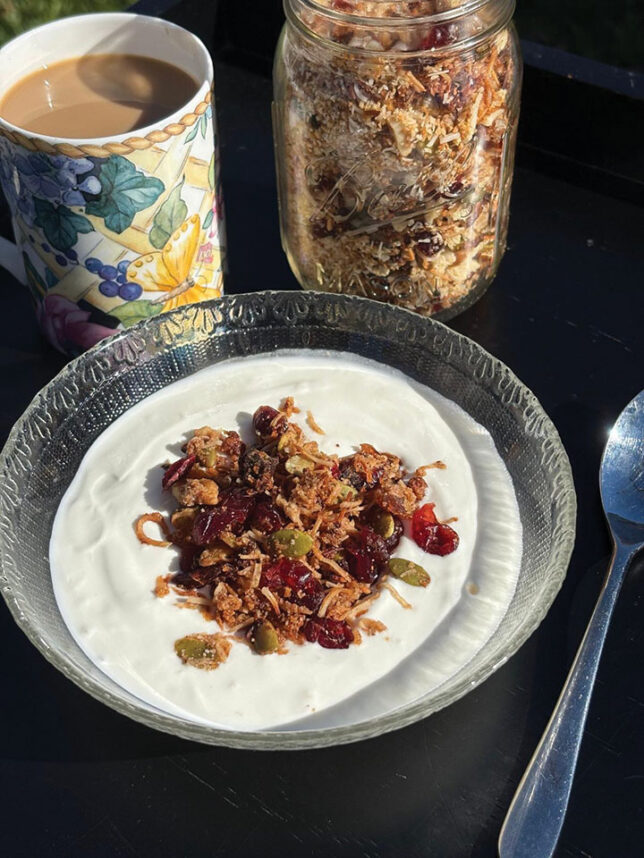
Every Passover, I prepare a truly delicious gluten-free granola. I use lots of nuts and seeds (pistachios, walnuts, almonds and pumpkin seeds) and dried fruits (apricots, dates and cranberries).

Pesach Reflections

How does the Exodus story, Judaism’s foundational narrative of freedom, speak to the present? We asked local leaders, including rabbis, educators and podcasters, to weigh in.

Rosner’s Domain | Be Skeptical of Skeptics, Too

Whoever risks a decisive or semi-decisive prediction of the campaign’s end (and there is a long list of such figures on the Israeli side as well as the American side) is not demonstrating wisdom but rather a lack of seriousness.

When We Can No Longer Agree on Who Is Pharaoh

The Seder asks us to remain present to the tension between competing fears and obligations. It does not require choosing one lesson over the other, but rather, it creates space for us to articulate our concerns and listen to the fears and hopes that shape others’ views.

Pesach at War. Leaving Fast, Leaving Slow.

Freedom, it would seem, is erratic; it happens in fits and starts, three steps forward and two steps back. Freedom is a leap into the unknown, driven by a dream. We will figure it out in time.

More news and opinions than at a Shabbat dinner, right in your inbox.